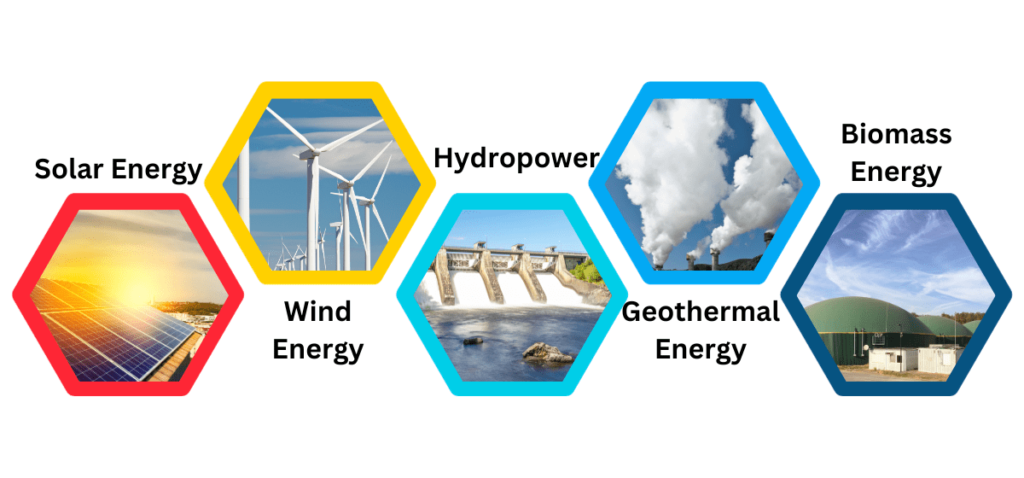
Renewable energy sources are at the forefront of a global shift towards sustainable and environmentally friendly alternatives. Defined as natural resources replenishable on a human timescale, these sources encompass solar energy, wind energy, hydropower, geothermal energy, and biomass energy.
The ongoing innovation and adoption of these resources have not only revolutionised the energy landscape but also significantly impacted environmental, economic, and energy security dimensions. This comprehensive overview will delve into the definition and types of renewable energy sources, examining their pivotal role in shaping our world.
From the fundamental technologies driving solar power systems to the historical evolution of renewable energy adoption, we will explore the major projects globally and underscore the critical importance of embracing renewable energy. Additionally, we will delve into the ongoing innovations in renewable technology, such as new solar cell materials, floating offshore wind farms, concentrated solar power (CSP), tidal energy, and wave energy.
What are the renewable energy sources?
In the face of growing environmental concerns and the imperative to transition towards sustainable energy solutions, the exploration of renewable energy sources has become paramount. Renewable energy sources are natural resources that can be replenished on a human timescale. They include solar energy, wind energy, hydropower, geothermal energy, and biomass energy.
Solar energy: Solar energy is the energy from the sun that is converted into electricity or heat using photovoltaic (PV) cells or solar thermal collectors.
Wind energy: Wind energy is the energy from the wind that is converted into electricity using wind turbines.
Hydropower: Hydropower is the energy from moving water that is converted into electricity using turbines.
Geothermal energy: Geothermal energy is the heat from the Earth’s core that is used to generate electricity or heat homes and buildings.
Biomass energy: Biomass energy is the energy from organic matter, such as plants and wood, that is converted into electricity or heat using combustion or other processes.
How do solar power systems work?
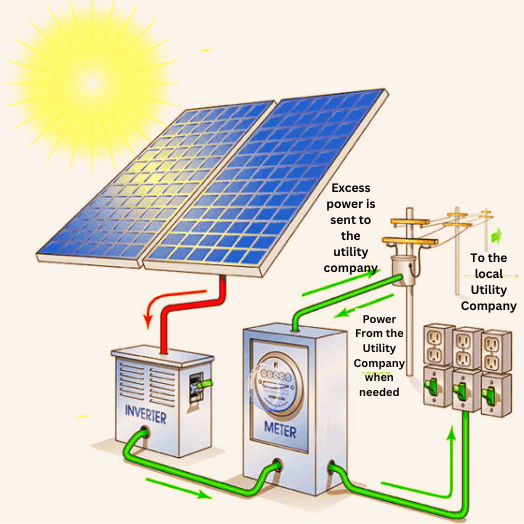
Solar power systems work by using photovoltaic (PV) cells to convert sunlight into electricity. PV cells are made of semiconductor materials like silicon that can release electrons when hit by photons of sunlight. This generates a flow of electrons, creating a direct electric current. The solar panels contain these PV cells to absorb and convert the maximum amount of sunlight. The direct current then goes into an inverter, which transforms it into alternating current that can be used to power home devices and appliances. Excess electricity can be stored in batteries. So in summary, the photovoltaic cells in the solar panels capture and convert the sun’s energy into direct current electricity.
Then the inverter changes this electricity into usable alternating current for the home. Batteries store surplus electricity. This allows the free power of sunlight to be utilised as a clean, renewable energy source.
When Did renewable energy adoption begin?
The adoption of renewable energy began in the early 1900s with the development of hydroelectric power. However, it was not until the late 1970s and early 1980s, during the oil crisis, that renewable energy sources began to receive serious attention.
Since then, there has been a steady increase in the adoption of renewable energy. In 2021, renewable energy accounted for 29% of global electricity generation.
Where are the major renewable energy projects? Examples around the world.
There are major renewable energy projects underway all over the world. Here are a few examples:
China: China is the world leader in renewable energy, with over 1,000 gigawatts of installed renewable capacity. The country is home to some of the world’s largest solar and wind farms.
United States: The United States is the second-largest renewable energy market in the world, with over 300 gigawatts of installed renewable capacity. The country is home to some of the world’s largest solar and wind farms, as well as a growing geothermal and hydropower industry.
Europe: Europe is a major market for renewable energy, with over 400 gigawatts of installed renewable capacity. The region is home to some of the world’s largest offshore wind farms, as well as a growing solar and biomass energy industry.
India: India is the fourth-largest renewable energy market in the world, with over 150 gigawatts of installed renewable capacity. The country is home to some of the world’s largest solar and wind farms, as well as a growing hydropower industry.
Brazil: Brazil is the fifth-largest renewable energy market in the world, with over 150 gigawatts of installed renewable capacity. The country is home to some of the world’s largest hydropower plants, as well as a growing solar and wind energy industry.
Why is adopting renewable energy important?
There are many benefits to adopting renewable energy, including:
Environmental benefits: Renewable energy sources are clean and do not produce greenhouse gas emissions. This helps to reduce air pollution and combat climate change.
Economic benefits: Renewable energy can create jobs and boost the economy.
Energy security: Renewable energy sources can help to reduce dependence on imported fossil fuels.
What are the next innovations in renewable tech?
There are a number of innovations in renewable technology that are currently under development. These include:
New solar cell materials: Researchers are developing new solar cell materials that are more efficient and less expensive than traditional silicon cells. One example is Perovskite Solar Cells, which have the potential to achieve efficiencies of over 30%.
Floating offshore wind farms: Floating offshore wind farms can be built in deeper waters than traditional fixed-bottom wind farms, which opens up new areas for wind energy development. The first floating offshore wind farm, Hywind Scotland, was installed in 2017.
Concentrated solar power (CSP): CSP plants use mirrors to concentrate sunlight onto a receiver, which heats a fluid to generate steam. The steam then drives a turbine to generate electricity. CSP plants can achieve higher efficiencies than traditional solar PV systems, but they are also more expensive.
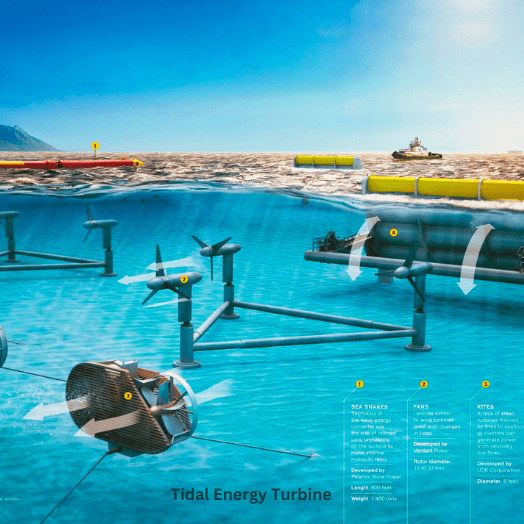
Tidal energy: Tidal energy is the energy from the movement of the tides. Tidal turbines can be installed in coastal areas to generate electricity. Tidal energy is a predictable source of energy, but it is only available in certain locations.
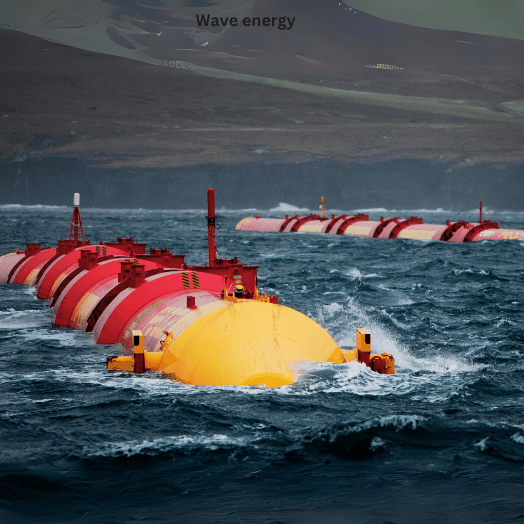
Wave energy: Wave energy is the energy from ocean waves. Wave energy converters can be installed offshore to generate electricity. Wave energy is a highly variable source of energy, but it has the potential to generate a significant amount of electricity.
These are just a few examples of the many innovations in renewable technology that are currently under development. As these technologies continue to mature and become more cost-effective, they are poised to play a major role in the global energy transition.
Conclusion
Renewable energy technology is transforming the world. Renewable energy sources are now clean, affordable, and reliable. They are being used to generate electricity, power homes and businesses, and even transportation.
The next generation of renewable energy technologies is even more promising. These technologies are more efficient, less expensive, and can be deployed in a wider range of locations.
As renewable energy technology continues to develop and improve, it is poised to play a major role in the global transition to a clean energy future.
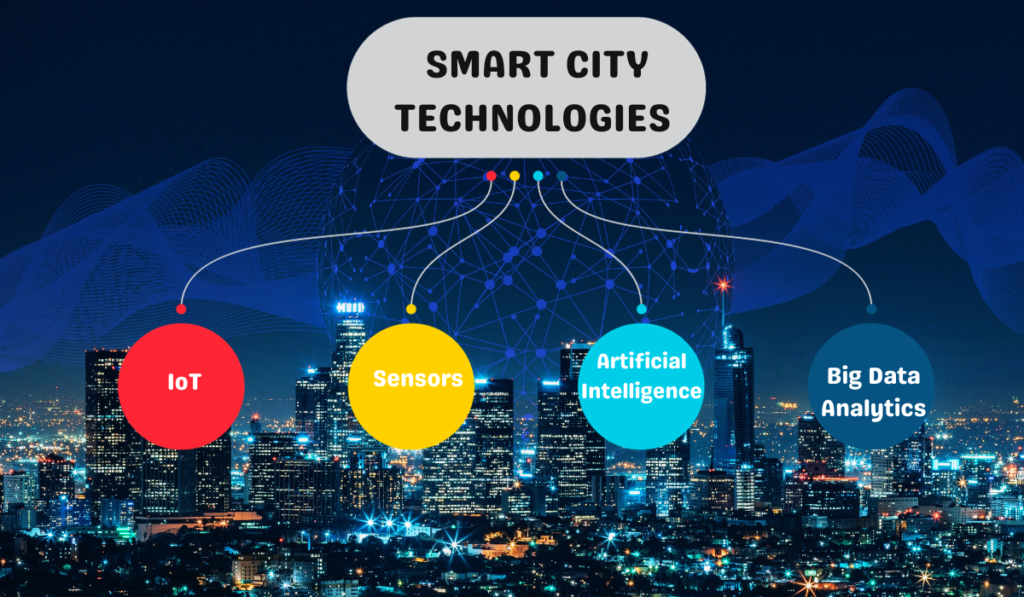
A smart city is a city that uses technology to improve the quality of life for its residents and to make the city more efficient and sustainable. Smart cities use a variety of technologies, including sensors, the Internet of Things (IoT), artificial intelligence (AI), and big data analytics.
These technologies enable smart cities to gather and analyze data in real-time, allowing for better decision-making and resource allocation. Additionally, smart cities aim to enhance connectivity and communication between citizens and the local government, fostering a more inclusive and participatory urban environment.
The Key Technologies That Build Smart Cities
Key technologies used in smart cities include:
Sensors: Sensors are used to collect data about the city environment, such as traffic flow, air quality, and energy consumption. This data can be used to improve city services, reduce congestion, and protect the environment.
IoT: The IoT is a network of devices that are connected to the internet and can collect and share data. IoT devices are used in smart cities to collect data about everything from traffic patterns to parking availability to building occupancy. This data can be used to improve the efficiency of city services and make the city more livable for residents.
Artificial intelligence: AI is used in smart cities to analyze data and make decisions. For example, AI can be used to optimise traffic signals, reduce energy consumption, and predict crime.
Big Data Analytics: Big data analytics is used in smart cities to analyze large amounts of data to identify patterns and trends. This information can be used to make better decisions about city planning, transportation, and resource management.
How are Sensors and IoT Improving Urban Life?
Sensors and the IoT are being used in a variety of ways to improve urban life. For example:
Smart parking: Sensors can be used to detect when parking spaces are available and to guide drivers to open spaces. This can help to reduce congestion and make it easier for drivers to find parking.
Smart traffic lights: Sensors can be used to monitor traffic flow and to adjust traffic lights accordingly. This can help to reduce congestion and improve travel times for commuters.
Smart waste management: Sensors can be used to track the fill level of waste bins and to send alerts when bins need to be emptied. This can help to improve waste collection efficiency and reduce the amount of litter on the streets.
Smart buildings: Sensors can be used to monitor energy consumption and to adjust building systems accordingly. This can help to reduce energy costs and make buildings more sustainable.
When did the Smart City Concept Begin?
The dawn of the 21st century witnessed a profound shift in urban development paradigms with the emergence of the smart city concept. Rooted in the rapid development of groundbreaking technologies like the Internet of Things (IoT) and big data analytics, the early 2000s marked a pivotal moment in reimagining the future of urban landscapes.
In a notable stride towards shaping urban evolution, the year 2008 witnessed the inauguration of the Smart Cities Initiative by the European Commission. This landmark initiative was a strategic step aimed at catalysing and promoting the development of smart cities across Europe. By fostering collaboration, innovation, and the integration of cutting-edge technologies, the initiative aimed to position European cities at the forefront of the global smart city movement.
Thus, the smart city concept not only emerged as a response to technological advancements but also as a deliberate and concerted effort to redefine urban living. The confluence of visionary technologies and strategic initiatives laid the foundation for a new era in urban development, where cities would not only harness the power of technology but also embody a commitment to sustainability, efficiency, and the holistic well-being of their inhabitants.
Where are Smart City Innovations Happening?
Smart city innovations are happening all over the world, but some of the leading locations include:
Barcelona, Spain: Barcelona is a leader in smart city development, with a number of initiatives in place to improve the quality of life for its residents. For example, the city has a smart parking system, a smart waste management system, and a smart grid.
Singapore: Singapore is another leading smart city, with a focus on using technology to improve its sustainability and efficiency. For example, the city has a smart traffic management system that uses AI to optimise traffic flow.
San Francisco, USA: San Francisco is a leader in smart city technology, with a number of startups and companies developing new smart city solutions. For example, the city is testing a number of self-driving cars and has a number of smart parking and traffic management initiatives in place.
Why Smart Cities? Discuss Benefits and Sustainability impact.
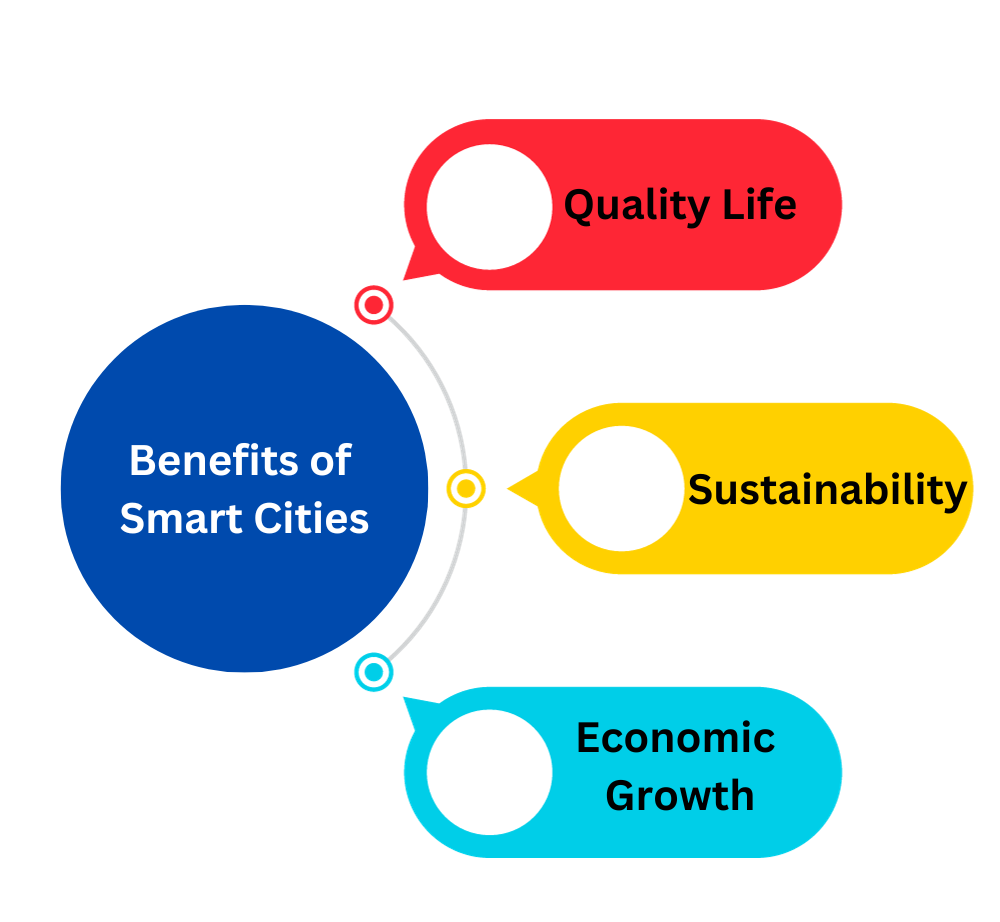
The adoption of smart city technologies is driven by a compelling array of benefits that extend far beyond mere technological advancement. Here are key reasons why the pursuit of smart cities is crucial for the future.
Improved quality of life: Smart cities can use technology to improve the quality of life for residents, such as by reducing congestion, improving air quality, and making transportation more efficient.
Sustainability: Smart cities can use technology to reduce their environmental impact, such as by using renewable energy, improving energy efficiency, and reducing waste.
Economic growth: Smart cities can attract new businesses and residents, and they can create new jobs in the technology sector.
What’s Next for Urban Tech? Future Smart City Trends
Some of the future trends in smart city technology include:
The rise of AI: AI will play an increasingly important role in smart cities as it is used to develop new and innovative solutions to urban challenges.
The growth of the IoT: The IoT will continue to grow, and more and more devices will be connected to the internet. This will lead to new opportunities for data collection and analysis, which can be used to improve city services and make the city more livable.
The emergence of new technologies: New technologies such as 5G and blockchain are emerging, and these technologies have the potential to revolutionise the smart city landscape.
Conclusion
In summary, smart cities leverage advanced technologies like sensors, IoT, AI, and big data to revolutionise urban living. From optimising traffic and parking to enhancing sustainability, these cities are at the forefront of innovation.
Smart cities aren’t just about technology; they represent a commitment to sustainability, economic growth, and improved living standards. As we look ahead, AI and the expanding IoT offer exciting possibilities, while emerging technologies like 5G and blockchain are poised to redefine the smart city landscape.
In essence, the journey to smart cities is a pursuit of efficiency, sustainability, and resident well-being. The future promises not just smart cities but visionary urban landscapes, where technology enriches every aspect of urban life.
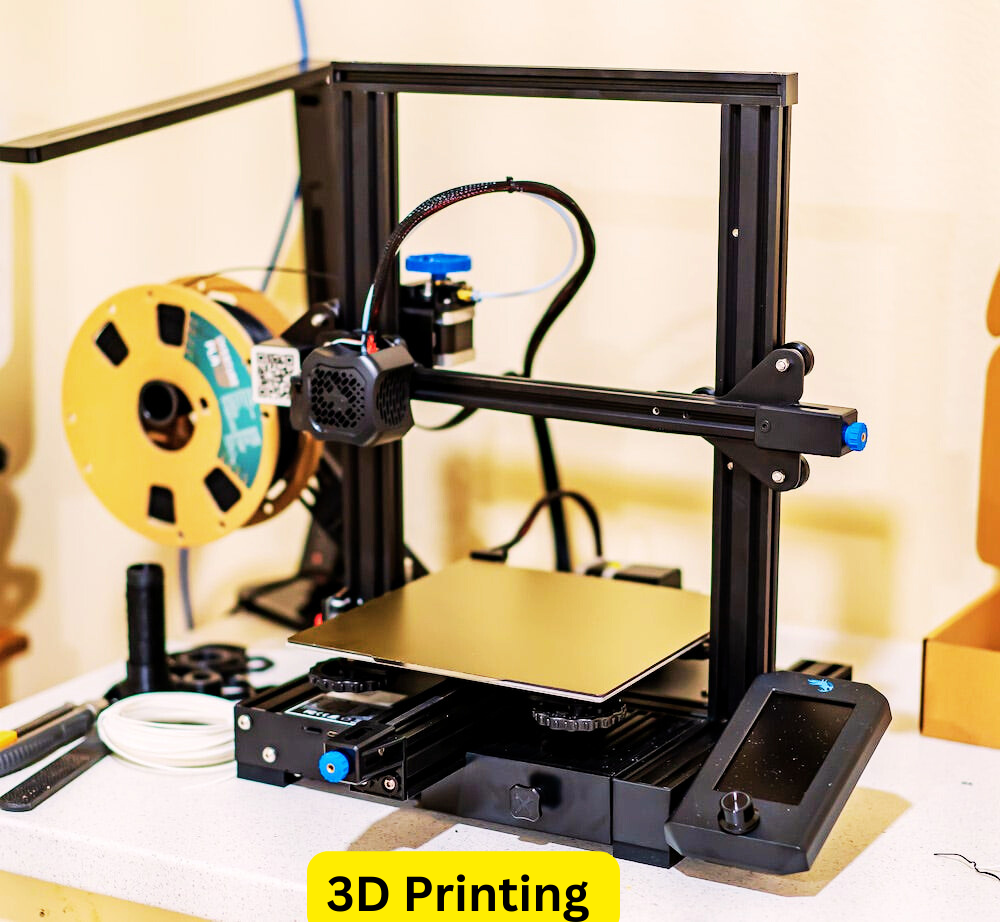
3D printing is a manufacturing processthat creates a three-dimensional object from a digital model. The process works by building up layers of material, one on top of the other until the desired object is complete.
In more everyday terms, 3D printing uses a special printer to make a physical, solid object based on a 3D digital design. It does this by slowly depositing thin layers of material in precise shapes until an object like a cup, a toy, or a spare part is formed.
3D printing technology allows objects of nearly any shape to be produced, optimized for the exact needs and customization required. Different materials, like plastics, metals, or even living cells, can be used as printing materials.
The key takeaway is that 3D printing is an additive manufacturing process that constructs objects layer-by-layer based on digital 3D models. It opens up new creative possibilities and customization for all kinds of applications.
How has 3D printing evolved? A brief history and trajectory
3D printing was first invented in the 1980s, but it has only become mainstream in recent years. This is due to a number of factors, including the development of new technologies, the reduction in the cost of 3D printers, and the growing awareness of the benefits of 3D printing.
Key milestones in the evolution of 3D printing:
1983: Charles Hull invented the first Stereolithography (SLA) 3D printer.
1986: Carl Deckard invents the selective laser sintering (SLS) 3D printer.
1992: Scott Crump invents the fused deposition modeling (FDM) 3D printer.
2005: The RepRap project is launched, which aims to create a self-replicating 3D printer.
2009: The MakerBot Cupcake 3D printer is released, making 3D printing more accessible.
2012: The first 3D-printed car is unveiled.
2013: NASA uses 3D printing to create tools for astronauts on the International Space Station.
2014: The first 3D-printed house is built.
2015: The first 3D-printed prosthetic leg is approved by the FDA for commercial sale.
2016: The first 3D-printed heart is successfully transplanted into a mouse.
2017: The first 3D-printed bridge is built in the Netherlands.
2018: The first 3D-printed rocket engine is test-fired by NASA.
2019: The first 3D-printed food restaurant opened in Moscow, Russia.
2020: The first 3D-printed houses were built in Mexico and the United States.
2021: The first 3D-printed meat is produced by a company called Aleph Farms.
2022: The first 3D-printed human skin was created by researchers at the University of California.
2023: The first 3D-printed heart valve is implanted into a human patient.
These are just a few examples of the many ways that 3D printing is being used to revolutionize various industries and applications. As the technology continues to develop and become more affordable, we can expect to see even more innovative and groundbreaking uses for 3D printing in the years to come.
In addition to the milestones above, here are some other notable recent developments in 3D printing:
Multi-material 3D printing: 3D printers that can print with multiple materials are becoming increasingly common. This allows for the creation of more complex and functional objects with a wider range of properties.
Metal 3D printing: Metal 3D printing is also becoming more widespread. This is opening up new possibilities for manufacturing metal parts for a variety of industries, including aerospace, automotive, and medical.
Bioprinting: Bioprinting is a type of 3D printing that is used to create living tissues and organs. This technology has the potential to revolutionize medicine and regenerative medicine.
3D printing is a rapidly developing technology with the potential to transform many industries and aspects of our lives. The milestones and developments listed above are just a glimpse of what is to come.
When did 3D printing become mainstream?
3D printing became mainstream in the early 2010s, with the release of affordable 3D printers such as the MakerBot Cupcake. The launch of the RepRap project also played a role in making 3D printing more accessible to consumers.
Prior to the early 2010s, 3D printers were very expensive and primarily used in industrial and commercial settings. However, the release of the MakerBot Cupcake in 2009 made 3D printing more accessible to consumers, with a price tag of just $1,200. The RepRap project, which was launched in 2005, aimed to create a self-replicating 3D printer, which would further reduce the cost of 3D printing.
In addition to the release of affordable 3D printers, the growing popularity of the maker movement also helped to mainstream 3D printing. The maker movement is a culture of DIY and innovation, and 3D printing was a natural fit for the maker community. Makers were able to use 3D printing to create custom objects, prototypes, and even entire products.
The mainstreaming of 3D printing has had a significant impact on a wide range of industries, including manufacturing, healthcare, education, and the arts. 3D printing is now used to produce everything from medical implants to custom shoes to architectural models.
Where is 3D printing used today?
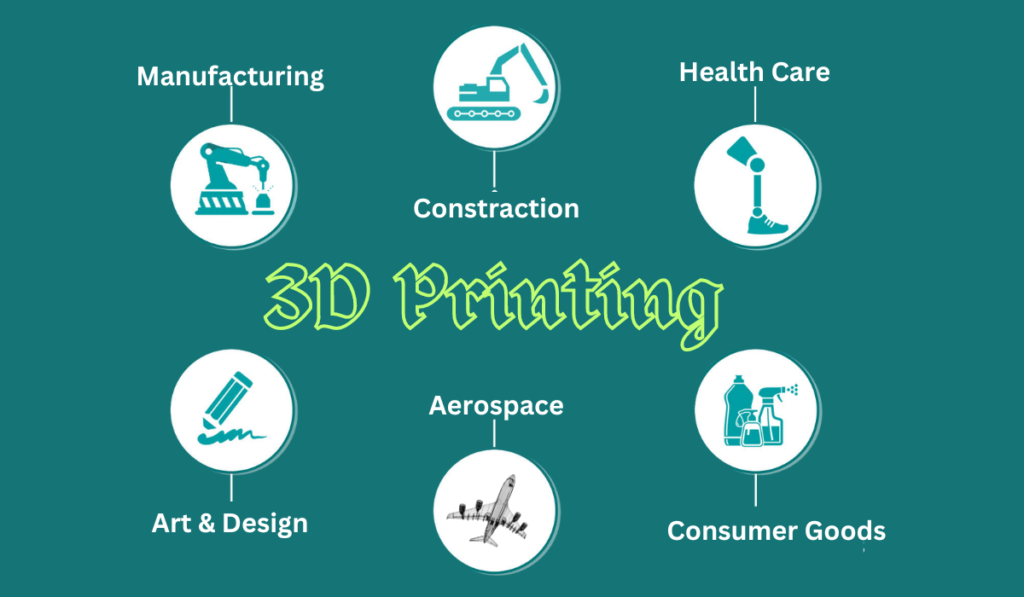
3D printing is used in a wide range of industries and applications, including:
Manufacturing: 3D printing is used to create prototypes, tooling, and end-use parts.
Design: 3D printing is used to create concept models, prototypes, and finished products.
Healthcare: 3D printing is used to create medical devices, prosthetics, and implants.
Aerospace: 3D printing is used to create lightweight and complex parts for aircraft and spacecraft.
Automotive: 3D printing is used to create prototypes, tooling, and end-use parts for cars and trucks.
Consumer goods: 3D printing is used to create custom products such as jewelry, toys, and home decor.
Why does 3D printing matter?
3D printing has the potential to revolutionize manufacturing and design. It offers a number of advantages over traditional manufacturing methods, including:
Flexibility: 3D printing can be used to create objects with complex geometries that would be difficult or impossible to create using traditional methods.
Customization: 3D printing can be used to create customized products for individual customers.
Speed: 3D printing can be used to create prototypes and small batches of products quickly and efficiently.
Cost: 3D printing can be used to reduce the cost of manufacturing certain products.
No Assembly: 3D printed objects are constructed as one solid piece with no assembly required. This enables monolithic structures.
Sustainability: Additive 3D printing has less material waste than subtractive manufacturing methods like machining, casting or forging. It uses only the required material.
Democratized Manufacturing: 3D printing enables decentralized manufacturing, allowing anyone to become a manufacturer with the right equipment. This disrupts traditional mass production.
Supply Chain Efficiency: 3D printing on-demand and on-site reduces logistics needs and supply chain costs. Products can be printed where and when they are required.
Invention Platform: 3D printing fosters innovation by allowing inventors and entrepreneurs to rapidly develop and iterate prototypes to turn ideas into products.
Healthcare Advances: Customized medical devices, implants, and living tissues are being 3D printed, improving treatment options.
3D printing enables creativity, sustainability, flexibility, and access to manufacturing in unprecedented ways. It empowers decentralized, localized production and is reinventing supply chains. This technology will have far-reaching impacts across industries.
How Does 3D Printing Work?
Forget replicators from sci-fi movies. 3D printing is real, but the process is way cooler than waving your hand! It’s all about building things up, layer by layer, like a mini-construction crew working for your imagination. Imagine building a cake, but instead of frosting, you use melted plastic or other materials. Each layer adds definition until your design comes to life!
Here’s a simplified breakdown:
1. Design Your Masterpiece: First, you create a digital model of your object using 3D design software. Think of it as a blueprint for your creation.
2. Slicing Up the Fun: The software then slices your design into thin, digital layers, like pages in a book. Each page represents one layer your printer will build.
3. Printing in Action: Now comes the printing magic! Your chosen printer reads the sliced file and, depending on the technology, does one of these things:
Melts and extrudes plastic: Similar to a hot glue gun, the printer melts plastic filament and deposits it layer by layer, following the design instructions.
Cures liquid resin: A laser beam precisely scans and hardens liquid resin layer by layer, forming your object.
Binds powdered materials: The printer selectively binds together tiny particles of powder with glue or heat, building your design one layer at a time.
4. Layer-by-Layer Wonders: With each layer solidifying, your object takes shape, rising from the print bed like a 3D timelapse! The process can take minutes or hours, depending on the size and complexity of your design.
5. Voila! Your Creation Awaits: Once printing is complete, you might need to remove support structures and do some light finishing. But then, behold! You hold your unique, 3D-printed masterpiece in your hands, ready to use, display, or share!
What You Can Make with 3D Printing
The beauty of 3D printing lies in its limitless potential. No longer confined to traditional manufacturing constraints, your imagination truly becomes the blueprint. Here’s just a glimpse of the diverse possibilities at your fingertips:
Functional Everyday Items:
Household tools and organizers: Custom hooks, phone stands, cable clips, storage containers, drawer dividers – anything to declutter and personalize your space.
DIY repairs and replacements: Broken doorknobs, missing furniture parts, malfunctioning gadget pieces—3D printing can often save the day (and a trip to the store).
Personalized wearables and accessories: Phone cases, jewelry, keychains, even shoes—unleash your inner designer and create unique pieces that reflect your style.
Creative Expression and Art:
Sculptures and figurines: Bring your artistic vision to life, layer by layer. You can even replicate real-world objects with stunning detail.
Custom toys and game pieces: Design imaginative toys for your kids or unique game pieces for family game nights.
Decorative home accents: Vases, lamps, coasters, wall art – the possibilities are endless, and you can customize them to match your décor.
Practical Applications and Prototyping:
Educational tools: Models of historical figures, anatomical models, puzzles, and interactive learning aids—bring complex concepts to life in a tangible way.
Medical and dental applications: Prosthetics, custom casts, braces, and even dental implants—3D printing is revolutionizing healthcare.
Prototyping and product design: Quickly and affordably create functional prototypes to test, iterate, and refine your product ideas before mass production.
Just remember, this is just the tip of the iceberg! The world of 3D printing is constantly evolving, with new materials, techniques, and applications emerging all the time. What will you create next?
What’s next for 3D printing?
Some of the upcoming innovations and trends in 3D printing include:
New materials: New 3D printing materials are being developed that have different properties, such as strength, flexibility, and biocompatibility.
Faster printing speeds: 3D printers are becoming faster and more efficient.
Larger build volumes: 3D printers with larger build volumes are being developed, which will allow for the printing of larger objects.
Multi-material printing: 3D printers that can print multiple materials at the same time are being developed.
Bioprinting: Bioprinting is a type of 3D printing that is used to create living tissues and organs.
Conclusion
3D printing is a rapidly evolving technology that promises to revolutionize manufacturing and design. It enables on-demand, customized production without assembly using digital files and additive printing. As 3D printing advances, it will transform supply chains through localized manufacturing. It also unlocks creative possibilities and sustainability benefits with reduced waste.
The technology is already used across industries today, and it will only grow. 3D printing allows inventions once impossible to become reality. It empowers businesses of any size to become producers. This technology will undoubtedly transform production and business models across sectors for years to come. Its full potential is still being unlocked, but 3D printing is undoubtedly one of the most disruptive and empowering technologies of our time.
How does 3D printing work?
There are many different types of 3D printers, but they all work on the same basic principle. The printer first reads a digital model of the object to be printed. Then, it heats up a material, such as plastic or metal, and deposits it layer by layer onto a build platform. Once the printing process is complete, the object is removed from the build platform and finished.
What are the different types of 3D printers?
The three most common types of 3D printers are: 1.FDM (fused deposition modeling): FDM printers are the most common type of 3D printer. They work by depositing a thermoplastic filament onto the build platform layer by layer. 2.SLA (stereolithography): SLA printers use a laser to cure a liquid resin into a solid object. 3.SLS (selective laser sintering): SLS printers use a laser to sinter a powder material into a solid object.
What is the future of 3D printing?
The future of 3D printing is very bright. 3D printers are becoming more affordable and accessible, and new materials and printing technologies are being developed all the time. 3D printing is already having a major impact on many industries, and its impact is only expected to grow in the years to come.
Discover the latest developments in the new space race, the commercial space industry, revolutionary space technologies, and the top 5 players shaping the future of space exploration.
In this exploration of the future of space exploration, we navigate the key players in the space race, often referred to as the cosmic players, shaping the narrative of galactic exploration. From the inception of the commercial space industry to the recent triumphs propelling us toward galactic glory, we delve into the revolutionary space technologies underpinning these achievements.
Introduction
The term “new space race” refers to the resurgence of international competition in space exploration and development that began in the early 21st century. Unlike the Cold War-era space race between the US and the Soviet Union, which was primarily focused on national prestige and technological dominance, the new space race is driven by a wider range of factors, including:
Economic potential: Resources like rare minerals and potentially water ice on the Moon and Mars could be immensely valuable in the future.
Scientific advancement: Space exploration allows us to study the universe, our solar system, and even our own planet in new ways, leading to groundbreaking discoveries in fields like astronomy, physics, and biology.
Technological innovation: The challenges of space travel push the boundaries of human engineering and ingenuity, leading to the development of new technologies that benefit many aspects of life on Earth.
What major space achievements have we seen lately?
In recent years, we have seen some amazing space achievements, including:
In 2020, SpaceX’s Crew Dragon spacecraft launched the first astronauts to the International Space Station from American soil since 2011.
In 2021, the Perseverance rover landed on Mars and began searching for signs of ancient life.
In 2021, the James Webb Space Telescope was launched and began sending back the deepest and sharpest images of the universe ever taken.
In 2022, the DART mission successfully crashed a spacecraft into an asteroid to test the feasibility of deflecting asteroids that could pose a threat to Earth.
Here are some of the major space achievements of 2023:
Chandrayaan-3: India’s Chandrayaan-3 moon lander became the first mission to reach the lunar south pole, an unexplored region where reservoirs of frozen water are believed to exist. The July 2023 launch of Chandrayaan-3 demonstrated to the world not only India’s dominance in space but also the feasibility of launching a moon lander for a mere $75 million.
Artemis program: NASA’s Artemis program continued preparations to send the first astronauts to the Moon. In 2023, NASA celebrated astronaut Frank Rubio becoming the first American astronaut to spend more than one year in space; delivered samples from an asteroid to Earth; sent a spacecraft to study a metal-rich asteroid for the first time; and launched multiple initiatives to share climate data.
China’s Zhuque-2: China’s Zhuque-2 rocket became the world’s first methane-fueled rocket, demonstrating a potentially greener way to do space travel, again at a vastly reduced cost.
James Webb Space Telescope: The James Webb Space Telescope was launched in December 2023. Its purpose is to investigate dark energy and matter with never-before-seen detail.
The Euclid satellite: In July 2023, the Euclid satellite was launched. Its purpose is to investigate dark energy and matter in previously unheard-of detail.
How do rockets and propulsion systems work in the New Space Race?
Rockets work by using the principles of action and reaction. The rocket engine ignites fuel and oxidizer, which creates a hot gas that is expelled from the nozzle of the engine. This creates a thrust force that propels the rocket forward.
There are a variety of different rocket propulsion systems, but the most common type is the liquid-propellant rocket engine. Liquid-propellant rocket engines use a liquid fuel and oxidizer, which are typically stored in separate tanks. The fuel and oxidizer are pumped into the engine, where they are mixed and ignited. The hot gas that is produced is then expelled from the nozzle of the engine, creating thrust.
When did the commercial space industry take off?
The commercial space industry began to take off in the early 2000s, with the founding of companies such as SpaceX and Blue Origin. These companies began developing new technologies and vehicles that could be used to reduce the cost of space access and enable new commercial space activities.
The first commercial corporation to send a spacecraft into orbit was SpaceX in 2010. Since then, SpaceX has launched numerous rockets and spacecraft, including the Crew Dragon spacecraft, which is now used to transport astronauts to the International Space Station.
Where is space exploration headed next?
Some of the future space missions that are being planned include:
Artemis missions: NASA’s Artemis program aims to return humans to the Moon by 2025 and establish a sustainable human presence on the Moon.
Mars Sample Return mission:NASA and the European Space Agency are planning a joint Mars Sample Return mission that will collect samples of Martian rock and soil that were collected by the Perseverance rover and return them to Earth for analysis.
Europa Clipper mission: NASA’s Europa Clipper mission will study the Jovian moon Europa, which is thought to have a subsurface ocean that could potentially harbor life.
Dragonfly mission: NASA’s Dragonfly mission will send a drone-like spacecraft to Saturn’s moon Titan, where it will study the moon’s atmosphere, surface, and subsurface lakes.
Why does space innovation matter?
In the boundless expanse of the cosmos, the pursuit of innovation holds profound implications for the trajectory of humanity. As we delve into the realms of space, the significance of space innovation becomes a guiding star, illuminating a path laden with benefits for our species. From scientific revelations to technological advancements, space innovation unveils a tapestry of possibilities that not only enrich our understanding of the universe but also shape the very fabric of our existence on Earth. Space innovation has a number of benefits for humanity, including:
Scientific discovery: Space exploration has led to a number of important scientific discoveries, such as the discovery of water on Mars and the evidence of organic molecules on Titan.
Technological advancement: Space exploration has driven the development of new technologies, such as lightweight materials, advanced propulsion systems, and new medical technologies.
Economic growth: The space industry is a growing economic sector that creates jobs and generates revenue.
Inspiration: Space exploration inspires people of all ages and backgrounds. It shows us what is possible when we work together to achieve a common goal.
What revolutionary space technologies are fueling space travel?
The new space race is not just about national pride or planting flags on celestial bodies. It’s a fierce competition to unlock the vast economic and scientific potential of the cosmos, and the major players are wielding an arsenal of revolutionary technologies to get there first. Here’s a glimpse into the game-changing tools propelling these nations and private companies toward galactic glory:
Reusability: Remember the iconic image of a rocket disappearing into the sky, never to return? Well, that’s becoming a relic of the past. Companies like SpaceX, with their Falcon 9 and Falcon Heavy rockets, are leading the charge in reusability, allowing these behemoths to gracefully land back on Earth after delivering their payloads. This slashes launch costs dramatically, making space travel more accessible than ever before. Imagine the environmental impact and cost savings if airplanes could land and be reused for the next flight! That’s the power of reusability in space.
3D printing: 3D printing isn’t just for your living room anymore. Companies like Made in Space are sending printers to the International Space Station, allowing astronauts to manufacture tools and spare parts on-demand at the final frontier. This reduces reliance on Earth for every little thing, which is crucial for future lunar and Martian outposts. Imagine needing a wrench to fix a moon rover and simply whipping it out of a 3D printer right there and then! That’s the convenience and ingenuity of 3D printing in space.
Advanced propulsion systems: Chemical rockets have served us well, but their days are numbered. New players like SpaceX are developing engines like the Raptor that burn methane and liquid oxygen for unprecedented efficiency and power. This translates to faster travel times, heavier payloads, and missions venturing deeper into the solar system than ever before. Imagine zipping to Mars in just months instead of years! That’s the potential of these next-generation engines.
Artificial intelligence: Space travel is complex, but AI is stepping in to lend a hand. From autonomous spacecraft navigation and control systems to analyzing vast amounts of data from deep space missions, AI is becoming an invaluable partner. Imagine a spacecraft intelligently adjusting its course to avoid space debris or an AI assistant helping scientists make sense of data from distant planets! That’s the future of AI in space exploration.
These are just a few of the revolutionary technologies propelling the new space race. As these advancements continue to mature and converge, we can expect to see even more audacious spacefaring feats in the years to come. From mining asteroids to building lunar cities, the possibilities are endless, and the ultimate prize: galactic glory, awaits those who dare to reach for it.
5 Key Players in the New Space Race?
This article unveils the key players shaping the trajectory of space exploration, each contributing unique innovations, lunar aspirations, and collaborative endeavors. Let’s talk about them one by one.
The United States: NASA’s Ongoing Missions and Private Sector Contributions:
NASA remains a leader in space exploration, with ongoing missions to Mars, the Moon, and other celestial bodies. The US private sector is also playing a major role, with companies like SpaceX and Blue Origin developing reusable rockets and spacecraft.
The United States stands at the forefront of space exploration, with NASA spearheading ambitious missions to various celestial bodies. This section explores the dynamic landscape of both governmental and private sector endeavors, showcasing the collaborative efforts shaping the future of space exploration.
NASA’s Leadership in Space Exploration: NASA, the National Aeronautics and Space Administration, continues to assert its leadership in space exploration through a series of ongoing missions that span our cosmic neighborhood. Notably, missions to Mars, the Moon, and other celestial bodies are emblematic of NASA’s commitment to advancing scientific knowledge and pushing the boundaries of human exploration.
Mars Missions: NASA’s relentless pursuit of understanding the Red Planet is evident in missions like the Mars Perseverance Rover, designed to explore the Martian surface and search for signs of ancient life. These missions contribute to our evolving understanding of Mars and lay the groundwork for potential future human exploration.
Lunar Exploration: The Moon remains a focal point for NASA, with plans under the Artemis program aiming to return humans to lunar soil by 2025. Beyond a mere return, NASA envisions establishing a sustainable human presence on the Moon, a crucial stepping stone for future deep-space missions.
Private Sector’s Vital Role: In tandem with NASA’s efforts, the private sector in the United States plays a pivotal role in propelling space exploration to new heights. Companies such as SpaceX, founded by Elon Musk, and Blue Origin, founded by Jeff Bezos, have emerged as key players contributing innovative solutions and technologies to the space domain.
SpaceX’s Impact: SpaceX has revolutionized space travel with groundbreaking achievements like the development of the Falcon 9 rocket, the first fully reusable orbital rocket. The Crew Dragon spacecraft, a SpaceX creation, now shuttles astronauts to the International Space Station, showcasing the potential for cost-effective and routine space access.
Blue Origin’s Contributions:Blue Origin, led by Jeff Bezos, has also been instrumental in advancing reusable rocket technology. Their New Shepard rocket has demonstrated the feasibility of vertical takeoff and landing, paving the way for more sustainable and economically viable space travel.
This collaborative synergy between NASA’s institutional expertise and the innovative drive of private companies exemplifies the United States’ commitment to pushing the boundaries of space exploration. As we delve into the intricate web of government and private sector partnerships, it becomes clear that the combined efforts of these entities are driving humanity towards an era of unprecedented cosmic discovery.
China: Rapid Progress in Mars Exploration and Space Station Development
China has propelled itself to the forefront of the new space race with remarkable advancements in both Mars exploration and the development of a space station. In recent years, the Chinese space program has achieved significant milestones, underscoring the nation’s ambitious goals and its emergence as a major player in the global space community.
Mars Exploration Triumphs:
China’s foray into Mars exploration has been characterized by bold missions and groundbreaking achievements.
Tianwen-1 Mission: In a bold and ambitious move, China launched the Tianwen-1 mission, an all-encompassing endeavor involving an orbiter, a lander, and the Zhurong rover. The successful deployment of the Zhurong rover on the Martian surface in 2021 marked a historic achievement, demonstrating China’s competence in interplanetary exploration.
Zhurong Rover’s Scientific Mission: The Zhurong rover is equipped with sophisticated instruments designed to conduct scientific investigations on Mars. Its mission includes analyzing soil samples, studying the Martian atmosphere, and contributing valuable data to the global scientific community’s understanding of the Red Planet.
Space Station Development:
China’s commitment to establishing a robust presence in space extends to the construction of a modular space station.
Tiangong Space Station: The Tiangong Space Station is a testament to China’s engineering prowess and dedication to sustained human presence in space. Comprising multiple modules, this ambitious space station is being assembled in orbit, showcasing China’s capabilities in space station development.
Human Spaceflight Achievements: Building on its accomplishments in robotic space exploration, China has successfully sent astronauts to the Moon, demonstrating a commitment to crewed space missions. These achievements contribute to China’s status as a nation with the capacity for both robotic and human space exploration.
Vision for the Future:
China’s strides in space exploration are part of a broader vision to establish itself as a major space power in the coming decades.
Strategic Goals: China’s space program is guided by strategic goals that encompass both scientific exploration and technological advancements. The nation aims to leverage its space capabilities for the benefit of humanity and solidify its position as a leader in space exploration.
Global Collaboration: While pursuing independent space initiatives, China also recognizes the importance of global collaboration. Collaborative efforts and partnerships with other nations are envisioned as crucial components of China’s future endeavors in space exploration.
As China continues to make rapid progress in Mars exploration and space station development, its achievements reverberate across the international space community. The nation’s commitment to scientific discovery, technological innovation, and global collaboration positions it as a key player shaping the landscape of the new space race.
Russia: Historical Contributions, Funding Challenges, and Collaborative Prospects
Russia, with its extensive history in space exploration, continues to hold a prominent position in the global space arena. While boasting historical contributions, particularly in human spaceflight, Russia faces contemporary challenges, including funding constraints, prompting a search for collaborative prospects to sustain its active role in the new space race.
Historical Contributions to Human Spaceflight:
Russia’s legacy in space exploration is deeply embedded in historical milestones, especially in the realm of human spaceflight.
Pioneering Achievements: Russia, formerly the Soviet Union, achieved groundbreaking feats in human space exploration, including launching the first artificial satellite, Sputnik 1, in 1957, and sending Yuri Gagarin as the first human into space in 1961. These early triumphs laid the foundation for subsequent advancements in space technology.
Salyut and Mir Space Stations: Russia’s expertise in establishing and operating space stations is exemplified by the Salyut and Shuttle-Mir programs. These endeavors showcased Russia’s commitment to long-term human habitation in space and set the stage for collaborative ventures on the International Space Station (ISS).
Funding Challenges in the Modern Era:
Despite its illustrious history, Russia’s space program grapples with contemporary challenges, notably financial constraints that impact its ambitious initiatives.
Budgetary Pressures: Economic considerations and budgetary pressures pose challenges to Russia’s space program, impacting the development and execution of ambitious space missions. The need for cost-effective strategies becomes imperative to navigate these constraints.
Seeking Collaborative Solutions: Recognizing the limitations posed by budgetary constraints, Russia actively seeks collaborative solutions. Engaging with international partners in joint space missions and projects allows Russia to pool resources and share expertise, ensuring the continuation of its active role in space exploration.
Collaborative Prospects on the Global Stage:
Russia, acknowledging the value of international collaboration, explores prospects for partnerships with other spacefaring nations.
ISS Collaboration: Russia plays a pivotal role in the International Space Station (ISS), collaborating with space agencies such as NASA and the European Space Agency. The ISS serves as a testament to the success of international cooperation in space exploration.
Future Collaborations: Russia actively explores opportunities for future collaborations, looking to join forces with other nations on upcoming missions beyond Earth’s orbit. Collaborative ventures not only address funding challenges but also contribute to a shared vision of the future of space exploration.
As Russia navigates the delicate balance between its historical contributions, funding challenges, and collaborative prospects, it remains a key player in shaping the trajectory of the new space race. The nation’s willingness to engage in collaborative efforts underscores the importance of collective endeavors in advancing humanity’s exploration of the cosmos.
Europe: The European Space Agency’s Lunar Exploration Program
Europe, through the endeavors of the European Space Agency (ESA), is carving a significant niche in the new space race by actively pursuing a dedicated lunar exploration program. This section illuminates ESA’s lunar initiatives, its strides in the development of launch vehicles and spacecraft, and its integral role as a major partner in the International Space Station (ISS).
Lunar Exploration Prowess:
ESA’s Lunar Exploration Program: At the forefront of Europe’s contributions to the new space race is ESA’s visionary lunar exploration program. ESA aims to unlock the secrets of the Moon and to achieve this, it has strategically crafted a series of missions dedicated to exploring and studying the lunar surface. These missions not only expand our scientific knowledge but also demonstrate Europe’s commitment to pushing the boundaries of space exploration.
Scientific Objectives: ESA’s lunar exploration efforts are fueled by scientific objectives that include studying the Moon’s geology, understanding its composition, and unraveling its cosmic history. By investing in these missions, Europe positions itself as a key player in advancing our comprehension of Earth’s celestial companion.
Advancements in Launch Vehicles and Spacecraft:
ESA’s Autonomous Capabilities: In a bid to bolster its autonomy in space access and exploration, ESA is actively developing its own launch vehicles and spacecraft. This strategic pursuit enables Europe to reduce dependence on external providers and enhances its ability to tailor missions according to its scientific and exploratory goals.
Technological Innovation: ESA’s development of launch vehicles and spacecraft is not just a practical necessity but a testament to Europe’s commitment to technological innovation. The agency is pushing the boundaries of space technology, contributing to the global pool of advancements that benefit future space missions.
Integral Role in the International Space Station (ISS):
Collaboration on the ISS: Europe’s involvement in the ISS is a cornerstone of its space endeavors. As a major partner, ESA actively collaborates with other space agencies to maintain and enhance the ISS, contributing vital modules and scientific experiments. This collaborative effort underscores Europe’s commitment to fostering international cooperation in space exploration.
Scientific Contributions: Within the ISS, ESA engages in a myriad of scientific experiments, utilizing the unique microgravity environment to conduct research that has implications for fields ranging from medicine to materials science. These contributions not only advance our understanding of fundamental sciences but also position Europe as a key player in the ISS community.
As Europe charts a course in the new space race, the European Space Agency’s multifaceted approach, encompassing lunar exploration, autonomous capabilities, and collaboration on the ISS, solidifies its role as a pivotal force shaping the future of space exploration on the global stage.
India: Strides in Lunar Probes and Ambitious Plans for Reusable Launch Vehicles
Stunning view of the moon from space with a prominent rocket in the frame, symbolizing space exploration and technological advancement.
India, a rising star in the new space race, has made significant strides in recent years, showcasing remarkable achievements in lunar exploration and unveiling ambitious plans for the development of reusable launch vehicles. This section delves into India’s noteworthy accomplishments, emphasizing lunar probes, its upcoming crewed space mission, and its pioneering efforts in creating a reusable launch vehicle by ISRO (Indian Space Research Organization).
Success in Lunar Probes:
Chandrayaan Missions: India’s space program reached a milestone with the successful launch of the Chandrayaan missions, dedicated to lunar exploration. Chandrayaan-1, launched on October 22, 2008, made history by discovering water molecules on the lunar surface. Building on this success, Chandrayaan-2 in 2019 furthered India’s lunar exploration goals with an orbiter, lander, and rover.
Scientific Contributions: India’s lunar endeavors extend beyond exploration. The data collected from these missions contributes valuable insights to the global scientific community, enhancing our understanding of the Moon’s geological and compositional characteristics.
Ambitious Plans for Reusable Launch Vehicles:
Indigenous Reusable Launch Vehicle Development: India is pioneering the development of its reusable launch vehicle. This ambitious initiative aims to reduce the cost of space access, aligning with global trends in sustainable and cost-effective space exploration.
Cost-Effective Space Access: The development of a reusable launch vehicle holds the potential to revolutionize India’s space capabilities. By introducing cost-effective and reusable launch systems, India seeks to make space exploration more accessible, fostering innovation and expansion in the commercial space sector.
Upcoming Crewed Space Mission:
Gaganyaan Mission: India’s space ambitions extend to crewed space exploration, as evidenced by the Gaganyaan mission. This ambitious project aims to send Indian astronauts, or “Gagannauts” into space, marking India’s entry into human spaceflight.
National Pride and Technological Advancements: The Gaganyaan mission not only signifies India’s national pride but also showcases the nation’s technological prowess in achieving crewed space travel. The mission holds the promise of inspiring future generations and solidifying India’s position as a key player in human space exploration.
As India continues its journey in the new space race, the nation’s achievements in lunar exploration, the ambitious plans for reusable launch vehicles, and the upcoming crewed space mission underscore its emergence as a significant player on the global space exploration stage. India’s commitment to innovation, cost-effectiveness, and scientific contributions positions it as a formidable force in shaping the future of space exploration.
Conclusion
The new space race is being driven by a number of factors, including the commercialization of space, the development of new technologies, and the desire to explore new worlds. This race is leading to a number of exciting new developments in space travel, and it is likely to have a profound impact on humanity in the years to come.
Imagine, in the endless depths of space, innovation like a bright star, guiding us toward incredible discoveries and a wealth of opportunities. Nations and pioneers join hands, sprinting towards a shared future—one with Martian mysteries revealed and lunar landscapes explored.
Landing on the Moon isn’t just a giant leap; it’s a rocket boost for the space industry, driving economic growth beyond our wildest dreams. Forget a space race; this is a boundless journey! We’re talking lunar secrets, Martian mysteries, and an ever-growing economy fueled by our cosmic adventures. \
Ready to strap in and navigate this celestial marathon? Every step takes us closer to the ultimate prize: pushing the boundaries of space together.
1. How has SpaceX revolutionized space travel?
SpaceX revolutionized space travel through its groundbreaking achievements, including the development of fully reusable rockets like the Falcon 9. This innovation significantly lowers the cost of space access, fostering a new era of affordability and sustainability.
2. What is the significance of the Artemis missions?
The Artemis missions signify NASA’s ambitious goal to return humans to the Moon by 2025. Beyond a lunar return, the program aims to establish a sustainable human presence on the Moon, laying the groundwork for future cosmic endeavors.
3. How does space exploration benefit the economy?
Space exploration contributes to economic growth by creating jobs and generating revenue within the space industry. Additionally, the technological advancements driven by space exploration have far-reaching impacts on various terrestrial industries.
4. What role does AI play in spacecraft navigation?
Artificial intelligence plays a pivotal role in spacecraft navigation by enhancing precision and autonomy. AI-driven systems enable spacecraft to navigate complex cosmic terrains with efficiency and accuracy.
5. Where can I learn more about the new space endeavors?
For more information on the latest space endeavors, stay updated with reputable space agencies like NASA and private companies like SpaceX. Additionally, reliable space-related publications and websites offer valuable insights into ongoing and upcoming missions.

In our rapidly evolving digital landscape, the question ‘What is Data Science’ echoes through the corridors of innovation. It is not merely a buzzword but a transformative field that plays a pivotal role in extracting meaningful insights from vast sets of data.
Let’s delve into the intricacies of Data Science, exploring not only what it is but also its components, applications, challenges, and the profound impact it has on various industries.
At its core, Data Science is an interdisciplinary field that utilizes scientific methods, processes, algorithms, and systems to extract knowledge and insights from structured and unstructured data. It combines elements of statistics, mathematics, and computer science to analyze and interpret complex data sets.
Key Components of Data Science
One of the most effective tools for tackling some of the most important issues facing the world nowadays is Data Science. From developing new medical treatments to improving business efficiency, data scientists are using their skills to make a real difference in the world.

This text will explore the key components of data science, including statistics and mathematics, programming and coding, and domain knowledge. We will also discuss how these components work together to enable data scientists to extract insights from data and make informed decisions.
1. Statistics and Mathematics
The foundation of Data science lies in statistics and mathematics. Professionals in this field leverage statistical models to identify patterns, trends, and correlations within data, providing a solid basis for decision-making.
2. Programming and Coding
Proficiency in programming languages such as Python and R is crucial for a data scientist. These languages facilitate data manipulation, analysis, and the implementation of machine learning algorithms.
3.Domain Knowledge
Beyond technical skills, domain knowledge is essential. Data scientists must understand the industry they are working in to generate relevant insights and contribute meaningfully to decision-making processes.
Applications of Data Science
Data science is a rapidly evolving field with a wide range of applications in various sectors. From business analytics to healthcare to social media, data science is transforming the way we work and live.
Business Analytics
Data science plays a crucial role in business analytics, providing actionable insights for strategic planning. By analyzing data on customer behavior, market trends, and financial performance, data scientists can help businesses make informed decisions about product development, marketing campaigns, and resource allocation.
For example, data science can be used to:
Determine which customer segments to target with personalized advertising strategies.
Predict customer churn and take steps to retain them.
Optimize supply chains and reduce costs.
Develop new products and services that meet customer needs.
Healthcare
In healthcare, data science is used to improve patient care and develop new medical treatments. By analyzing data on patient demographics, medical history, and treatment outcomes, data scientists can identify patterns and trends that can be used to predict disease risk, develop personalized treatment plans, and improve the quality of care.
For example, data science can be used to:
Develop predictive models to identify patients at risk of certain diseases.
Develop personalized treatment plans based on a patient’s individual characteristics.
Improve the efficiency of clinical trials.
Speed up the creation of new medications and treatments.
Finance
The finance industry benefits from data science through fraud detection, risk management, and algorithmic trading. Data scientists use data on financial markets, customer transactions, and risk factors to develop algorithms that can identify fraudulent activity, assess risk, and make investment decisions.
Data science, for instance, can be applied to:
Detect and prevent fraudulent transactions.
Assess the creditworthiness of borrowers.
Develop algorithmic trading strategies.
Manage investment portfolios.
Social Media
Social media platforms utilize data science for user engagement, content recommendation, and targeted advertising. Algorithms analyze user behavior, such as the pages they visit, the posts they like, and the people they follow, to deliver personalized experiences.
Data science, for instance, can be applied to:
Recommend content to users that is likely to interest them.
Display advertisements to users based on their interests.
Identify and remove harmful content, such as hate speech and misinformation.
The Data Science Process
The data science process is a systematic approach to extracting insights from data. It involves four key steps:
Data Collection: The first step is to collect relevant data from a variety of sources. This may include databases, surveys, social media, and sensors. The data should be aligned with the objectives of the analysis.
Data Cleaning and Preprocessing: Raw data often contains errors and inconsistencies. Data scientists use a variety of techniques to clean and preprocess the data to ensure accuracy and reliability. This may involve removing errors, filling in missing values, and converting the data into a consistent format.
Data Analysis: Data analysis involves exploring and interpreting the data using statistical methods and machine learning algorithms to identify patterns and trends. This may involve creating visualizations, running statistical tests, and building predictive models.
Model Building and Evaluation: Once the data has been analyzed, data scientists can build models to make predictions or recommendations. These models are typically evaluated on a held-out test set to ensure that they generalize well to new data.
The data science process is iterative. Data scientists may need to go back and forth between the different steps as they learn more about the data and their objectives.
Example
A data scientist might be hired by a company to help them understand their customer behavior. The data scientist would first collect data on customer demographics, purchase history, and website interactions. They would then clean and preprocess the data to ensure that it is accurate and reliable.
Next, the data scientist would analyze the data to identify patterns and trends. They might use statistical methods to segment customers into different groups or machine learning algorithms to build predictive models to predict customer churn.
Finally, the data scientist would build and evaluate models to make recommendations to the company on how to improve customer retention. They might recommend targeted marketing campaigns, loyalty programs, or changes to the company’s website or product offerings.
The data science process is a powerful tool for extracting insights from data and solving real-world problems. By understanding the different steps involved, we can better appreciate the value of data science and the impact that it can have on our lives.
Common Tasks that Data Scientists Perform
Data scientists use a variety of tools and techniques, including statistics, machine learning, artificial intelligence, and computer science. They also need to have a deep understanding of the business domain in which they are working in order to ask the right questions and extract the most relevant insights from the data.
Collect and prepare data: Data scientists typically start by collecting data from a variety of sources, such as databases, surveys, and social media. The data must be cleansed and made ready for analysis after it has been gathered. This may involve removing errors, formatting the data consistently, and filling in missing values.
Analyze data: Data scientists use a variety of statistical and machine-learning techniques to analyze the data. They may use this analysis to identify patterns and trends, build predictive models, or segment customers.
Visualize data: Data scientists use data visualization tools to create charts, graphs, and other visuals that communicate the insights from the data in a clear and concise way.
Skills Required for a Data Scientist
Data scientists are in high demand across a wide range of industries, from healthcare to finance to technology. To be successful in this field, it is important to have a combination of technical and soft skills.
Technical Skills
The following are some of the most important technical skills for data scientists:
Programming languages: Data scientists need to be proficient in at least one programming language, such as Python, R, or Scala. These languages are used for data manipulation, analysis, and machine learning.
Data manipulation: Data scientists need to be able to clean, prepare, and manipulate data sets. This includes removing errors, formatting the data consistently, and filling in missing values.
Machine learning: Machine learning is a key component of data science. Data scientists need to have a good understanding of machine learning algorithms and be able to apply them to solve real-world problems.
Soft Skills
In addition to technical skills, data scientists also need to have strong soft skills. Some of the most important soft skills for data scientists include:
Analytical skills: Data scientists need to be able to interpret complex data sets and identify patterns and trends. They must also possess the ability to solve problems and think critically.
Communication skills: Data scientists need to be able to communicate their findings effectively, both to technical and non-technical audiences. They must be able to concisely and effectively communicate difficult ideas.
Teamwork skills: Data scientists often work as part of a team with other data scientists, engineers, and product managers. They need to be able to collaborate effectively and share their knowledge with others.
Data scientists play a crucial role in helping organizations make informed decisions. By developing a combination of technical and soft skills, aspiring data scientists can position themselves for success in this exciting and growing field.
Challenges in Data Science
Data science is a rapidly evolving field with the potential to solve some of the world’s most pressing problems. However, it also comes with its own set of challenges, such as big data management, privacy concerns, and the interpretability of models.
This text will explore the challenges in data science and discuss how they can be addressed. We will also discuss the importance of using data science responsibly and ethically.
1.Challenges in Data Science
Data science is a powerful tool with immense potential to solve real-world problems. It does, however, come with a unique set of difficulties.
2. Big Data Management
One of the biggest challenges in data science is big data management. The amount of data that is collected and stored is growing exponentially, and traditional data management solutions are often inadequate to handle this big data. Data scientists need to adopt scalable solutions to store, process, and analyze big data effectively.
3.Privacy Concerns
Another challenge in data science is privacy concerns. As data collection becomes more pervasive, individuals are becoming increasingly concerned about their privacy. Data scientists need to strike a balance between data utilization and individual privacy. This means using data responsibly and ethically, and ensuring that individuals have control over their own data.
4. Interpretability of Models
Some machine learning models are very complex, and it can be difficult to understand how they make predictions. This lack of interpretability can make it difficult to trust the model predictions and to identify potential biases in the model. Data scientists need to develop methods to improve the interpretability of machine learning models.
In addition to these challenges, data scientists also face challenges in finding skilled talent and collaborating with other stakeholders in the organization.
5.Addressing the Challenges
There are a number of things that can be done to address the challenges in data science.
Big Data Management: Data scientists can adopt scalable solutions such as cloud computing and distributed computing to manage big data. They can also use data compression and other techniques to reduce the size of the data.
Privacy Concerns: Data scientists can use anonymization and pseudonymization techniques to protect the privacy of individuals. In order to obtain and use people’s data, they can also get their consent.
Interpretability of Models: Data scientists can use explainable AI (XAI) methods to improve the interpretability of machine learning models. They can also develop models that are simpler and easier to understand.
By addressing these challenges, data scientists can help to ensure that data science is used responsibly and ethically to solve real-world problems.
Data Science and Data Analysis
Data science and data analysis are two closely related fields, but they have some key differences.
Data science is a broader field that encompasses data analysis, as well as other areas such as data engineering and machine learning. Data scientists create prediction models, create new algorithms, and glean insights from data using statistical and computational techniques.
Data analysis is a more focused field that involves analyzing data to gain insights and inform business decisions. Data analysts typically use a variety of statistical and data visualization tools to identify patterns and trends in the data, and to communicate their findings to others.
Here is a table that summarizes the key differences between data science and data analysis:
Characteristic
Data Science
Data Analysis
Scope
Broader encompasses data analysis, data engineering, and machine learning
More focused on analyzing data to gain insights and inform business decisions
Skills
Strong statistical and computational skills, as well as knowledge of machine learning and algorithms
Strong statistical and data visualization skills, as well as good business acumen
Tools and techniques
Statistics, machine learning, artificial intelligence, and computer science
Statistics, data visualization tools, and business intelligence tools
Focus
Extracting insights from data and developing new algorithms
On gaining insights from data to inform business decisions
In general, data scientists have a more technical background and are more focused on developing new tools and techniques for data analysis. Data analysts, on the other hand, have a more business-oriented background and are more focused on using data to solve real-world business problems.
However, the lines between data science and data analysis are becoming increasingly blurred. Many data scientists now work on projects that are directly focused on solving business problems, and many data analysts now use machine learning and other advanced techniques in their work.
Ultimately, the best way to decide which field is right for you depends on your skills and interests. If you are interested in developing new tools and techniques for data analysis, then data science may be a good fit for you. If you are more interested in using data to solve real-world business problems, then data analysis may be a better choice.
The Future of Data Science
The future of data science is promising, with continuous advancements and emerging technologies shaping the landscape.
1. Emerging Technologies
Emerging technologies such as artificial intelligence (AI), blockchain, and edge computing are poised to revolutionize the field of data science. AI can be used to develop more sophisticated machine learning models that can learn from data and make predictions more accurately. Blockchain can be used to create secure and decentralized data-sharing networks. Edge computing can be used to analyze data in real-time, closer to where it is generated.
These technologies are opening up new possibilities for data analysis and interpretation. For example, AI-powered data science tools can help researchers identify new drug targets and develop personalized treatment plans for patients. Blockchain-based data-sharing platforms can enable companies to share data securely and collaborate on research projects. Edge computing can be used to analyze sensor data from industrial machines to predict maintenance needs and prevent downtime.
2. Job Opportunities
Data scientists are becoming more and more in demand across all industries. Companies in healthcare, finance, technology, and other sectors are all looking for data scientists to help them make informed decisions and solve real-world problems. The future job market will see an increased need for professionals with expertise in data science.
3. Continuous Learning in the Field
Given the rapid evolution of technology, continuous learning is essential for data scientists to stay updated with the latest tools and methodologies. Data scientists need to be proactive about learning new technologies and skills. They can do this by attending conferences, reading industry publications, and taking online courses.
Data Science Tools and Technologies

Data scientists gather, clean, analyze, and visualize data using a range of instruments and technologies. Among the most widely used instruments and technologies are:
Programming Languages
Python:Data science makes extensive use of this general-purpose programming language. It is renowned for its readability, simplicity, and a large collection of data science tools.
R: R is a software environment and programming language created especially for statistical computing and graphics. Because of its robust statistical skills and extensive library of programs for data analysis and visualization, it is well-liked by data scientists.
Database Management Systems
SQL: SQL (Structured Query Language) is a programming language used to communicate with and manipulate data in relational database management systems. It is essential for data scientists to be able to use SQL to extract data from databases for analysis.
Machine Learning Libraries
TensorFlow: TensorFlow is an open-source software framework that uses data flow graphs to do numerical calculations. It is frequently employed in the creation and instruction of machine learning models.
Scikit-learn: For the Python programming language, Scikit-learn is a free machine learning package. It has several different machine-learning techniques, such as dimensionality reduction, clustering, regression, and classification.
Data Visualization Tools
Tableau: Tableau is a data visualization software package that allows users to create interactive dashboards and reports. It is popular among data scientists for its ease of use and powerful visualization capabilities.
Power BI: Power BI is a business intelligence and data visualization platform from Microsoft. It offers a wide range of features for data analysis and visualization, including interactive dashboards, reports, and maps.
These are just a few of the many tools and technologies that data scientists use in their work. The specific tools and technologies that a data scientist uses will depend on the specific tasks that they are working on and their personal preferences.
In addition to the tools and technologies listed above, data scientists may also use other tools such as cloud computing platforms (e.g., AWS, Azure, GCP), big data processing platforms (e.g., Apache Hadoop, Apache Spark), and natural language processing (NLP) libraries (e.g., NLTK, spaCy).
Data scientists are constantly using new tools and technologies to improve their work. By staying up-to-date with the latest trends and developments, data scientists can position themselves for success in this exciting and growing field.
Data Science in the Age of Digital Transformation
Data science is a driving force behind the ongoing digital transformation across industries. It is enabling organizations to innovate, grow their businesses, and improve their customer experiences.
1. Role in Innovation
Data-driven innovation is at the forefront of digital transformation. Data scientists are using data to develop new business models, products, and services. For example, Netflix uses data to recommend movies and TV shows to its users, and Amazon uses data to recommend products to its customers.
New technologies are also being developed using data science. For example, data scientists are using data to develop self-driving cars, improve medical diagnostics, and create new financial products and services.
2. Driving Business Growth
Companies that embrace data science gain a competitive edge by leveraging insights to drive innovation, improve customer experiences, and optimize operations.
For example, Walmart uses data to optimize its supply chain and reduce costs. Airbnb uses data to improve its search algorithm and make it easier for travelers to find the perfect place to stay. And Spotify uses data to personalize its music recommendations for each user.
Data science is also being used to improve customer service. For example, banks are using data to detect fraud and prevent identity theft. Airlines are using data to predict flight delays and cancellations so that they can better communicate with passengers.
How to Learn Data Science on Your Own
The allure of data science is undeniable: unraveling hidden patterns, extracting insights, and shaping the future with the power of information. But where do you start if you’re driven to embark on this exciting journey, but lack a formal background or structured program?
Fear not, aspiring data warrior, for the path to self-taught mastery is paved with resources and opportunities. Here’s your roadmap to kickstart your data science adventure:
1. Foundational Pillars:
Math & Statistics: These are the cornerstones of data analysis. Start with basic statistics, then delve into probability, linear algebra, and calculus. Online courses, textbooks, and practice problems are your allies.
Programming: Python and R reign supreme in data science. Choose one and dive in! Interactive tutorials, coding challenges, and online communities can guide your progress.
2. Data Wrangling Wizards:
Databases: Understand how data is stored and accessed. Explore SQL, the lingua franca of relational databases, through online tutorials and practice platforms.
Data Cleaning & Manipulation: Learn to wrangle messy data into usable form. Master data cleaning techniques and explore libraries like Pandas (Python) and dplyr (R).
3. Unveiling the Magic:
Machine Learning: This is where data transforms into predictions and insights. Start with supervised learning basics like linear regression and decision trees. Online courses, platforms like Kaggle, and open-source libraries like scikit-learn (Python) and caret (R) are your playgrounds.
Data Visualization: Tell compelling stories with your data. Explore libraries like Matplotlib (Python) and ggplot2 (R) and learn visualization best practices.
4. Sharpen Your Tools:
Projects are your weapons: Don’t just learn, do! Find datasets online, participate in hackathons, or create your own project. This is where you solidify your skills and showcase your potential.
Community is your compass: Connect with other aspiring data scientists through forums, online groups, and meetups. Share knowledge, ask questions, and learn from each other’s experiences.
Remember: The journey is continuous. Stay curious, embrace challenges, and never stop learning. With dedication, the world of data science awaits your exploration.
Conclusion
In conclusion, Data Science is a dynamic field that continues to shape our digital landscape. From predictive analytics to machine learning, its applications are diverse and impactful. As industries undergo digital transformation, the demand for skilled data scientists will only increase. However, with great power comes great responsibility. Ethical considerations must be prioritized to ensure the responsible use of data and avoid biases in algorithms. Whether you’re an aspiring data scientist or a business leader, understanding the nuances of Data Science is crucial in navigating the data-driven future.
FAQs
Is a formal education in data science necessary to pursue a career in the field?
While formal education provides a structured foundation, many successful data scientists have gained expertise through online courses and self-directed learning.
How can Data Science benefit traditional industries like manufacturing?
Data Science optimizes processes in manufacturing by analyzing data to improve efficiency, reduce costs, and enhance overall productivity.
What role does ethics play in the practice of Data Science?
Ethics are paramount in Data Science to ensure responsible data use, avoid bias in algorithms, and protect individual privacy.
Are there specific industries where the demand for data scientists is particularly high?
Yes, industries such as finance, healthcare, and technology have a high demand for data scientists due to their reliance on data-driven decision-making.
What are some emerging technologies that will impact the future of Data Science?
Artificial intelligence, blockchain, and edge computing are poised to revolutionize Data Science, opening new avenues for analysis and interpretation.
“Cybersecurity in the Digital Age” has become an indispensable shield for both individuals and organizations alike. In an interconnected world, this term embodies the critical practice of safeguarding not only the computer systems, networks, and sensitive data of organizations but also the personal information of individuals. As cyber threats continue to evolve in sophistication and frequency, the need for robust cybersecurity has never been more paramount.
Within this ever-expanding realm, both organizations and individuals must bolster their defenses with effective cybersecurity measures. These measures are the bastions against an extensive array of threats, ranging from the humble computer virus to the ominous specter of ransomware. The professionals entrusted with this crucial mission employ an arsenal of technologies and best practices, harnessing advanced analytics, artificial intelligence, and automation to shield against the ceaseless march of digital adversaries.
To strengthen cyber defenses, organizations and individuals must place paramount focus on risk assessment and management, implement comprehensive security controls, nurture a culture of security awareness and training, and stand ready with well-defined incident response and recovery strategies. By anchoring their cybersecurity strategy on these four pillars of digital transformation, organizations and individuals are empowered to minimize the impact of cyberattacks when adversity strikes.
Opportunities and Challenges in Cybersecurity in the Digital Age
Cybersecurity is a rapidly evolving field that presents both opportunities and challenges.
Opportunities in Cybersecurity in the Digital Age
1. Increased Demand for Cybersecurity Professionals: As cyberattacks become more frequent and sophisticated, the demand for cybersecurity professionals is on the rise. This presents an opportunity for individuals with cybersecurity skills to pursue a rewarding career in this field. 2.Advancements in Technology: Advancements in technology, such as artificial intelligence and machine learning, can help improve cybersecurity measures by detecting and responding to threats more quickly and accurately. 3. Increased Awareness: As cyberattacks become more prevalent, individuals and organizations are becoming more aware of the importance of cybersecurity. This increased awareness can help drive investment in cybersecurity measures.
Challenges in Cybersecurity in the Digital Age
1.Sophisticated Cyber Threats: Cybercriminals are constantly discovering new attack vectors, making it challenging for organizations to keep up with the latest threats. Ransomware attacks, phishing scams, and data breaches are just some of the challenges that organizations face. 2.Shortage of Cybersecurity Professionals: The demand for cybersecurity professionals is on the rise, but there needs to be more skilled professionals to fill these roles. This shortage makes it challenging for organizations to implement adequate cybersecurity measures. 3.Complexity of IT Infrastructure: The increasing complexity of IT infrastructure, including cloud computing, mobile devices, and the Internet of Things (IoT), makes it challenging to manage security across all devices and platforms.
Common Types of Cyberattacks on Individuals
Cyberattacks can take many forms, from simple phishing scams to sophisticated ransomware attacks. Here are some examples of common types of cyberattacks on individuals:
1. Phishing Scams: Phishing scams are fraudulent emails or messages that trick individuals into revealing sensitive information such as passwords or credit card numbers.
2.Malware Attacks: Malware is a type of software that is designed to harm a computer system or network. Malware attacks can be caused by worms, Trojan horses, and viruses, among other things.
3.Ransomware Attacks: Ransomware is a type of malware that encrypts an individual’s data and demands payment in exchange for the decryption key.
4. Identity Theft: Identity theft occurs when an individual’s personal information is stolen and used for fraudulent purposes.
5.Man-in-the-Middle (MitM) Attacks: MitM attacks occur when an attacker intercepts communication between two parties to steal sensitive information.
These are just a few examples of the many types of cyberattacks that individuals face. To protect against these threats, individuals must implement strong cybersecurity measures that safeguard against a wide range of threats, from simple phishing scams to sophisticated ransomware attacks.
How Can Individuals Improve Their Personal Cybersecurity?
In the era of cybersecurity in the Digital Age, enhancing personal cybersecurity is imperative to safeguard your personal information and sensitive data from the ever-present cyber threats. This guide outlines several steps individuals can take to bolster their personal cybersecurity:
Keep Software Up to Date: Ensure that all software and operating systems are up-to-date with the latest security patches.
Use Antivirus Software: Install and regularly update antivirus software to detect and remove malware.
Implement Access Controls: Implement access controls to limit the number of users who have administrative privileges.
Train Employees: Train employees on how to identify and avoid phishing scams and other social engineering tactics used by cybercriminals.
Back-Up Data Regularly: Regularly back up important data to an external hard drive or cloud storage service.
Use Strong Passwords: Use strong passwords that are difficult to guess and change them regularly.
Implement Multi-Factor Authentication (MFA): Implement MFA to add an extra layer of security to user accounts.
Think Before You Click or Share: Do not click on links or open attachments from unwanted messages or emails. If you do, it could result in the installation of spyware on your computer. Be careful when communicating Personally Identifiable Information (PII) via phone, text message, or email, particularly when you are not the one initiating the conversation. Limit the amount of information you divulge on social media and adjust the privacy settings of your accounts.
By implementing these measures, individuals can minimize the risk of cyberattacks and protect their sensitive data.
Cybersecurity Challenges Faced by Organizations
In the realm of cybersecurity in the digital age, organizations grapple with evolving challenges as the digital landscape expands. Protecting sensitive data and ensuring digital operations’ integrity is paramount. Understanding and addressing these cybersecurity challenges faced by organizations is critical to fortifying their digital infrastructure’s security and resilience. Here are some key challenges:
1. Rise of Cyber Threats: As technology evolves, cyberattacks are becoming more complex and destructive. Cyberattacks on information systems, as well as cyber espionage, are just a few of the issues organizations have to contend with. Cybercriminals are constantly discovering new attack methods, which require ongoing improvements in security techniques.
2. Shortage of Cybersecurity Professionals: The demand for cybersecurity professionals is on the rise, but there needs to be more skilled professionals to fill these roles. This shortage makes it challenging for organizations to implement adequate cybersecurity measures.
3. Complexity of IT Infrastructure: The increasing complexity of IT infrastructure, including cloud computing, mobile devices, and the Internet of Things (IoT), makes it challenging to manage security across all devices and platforms.
4. Lack of Awareness: Many organizations need more awareness about the importance of cybersecurity and the risks associated with cyberattacks. This lack of understanding can lead to inadequate investment in cybersecurity measures and a lack of preparedness for cyberattacks.
5.Insufficient Budget: Cybersecurity measures require significant investment in technology, personnel, and training. Many organizations struggle to allocate a sufficient budget for cybersecurity measures, which can lead to inadequate protection against cyber threats.
To address these challenges in the digital age, organizations must implement strong cybersecurity measures that safeguard against various threats, from simple computer viruses to sophisticated ransomware attacks. In this era of “cybersecurity in the digital age,” cybersecurity professionals utilize various technologies and best practices, such as advanced analytics, artificial intelligence, and automation, to fortify their defenses. In addition to these domains, organizations must also emphasize risk assessment and management, security control implementation, security awareness and training, and incident response and recovery. By incorporating these four pillars into an effective cybersecurity strategy for the digital age, organizations can minimize the impact of cyberattacks when they occur.
Examples of Cyberattacks on Organizations
Cyberattacks can take many forms, from simple phishing scams to sophisticated ransomware attacks. Here are some examples of cyberattacks on organizations:
Ransomware Attacks: Ransomware is a type of malware that encrypts an organization’s data and demands payment in exchange for the decryption key. In 2021, Electronic Arts, one of the world’s biggest video game publishers, was breached by hackers who stole source code used in company games.
Data Breaches: Data breaches occur when an organization’s sensitive data is accessed or stolen by unauthorized individuals. In 2021, McDonald’s suffered a data breach that exposed the private information of customers and employees in South Korea and Taiwan.
Phishing Scams: Phishing scams are fraudulent emails or messages that trick individuals into revealing sensitive information such as passwords or credit card numbers. In 2021, Peloton announced that it was targeted by hackers who stole customer data through a phishing scam.
Denial-of-Service (DoS) Attacks: DoS attacks occur when an organization’s servers are overwhelmed with traffic, causing them to crash or become unavailable. In 2021, Amazon Web Services (AWS) experienced a DoS attack that caused widespread outages across the internet.
Advanced Persistent Threats (APTs): APTs are long-term targeted attacks that aim to steal sensitive information from an organization. In 2021, the Russian hacking group APT29 was accused of targeting organizations involved in COVID-19 vaccine development.
These are just a few examples of the many types of cyberattacks that organizations face. To protect against these threats, organizations must implement strong cybersecurity measures that safeguard against various threats, from simple computer viruses to sophisticated ransomware attacks. Cybersecurity professionals use a variety of technologies and best practices to protect against these threats, including advanced analytics, artificial intelligence, and automation.
How Can Organizations Protect Against Ransomware Attacks?
In the realm of cybersecurity in the digital age, organizations can take several steps to protect against ransomware attacks:
1.Keep Software Up to Date: Ensure that all software and operating systems are up-to-date with the latest security patches.
2. Use Antivirus Software: Install and regularly update antivirus software to identify and eliminate malware.
3.Implement Access Controls: Implement access controls to limit the number of users who have administrative privileges.
4.Train Employees: Train employees on how to identify and avoid phishing scams and other social engineering tactics used by cybercriminals.
5.Back-Up Data Regularly: Regularly back up important data to an external hard drive or cloud storage service.
6. Use Strong Passwords: Use strong passwords that are difficult to guess and change them regularly.
7. Implement Multi-Factor Authentication (MFA): Implement MFA to add an extra layer of security to user accounts.
8. Conduct Regular Security Audits: Conduct regular security audits to identify vulnerabilities in the organization’s IT infrastructure.
By implementing these measures, organizations can minimize the risk of ransomware attacks and protect their sensitive data.
Conclusion
Cybersecurity is an essential practice that helps protect individuals and organizations from cybercrime. In the digital age, cybersecurity has become more critical than ever before as cyberattacks have become more sophisticated and frequent. To ensure effective cybersecurity, individuals and organizations must implement strong cybersecurity measures that safeguard against various threats, from simple computer viruses to sophisticated ransomware attacks. Cybersecurity professionals use various technologies and best practices to protect against these threats, including advanced analytics, artificial intelligence, and automation.
In recent news, we are witnessing a significant shift in the world of technology and disinformation research as Elon Musk’s X Restructuring takes center stage. This restructuring not only impacts the tech industry but also sparks legal concerns. In this article, we’ll delve into the details of this groundbreaking development, exploring the implications and ramifications.
Elon Musk’s Actions Disrupt Social Media Research
Researchers studying social media, including X (formerly Twitter), have faced significant disruptions due to actions taken by Elon Musk. A survey of 167 academic and civil society researchers found that X has canceled studies due to Elon Musk’s policies, and a majority fear being sued by the company over their findings or data use. The survey also revealed that X’s U.S. ad revenue has declined at least 55% year-over-year each month since Musk’s acquisition. The survey showed 30 canceled projects, 47 stalled projects, and 47 ongoing projects. Despite these challenges, some studies continue, focusing on topics like hate speech and child safety on the X platform.
The Tech Behind Elon Musk’s X Restructuring
With X Restructuring, Musk plans to implement advanced algorithms and artificial intelligence to analyze and verify the authenticity of information shared online. By promoting transparency and accountability, he hopes to restore trust in the digital realm and empower users to make informed decisions. This groundbreaking initiative has the potential to revolutionize the way we consume and interact with information, paving the way for a more informed and connected society. These cutting-edge technologies are being harnessed to identify and combat disinformation effectively for Elon Musk’s X Restructuring. The core components of this technological marvel include:
This diagram illustrates how these components work in harmony to identify and mitigate disinformation, making online spaces more trustworthy.
Disinformation Research at the Forefront
Elon Musk’s X Restructuring Project has been carrying out extensive disinformation research in collaboration with experts in the field. The aim of this research is to understand the nuances of online misinformation and develop effective countermeasures. This is one of the key aspects of the project, which aims to restructure the way information flows in the digital sphere, curbing the dissemination of disinformation and misinformation.
Legal Implications and Concerns
As Elon Musk’s X Restructuring gains momentum, it has raised several legal concerns. The primary issue is that of censorship and freedom of speech. Critics argue that advanced algorithms and AI may inadvertently suppress legitimate content, infringing upon the rights of individuals to express their opinions.
Balancing Act
Elon Musk and his team are aware of these legal concerns and are working diligently to strike a balance between curbing disinformation and protecting freedom of speech. The process involves constant refinement of the algorithms and meticulous monitoring of their impact on online discourse.
The X Restructuring Controversy
Recent developments have added depth to the X restructuring narrative. According to a recent news article, social media researchers have canceled, suspended, or changed more than 100 studies about X, formerly Twitter, as a result of actions taken by Elon Musk that limit access to the social media platform. These restrictions have suppressed the ability to untangle the origin and spread of false information during real-time events.
The most important method affected by these changes was a tool that gave researchers access to about 10 million tweets per month. According to an email obtained by Reuters, Twitter informed researchers in February that, as part of a redesign of the tool, it would no longer provide free academic access to this application programming interface (API).
How does Elon Musk’s X Restructuring differ from other social media platforms?
Elon Musk’s most recent project, X Restructuring, seeks to reorganize the digital information flow in order to prevent the spread of false and misleading information. Reactions to the project have been divided; while some experts have praised it as a step towards a more trustworthy and safe online environment, others have expressed worries about the impact on free expression and the possibility of censorship.
Elon Musk’s X Restructuring is distinct from other social media networks due to its emphasis on suppressing false and misleading material. In order to comprehend the subtleties of online misinformation and create efficient countermeasures, the project has been conducting in-depth disinformation research in conjunction with subject-matter specialists. Critics have voiced worries about the impact on free expression and the possibility of censorship, though.
What is the role of AI in Elon Musk’s X Restructuring?
The role of AI in Elon Musk’s X restructuring is not clear. However, it is known that Elon Musk’s team has been collaborating with experts in the field to understand the nuances of online misinformation and develop effective countermeasures. It is possible that AI will play a role in identifying and curbing disinformation and misinformation on the platform. Critics have expressed worries about the impact on free speech and the possibility of censorship, though.
Impact on X’s Value
Elon Musk’s acquisition of X in October 2022 for a staggering $44 billion sent shockwaves through the tech industry. This high-profile acquisition was met with great anticipation, with many wondering what Musk’s vision and strategic plans for the company might be.
However, since the acquisition, X has experienced a tumultuous journey, with significant financial challenges. As of November 2023, the company’s value has plummeted dramatically, now standing at just $19 billion. This sharp decline in market value raises questions about the factors contributing to this substantial drop.
X’s first year under Elon Musk’s ownership has seen advertisers flee due to concerns about harmful content and potential brand damage. The platform’s U.S. ad revenue has declined by at least 55% annually since Musk’s acquisition, indicating challenges in retaining advertisers and sustaining its ad-driven business model. This uncertainty over X’s future is causing industry experts and financial analysts to monitor the company’s financial performance and reputation, particularly as Elon Musk’s X Restructuring project takes center stage.
Researcher Concerns and Legal Battles
The Coalition for Independent Technology Research surveyed 167 academic and civil society researchers in September at Reuters’ request, and the results, for the first time, quantify the number of studies that have been canceled as a result of Musk’s policy. It also reveals that most poll participants worry about being sued by X for their research results or data use. The concern arises from X’s lawsuit filed in July against the Center for Countering Digital Hate (CCDH), which released negative reports regarding the platform’s moderation of content.
Conclusion
In conclusion, Elon Musk’s X Restructuring is a groundbreaking endeavor that aims to transform the online landscape, curbing disinformation and misinformation. While it holds great promise for making the internet a safer space, it also raises legitimate legal concerns. The coming months will undoubtedly shed more light on the impact of this ambitious project, and we’ll be closely following its evolution.
In the fast-evolving world of technology, it’s essential to stay informed about the latest developments. With X Restructuring, Elon Musk has once again demonstrated his commitment to making a positive change in the digital realm. However, the controversies surrounding its impact on research and legal battles raise questions about the balance between curbing disinformation and protecting free speech.
Elon Musk’s Grok in AI is reshaping technology. As the visionary entrepreneur behind Tesla and SpaceX, Musk has once again captured our imagination with the groundbreaking announcement of ‘Grok.’ In this comprehensive article, we delve deep into the intricacies of Grok and explore its potential impact on the tech landscape.
What is Grok?
Elon Musk’s Grok in AI: A Revolution in Artificial Intelligence
Grok is a term that carries immense weight in artificial intelligence. Derived from Robert A. Heinlein’s science fiction novel ‘Stranger in a Strange Land,’ Grok signifies a profound understanding. Elon Musk’s XAI (Xploration, Artificial Intelligence) project has introduced Grok as a game-changing concept in AI.
The Essence of Grok
Grok represents the next step in human-computer interaction. It’s an AI-driven system designed to understand and respond to human language more intuitively and naturally. Unlike traditional AI systems that rely on rigid programming, Grok leverages the power of deep learning, natural language processing, and neural networks to comprehend and respond to user queries in a manner that feels almost human.
How Does Grok Work?
The Inner Workings of Grok
Grok’s functionality is a result of intricate algorithms and neural networks. It continually learns from interactions, making it more adept at understanding user input. This self-improvement mechanism enables Grok to provide increasingly accurate and contextually relevant responses.
Natural Language Processing
One of the core components of Grok is its advanced natural language processing (NLP) capabilities. NLP enables the system to interpret user queries in a way that considers the subtleties and nuances of human language, resulting in more accurate and meaningful interactions.
Learning from Data
Grok’s ability to ‘grok’ or understand is rooted in its capacity to learn from a vast amount of data. It continuously analyzes information from diverse sources, including books, articles, and internet content, enhancing its knowledge and adaptability.
Motivation for Developing Grok at xAI
At xAI, the driving force behind Grok’s creation is deeply rooted in the commitment to advancing human understanding and knowledge. A set of clear objectives guides the development and enhancement of Grok:
Inclusive Feedback Gathering: The mission is to design AI tools that benefit all of humanity, regardless of individual backgrounds and perspectives. The aim is to empower users with AI tools while adhering to legal guidelines. Grok serves as a public experiment reflecting this inclusive approach.
Fostering Research and Innovation: Grok is envisioned as a robust research assistant, providing valuable support to individuals seeking rapid access to information, data analysis, and the generation of innovative concepts.
The Impact of Grok
Revolutionizing User Experience
Grok has the potential to revolutionize the way we interact with technology. Enabling more natural and human-like interactions with AI systems it can lead to a significant enhancement in user experience. Once cumbersome tasks may become effortless with Grok’s intuitive abilities.
Applications in Various Industries
The applications of Grok extend far beyond simple user interactions. Industries such as customer service, healthcare, education, and more can benefit from the seamless integration of this technology. Imagine a healthcare chatbot that can genuinely understand patient concerns or an educational AI that adapts to the learning style of each student.
The Future of Grok
What Lies Ahead
As Grok continues to evolve, we can anticipate even more advanced applications and a broader integration into our daily lives. Elon Musk’s XAI project is at the forefront of AI innovation, and Grok is a testament to the boundless possibilities.
Conclusion
In conclusion, Elon Musk’s XAI has introduced Grok, a revolutionary AI concept that has the potential to transform the way we interact with technology. By embracing the power of deep learning and natural language processing, Grok paves the way for more intuitive and genuine interactions with AI systems. Its impact spans various industries and promises a brighter technological future. As we look ahead, it’s clear that Grok is a milestone in the journey of human-computer interaction.
Are you wondering how to become a robotics engineer? Robotic engineering is a field that involves designing, developing, and maintaining robotic systems. Robotics engineers are professionals who specialize in the design, development, and maintenance of robotic systems. They typically work in industries such as manufacturing, healthcare, and aerospace, where they design robots to perform tasks that are dangerous, repetitive, or otherwise difficult for humans to accomplish.
Robotics engineers may also work on the development of autonomous robots that can perform tasks without human intervention. To embark on the path of becoming a robotics engineer, you will need a combination of education, experience, and specialized skills. In this article, we will learn all the steps and skills you need to become a robotic engineer.
How to Become a Robotics Engineer: The Necessary Steps
Embarking on a career as a robotics engineer requires a strategic approach. This guide demystifies the essential steps you must take, equipping you with the knowledge and skills to navigate your path to robotic innovation. To become a robotics engineer, you need to follow these steps:
Educational Foundation:
Obtain a bachelor’s degree in robotics engineering, electrical engineering, mechanical engineering, or computer science.
High School Preparation:
Take advanced math and science courses in high school to prepare for a degree in robotics.
Continuous Learning:
Attend professional conferences to stay up-to-date with the latest technology and share new ideas with other experts.
Specialization:
Specialize in areas such as mobility, locomotion, sensing and perception, operator interface, manipulators and effectors, or programming.
Hands-on Experience:
Gain experience by working on-site at manufacturing plants, overseeing robots as they operate on assembly lines.
Develop robotic applications across various industries, including automotive, aerospace, manufacturing, defense, and medicine.
By following these steps, aspiring robotics engineers can build a strong educational foundation, stay informed about industry advancements, specialize in specific areas of interest, and gain hands-on experience in real-world applications. This comprehensive approach prepares individuals for a successful career in the field of robotics engineering.
What are some skills required for robotics engineering?
Robotics engineering might sound like something straight out of science fiction, but the reality is far more exciting and tangible. It’s a rapidly evolving field that blends the precision of engineering with the magic of innovation, demanding both technical prowess and creative problem-solving.
To navigate this dynamic world and build robots that push boundaries, you’ll need to cultivate a diverse skill set. Here are some of the most essential skills required for robotics engineering:
Programming: Robotics engineers must have a strong foundation in programming languages such as Python, C++, and Java.
Mathematics: Robotics engineering involves complex mathematical concepts such as linear algebra, calculus, and probability theory.
Mechanical Engineering: Knowledge of mechanical engineering principles is essential for designing and building robots.
Electrical Engineering: Robotics engineers must have a solid understanding of electrical engineering concepts such as circuit design, control systems, and signal processing.
Problem-solving: Robotics engineers must be able to identify problems and develop solutions to overcome them.
Creativity: Robotics engineers must be creative in developing new ideas and solutions to problems.
Communication: Robotics engineers must be able to communicate effectively with other team members and stakeholders.
Attention to detail: Robotics engineers must have excellent attention to detail to ensure that robots are designed and built correctly.
How many years does it take to become a Robotics Engineer?
To become a robotics engineer, a bachelor’s degree in robotics engineering, electrical engineering, mechanical engineering, or computer science is essential, typically requiring four years of full-time study. However, starting from scratch may require a Ph.D. or master’s degree (or equivalent professional experience) and at least 3 years of practical experience.
As a robotics engineer, responsibilities include designing, building, maintaining, and repairing robots. Additionally, you will conduct research and develop new applications for existing robots, serving various purposes such as exploration of other planets and applications in factories.
The field of robotics engineering is an interdisciplinary one, combining electrical engineering, mechanical engineering, and computer systems engineering. Robotics engineers have the option to specialize in areas like mobility, locomotion, sensing and perception, operator interfaces, manipulators, and effector programming.”
Here are some popular robotics engineering programs that you might find interesting:
Carnegie Mellon University (Pittsburgh, PA, USA): Offers a Bachelor of Science in Robotics Engineering and a Master of Science in Robotics.
Massachusetts Institute of Technology (Cambridge, MA, USA): Offers a Bachelor of Science in Electrical Engineering and Computer Science with a concentration in Robotics.
Worcester Polytechnic Institute (Worcester, MA, USA): Offers a Bachelor of Science in Robotics Engineering and a Master of Science in Robotics Engineering.
California Institute of Technology (Pasadena, CA, USA): Offers a Bachelor of Science in Mechanical Engineering with a concentration in Control and Dynamical Systems.
Stanford University (Stanford, CA, USA): Offers a Bachelor of Science in Computer Science with a concentration in Artificial Intelligence and Robotics.
University of California, Berkeley (Berkeley, CA, USA): Offers a Bachelor of Science in Electrical Engineering and Computer Sciences with a concentration in Robotics and Control.
University of Washington (Seattle, WA, USA): Offers a Bachelor of Science in Electrical Engineering with a concentration in Robotics and Controls.
How much does it cost to study robotics engineering?
The allure of robotics engineering beckons—the power to create intelligent machines that shape our world is an undeniable draw. But before diving headfirst into circuits and code, a crucial question arises: how much does it cost to turn your robotics aspirations into reality?
While the exact figures can vary depending on your chosen path, let’s delve into the cost landscape:
University Tuition: As CareerExplorer suggests, the average yearly tuition for a robotics engineering degree in the US sits at around $9,637. But remember, this is just an average. Public universities generally offer lower tuition, while prestigious private institutions can significantly bump up the price tag.
Beyond Tuition: Factor in additional expenses like course materials, living costs, and potential fees. Textbooks, software, and specialized equipment can add up, and living expenses near universities can vary greatly. Don’t forget application fees, entrance exams, and potential travel costs for campus visits.
Location, Location, Location: The country you choose to study in significantly impacts the cost. European universities often offer lower tuition compared to their US counterparts, while some Asian institutions might present even more affordable options. Remember to factor in living costs and visa requirements when comparing international programs.
Alternative Routes: Not everyone opts for the traditional university path. Community colleges can offer more affordable associate’s degrees or certificates in robotics technology, providing a stepping stone to further education or even industry entry. Bootcamps and online courses are also emerging options, offering intensive training at varying costs.
Scholarships and Financial Aid: Don’t be discouraged by the numbers! Explore scholarship opportunities offered by universities, government agencies, and even robotics organizations. Financial aid options like grants and loans can ease the financial burden. Remember to research and apply early to maximize your chances of securing aid.
Remember, the cost of pursuing robotics engineering is an investment in your future. Carefully weigh the financial aspects with your passion and career goals. With dedication and resourcefulness, you can find the path that unlocks your robo-dreams!
Careers in Robotics Engineering
Robotics engineering isn’t just about building cool robots. It’s a rapidly evolving field brimming with diverse career paths, each offering unique challenges and opportunities to impact the world. So, if you’re drawn to the intersection of technology, innovation, and problem-solving, buckle up—we’re about to dive into the exciting world of robotics engineering careers!
1. The Mastermind Builders:
Design Engineer: Conceptualize and design robots, from their mechanical structure to their electrical systems and software. Think “Iron Man,” but with actual engineering know-how!
Control Systems Engineer: Breathe life into robots by developing the algorithms and software that control their movements and interactions with the environment. Picture yourself coding the brains behind the brawn!
Manufacturing Engineer: Oversee the production of robots in factories, ensuring quality and efficiency. This role is all about optimizing robotic assembly lines, a crucial step in bringing robot dreams to life.
2. The Robot Whisperers:
Field Robotics Engineer: Develop robots for outdoor applications, like search and rescue missions, agricultural tasks, or exploring Mars! Think rugged robots working in challenging environments.
Medical Robotics Engineer: Design and build robots for healthcare, from surgical assistants to rehabilitation tools. This path lets you combine your passion for technology with making a real difference in people’s lives.
Service Robotics Engineer: Create robots that interact with humans in everyday settings, like domestic robots, customer service assistants, or even robotic companions. Imagine shaping the future of human-robot interaction!
3. The Innovation Trailblazers:
Research and Development Engineer: Push the boundaries of robotics by pioneering new technologies and applications. Be at the forefront of developing robots for fields like underwater exploration, space exploration, or even artificial intelligence.
Robotics Software Developer: Design and develop the software that powers robots, from their operating systems to their machine learning algorithms. Think of yourself as the software architect for the next generation of robots!
Robotics Entrepreneur: Strike out on your own and build your own robotics company! This path requires a blend of technical expertise, business acumen, and a healthy dose of entrepreneurial spirit.
Remember, this is just a glimpse into the diverse landscape of robotics engineering careers. With its ever-evolving nature, new opportunities are constantly emerging, waiting for passionate individuals like you to shape the future! So, if you’re ready to explore the exciting world of robots and make a real impact, start your adventure in robotics engineering today!
How much do robotics engineers make?
According to CareerExplorer, the average yearly salary for robotics engineers in the United States is $100,640. However, the salary of robotics engineers can vary depending on factors such as years of experience, educational background, specialization, and industry.
Glassdoor reports that the average yearly wage for robotics engineers in the US is $100,273. Robotics engineers can earn additional income through profit sharing, bonuses, or commissions.
The highest-paying cities in the USA for Robotics Engineers
The allure of robotics engineering isn’t just about building cutting-edge robots; it’s also about unlocking a rewarding career path. And when it comes to financial rewards, some cities in the USA shine brighter than others. So, pack your bags, aspiring roboticists, because we’re about to embark on a journey to the top-paying havens for your future profession!
Pittsburgh, Pennsylvania: Steel City Forges a Robotics Future ($98,929 per year): Don’t underestimate Pittsburgh’s robotics prowess! The city is transforming, leveraging its industrial heritage to become a leader in robotics research and development. This translates to a growing job market with promising salaries, making it an attractive option for those seeking affordability alongside career growth.
Pasadena, California: Following in the Footsteps of Robotics Giants ($143,168 per year): Home to the renowned California Institute of Technology (Caltech), Pasadena has a long-standing legacy in robotics development. This heritage translates into a thriving job market with attractive salaries, making it an ideal spot for those seeking to be part of a dynamic and established robotics community.
Boston, Massachusetts: Where History Meets Robotics Prowess ($154,477 per year): Steeped in academic excellence and cutting-edge research, Boston is a hub for robotics innovation. From world-renowned universities to leading tech companies, the city offers ample opportunities for high-paying robotics engineering jobs, along with a rich cultural scene to explore.
Austin, Texas: Innovation Hub with a Southern Charm ($118,192 per year): Austin’s booming tech scene extends to robotics, offering a plethora of exciting opportunities with competitive salaries. Beyond the financial aspect, the city’s vibrant live music scene, diverse food scene, and laid-back atmosphere create an appealing work-life balance for robotics engineers.
Santa Barbara, California: Dreaming of Robots and Beach Views ($183,078 per year): Imagine basking in the Californian sunshine while designing robots that push the boundaries of innovation. Santa Barbara offers the highest average salary for robotics engineers in the US, making it a dream destination for those seeking both financial success and a vibrant coastal lifestyle.
Conclusion
To become a successful robotics engineer, one should have a combination of technical and soft skills. This includes obtaining a bachelor’s degree in robotics engineering, electrical engineering, mechanical engineering, or computer science, gaining experience through internships, and developing technical skills in programming, control systems, and mechanical design.
Soft skills like communication, teamwork, and problem-solving can be developed through group projects, volunteering, or courses. Staying updated with the latest technology and specializing in areas like mobility, locomotion, sensing, and perception can increase success.
Cloud Network Security is a paramount aspect of this evolving technological landscape. As more sensitive information and mission-critical functions migrate to the cloud, safeguarding these digital assets from an ever-growing array of cyber threats becomes imperative.
In this era, network security extends beyond traditional perimeters, necessitating innovative approaches to protect cloud environments and data.
We will examine the unique security considerations presented by cloud networks, the threats that loom in this environment, and the advanced solutions designed to fortify your organization’s digital presence in the cloud.
What exactly is cloud network security?
Cloud Network Security is a crucial aspect of cloud computing that helps protect public, private, and hybrid cloud networks from unauthorized access, modification, misuse, or exposure. It is one of the foundational layers of cloud security that enables companies to embed security monitoring, threat prevention, and network security controls to help manage the risks of the dissolving network perimeter.
If you expand your current network to cloud-based environments, there are a variety of consequences for security. Historically, every on-premises solution had an undefined perimeter between your internet and the internal network, as well as several multi-layered security measures like physical firewalls and routers, intrusion detection, and much more. However, as more users and workloads move over the on-prem boundary, it becomes more challenging to recognize and react to attacks using the previous security measures to create an effective network.
To keep pace with the rapid growth of today’s IT environments, companies require a more straightforward method to deploy and manage network security that is integrated directly into the cloud. Cloud-based security for networks allows you to reduce risks, meet the requirements of compliance, and guarantee secure and efficient operations.
According to Google Cloud, cloud network security refers to the security measures–technology, policies, controls, and processes–used to protect public, private, and hybrid cloud networks. As with cloud security, security is a term that refers to the policies, technology control, procedures, and methods employed to safeguard data. It only focuses on protecting cloud networks from unauthorized access and misuse or exposure. Cloud security is one of the primary layers of cloud security, which allows companies to incorporate surveillance of security, threat detection, and security measures for networks to manage the security risks associated with the disappearing firewall.
Why is cloud network security important?
Cloud network security is essential because it helps protect public, private, and hybrid cloud networks from unauthorized access, modification, misuse, or exposure. When you connect your existing network to cloud-based environments, it comes with numerous security implications. Historically, any on-premise approach involved a distinct perimeter between the internet and your organization’s internal network and a variety of multi-layered defences like physical firewalls, routers, intrusion detection, and more. But as more workloads and users move beyond your on-premise perimeter, it becomes harder to detect and respond to intrusions using previous perimeter protections to create a secure network.
Utilizing cloud network security is necessary when using cloud-based infrastructure to safeguard your systems, data, and apps. With cloud network security, you can guarantee secure and effective operations, reduce risk, and comply with regulations. Utilizing cloud-based infrastructure that incorporates network security features like policy-based enforcement mechanisms and centralized monitoring helps minimize risk and ensure secure operations for enterprises.
In summary, cloud network security is an essential aspect of cloud computing that helps protect public, private, and hybrid cloud networks from unauthorized access or exposure. It forms one of the foundational layers of cloud security that enables companies to embed security monitoring, threat prevention, and network security controls to help manage the risks of the dissolving network perimeter.
How is it different from traditional network security?
Cloud network security and traditional network security are different in several ways.
Traditional network security involves securing the underlying infrastructure that supports computing, such as routers, switches, firewalls, and other devices. It also includes ensuring the communication channels between different components of a computing infrastructure.
On the other hand, cloud network security describes the technologies, procedures, controls, and policies that are utilized to safeguard public, private, and hybrid cloud networks. Similar to cloud security, cloud network security is the exclusive focus of safeguarding cloud networks against unauthorized access, modification, misuse, or disclosure. It encompasses the technology, rules, controls, and procedures used to protect data. One of the fundamental pillars of cloud security is cloud network security, which enables businesses to incorporate threat prevention, security monitoring, and network security controls to help limit the risks associated with the network perimeter collapsing.
One of the key differences between traditional network security and cloud network security is that traditional network security is primarily focused on securing on-premises infrastructure. In contrast, cloud network security is focused on securing cloud-based infrastructure.
Another difference is that traditional network security typically involves deploying physical devices such as firewalls and intrusion detection systems. In contrast, cloud network security relies on virtualized solutions that are built directly into the cloud environment.
In summary, while both traditional network security and cloud network security are essential aspects of securing computing infrastructure, they differ in their focus and approach. Traditional network security focuses on securing on-premises infrastructure, while cloud network security focuses on securing cloud-based infrastructure using virtualized solutions.
Threats to Cloud Network Security
Cloud networks are vulnerable to various types of threats, such as data breaches, malware attacks, DDoS attacks, insider threats, and more. These threats can cause significant damage to your business by compromising sensitive data or disrupting critical services. Therefore, it is essential to understand these threats and take appropriate measures to mitigate them.
Some common threats to cloud network security include:
Data Breaches: Unauthorized access or theft of sensitive data can lead to significant financial and reputational damage to an organization. Data breaches can occur due to various reasons, such as weak passwords, unpatched software vulnerabilities, or social engineering attacks. Attackers can use stolen data for identity theft, financial fraud, or other malicious purposes.
Malware Attacks: Malicious software that can infect your systems and steal data or disrupt services. Malware can enter your plans through various means, such as email attachments, malicious websites, or infected software. Once inside your systems, malware can steal sensitive data, encrypt files for ransom, or cause system crashes.
DDoS Attacks: Distributed Denial-of-Service attacks that can overwhelm your systems with traffic and cause them to crash. DDoS attacks are often used to disrupt the availability of online services or extort money from organizations. Attackers can use botnets or other means to generate massive amounts of traffic that can saturate your network bandwidth and make your services unavailable.
Insider Threats: Malicious or negligent insiders who can intentionally or unintentionally cause harm to your systems. Insider threats can come from employees, contractors, or partners who have authorized access to your plans and data. They can steal sensitive data, introduce malware, or cause system outages due to negligence or mistakes.
Cloud Network Security Solutions
There are several solutions available for securing cloud networks. Here are some best practices for implementing cloud network security solutions:
Encryption: Encrypting data at rest and in transit can help protect it from unauthorized access. Encryption should be implemented using robust encryption algorithms and keys, and the keys should be managed securely. It is also vital to ensure that the encryption solution is compatible with your cloud environment.
Access control: Implementing strict access control policies can help prevent unauthorized access to your systems. Access control policies should be based on the principle of least privilege, which means that users should only have access to the resources they need to perform their job functions. Access control policies should also be regularly reviewed and updated to ensure that they are effective.
Firewalls: Deploying firewalls can help monitor incoming and outgoing traffic and block malicious traffic. Firewalls should be configured to allow only authorized traffic and should be regularly updated with the latest security patches.
Intrusion detection/prevention systems: Deploying intrusion detection/prevention systems can help detect and prevent malicious activity on your plans. These systems use various techniques, such as signature-based detection, anomaly detection, and behavioural analysis, to identify potential threats. They should be configured to generate alerts when suspicious activity is detected, and the warnings should be reviewed promptly.
Security information and event management (SIEM): Implementing SIEM solutions can help monitor your systems for suspicious activity. SIEM solutions collect and analyze log data from various sources to identify potential security threats. They can also generate alerts when suspicious activity is detected, enabling security teams to respond quickly.
It is important to note that there is no one-size-fits-all solution for securing cloud networks. The best approach depends on your specific business needs and requirements. By following these best practices, you can minimize the risk of cloud network security breaches.
In conclusion, network security is a critical aspect of cloud computing that cannot be ignored. Securing cloud networks requires a multi-layered approach that involves implementing various technologies, policies, controls, and processes. By following best practices for securing cloud networks, such as encryption, access control, firewalls, intrusion detection and prevention systems, and SIEM solutions, you can minimize risk and ensure safe and efficient operations in your organization’s cloud environment.