In a surprising twist of events, Sam Altman is back at OpenAI, reclaiming the position of CEO just days after his unexpected removal. This dramatic reversal follows an overwhelming show of support from this company’s staff, investors, and the broader AI community.
Last week, Altman’s removal sparked widespread criticism, leaving many to question the board’s decision to oust the co-founder and visionary leader of the company. The move even triggered a series of resignations from OpenAI employees, who made it clear they would depart unless Altman was reinstated.
Why OpenAI Reversed Course and Sam Altman is Back at OpenAI?
In a surprising turn of events, OpenAI has recently announced that it is bringing back Sam Altman as its CEO, just days after his ouster from the position. The dramatic reversal comes after OpenAI’s board faced significant backlash from employees, investors, and the broader AI community following Altman’s removal.
There are several reasons why OpenAI reversed course and Sam Altman is Back at OpenAI.
First, the company’s employees were overwhelmingly supportive of Altman and threatened to leave if he was not reinstated.
Second, Altman is a highly respected figure in the tech industry and has a proven track record of success.
Third, OpenAI’s board was likely concerned about the reputational damage that the company would suffer if Altman was not brought back.
Altman’s return to OpenAI is a sign that the company is committed to its founding mission of ensuring that artificial general intelligence (AGI) benefits all of humanity. OpenAI is one of the leading AI research companies in the world, and Altman is the right person to lead the company into the future.
Here are some of the specific reasons why OpenAI’s employees were supportive of Altman and threatened to leave if he was not reinstated:
Altman is a visionary leader who has a deep understanding of AI and its potential to benefit society.
Altman is a strong advocate for open research and collaboration.
Altman is committed to ensuring that AI is developed and used for the benefit of all humanity.
OpenAI’s investors were also supportive of Altman’s return, and this is one of the reasons why Sam Altman is Back at OpenAI. Altman is a successful entrepreneur with a proven track record of success. He is also a well-respected figure in the tech industry, and his return to OpenAI will likely boost the company’s credibility and attract new investors.
The broader AI community was also supportive of Altman’s return. Altman is a respected leader in the field of AI, and his removal from OpenAI was seen as a major setback for the community. Now, Sam Altman is Back at OpenAI and this return is a sign that the community is united in its support for OpenAI’s mission.
OpenAI’s board likely reversed course and brought back Altman after considering the following factors:
The overwhelming support for Altman from OpenAI’s employees, investors, and the broader AI community.
The potential damage to OpenAI’s reputation if Altman was not reinstated.
The importance of Altman’s leadership and experience to OpenAI’s future success.
In the face of this backlash, the OpenAI board had no choice but to reconsider. After days of negotiations, Altman agreed to return to the company under the condition of a restructured board. Now, Sam Altman is Back at OpenAI, and the newly formed board chaired by Bret Taylor, former co-chief executive of Salesforce, includes notable figures such as Larry Summers, former US Treasury secretary, and Adam D’Angelo, the tech entrepreneur and current OpenAI board member.
Altman’s return marks a significant triumph for OpenAI’s workforce and investors, showcasing the influential stance of the AI community in supporting its leaders.
It also underscores Altman’s resilience and determination in the face of adversity. Emerging stronger, he remains steadfast in his commitment to the vision he has for OpenAI.
With Altman back at the helm, OpenAI is well-poised to continue its groundbreaking work in artificial intelligence. The company boasts a talented team of researchers and engineers, now led by a CEO with the vision and experience to propel it to new heights.
Sam Altman is Back at OpenAI, marking a remarkable turn of events that underscores the influential support of the AI community for its leaders and their shared values. The reinstatement of Altman signifies a renewed dedication to OpenAI’s mission of ensuring the benefits of artificial general intelligence for all of humanity. With Altman back in charge, OpenAI is well-positioned to sustain its groundbreaking work in AI, poised to leave a lasting impact on the world. The future of OpenAI shines brightly, and with Altman’s return, the company is positioned to leave a lasting impact on the world.”
As the global population continues to grow and land availability becomes increasingly limited, traditional farming methods face challenges in meeting the rising demand for food. Vertical farming has emerged as a promising solution, offering a transformative approach to agriculture that utilises vertically stacked layers or indoor spaces to cultivate crops.
This innovative technique has gained traction as a sustainable and efficient method for urban agriculture, year-round production, and the cultivation of specialty crops. In this article, we will discuss what vertical farming is, explore the advantages of it, and discuss the future of vertical farming.
What is Vertical Farming?
Vertical farming is an innovative agricultural practise that involves cultivating crops on vertically stacked layersor inclined surfaces, often within controlled indoor environments. This method is designed to maximise space utilisation and efficiency while minimising the need for traditionali soil and outdoor conditions.
In a vertical farming system, various technologies, such as hydroponics, aeroponics, and aquaponics, are employed to deliver nutrients to the plants. These systems often utilise artificial lighting, climate control, and automation to create optimal growing conditions for crops.
The vertical arrangement of crops allows for stacking multiple layers, making it possible to grow a variety of crops in a confined space. This approach is particularly advantageous in urban areas where arable land is limited, enabling local food production and reducing the environmental impact associated with traditional agriculture.
Vertical farming has gained prominence due to its potential to enhance crop yield, conserve resources like water and land, and provide a more sustainable and resilient method of food production in the face of increasing population and urbanisation.
Exploring the Advantages of Vertical Farming
Vertical farming systems offer a multitude of advantages over traditional farming methods, making them a compelling alternative to modern agriculture. Here, we’ve discussed the most important advantages of vertical farming:
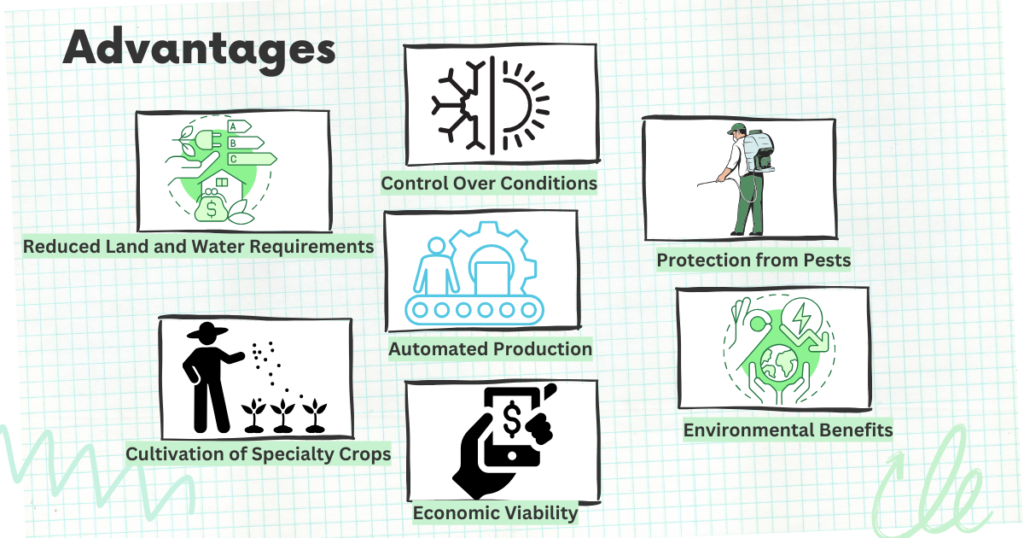
Reduced Land and Water Requirements: Unlike traditional farming, which requires vast expanses of land, vertical farming systems can be established in urban areas, utilising rooftops, warehouses, or dedicated vertical farm structures. This significantly reduces the land footprint required for crop production, making it a viable option for urban environments where land is scarce. Additionally, vertical farming systems employ hydroponic or aeroponic techniques, which conserve water by delivering nutrients directly to plant roots through nutrient-rich solutions or misting systems. This results in significantly reduced water consumption compared to traditional farming methods that rely on rainfall or irrigation systems.
Improved Control Over Growing Conditions: Vertical farming systems provide growers with unprecedented control over the environment in which their crops are grown. This includes precise control over temperature, humidity, light intensity, and nutrient levels, allowing for optimal growth conditions that maximise yield and quality. By eliminating the unpredictable factors of outdoor weather and pests, vertical farming ensures a consistent and reliable supply of high-quality crops throughout the year.
Protection from Pests and Diseases: Vertical farming systems offer a closed environment that is isolated from external pests and diseases, eliminating the need for harsh chemical pesticides and herbicides. This results in cleaner, healthier crops that are free from harmful residues. Additionally, the controlled environment allows for the implementation of integrated pest management (IPM) strategies, utilizing natural pest control methods to maintain a healthy crop ecosystem.
Automated and Efficient Production: Vertical farming systems can be highly automated, minimising labour costs and maximizing production efficiency. Automated systems can handle tasks such as seeding, transplanting, nutrient delivery, pest control, and harvesting, reducing the need for manual labour. This automation, coupled with the controlled environment and efficient use of space, allows vertical farming operations to achieve higher yields per square foot compared to traditional farming methods.
Cultivation of Specialty Crops: Vertical farming is particularly well-suited for the cultivation of specialty crops, such as herbs, leafy greens, and berries. These crops thrive in the controlled environments of vertical farms, and their shorter growth cycles allow for multiple harvests per year. Additionally, vertical farming can be used to grow crops that are difficult or impossible to cultivate in traditional outdoor settings, such as crops requiring specific temperature or humidity conditions.
Environmental Benefits: Vertical farming offers several environmental benefits, including reduced greenhouse gas emissions, minimised soil degradation, and improved water conservation. By reducing the need for transportation and refrigeration, vertical farming contributes to a lower carbon footprint for food production. Additionally, the controlled environment and hydroponic systems eliminate soil erosion and contamination, protecting soil health and reducing the impact on surrounding ecosystems.
Economic Viability: While the initial investment in vertical farming infrastructure can be higher than traditional farming, the long-term economic benefits are promising. Vertical farming’s efficient use of space, high yields, and year-round production can lead to increased profitability and a shorter return on investment. Additionally, vertical farming can create new jobs in urban areas, stimulating local economies and contributing to community development.
The Future of Vertical Farming: A Transformational Approach to Agriculture
Vertical farming, a method of cultivating crops in vertically stacked layers or indoor spaces, has emerged as a transformative agricultural innovation with immense potential to redefine the way we produce food in the future. As technology advances, costs decline, and consumer demand for sustainable and locally sourced produce increases, vertical farming is poised to play an increasingly prominent role in global food systems.
Driving Factors for Vertical Farming’s Growth:
Several factors are driving the growth and adoption of vertical farming:
Urbanisation and Land Scarcity: As the world’s population urbanises, the demand for local, fresh produce increases while arable land becomes increasingly scarce, making traditional farming methods less feasible in urban centres. Vertical farming offers a solution by utilising vertical space in urban areas, reducing land requirements, and bringing food production closer to consumers.
Resource Conservation and Sustainability: Vertical farming techniques significantly reduce water consumption compared to traditional agriculture, minimizing the strain on water resources in a world facing water scarcity. Additionally, controlled indoor environments eliminate the need for pesticides and herbicides, promoting sustainable practices and reducing environmental impact.
Year-Round Production and Climate Resilience: Vertical farming systems offer year-round production, independent of external weather conditions, ensuring a consistent supply of high-quality crops even in regions with harsh climates or unpredictable seasons. This resilience to climate change is crucial for ensuring food security in a changing world.
Precision Agriculture and Technology Integration: Vertical farming embraces precision agriculture principles, allowing for precise control over environmental parameters such as temperature, humidity, light intensity, and nutrient levels. This optimization leads to enhanced crop yields, improved quality, and reduced resource consumption.
Consumer Demand for Sustainable and Local Produce: Growing consumer awareness of the environmental and ethical implications of food production has driven demand for sustainable and locally sourced produce. Vertical farming aligns with these preferences by reducing the environmental footprint of food production and bringing cultivation closer to urban consumers.
Technological advancements are playing a crucial role in driving down the costs of vertical farming and making it more economically viable:
Automated Systems and Robotics: Automation of tasks such as seeding, transplanting, nutrient delivery, pest control, and harvesting significantly reduces labor costs and increases production efficiency. Robotics is also being integrated into vertical farming systems, further enhancing automation and precision.
LED Lighting Technology: Energy-efficient LED lighting systems are becoming increasingly affordable, reducing the energy consumption associated with vertical farming’s controlled environments. This cost reduction is critical for improving the economic feasibility of vertical farming operations.
Hydroponic and Aeroponic Systems: Hydroponic and aeroponic techniques, which deliver nutrients directly to plant roots through nutrient-rich solutions or misting systems, are becoming more widely adopted in vertical farming. These methods conserve water and optimize nutrient uptake, enhancing crop yields and reducing waste.
Data Analytics and Sensor Technologies: Data analytics and sensor technologies are being integrated into vertical farming systems to collect real-time data on crop health, environmental parameters, and resource utilization. This data is used to optimize growing conditions, predict potential problems, and improve overall efficiency.
Future Outlook for Vertical Farming
As vertical farming technology continues to advance and costs decline, its impact on global food systems is expected to grow significantly:
Urban Agriculture: Vertical farming is expected to become increasingly prevalent in urban areas, providing local, fresh produce to urban populations and reducing the environmental impact of long-distance transportation.
High-Value Crop Cultivation: Vertical farming is well-suited for cultivating high-value crops such as herbs, leafy greens, and berries, which thrive in controlled environments and have shorter growth cycles, allowing for multiple harvests per year.
Specialty Crop Production: Vertical farming can be used to grow specialty crops that are difficult or impossible to cultivate in traditional outdoor settings, such as crops requiring specific temperature, humidity, or light conditions.
Integrated Food Systems: Vertical farming is expected to integrate with other innovative agricultural practices, such as rooftop gardening and community-supported agriculture, to create a more resilient and sustainable food system.
Global Impact: Vertical farming has the potential to address global food security challenges by providing a reliable and sustainable source of fresh produce in regions with limited land or harsh climates.
In conclusion, vertical farming holds immense potential to revolutionise the way we grow food in the future. Its ability to conserve resources, produce year-round, and provide local, fresh produce aligns with the growing demand for sustainable and ethical food production. As technology advances and costs decline, vertical farming is poised to play a transformative role in addressing global food security challenges and ensuring a more sustainable food system for future generations.
Architects play a crucial role in shaping our world by designing the structures that we live, work, and play in. While many architects adhere to established styles and practises, there exists a group of visionary individuals who are constantly pushing the boundaries of design, creating structures that are not only aesthetically pleasing but also functional, sustainable, and innovative.
These innovative architects are the pioneers of new architectural styles and technologies, and their work has a profound impact on the way we interact with the built environment. In this article, we will explore the essential qualities of innovative architects and highlight five individuals who have revolutionised the field with their innovative designs, making them standout architects on a global scale.
What Makes an Architect Innovative?
Innovation in architecture is not merely about creating unconventional or eye-catching designs. Rather, it encompasses a deeper understanding of the principles of architecture, a commitment to sustainability, and a willingness to experiment with new materials, techniques, and ideas. Innovative architects possess a unique ability to envision possibilities beyond the ordinary, transforming their creative visions into tangible realities.
Key Qualities of Innovative Architects:
Creative Vision: Innovative architects are not bound by traditional design constraints. They possess a keen eye for aesthetics and a flair for the unconventional, enabling them to conceptualise structures that break free from conventional moulds.
Strong Design Principles: Innovation in architecture is not just about aesthetics; it is also about functionality and practicality. Innovative architects have a deep understanding of the principles of architecture, ensuring that their designs are structurally sound, user-friendly, and adaptable to various needs.
Commitment to Sustainability: With growing environmental concerns, sustainability has become an integral aspect of innovative architecture. Innovative architects are at the forefront of developing sustainable designs that minimise environmental impact and promote resource conservation.
Willingness to Take Risks: Innovation often involves venturing into uncharted territories and embracing the unknown. Innovative architects are not afraid to take risks, experimenting with new materials, techniques, and ideas to push the boundaries of what is possible.
5 Pioneering Innovative Architects
Throughout history, numerous architects have left an indelible mark on the field, shaping our understanding of architecture and inspiring generations to come. Here are a few notable examples of innovative architects who have pushed the boundaries of design:
Frank Lloyd Wright(1867-1959)
Frank Lloyd Wright: An American architect who revolutionized modern architecture with his emphasis on open-plan living, integration with nature, and use of natural materials. His iconic designs like the Fallingwater and Guggenheim Museum continue to inspire architects today.
Museum continue to inspire architects today.
Key contributions:
Pioneered the Prairie School style, characterised by horizontal lines, open interiors, and integration with the landscape.
Developed the concept of “organic architecture,” which emphasizes harmony between buildings and their natural surroundings.
Designed numerous iconic buildings, including the Fallingwater, Guggenheim Museum, and Robie House.
Le Corbusier (1887-1965)
A Swiss-French architect who is considered one of the pioneers of modern architecture. He advocated for clean lines, open spaces, and the use of modern materials like concrete and steel. His influential works include the Villa Savoye and the Unité d’Habitation housing complex.
Key contributions:
Developed the principles of functionalism and modernism, which emphasized the relationship between form and function.
Pioneered the use of reinforced concrete in architecture, allowing for more open and flexible spaces.
Designed numerous iconic buildings, including the Villa Savoye, Unité d’Habitation, and the Ronchamp Chapel.
Buckminster Fuller (1895-1983)
An American architect, designer, and engineer who is best known for his geodesic dome design. He was a pioneer in the field of sustainable design and believed in creating structures that were efficient and environmentally friendly.
Key contributions:
Developed the geodesic dome, a lightweight and structurally sound structure that can be used for a variety of purposes.
Advocated for the use of renewable energy sources and sustainable design principles.
Designed numerous geodesic domes, including the Climatron at the St. Louis Zoo and the Biosphere in Montreal.
Rem Koolhaas (born 1944) A Dutch architect and urban planner who is known for his unconventional and often controversial designs. He is a leading figure in the field of architectural theory and has written extensively about the relationship between architecture and urbanism.
Key contributions:
Founded the Office for Metropolitan Architecture (OMA), an influential architectural firm known for its innovative and provocative designs.
Designed numerous iconic buildings, including the Seattle Public Library, CCTV Headquarters in Beijing, and the Casa da Música in Porto.
A recipient of the Pritzker Architecture Prize and the Praemium Imperiale for Architecture.
Zaha Hadid (1950-2016)
An Iraqi-British architect who was known for her bold, deconstructivist designs. She broke barriers with her fragmented forms, dynamic lines, and unconventional use of materials. Her notable works include the Heydar Aliyev Center in Baku, Azerbaijan, and the MAXXI Museum in Rome, Italy.
Key contributions:
Pioneered the deconstructivist style, characterized by fragmented forms, dynamic lines, and the use of unconventional materials.
Designed numerous groundbreaking buildings, including the Heydar Aliyev Center, MAXXI Museum, and the Broad Contemporary Art Museum.
The first woman to receive the Pritzker Architecture Prize, the highest honor in the field of architecture.
Impact of Innovative Architects
The work of innovative architects has had a profound and transformative impact on our world. Their groundbreaking designs have shaped our cities, influenced our architectural styles, and challenged our perceptions of what is possible. Their contributions to sustainability have helped reduce the environmental impact of our built environment, and their commitment to social responsibility has promoted inclusive and equitable design practices.
The future of buildings is changing big time! Imagine architects doing some really cool stuff, totally shaking up how we see design. With tech getting fancier and people caring more about our planet, architects are trying out new materials, tricks, and ways of designing. They’re not just building places; they’re making experiences, and crafting spaces that fit right into the natural world.
Tech is like the superhero here, helping architects make buildings that can handle different weather and stuff. They’re also figuring out how to deal with more people moving to cities and needing affordable places to live. The future of buildings isn’t just about looking good; it’s about making spaces that bring people together, help the economy, and keep our culture alive. Architects need to team up and share what they know to make sure they create awesome, all-around solutions.
Conclusion
Innovative architects are the visionary minds shaping the future of our built environment. Their creativity, commitment to sustainability, and willingness to take risks are driving the evolution of architecture, creating structures that are not only aesthetically pleasing but also functional, sustainable, and inspiring. As we look towards the future, we can expect innovative architects to continue pushing boundaries, redefining our understanding of architecture, and shaping the world we live in for generations to come.
Transformative pedagogy is an innovative teaching method that encourages students to critically examine their values, beliefs, knowledge, and attitudes. The goal is to develop a reflective knowledge base, an appreciation for multiple perspectives, and critical thinking. Transformative pedagogy can also help teachers and students develop their identities as whole people with relationships based on interdependence and moral values.
Education is a dynamic and ever-evolving field, constantly adapting to meet the changing needs of learners and societies. In today’s rapidly changing world, characterised by technological advancements, globalisation, and interconnectedness, the need for innovative pedagogical approaches is more pressing than ever. Traditional teaching methods, while valuable, often fall short of addressing the complex challenges and demands of the 21st century.
Transformative pedagogical approaches, rooted in the principles of critical thinking, social justice, and student empowerment, are emerging as the driving force behind educational reform. In this article, we will explore the innovative pedagogical approaches shaping the future of education.
Understanding the Essence of Transformative Pedagogy
Transformative pedagogy is not merely a new set of teaching techniques; it represents a paradigm shift in education. It moves beyond the traditional teacher-centered model, where knowledge is passively transferred from the instructor to the student, towards a more student-centered approach. In transformative pedagogy, learners are not merely recipients of information but active participants in the construction of knowledge. They are encouraged to engage in critical thinking, question assumptions, challenge norms, and explore diverse perspectives.
Key Principles of Transformative Pedagogy
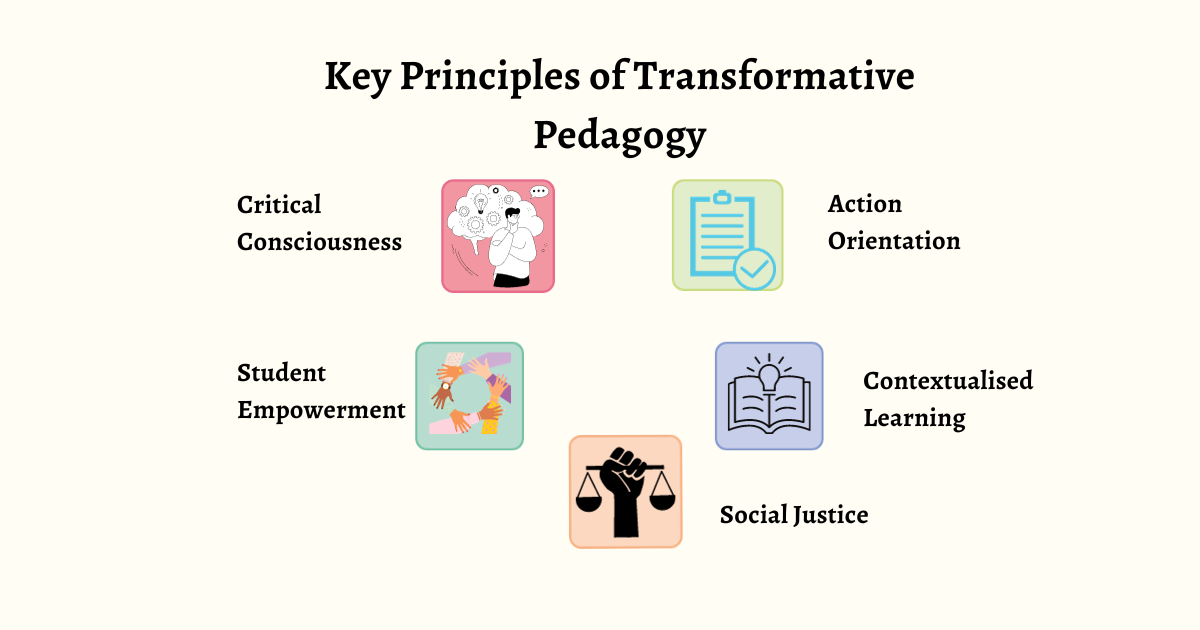
Critical Consciousness
Transformative pedagogy cultivates critical consciousness in learners, empowering them to question assumptions, challenge norms, and examine power structures. This involves developing an awareness of social inequalities, questioning biases and prejudices, and recognising the role of power dynamics in shaping society. By fostering critical consciousness, transformative pedagogy encourages students to become active agents of social change.
Student Empowerment
Students are not mere recipients of knowledge but active participants in the learning process. Transformative pedagogy promotes student empowerment by providing opportunities for self-directed learning, encouraging collaboration, and valuing student voices. Students are encouraged to take ownership of their learning, setting their own goals, making choices, and evaluating their progress. This empowerment fosters a sense of agency and responsibility, enabling students to become lifelong learners.
Social Justice
Transformative pedagogy is deeply intertwined with social justice, aiming to create a more equitable and just society. It encourages students to examine social inequalities, understand the root causes of injustice, and advocate for positive change. This involves developing an understanding of different forms of oppression, recognising the impact of social structures on individuals and communities, and challenging discriminatory practises. By promoting social justice, transformative pedagogy empowers students to become agents of social transformation.
Contextualised Learning
Learning is not confined to textbooks and classrooms. Transformative pedagogy connects learning to real-world contexts, allowing students to apply their knowledge to address social, environmental, and economic challenges. This involves incorporating real-world issues into the curriculum, providing opportunities for community engagement, and encouraging students to apply their knowledge to solve practical problems. By contextualising learning, transformative pedagogy fosters a deeper understanding of concepts and the ability to make a positive impact on the world.
Action Orientation
Transformative pedagogy does not end with understanding; it emphasises action. Students are encouraged to apply their knowledge and skills to create positive change in their communities and the world at large. This involves translating knowledge into action, engaging in community service projects, and advocating for social justice. By promoting action orientation, transformative pedagogy empowers students to become changemakers and contribute to a more just and equitable society.
Examples of Transformative Pedagogical Approaches
In the dynamic landscape of education, the quest for innovation in pedagogical approaches has become paramount. As we navigate the ever-evolving realm of teaching and learning, the spotlight is on “Pedagogical Approaches” and, in particular, the transformative strides they are making in shaping the future of education.
Problem-Based Learning (PBL): Students work collaboratively to solve real-world problems, fostering critical thinking, communication, and problem-solving skills. This approach encourages students to apply their knowledge to real-world scenarios, developing a deep understanding of concepts and the ability to think creatively and critically.
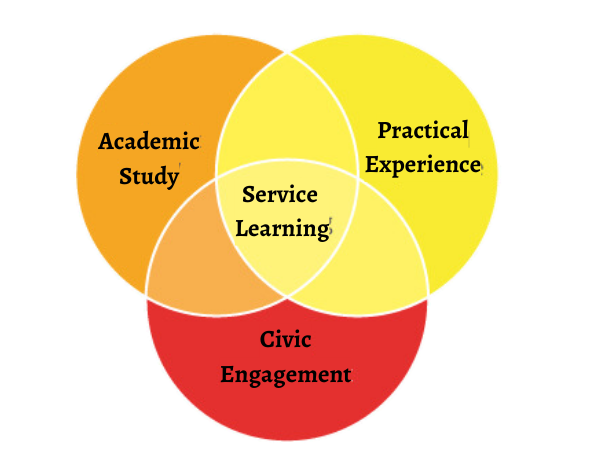
2.Service-Learning: Students engage in community service projects, integrating academic learning with practical application and social responsibility. This approach fosters a sense of civic engagement and social justice as students learn to apply their knowledge and skills to address real-world problems and contribute to their communities.
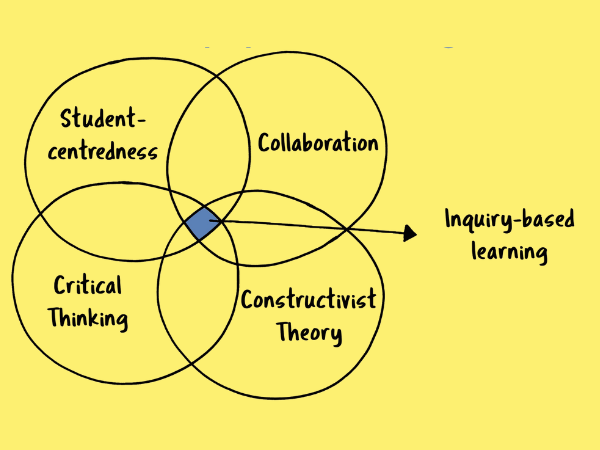
3. Inquiry-Based Learning: Students take the lead in exploring questions, conducting research, and drawing their own conclusions, developing independence, curiosity, and self-directed learning. This approach encourages students to become active investigators and thinkers, fostering a lifelong love of learning and the ability to think critically and independently.
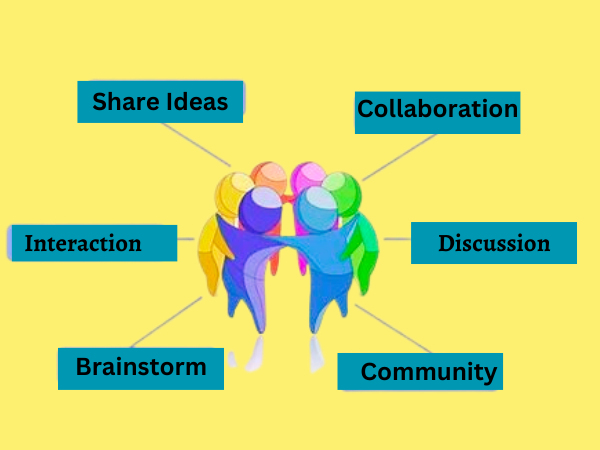
4. Cooperative Learning: Students work together in small groups, promoting teamwork, communication, and peer-to-peer learning. This approach fosters a sense of collaboration and shared responsibility, as students learn to work together effectively to achieve common goals.
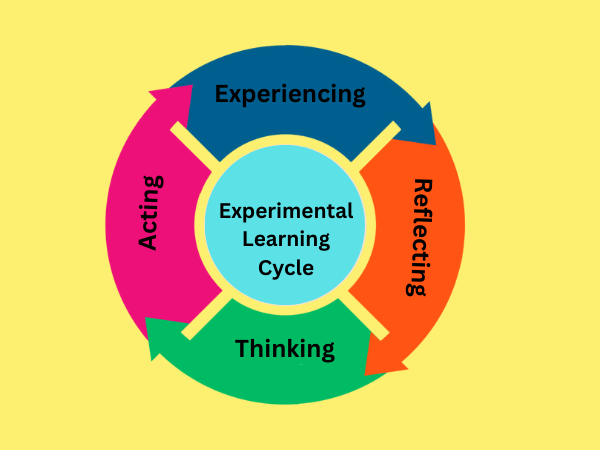
5.Experiential Learning: Students learn through hands-on experiences, simulations, and real-world projects, enhancing engagement, retention, and application of knowledge. This approach provides students with opportunities to apply their knowledge in practical settings, fostering a deeper understanding of concepts and the ability to adapt to new situations.
Impact of Transformative Pedagogy
Transformative pedagogy has a profound and multifaceted impact on both learners and society. It empowers students to become critically thinking, socially responsible, and engaged citizens capable of addressing the complexities of the 21st century. It fosters a more equitable and just society by promoting understanding, empathy, and action for positive change.
Impact on Learners
Develops Critical Thinking Skills: Transformative pedagogy cultivates critical thinking skills in learners, enabling them to analyse information, question assumptions, and form their own judgments. This empowers them to make informed decisions, solve problems creatively, and engage in meaningful discourse.
Promotes Social Responsibility: Transformative pedagogy instills a sense of social responsibility in students, encouraging them to become active participants in addressing social and environmental issues. They develop an awareness of social inequalities and a commitment to advocating for positive change.
Enhances Engagement and Motivation: Transformative pedagogy fosters a more engaging and motivating learning environment where students are actively involved in the construction of knowledge. This leads to increased interest, deeper understanding, and a greater sense of ownership over their learning.
Nurtures Self-Directed Learning: Transformative pedagogy empowers students to become self-directed learners, capable of setting goals, managing their time, and taking responsibility for their own learning. This prepares them for lifelong learning and adaptability in an ever-changing world.
Promotes Personal and Social Growth: Transformative pedagogy fosters personal and social growth in students, helping them develop their identity, build relationships, and contribute to their communities. They become more aware of their strengths and weaknesses, learn to collaborate effectively and develop a sense of empathy and compassion.
Impact on Society
Creates a More Informed and Engaged Citizenry: Transformative pedagogy contributes to a more informed and engaged citizenry, as students develop the skills and dispositions necessary to participate actively in democratic processes. They are more likely to vote, advocate for their communities, and hold their leaders accountable.
Promotes Social Justice and Equity: Transformative pedagogy promotes social justice and equity by challenging societal biases and inequalities. Students learn to recognize and challenge discrimination, advocate for marginalized groups, and work towards a more just and equitable society.
Encourages Sustainable Practices: Transformative pedagogy encourages sustainable practices by fostering an understanding of environmental issues and empowering students to take action to protect the environment. They learn to make informed choices, conserve resources, and promote sustainable lifestyles.
Fosters Innovation and Creativity: Transformative pedagogy fosters innovation and creativity by encouraging students to think outside the box, challenge conventional thinking, and explore new ideas. This leads to the development of creative solutions to real-world problems and advancements in various fields.
Promotes Cultural Understanding and Global Citizenship: Transformative pedagogy promotes cultural understanding and global citizenship by exposing students to diverse perspectives and encouraging them to engage with people from different backgrounds. They develop an appreciation for cultural differences, gain cross-cultural communication skills, and become responsible global citizens.
Charting the Path Forward: The Future of Education
As we navigate the ever-evolving landscape of education, it is becoming increasingly clear that traditional pedagogical approaches are no longer sufficient to prepare students for the demands of the 21st century. The world is changing at an unprecedented pace, characterized by technological advancements, globalization, and interconnectedness. To equip our youth with the skills and dispositions necessary to thrive in this dynamic world, we must embrace transformative pedagogical approaches.
Transformative pedagogy represents a paradigm shift in education, moving away from teacher-centered, knowledge-transmission models towards student-centered, collaborative, and inquiry-based learning environments. It emphasises critical thinking, problem-solving, social responsibility, and action for positive change. This shift is not merely a passing trend; it is a fundamental transformation of how we approach education, one that is essential for preparing students to become engaged, informed, and responsible citizens.
The future of education is not about acquiring a static set of facts and figures; it is about developing the ability to think critically, adapt to change, and contribute meaningfully to society. Transformative pedagogy fosters these essential skills by encouraging students to question assumptions, challenge norms, and explore diverse perspectives. It empowers them to become active participants in their own learning, take ownership of their education, and develop a lifelong love of learning.
By embracing transformative pedagogy, we can cultivate a generation of individuals who are not only knowledgeable but also critically engaged, socially responsible, and equipped to make a positive impact on the world. These individuals will be the driving force behind innovation, social progress, and a more just and equitable society.
Key Steps for Embracing Transformative Pedagogy
Educator Professional Development: Provide ongoing professional development opportunities for educators to learn about, understand, and implement transformative pedagogical approaches. This includes workshops, seminars, and mentorship programmes that foster a deep understanding of the principles and practises of transformative pedagogy.
Curriculum Transformation: Revise and adapt curricula to align with transformative pedagogical principles. This involves incorporating real-world contexts, promoting critical thinking, and emphasising student-centered learning activities.
Supportive Learning Environments: Create supportive learning environments that foster collaboration, creativity, and a sense of community. This includes providing access to technology, encouraging open communication, and celebrating diverse perspectives.
Assessment and Evaluation: Redesign assessment and evaluation methods to reflect the goals of transformative pedagogy. This includes focusing on critical thinking skills, problem-solving abilities, and self-reflection rather than rote memorization and standardised testing.
Community Engagement: Engage with parents, community members, and stakeholders to create a shared vision for transformative education. This involves fostering open communication, seeking feedback, and building partnerships that support the implementation of transformative pedagogical approaches.
Conclusion
The future of education is bright, filled with innovative teaching methods, diverse learning environments, and a renewed commitment to student empowerment and social responsibility. By embracing transformative pedagogical approaches, we can shape a future where education is not just about acquiring knowledge but about becoming active participants in creating a more just, equitable, and sustainable world.
OpenAI ousts CEO Sam Altman, a distinguished figure in the realm of artificial intelligence, the entity behind the widely embraced ChatGPT chatbot, a creation he significantly contributed to—after the board declared a loss of confidence in his leadership.
Mira Murati, an Albanian-born, Dartmouth-educated engineer who played a pivotal role in crafting some of OpenAI’s most renowned products as its chief technology officer, is stepping in as OpenAI’s interim chief executive officer.
Altman‘s departure results from a meticulous board review, concluding that his communication lacked consistent candor, impeding the board’s ability to fulfill its duties. The board has, as a result, lost faith in Altman’s capacity to effectively lead OpenAI.
Shortly after OpenAI Ousts CEO Sam Altman, launched its blog, Altman wrote on X, formerly Twitter: “I loved my time at OpenAI. It was transformative for me personally, and hopefully for the world a little bit. Most of all, I loved working with such talented people. Will have more to say about what’s next later.”
Greg Brockman, a co-founder of OpenAI and former chairman of the board, is also relinquishing his position and resigning as the company’s president. In a post on X (formerly Twitter), Brockman stated, “Based on today’s news, I quit.”
Altman’s role as CEO turned OpenAI into the most impactful AI company globally. The company was recently in discussions to sell employee shares to investors, valuing the company at $86 billion. The introduction of ChatGPT and OpenAI’s image generator, Dall-E, brought generative AI into the mainstream, leveraging technology that trains on extensive digital data, producing human-like content such as images, text, and code upon prompt.
Founded in 2015, OpenAI unveiled ChatGPT about a year ago, sparking widespread interest in AI technology. As of November, approximately 100 million people engage with ChatGPT weekly, with over 90% of Fortune 500 businesses building tools on OpenAI’s platform. The company, which provides software to businesses, is on track to achieve annual revenue of around $1 billion, as reported by Bloomberg in August.
Simultaneously, OpenAI faces escalating competition from well-funded rival products developed by other startups and tech giants, including Alphabet Inc.’s Google.
Following Altman’s departure, transactions involving hundreds of millions of dollars in closely held OpenAI shares on the secondary market are now uncertain. Some transactions are on hold, while others have been canceled outright.
Internally and externally, uncertainty looms over OpenAI’s future without its long-standing leader and public face. Pieter Abbeel, a professor at the University of California, Berkeley, and an AI startup founder who worked as a research scientist at OpenAI in 2016 and 2017, expressed being “completely baffled” by Altman’s ousting.
Murati, who assumed the role of Chief Technology Officer (CTO) last year, expressed being “honored and humbled” to take on the leadership role after Altman’s exit. In a memo to staff, she highlighted the crucial juncture where their tools are gaining widespread adoption, developers are actively building on their platforms, and policymakers deliberating on the best ways to regulate these systems.
Microsoft Corp., a major investor with a $10 billion investment in OpenAI, experienced a decline of up to 2.4% on the news of Altman’s departure. Despite the changes, Microsoft affirmed its commitment to OpenAI, emphasising its enduring support. Murati, in her memo, conveyed conversations with Microsoft’s CEO and CTO, who expressed unwavering support without explicitly mentioning Altman by name.
Altman’s tenure at OpenAI was marked by both success and controversy. Altman is widely credited with helping to raise awareness of the potential benefits of artificial intelligence. He has also been a vocal advocate for the need to develop AI that is safe and beneficial to society.
On the other hand, Altman has also been criticised for his handling of some of OpenAI’s controversies. For example, he was criticised for hisdecision to release ChatGPT to the public without first conducting a thorough review of its potential risks.
Why OpenAI Ousts CEO Sam Altman?
OpenAI ousted CEO Sam Altman due to a lack of candor and transparency in his communications with the board of directors. The board concluded that Altman was not consistently honest with them about the company’s operations and his plans for the future. This lack of trust led the board to lose confidence in Altman’s ability to lead OpenAI effectively.
Here are some specific examples of Altman’s behavior that may have led to his ouster:
Altman may have withheld information from the board about important company decisions.
Altman may have misrepresented the company’s financial performance.
Altman may have failed to disclose potential conflicts of interest.
The board’s decision to oust Altman was not taken lightly. They likely weighed the risks of removing a charismatic and well-respected leader against the risks of continuing to work with someone they no longer trusted. Ultimately, they decided that Altman’s lack of candor posed too great a risk to the company’s future.
Altman’s ouster is a major setback for OpenAI. He was a visionary leader who had a deep understanding of the field of artificial intelligence. He was also a skilled communicator and fundraiser. Without Altman, OpenAI will need to find a new leader who can fill his shoes and guide the company into the future.
Altman’s Removal is a Major Setback for OpenAI
He was a charismatic and well-respected leader, and his departure is sure to leave a void at the company. However, it is also an opportunity for OpenAI to start anew and chart a new course for the future.
Only time will tell what the long-term impact of Altman’s removal will be on OpenAI. However, the decision is sure to have a significant impact on the company and on the field of artificial intelligence as a whole.
In addition to the issues mentioned above, Altman has also been criticised for his close ties to Elon Musk.
Musk was one of the original founders of OpenAI, and he has remained a close advisor to the company. However, Musk has also made a number of controversial statements about artificial intelligence, and some critics have argued that his close ties to Altman are a conflict of interest.
It is unclear whether Altman’s removal was in any way related to his ties to Musk. However, the decision is sure to raise questions about the future of OpenAI and its relationship with Musk.
The ousting of Sam Altman is a major news story that is sure to have a significant impact on the field of artificial intelligence.
It is a story that is still unfolding, and it will be interesting to see how OpenAI moves forward in the wake of Altman’s departure.
Explore nanotechnology’s basics, applications, challenges, and future possibilities in this essential guide. Your gateway to groundbreaking knowledge awaits!
Nanotechnology is the manipulation of matter at the nanoscale, which is approximately 1 to 100 nanometers. One billionth of a metre is called a nanometer. The diameter of a human hair is about 100 micrometers or 100,000 nanometers. At this infinitesimal scale, matter exhibits unique properties, such as enhanced strength, lighter weight, and increased conductivity.
Nanotechnology is the science and engineering of designing, producing, and using structures, devices, and systems at the nanoscale. It is defined as the manipulation of matter at the nanoscale and is a rapidly developing field with applications in various industries, such as medicine, electronics, materials, and energy. If you’re wondering, ‘What is nanotechnology?’ it involves working with materials at the atomic and molecular levels. Some examples of nanomaterials include carbon nanotubes, graphene, and quantum dots.
Real-World Applications of Nanotechnology Today
Here are some examples of real-world applications of nanotechnology today:
Medicine: Nanoparticles can be used to deliver drugs to specific cells in the body, which can improve the effectiveness of treatment and reduce side effects. Additionally, new imaging methods and diagnostic tools are being developed using nanotechnology.
Electronics: Nanotechnology is used to create smaller, faster, and more energy-efficient electronic devices. For example, nanoparticles are used in lithium-ion batteries to increase their energy density and lifespan.
Materials: Nanotechnology is used to create new materials with enhanced properties, such as strength, lightness, and durability. For example, carbon nanotubes are used to create lightweight and strong composites that are used in aircraft and spacecraft.
Energy: Nanotechnology is being used to develop new renewable energy technologies and improve the efficiency of existing energy sources. For example, nanomaterials are used in solar cells to improve their efficiency and reduce their cost.
How Small Are Nanomaterials? Explain the Nanometer Scale
Imagine shrinking yourself down to the size of a speck of dust. Suddenly, a human hair looms like a towering redwood, and a raindrop becomes a shimmering ocean. Welcome to the realm of nanotechnology, where the tiniest tweaks at the atomic and molecular level unlock a universe of possibilities.
Nanoscale: Where Big Impact Starts Small
At the heart of this revolution lies the nanometer, a unit so small it boggles the mind. One nanometer is one billionth of a meter – think of it as a single strand of hair compared to the entire Earth! It’s a scale invisible to the naked eye, yet where some of the most fascinating phenomena occur.
Nano vs. Macro
To grasp just how microscopic this world is, let’s take a familiar object: a human hair. This seemingly slender filament boasts a whopping 100,000 nanometers in diameter! Imagine squeezing 100,000 of these miniaturized hairs side-by-side to barely reach the width of your fingernail.
A red blood cell is roughly 7,000 nanometers wide, while a DNA molecule is only about 2 nanometers thick.
The tip of a ballpoint pen is about 10,000 nanometers wide, while a virus is around 100 nanometers across.
Why Size Matters:
This mind-bending smallness gives nanomaterials unique properties that their larger counterparts lack. Think of it like having superpowers:
Strength on a nano-scale: Nanomaterials can be incredibly strong, lighter than air, and more conductive than ever before. Imagine bridges constructed with carbon nanotubes, stronger than steel yet feather-light!
Playing with atoms: At the nanoscale, scientists can manipulate individual atoms and molecules, crafting materials with tailor-made properties. It’s like building with Lego blocks, but on a subatomic level!
Unlocking the door to the unseen: Nanomaterials can interact with biological systems on a cellular level, opening doors for targeted drug delivery and medical imaging. Imagine tiny nanorobots patrolling your bloodstream, seeking and destroying diseased cells!
Nanotechnology is no longer a futuristic fantasy; it’s rapidly transforming our world. From revolutionizing medicine and electronics to shaping the future of energy and materials, the possibilities are endless.
How Did Nanotechnology Get Started?
The term “nanotechnology” was first coined by Eric Drexler in his 1986 book Engines of Creation: The Coming Era of Nanotechnology. In this book, Drexler describes a vision of a future in which nanobots, or tiny machines, would be used to build anything from new materials to entire machines.
Although Drexler’s vision of nanotechnology has not yet been fully realised, significant progress has been made in the field over the past few decades. In the 1990s, scientists developed new techniques for manipulating matter at the nanoscale, such as scanning tunnelling microscopy and atomic force microscopy.
In the early 2000s, the first nanomaterials, such as carbon nanotubes and graphene, were discovered. These materials have unique properties that have led to a wide range of applications in electronics, materials, and other industries.
How is Nanotech Being Used in Healthcare?
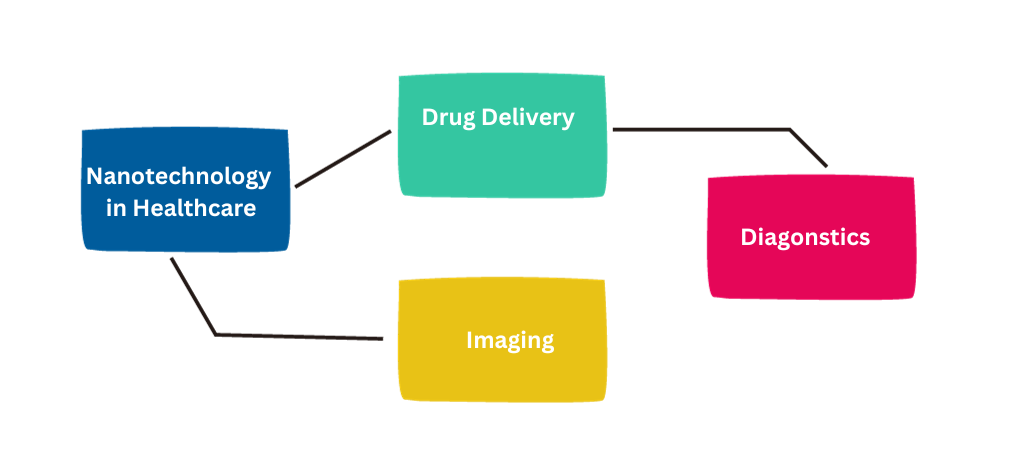
Nanotechnology is being used in healthcare to develop new and innovative ways to diagnose and treat diseases. Here are some examples:
Drug delivery: Nanoparticles can be used to deliver drugs to specific cells in the body, which can improve the effectiveness of treatment and reduce side effects. For example, nanoparticles are being used to deliver cancer drugs to tumor cells, while avoiding healthy cells.
Imaging: Nanoparticles can be used to create contrastagents that can improve the resolution and accuracy of medical imaging techniques, such as MRI and CT scans.
Diagnostics: Nanotechnology is being used to develop new diagnostic tools that can detect diseases at an early stage when they are most treatable. For example, nanobiosensors are being developed to detect cancer cells in the blood.
Exploring Ethical Questions in Nanotechnology
Delving into nanotechnology’s wonders, let’s pause to think about the ethics tied to these breakthroughs. While nanotech brings vast transformations, nuanced concerns in medicine and privacy deserve our attention.
In medicine, nanotechnology advances drug delivery. Nanoparticles targeting specific cells promise better treatments with fewer side effects. Yet, ethical questions arise. Are we tampering too much with the human body at the molecular level? How do we ensure ethical use, preventing unintended health consequences?
Take cancer treatment—nanoparticles delivering drugs directly to tumors show potential. Yet, we must balance innovation with ethics, safeguarding healthy cells. It’s a delicate dance needing continuous scrutiny and thoughtful rules.
Beyond medicine, nanotech sparks privacy concerns. Sophisticated nanoscale devices may intrude at unprecedented levels. Imagine nanosensors in our bloodstream for diagnostics—how do we protect personal data? Nanotech and privacy intersect, demanding exploration of boundaries and safeguards.
Nanotech’s ability to process molecular-level information requires robust ethical frameworks. Balancing innovation with privacy safeguards is crucial. How do we prevent misuse, like nanodevices for surveillance or data exploitation?
In exploring nanotechnology’s ethics, we face questions beyond science. Reflecting on achievements, we must consider the responsibilities that come with such capabilities. As we marvel at progress, let’s guide our nanoscale journey with an ethical compass—valuing impact on individuals, society, and our shared humanity.
Challenges in Nanotechnology
Unraveling the wonders of nanotechnology reveals not just boundless possibilities but also intricate challenges that shape its trajectory. Let’s explore these hurdles, acknowledging the complexities that define the nanotech landscape.
Toxicity at the Nanoscale: A notable challenge is the potential toxicity of certain nanomaterials. While these materials offer remarkable properties, questions arise about their impact on living systems. How can we ensure the benefits of nanotechnology without unintended harm? Researchers grapple with understanding the interactions between nanomaterials and living organisms, aiming for innovation without compromising safety.
Environmental Considerations: The environmental footprint of nanotechnology is another challenge. The manufacturing and disposal of nanomaterials may introduce new complexities to ecological systems. The very properties that make nanoparticles valuable—small size and increased reactivity—pose potential threats to the environment. Navigating this challenge requires a holistic approach, considering the entire life cycle of nanomaterials. It’s about balancing innovation with environmental responsibility.
Technological Frontiers: In the ever-evolving nanotech landscape, researchers face technological hurdles. Tools like scanning tunneling microscopy and atomic force microscopy, while revolutionary, come with limitations. Bridging the gap between current technologies and the aspirations of working at the nanoscale demands constant refinement. Researchers walk a technological tightrope, pushing boundaries while navigating the constraints of existing tools.
Acknowledging these challenges is not a step back but a leap forward with awareness. The journey into the full potential of nanotechnology is adorned with triumphs and tribulations. Embracing these challenges ensures a balanced perspective, steering the nanotech narrative responsibly through the delicate interplay of innovation, safety, and environmental stewardship.
What Are the Future Possibilities of Nanotechnology?
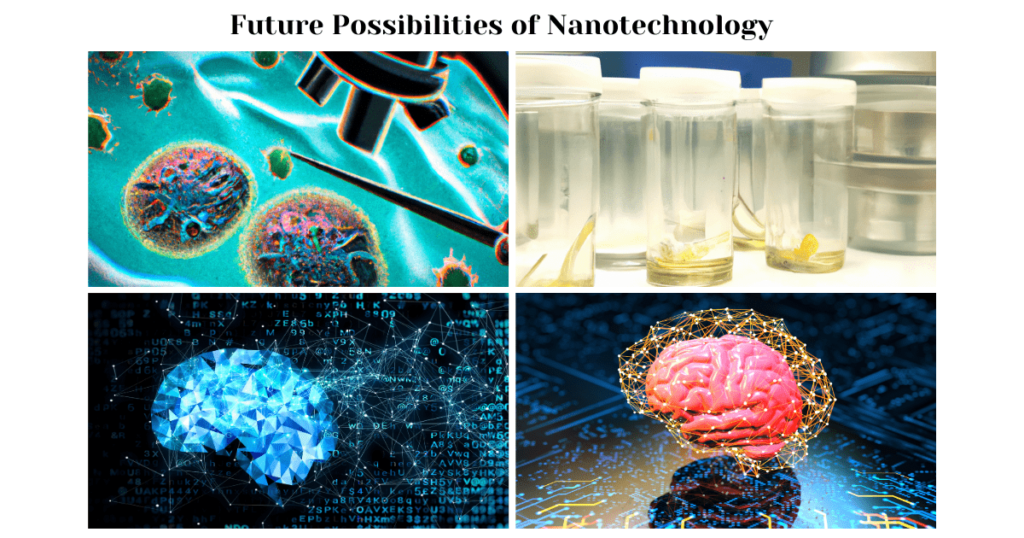
Nanotechnology, the manipulation of matter at the atomic and molecular level, is no longer a futuristic fantasy. It’s rapidly evolving from science fiction to scientific fact, poised to revolutionize numerous industries and redefine our world. Imagine tiny machines operating within your body, crafting new tissues to heal, or computers with unimaginable processing power. This is the transformative potential of nanotechnology, and its upcoming applications are sure to leave us awestruck.
Here are some potential upcoming applications of nanotechnology:
Surgery on a Cellular Scale: Nanorobots, microscopic machines designed to operate at the nanoscale, hold immense promise for medical advancements. These miniature marvels could navigate our bloodstreams, performing pinpoint surgery on diseased cells or delivering targeted drug therapies directly to affected areas. Imagine treating cancer by deploying these nanodocs, eliminating tumors with precision while minimizing side effects. The possibilities for personalized medicine become boundless with nanorobotics at the helm.
Tissue engineering:Tissue engineering, the art of growing functional tissues, takes a leap forward with nanotechnology. By harnessing the power of nanomaterials, scientists envision crafting replacement organs, nerves, and even entire limbs. This could bring hope to millions suffering from organ failure or debilitating injuries, offering a future where regeneration replaces irreversible damage. Imagine a world where a damaged liver could be regrown using biocompatible nanomaterials, or a severed spinal cord restored through nanofiber bridges.
Artificial intelligence:Artificial intelligence, the driving force behind our technological advancements, stands to benefit immensely from nanotechnology. Nanoelectronic components would offer unprecedented miniaturization and processing power, paving the way for AI systems that are far more sophisticated and energy-efficient than anything we’ve seen before. Imagine intelligent prosthetics seamlessly connected to the nervous system, or AI assistants embedded in our environment, anticipating our needs and seamlessly adapting to our lives.
Quantum computing:Quantum computing, harnessing the bizarre quirks of quantum mechanics, promises to shatter the limitations of traditional computers. However, creating functioning quantum systems requires incredible precision and control. Nanotechnology emerges as a crucial enabler, providing the tools to manipulate quantum bits (qubits) at the atomic level. This could unlock the door to solving previously intractable problems, revolutionizing fields like materials science, drug discovery, and even financial modeling. Imagine simulating complex molecules to design life-saving drugs, or optimizing global logistics networks with real-time quantum computations.
Conclusion
Nanotechnology, the manipulation of matter at the nanoscale, has the potential to revolutionise various sectors, including healthcare, electronics, and energy. Its unique properties allow for groundbreaking technologies to address pressing challenges. Nanoparticles can enhance drug delivery, imaging, and diagnostics in medicine, while nanomaterials can improve medical imaging techniques.
Nanotechnology can also enhance the performance of electronic components, leading to more powerful and compact devices. It can also create materials with enhanced properties, enabling applications in aerospace, construction, automotive, and consumer electronics. Additionally, nanotechnology can develop renewable energy technologies and improve energy storage and distribution.
Wondering who owns Boost Mobile? Dive into the full ownership story, from founding fathers to the latest Dish takeover. Get the answers you need here!
In the ever-evolving world of mobile telecommunications, Boost Mobile has established itself as a prominent provider of prepaid wireless services. As users reap the benefits of Boost Mobile’s affordable plans and diverse offerings, many are curious to know who lies behind the helm of this dynamic network.
Embark on a journey with us as we delve into who owns Boost Mobile, the captivating ownership history of Boost Mobile, Dish Wireless LLC, uncovering a tale of evolution, strategic alliances, and a steadfast commitment to delivering exceptional connectivity.
The Evolution of Boost Mobile
2000: Down Under Beginnings with a Visionary Spark
Imagine a world where everyone can connect, regardless of budget. That’s the dream that Australian entrepreneur Peter Adderton brought to life when he founded Boost Mobile in Sydney back in 2000. He set out to shake up the industry with affordable, no-frills plans, making mobile accessible to everyone. Soon, that Aussie spirit crossed the Pacific, hitting the shores of the US in 2001.
Early Adrenaline Rush: Nextel Fuels the Growth Engine
Nextel, another disruptor in the game, saw Boost’s potential and took the wheel in 2003. Together, they fueled the brand’s growth, pushing innovative features like push-to-talk and those iconic $1-a-day plans. Boost became synonymous with value and freedom, attracting millions of fans who craved a break from the big-name giants.
Sprint Takes the Reins: Navigating the Merger Maze
In 2004, Sprint merged with Nextel, bringing Boost along for the ride. This marked a period of expansion and change, with Boost integrating into Sprint’s network and customer base. While it opened new doors, it also brought challenges, as Boost had to adapt to a larger, more complex environment.
Current Ownership: Who Owns Boost Mobile Now
Guess who took the wheel at Boost Mobile in 2020? That’s right, none other than Dish Network Corporation, the satellite TV giant. Boost Mobile has been under the operation of Dish Network since July 1, 2020. This $1.4 billion acquisition wasn’t just a random pit stop – it was a strategic move to give Dish a foot in the booming wireless market.
Why Boost? Simple: a ready-made audience of 9 million prepaid customers. That’s a head start that any newcomer would envy.
But it’s not just about the existing fans. Dish has bigger plans: building the first standalone 5G network in the US through their Boost Infinite service. Think of it as a whole new highway just for you to zoom on.
So, if you’re wondering who’s steering the Boost Mobile ship, it’s now firmly under the command of Dish Network. And with their ambitious vision for the future, buckle up – things are about to get fast and furious in the wireless world!
Dish Wireless LLC: A Driving Force
Dish Wireless LLC, a subsidiary of Dish Network Corporation, now serves as the driving force behind Boost Mobile’s operations. This strategic acquisition has not only bolstered Boost Mobile’s financial standing but also opened doors to new opportunities and partnerships.
As a wholly owned subsidiary of Dish, Boost Mobile gained access to robust financial resources and wireless infrastructure assets to support growth. Dish Network’s 2022 revenue topped $16.68 billion. This represents a decrease of 6.72% from the company’s 2021 revenue of $17.88 billion.
The decrease in revenue was attributed to a number of factors, including the loss of subscribers to streaming services and increased competition from other cable and satellite providers. Despite the decline in revenue, Dish Network remains a profitable company. The company reported net income of $2.30 billion in 2022, compared to $2.41 billion in 2021.
Dish’s accumulated spectrum holdings offered crucial wireless infrastructure to enable the expansion of Boost’s service offerings.
Additionally, Dish Network has been around the tech block a few times, and they’ve built some powerful partnerships along the way. Think major players like Qualcomm and Crown Castle. This means Boost gets access to cutting-edge technology and a network of experts to help them build the best possible wireless experience for you.
With Dish Wireless at the helm, Boost Mobile is set to conquer the 5G frontier. They’re already building a next-generation network that promises lightning-fast speeds and game-changing possibilities. So, buckle up, Boost fans, because the future’s looking brighter than ever with Dish in the driver’s seat!
Leveraging T-Mobile’s Network: A Strategic Alliance
A key aspect of Dish Wireless LLC’s ownership is its strategic utilization of the T-Mobile network. This partnership has significantly enhanced Boost Mobile’s network coverage, speed, and reliability, ensuring an optimal user experience for its subscribers.
As part of the merger deal between T-Mobile and Sprint, Dish Network secured a 7-year MVNO agreement with T-Mobile to provide wireless service to Boost Mobile customers. This agreement gives Boost customers access to T-Mobile’s nationwide 5G and 4G LTE networks.
By leveraging T-Mobile’s robust network infrastructure under this deal, Boost Mobile can deliver wider coverage, faster speeds, and enhanced performance to its subscriber base across the country. T-Mobile’s network reaches over 320 million people in the US currently.
This mutually beneficial partnership provides Dish time to methodically build out Boost Infinite’s 5G network without service disruptions. Boost subscribers enjoy T-Mobile’s network quality as Dish works in parallel on deploying standalone next-gen infrastructure.
The MVNO arrangement with T-Mobile serves as a bridge, enabling Dish Wireless to operate Boost seamlessly while also charting its own course to disrupt the wireless market down the road. By standing on T-Mobile’s shoulders, Boost Mobile can look ahead to the horizon of 5G possibilities.
Service Offerings: Catering to Diverse Needs
Boost Mobile’s commitment to providing accessible and affordable wireless services extends across its comprehensive range of plans, catering to a diverse spectrum of user needs and preferences. Whether you’re an occasional user seeking a basic talk and text plan or a data-hungry subscriber constantly streaming videos and browsing the web, Boost Mobile has a plan tailored to your lifestyle.
Plan
Monthly Price
Talk
Text
Data
5GB
$15
Unlimited
Unlimited
5GB 5G/4G LTE
Unlimited Talk & Text
$25
Unlimited
Unlimited
5GB 5G/4G LTE
Unlimited
$40
Unlimited
Unlimited
12GB 5G/4G LTE Mobile
Unlimited Plus
$60
Unlimited
Unlimited
Unlimited
Budget-Friendly Options for Occasional Users
For those who primarily use their phones for essential calls and text messages, Boost Mobile offers a variety of budget-friendly plans that fit their needs without breaking the bank. These plans provide ample talk and text minutes, ensuring you stay connected without worrying about overage charges.
Mid-Tier Plans for Moderate Users
If you’re a moderate user who enjoys occasional internet usage, Boost Mobile’s mid-tier plans offer a balance of affordability and flexibility. These plans provide a generous amount of data, allowing you to browse the web, check emails, and stream videos without exceeding your data limits.
High-End Packages for Data-Intensive Subscribers
For those who rely heavily on their smartphones for data-intensive activities like streaming videos, playing online games, and using social media, Boost Mobile’s high-end packages offer unlimited data at competitive prices. These plans ensure you stay connected and entertained, all without the worry of data caps or throttling.
Tailored Plans for Specific Needs
Boost Mobile’s service offerings extend beyond the traditional talk, text, and data plans. The company also offers specialized plans catering to specific needs, such as international calling plans for frequent travelers and hotspot plans for those who need to share their internet connection with multiple devices.
Commitment to Competitive Positioning
Boost Mobile consistently reviews and updates its service offerings to ensure they remain competitive and aligned with evolving user needs. The company’s commitment to providing affordable and flexible plans has made it a popular choice among budget-conscious consumers and those seeking alternatives to traditional carrier contracts.
By catering to a diverse range of user needs and preferences, Boost Mobile has established itself as a leading provider of prepaid wireless services. Its comprehensive portfolio of plans, combined with its competitive pricing and commitment to innovation, has earned the company a loyal customer base and a strong position in the dynamic telecom market.
In the ever-crowded telecom landscape, Boost Mobile stands out as a provider that consistently delivers exceptional value to its customers. Its unique selling proposition (USP) is a compelling blend of competitive pricing, expansive network coverage, and a diverse range of plans, setting it apart from its competitors.
Competitive Pricing: Striking a Balance between Affordability and Value
Boost Mobile is renowned for its commitment to providing affordable wireless services without compromising on quality or features. Its plans are designed to cater to a wide range of budgets, from value-conscious consumers seeking basic connectivity to data-intensive users who demand unlimited data access.
Expansive Network Coverage: Reaching Far and Wide
Boost Mobile’s network coverage is a testament to its dedication to providing seamless connectivity to its customers. Leveraging the robust T-Mobile network, Boost Mobile ensures that its subscribers can stay connected wherever life takes them, whether they’re in bustling cities, rural areas, or travelling across the country.
Diverse Range of Plans: Tailored to Individual Needs
Boost Mobile understands that every user has unique mobile needs. That’s why it offers a wide array of plans, from simple talk and text options for occasional users to high-end packages with unlimited data and international calling capabilities. This flexibility allows customers to choose a plan that perfectly aligns with their usage patterns and budget constraints.
The USP in Action: A Symphony of Value
The combination of competitive pricing, expansive network coverage, and a diverse range of plans creates a powerful USP that sets Boost Mobile apart from its competitors. It’s a winning formula that resonates with value-conscious consumers seeking a reliable and affordable wireless experience.
Boost Mobile: A Champion of Affordability and Choice
Boost Mobile’s USP is not merely a marketing tagline; it’s a reflection of the company’s commitment to providing exceptional value to its customers. By prioritising affordability, network coverage, and choice, Boost Mobile has carved out a unique niche in the telecom market, attracting a loyal customer base that appreciates its dedication to delivering a superior mobile experience.
Conclusion
The journey through Boost Mobile’s ownership history has unveiled a captivating narrative of evolution, strategic alliances, and a steadfast commitment to delivering exceptional connectivity. From its humble beginnings as an Australian startup to its current standing as a thriving prepaid wireless provider under the stewardship of Dish Wireless LLC, Boost Mobile has consistently demonstrated its ability to adapt and thrive in a dynamic industry.
The strategic moves made by Dish Wireless LLC, the utilisation of the T-Mobile network, and Boost Mobile’s unwavering dedication to providing a robust and competitive mobile experience for its users collectively underscore its dynamic presence in the ever-changing world of telecommunications.
As Boost Mobile embraces the future of telecommunications, users can anticipate new features, expanded coverage, and enhanced services. With Dish Wireless LLC’s strategic guidance and the leveraging of cutting-edge technologies, Boost Mobile is well-positioned to remain a beacon of innovation, ensuring that its subscribers stay connected and empowered in an increasingly digital world.
Healthcare is undergoing a sweeping transformation, driven by groundbreaking, disruptive innovation in healthcare that is fundamentally altering the way we provide and experience care.
These advancements are not merely incremental improvements or refinements of existing methods; they are radical shifts that are redefining the healthcare landscape.
In simpler terms, this revolution is not about making minor adjustments or small enhancements to the current state of healthcare. It is about introducing groundbreaking changes that challenge conventional practices and open the door to entirely new approaches to delivering and experiencing care.
These innovations are the catalysts for a paradigm shift, propelling the healthcare industry into uncharted territories where traditional boundaries are being broken down and established norms are being replaced by innovative and more effective solutions.
The current revolution in healthcare is not a series of small, gradual improvements. It is a radical transformation driven by disruptive innovations, ushering in a new era where the way we think about, deliver, and experience healthcare is undergoing a profound and revolutionary change.
Revolutionize patient care with Disruptive Innovation in healthcare. Explore the examples, real-world case studies, global impact, and challenges.
What is Disruptive Innovation in Healthcare?
Disruptive innovation in healthcare refers to the introduction of new technologies, services, or business models that significantly change the way healthcare is delivered, consumed, and financed. These innovations often challenge the status quo and disrupt established industries, leading to the emergence of new players and the redefinition of traditional roles.
Characteristics of Disruptive Innovation in Healthcare
In the dynamic world of healthcare, disruptive innovations are driving significant changes. Let’s unravel the distinctive characteristics that define these groundbreaking advancements, promising a future where healthcare is not only cost-effective but also tailored to individual needs.
Disruptive innovations in healthcare typically share several key characteristics:
They are affordable and accessible. They cater to a broader patient population and reduce the cost of care.
They are easy to use and convenient. They empower patients to take control of their health and provide care in a more patient-centered manner.
They are scalable and adaptable. They can be readily implemented and customised to meet the diverse needs of different healthcare settings and patient populations.
Examples of Disruptive Innovation in Healthcare
The healthcare industry is witnessing a surge of disruptive innovations that are transforming the way we diagnose, treat, and manage diseases. Here are a few notable examples:
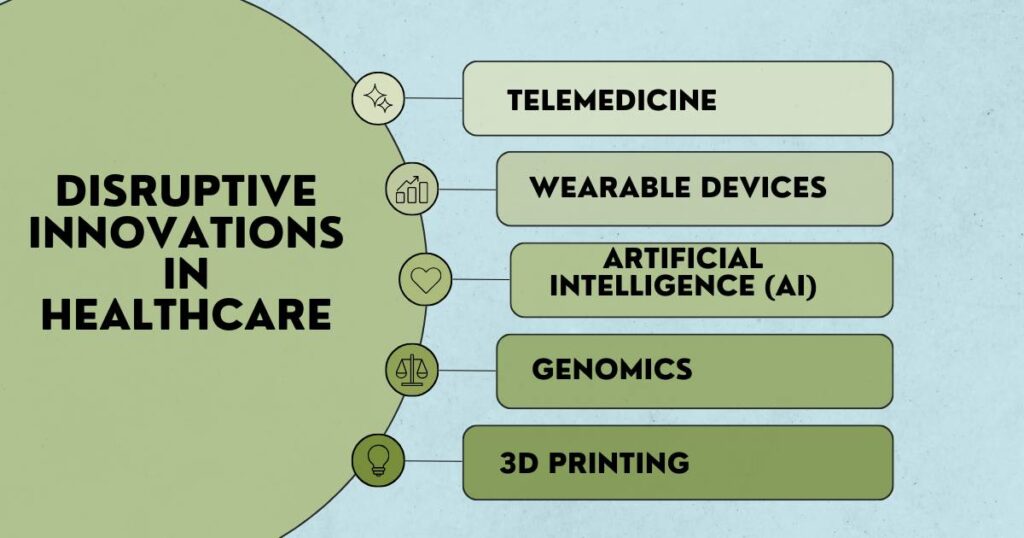
Telemedicine: Gone are the days of waiting rooms and inconvenient commutes. Telemedicine leverages video conferencing and remote monitoring technology, allowing patients to connect with doctors virtually. This not only boosts accessibility but also empowers patients to manage their health more actively. These platforms enable remote patient consultations, expanding access to care for those in underserved areas or with limited mobility.
Wearable Devices: From smartwatches tracking your heart rate to sleep trackers monitoring your rest patterns, wearable tech is transforming health monitoring. Wearable devices like smartwatches and fitness trackers provide real-time health data, enabling early detection of potential health issues and personalized interventions. This constant stream of personalized data empowers individuals to make informed choices about their well-being and even predict potential health risks.
Artificial Intelligence (AI): Imagine AI analyzing mountains of medical data, uncovering hidden patterns, and aiding doctors in precise diagnoses and personalized treatment plans. That’s the power of AI, already assisting in radiology, drug discovery, and even robot-assisted surgery!
Genomics: Imagine tailoring treatments to your unique genetic makeup! Genomics, the study of our genes, is revolutionizing healthcare by enabling personalized medicine approaches. From cancer treatment to chronic disease management, this field holds immense potential for optimizing individual care. Advances in genomics are leading to personalized medicine, tailoring treatments to individual genetic profiles.
3D Printing: From printing custom prosthetics to creating biocompatible tissues for organ transplantation, 3D printing is pushing the boundaries of medical possibilities. This technology offers faster, more affordable, and personalized solutions for a wide range of medical needs. It is being used to create custom medical implants and prosthetics, revolutionizing surgical procedures and patient outcomes.
What Leads to Disruptive Innovation?
Disruptive innovation occurs when new technologies or business models challenge and eventually displace established ones. This can happen in any industry, but it is often seen in industries that are complex, confusing, and have limited access to certain services.
Complex experiences: When an industry is complex and difficult to navigate, it can create opportunities for new solutions that are simpler and more user-friendly. For example, MinuteClinics has disrupted traditional healthcare by providing convenient and affordable access to routine care.
Consumer confusion: When consumers are confused or frustrated by the products or services in an industry, it can open the door for new solutions that are more transparent and understandable. For example, Lemonade has disrupted the insurance industry by making its products and services easy to understand and use.
Redundant intermediaries: When consumers are confused or frustrated by the products or services in an industry, it can open the door for new solutions that are more transparent and understandable. For example, Lemonade has disrupted the insurance industry by making its products and services easy to understand and use.
Limited access: When certain services are not available to everyone, it can create opportunities for new solutions that make these services more accessible. For example, robo-advisors have disrupted the wealth management industry by providing investment advice to a wider range of consumers, including those who cannot afford traditional human advisors.
In addition to these four factors, there are other factors that can contribute to disruptive innovation, such as technological advancements, changes in consumer behavior, and shifts in the regulatory landscape.
Impact of Disruptive Innovation in Healthcare
Disruptive innovation is improving healthcare by meeting consumer-driven demand and spreading health and economic gains to stakeholders. It also highlights the role of established players in adapting to disruptive innovation and the need for continued support from entrepreneurs to fully reap the benefits of consumer-focused healthcare.
Disruptive innovation is transforming the healthcare industry in several ways:
Improving patient outcomes: Disruptive innovations are leading to more accurate diagnoses, personalised treatment plans, and better patient outcomes.
Enhancing the patient experience: Disruptive innovations are empowering patients with greater control over their health and providing more convenient and accessible care.
Reducing costs: Disruptive innovations are helping to reduce healthcare costs by streamlining processes, improving efficiency, and preventing unnecessary interventions.
Expanding access to care: Disruptive innovations are expanding access to care for underserved communities and those with limited mobility.
Established players in the healthcare industry are beginning to take notice of disruptive innovation and are taking steps to adapt. Some are creating leadership roles to help improve their product offerings, while others are partnering with startups or acquiring them outright.
To fully reap the benefits of consumer-focused healthcare, it will be necessary for smart policy, private enterprise, and the continued support of entrepreneurs.
Challenges of Disruptive Innovation in Healthcare
Despite the numerous benefits, disruptive innovations also pose challenges. The following are a few challenges described:
Regulatory Hurdles:Imagine you’ve concocted a revolutionary cure for a deadly disease – a beacon of hope for millions. But before it touches a single patient, it gets swallowed by a labyrinth of red tape and paperwork. Scientists must painstakingly demonstrate its safety and efficacy, lawyers dissect every clause, and government gatekeepers hold the keys to its release. This grueling obstacle course can stretch for years, sometimes trapping even the most promising breakthroughs in regulatory purgatory, leaving patients yearning for the desperate hope just out of reach.
Reimbursement Models: Think healthcare like a giant vending machine – you slot your insurance card, press for the treatment you need, and bam! Instant cure. But what if a revolutionary new treatment exists, a game-changer, yet the vending machine spits it out, unrecognized? That’s the glitch with outdated reimbursement models. They’re stuck in the retro zone, ill-equipped for cutting-edge tech and services. So, even if the new treatment rocks, doctors and hospitals might be financially paralyzed, unable to provide it. Patients, then, are left with the meh-tastic option, simply because it’s the one the insurance machine spits out.
Cost Implications: Implementing disruptive innovations can come with hefty price tags, potentially stalling broad adoption. Our key lies in showcasing their long-term value. Think improved patient outcomes, slashed healthcare costs, and boosted operational efficiency. These bold benefits paint a compelling picture, proving these innovations aren’t just flash-in-the-pan fancies but sustainable investments in a healthier, more cost-conscious future.
Lack of Education and Training: Healthcare professionals, the champions of our well-being, might not be fully equipped to wrestle with disruptive technologies. Their expertise lies in the tried-and-true, and navigating the revolutionaries can be tricky. This is where education and training step in as the knight in shining armor. By investing in comprehensive programs, we empower healthcare providers, giving them the skills and knowledge to harness the benefits of these trailblazing solutions. Let’s bridge the knowledge gap and ensure our caregivers can wield the tools of tomorrow to deliver the best care possible!
Data Security Concerns: With technology inextricably woven into healthcare, the collection and use of ultra-sensitive patient data rings alarm bells. Robust security measures are not just a box to tick, they’re the cornerstone of trust between healthcare providers and patients. Privacy must be prioritized, transparency must reign supreme, and compliance with data protection regulations is non-negotiable. Innovators must remember: in this digital landscape, trust is the currency, and protecting patient data is the golden rule.
Remember, overcoming these challenges is crucial to ensure everyone has access to the amazing possibilities of disruptive healthcare innovations!
Case Studies
In the ever-evolving realm of healthcare, the impact of disruptive innovation isn’t just theoretical; it’s tangible, measurable, and transformative. Let’s delve into real-world case studies that spotlight the pioneers shaping the future of patient care:
Transforming Challenges into Triumphs: Streamlining Care with AI
Meet Babylon Health, a UK-based startup that’s revolutionizing primary care through AI-powered consultations. Faced with challenges in long wait times and limited access to specialists, Babylon embraced virtual consultations powered by AI symptom checkers and chatbots.
Challenges:
Long wait times for doctor appointments, particularly in rural areas.
Shortage of healthcare professionals, leading to limited access to specialists.
Strategies:
Developed a symptom checker AI chatbot that provides initial assessments and guides patients to the appropriate care level.
Offered 24/7 virtual consultations with doctors or nurses via video calls.
Partnered with NHS clinics to integrate seamlessly with the existing healthcare system.
Outcomes:
Reduced wait times for appointments by up to 80%.
Increased access to healthcare, particularly for those in underserved areas.
Improved patient satisfaction with faster diagnosis and treatment initiation.
Strategies that Resonate: Early Cancer Detection with AI-powered Imaging
Explore the story of Paige.AI, a Boston-based company using AI to analyze medical images for early cancer detection. By tackling traditional limitations like human error and subjectivity in radiology, Paige.AI is paving the way for personalized and preventative care.
Challenges:
High rates of misdiagnosis and missed early-stage cancers due to limitations of traditional radiology methods.
Workload burden on radiologists leading to potential fatigue and errors.
Strategies:
Developed AI algorithms that can analyze medical images with higher accuracy and efficiency than humans.
Partnered with hospitals and clinics to integrate their technology into existing workflows.
Focused on developing AI models for specific cancer types for targeted screening and diagnosis.
Outcomes:
Increased accuracy of cancer detection, leading to earlier treatment and improved patient outcomes.
Reduced workload on radiologists, allowing them to focus on complex cases.
Personalized cancer screening and risk assessment based on individual patient data.
Outcomes that Matter: 3D Printing Personalized Medical Devices
Enter the world of Stratasys, a leading 3D printing company creating customized medical devices like prosthetics, implants, and surgical tools. By bridging the gap between traditional manufacturing and patient-specific needs, Stratasys is changing the landscape of personalized medicine.
Challenges:
Limited availability of customized medical devices that perfectly fit individual patient needs.
Time-consuming and expensive traditional manufacturing processes for prosthetics and implants.
Strategies:
Developed 3D printing technology capable of creating patient-specific medical devices based on individual scans and data.
Partnered with hospitals and rehabilitation centers to provide on-site 3D printing of prosthetics and implants.
Focused on developing biocompatible materials for safe and long-lasting medical devices.
Outcomes:
Improved quality of life for patients with amputations through better-fitting and more functional prosthetics.
Reduced surgery times and recovery periods through personalized surgical tools and implants.
Increased access to affordable and customized medical devices for patients in underserved areas.
These case studies illuminate the reality of disruptive innovation in healthcare—its challenges, strategies employed, and the profound outcomes achieved. As we navigate this transformative landscape, these stories serve as beacons, guiding us towards a future where healthcare isn’t just advanced but deeply human.
Witness the Revolution
The healthcare landscape is undergoing a seismic shift, propelled by disruptive innovations like artificial intelligence (AI), augmented reality (AR), and personalized medicine. These advancements are not mere buzzwords; they’re revolutionizing patient care, promising a future where:
AI: The Doctor’s Superpowered Sidekick
Imagine an AI assistant tirelessly analyzing mountains of medical data, pinpointing disease patterns invisible to the human eye. That’s the promise of AI in healthcare. AI algorithms can:
Power up early diagnosis: By analyzing medical images and patient records, AI can spot subtle signs of illness sooner, leading to faster intervention and better outcomes.
Personalize treatment plans: No two patients are alike, and AI can help tailor treatment strategies to individual needs and genetic profiles, maximizing efficacy and minimizing side effects.
Streamline clinical workflows: From automating administrative tasks to predicting patient readmission risks, AI frees up clinicians’ time for what matters most—patient interaction and care.
AR: Unveiling the Magic Behind the Curtain
AR, the technology that overlays digital elements in the real world, is transforming the way doctors visualize and interact with the human body. Imagine surgeons donning AR headsets that project vital organ information onto patients during surgery, or students practicing complex procedures on holographic models. AR brings:
Enhanced surgical precision: AR overlays can guide surgeons during minimally invasive procedures, leading to smaller incisions, quicker recovery times, and improved outcomes.
Revolutionized medical education: AR training simulations provide immersive, interactive experiences, allowing students to hone their skills in a safe, controlled environment.
Improved patient understanding: AR visualizations of anatomy and treatment plans can empower patients to actively participate in their care decisions.
Personalized Medicine: Your Body, Your Blueprint
Imagine a future where medical interventions are tailored to your unique genetic makeup and lifestyle. That’s the essence of personalized medicine, which leverages:
Genomic testing: By analyzing your DNA, doctors can identify genetic predispositions to diseases and tailor preventive measures or early interventions.
Biomarker analysis: Tracking specific molecules in your body can reveal disease progression or treatment response, allowing for personalized adjustments to therapy plans.
Precision medicine: By targeting specific molecular mechanisms of disease, personalized medicine promises more effective and less toxic treatments.
Disruptive Innovation for a Healthier Tomorrow
AI, AR, and personalized medicine are not just futuristic concepts; they are transforming patient care today. These disruptive innovations hold the potential to:
Improve diagnosis and treatment accuracy
Reduce healthcare costs
Empower patients with knowledge and control
Make healthcare more accessible and equitable
While challenges remain, such as data privacy concerns and equitable access to technology, the future of healthcare is undeniably bright. With disruptive innovation paving the way, we can envision a world where everyone has the opportunity to live a healthier, happier life.
Conclusion
In conclusion, we can see that disruptive innovations are transforming the healthcare landscape, offering the potential to improve patient outcomes, enhance the patient experience, reduce costs, and expand access to care. While challenges exist, the promise of disruptive healthcare innovation is immense, holding the key to shaping a healthier and more equitable future for all.
Statistics whisper a compelling story: Disruptive innovations in healthcare boast a 32% reduction in the average length of stay, a 15% increase in patient satisfaction, and a projected cost savings of over $50 billion by 2030. These numbers aren’t mere projections; they represent lives saved, burdens lifted, and opportunities unearthed.
While roadblocks remain, the potential is too immense to ignore. Let’s invest in research, champion innovative policies, and empower patients to become active participants in this transformation. The future of healthcare isn’t preordained; it’s a blank canvas waiting for our collective brushstrokes.
Let’s paint a future where health is not a privilege but a fundamental right, accessible to all.
What is disruptive innovation in healthcare?
Disruptive innovation, coined by Clayton Christensen, describes the progression where a product or service starts in basic applications at the lower end of the market and gradually advances, displacing established competitors along the way.
Examples you know?
Examples of disruptive innovation in healthcare encompass telemedicine, retail clinics, and mobile health applications. These advancements are reshaping the traditional healthcare landscape by introducing new, accessible, and convenient ways for patients to receive medical care and manage their health.
How can disruptive innovation improve healthcare?
It brings down costs, opens doors to care for more people, and makes the whole experience smoother for patients.
What are the benefits of disruptive innovation in healthcare?
Disruptive innovation in healthcare brings forth several benefits, including reduced costs, enhanced patient outcomes, and heightened patient satisfaction. These positive impacts signify a transformative shift towards more efficient, effective, and patient-centered healthcare practices.
Self-driving cars are starting to move from science fiction to reality. These autonomous vehicles use advanced sensors and AI to get around without a driver. While this technology could make transportation safer and easier, it also raises hard ethical issues that need attention.
One of the most pressing ethical dilemmas is how self-driving cars should be programmed to make decisions in situations where there is no clear course of action. For example, should a self-driving car swerve to avoid hitting a pedestrian, even if it means crashing into another car? Or should it prioritise the safety of its occupants over that of other road users?
A big question is: how should self-driving cars be programmed to make tough decisions in no-win situations? For example, if a pedestrian suddenly jumps in front of the car, should it swerve into oncoming traffic, potentially harming its own passengers, to avoid hitting them? Who gets priority?
There are no easy answers, and experts disagree on what’s ethically acceptable. As self-driving cars spread, we need clear rules so they act responsibly. Manufacturers cannot just leave life-and-death judgments to algorithms.
Another concern is security. If hackers accessed the AI driving system, they could try steering the car to deliberately cause a crash. Safety features to prevent harmful hacks will be essential.
While true self-driving cars are still being perfected, now is the time to proactively address ethics. Thoughtful policies and procedures on priorities in tough scenarios as well as cybersecurity should be in place before these vehicles hit the mainstream.
There are always pros and cons when new technology reshapes daily life. But if done right, self-driving cars could revolutionise transportation and improve road safety dramatically. By considering ethics today, we can steer autonomous vehicles towards an ethically sound destination.
Liability in Self-Driving Car Accidents
As self-driving cars are poised to transform our roads, a crucial legal question emerges: who bears responsibility for accidents involving these autonomous vehicles? In this rapidly evolving landscape, traditional notions of driver liability have become blurred, demanding a fresh examination of accountability and legal frameworks.
Untangling the Web of Responsibility:
No Driver, No Fault?
In the absence of a human driver, the concept of driver liability, long a cornerstone of automotive law, faces a significant challenge. When a self-driving car causes an accident, who is at fault? The manufacturer, the programmer, or perhaps the owner of the vehicle? Delving into these questions requires a nuanced understanding of the complex interplay between technology and human oversight.
Programming Predicament:
Self-driving cars rely on sophisticated software and intricate sensor systems to navigate the roads. If an accident occurs due to a programming flaw or a sensor malfunction, assigning responsibility becomes a tangled web. Should the blame fall on the programmers who crafted the algorithms, the manufacturers who designed and assembled the vehicle, or the software developers who created the underlying operating systems?
Shifting the Legal Landscape:
The advent of self-driving cars necessitates a re-examination of product liability laws. Traditional legal frameworks, crafted for an era of human-operated vehicles, may not adequately address the complexities of autonomous technology. As the capabilities of these vehicles advance, the legal system faces the challenge of assigning accountability in a world where decisions are made by lines of code rather than human judgment.
Exploring Liability Scenarios:
Manufacturer Accountability:
Proponents of holding car manufacturers accountable argue that the responsibility for self-driving cars lies squarely with the companies that design, manufacture, and programme them. Since the vehicle operates based on its programming and sensors, the manufacturer should bear the brunt of liability in the event of an accident.
The Role of the Owner:
While manufacturers play a crucial role, the question of owner responsibility also demands attention. Should the owner of a self-driving car be liable for the actions of a vehicle they were not actively controlling? Navigating this grey area is essential to establishing a fair and equitable legal system.
Programmer Responsibility:
The individuals responsible for coding the algorithms and designing the AI systems that govern self-driving cars may find themselves in the legal spotlight. How much responsibility should programmers shoulder in the face of unforeseen accidents? Striking a balance between encouraging innovation and ensuring accountability is critical in this domain.
Legal Evolution in the Age of Autonomy:
The Need for Legislative Clarity:
The ambiguity surrounding liability in self-driving car accidents underscores the urgent need for legislative clarity. Crafting laws that clearly define responsibility and establish legal procedures is essential to provide a solid foundation for resolving disputes and ensuring a fair and just legal system.
Collaboration between Industry and Legal Experts:
As self-driving technology matures, collaboration between the automotive industry and legal experts becomes paramount. Establishing industry standards and developing comprehensive legal frameworks can help streamline the process of determining liability and ensure a balanced approach to accountability.
Conclusion
The advent of autonomous vehicles represents a pivotal moment of promise and peril. Self-driving cars may transform transportation for the better, but only if ethics and security remain top priorities. As this technology advances, we must proactively navigate complex questions of accountability and regulation.
Manufacturers cannot delegate life-or-death decisions to algorithms alone. Policymakers need to implement clear ethical guidelines and restrictions. Cybersecurity and resilience to hacking attempts must be treated as necessities, not afterthoughts. And updated legal frameworks that apportion liability fairly should be established.
The debate surrounding self-driving cars will persist as innovation outpaces regulation. But by collaborating across disciplines, considering every angle, and keeping the public interest at heart, we can steer towards a future where autonomous vehicles provide safe, efficient, and morally sound transportation. If ethics and human values guide the way forward, this revolution in mobility can positively transform society. But we must remain focused on that ethical destination as the landscape rapidly evolves.
Are self-driving cars safer than traditional vehicles?
A1: While self-driving cars hold the promise of enhanced safety, ethical questions surrounding decision-making and cybersecurity must be addressed to ensure their overall safety.
How can we trust the ethical decision-making of self-driving cars?
A2: Establishing transparent and universally accepted ethical guidelines, along with rigorous testing and oversight, is essential to build trust in the decision-making capabilities of self-driving cars.
What measures are being taken to prevent the hacking of self-driving cars?
The automotive industry is actively investing in cybersecurity measures, including encryption, secure communication protocols, and continuous software updates, to protect self-driving cars from hacking attempts.
Quantum cryptography is a new and exciting field of cryptography that uses the principles of quantum mechanics to create unbreakable codes. It is based on the fact that quantum information cannot be copied or measured without disturbing it. This makes quantum cryptography extremely secure, as any attempt to eavesdrop on a quantum communication channel will be immediately detected.
In this article, we will explore the world of quantum cryptography and discuss its potential to change the way we live and work. We will also discuss the challenges that need to be overcome before quantum cryptography can be widely deployed.
What is Quantum Cryptography?
The process of encrypting data, or turning plain text into jumbled information that can only be read by someone with the appropriate “key,” is known as cryptography, and quantum cryptography is a realm where the arcane dance of particles embraces the essence of encrypting information and delves into the labyrinth of quantum mechanics.
Quantum cryptography uses quantum mechanics laws and principles to secure data encryption. It uses unique properties like superposition and entanglement to transmit data in an uncrackable way. Quantum states of particles like photons are detectable, allowing for the communication of encryption keys or data that cannot be hacked without leaving evidence of tampering.
Behind the veneer of simplicity in definition, the intricate tapestry of quantum cryptography unravels through the lens of quantum mechanics, entailing nuances such as:
The inherent uncertainty of particles constituting the universe makes them capable of simultaneous existence in multiple locations or states.
Photons, the elemental carriers, are spontaneously generated in one of two quantum states, an act of randomness inherent in their quantum nature.
The paradox that attempting to measure a quantum property inevitably alters or disturbs it, is a fundamental tenet challenging conventional notions of observation.
The partial duplicability of some quantum properties of a particle, while the entirety of the particle remains beyond the reach of replication.
In essence, quantum cryptography operates on the enigmatic principles of quantum mechanics, where the very fabric of the universe converges with the quest for secure and untamperable data transmission.
Foundations of Quantum Mechanics
To understand quantum cryptography, one must delve into the mysterious realm of quantum mechanics. This science describes the fundamental behaviour of matter and energy at the atomic and subatomic levels. Unlike classical mechanics, quantum mechanics is based on the idea that physical systems can exist in a superposition of states, meaning that they can be in multiple states at the same time.
One of the most important concepts in quantum mechanics is entanglement. Entanglement is a phenomenon where two or more quantum systems are linked together in such a way that they share the same fate, even if they are separated by a large distance. If a measurement is performed on one entangled system, the outcome of that measurement will instantly and irrevocably affect the other entangled systems.
Quantum superposition and entanglement are two of the key principles that underlie quantum cryptography. Quantum cryptography uses the unique properties of quantum systems to create codes that are unbreakable using classical methods.
Quantum Key Distribution (QKD)
Quantum Key Distribution (QKD) is a promising application of quantum cryptography, utilising the quantum properties of particles to create a secure communication key. Encoded on quantum particles like photons, QKD ensures that any attempts to measure or intercept the particles collapse their quantum state, alerting parties of the breach. This unique ability makes QKD essential for protecting communication and potentially the only robust means for distributing secure encryption keys.
Benefits of Quantum Cryptography
Quantum cryptography offers a number of benefits over traditional cryptography, including:
Unbreakable security: Quantum cryptography is based on the principles of quantum mechanics, which are very difficult to break.
Long-distance communication: Quantum cryptography can be used to create secure communication channels over long distances, even if the communication channel is not physically secure.
Resistance to eavesdropping: Quantum cryptography is resistant to eavesdropping because any attempt to eavesdrop on a quantum communication channel will be immediately detected.
Challenges of Quantum Cryptography
Despite its many benefits, quantum cryptography also faces a number of challenges, including:
Cost: Quantum cryptography systems are currently very expensive to build and operate.
Complexity: Quantum cryptography systems are complex and require specialized expertise to operate and maintain.
Distance limitations: Quantum cryptography systems are currently limited to short distances, although research is ongoing to extend the range of quantum communication channels.
How does Quantum Cryptography Work?
Quantum cryptography is a revolutionary new way to secure communication. It uses the principles of quantum mechanics to create a secret key that is unbreakable by even the most powerful computers.
The key to quantum cryptography is the use of photons, or particles of light. Photons can be in one of two polarisation states: vertical or horizontal. These states can be used to represent bits, with vertical representing 1 and horizontal representing 0.
To generate a secret key, suppose, Charlie and Diana, the two parties who want to communicate securely, exchange a series of photons. Each photon is randomly polarised in one of the two states. If an eavesdropper, Emma, tries to intercept any of the photons, she will inevitably disturb their polarisation. This disturbance will be detected by Charlie and Diana, and they will know that their communication has been compromised.
Once Charlie and Diana have exchanged the photons, they compare notes to determine their polarisation states. Any photons that were disturbed by Emma are discarded, and the remaining photons form the secret key. This key can then be used to encrypt and decrypt messages, ensuring that their communication is secure.
One of the unique aspects of quantum cryptography is that it relies on the fundamental properties of quantum mechanics, which are very difficult to break. Even if Emma has unlimited computational power, she will not be able to crack the secret key without being detected.
Another unique aspect of quantum cryptography is that it can be used to create a truly random key. This is important because traditional encryption algorithms rely on keys that are not truly random. If an attacker can guess the key, they can decrypt the message. However, with quantum cryptography, the key is generated using the random polarisation states of photons, which is impossible to predict.
Quantum cryptography is still in its early stages of development, but it has the potential to revolutionise the way we communicate. By using the principles of quantum mechanics, quantum cryptography can create a level of security that is unbreakable by even the most sophisticated adversaries.
Here is a unique analogy to help understand how quantum cryptography works:
Imagine that Charlie and Diana are two secret agents who need to exchange a secret message. They have a special device that can generate a pair of quantum-entangled coins. These coins are linked together in such a way that if you flip one coin, the other coin will instantly flip to the same state, even if it is miles away.
Charlie and Diana each take one of the coins and go to separate locations. Charlie then flips his coin. This instantly causes Diana’s coin to flip to the same state. Charlie and Diana can then communicate securely by revealing the state of their coins. If Emma, the eavesdropper, tries to intercept the coins, she will inevitably disturb the entanglement between them. This disturbance will be detected by Charlie and Diana, and they will know that their communication has been compromised.
Quantum cryptography is similar in that it uses the unique properties of quantum mechanics to create a secure communication channel. If an eavesdropper tries to intercept the communication, they will inevitably disturb the quantum state of the information, and the sender and receiver will know that their communication has been compromised.
Quantum Cryptography vs Traditional Cryptography
Here is an expanded and rewritten version of the text with additional information on cryptography:
Traditional cryptography relies on mathematical techniques to encrypt and decrypt data. Symmetric-key cryptography uses a single private key for both encryption and decryption. Asymmetric or public-key cryptography uses paired public and private keys; data encrypted with the public key can only be decrypted by the private key. These methods enable secure communication by scrambling data mathematically.
However, traditional cryptography is potentially vulnerable to brute-force attacks as computing power grows. Quantum computers could one day crack mathematical encryption methods by quickly factoring the large numbers comprising cryptographic keys.
Quantum cryptography offers a solution by leveraging quantum physics rather than math for encryption. It takes advantage of quantum properties like superposition, entanglement, and uncertainty to ensure secure communication. For example, quantum key distribution uses photon polarisation to distribute encryption keys that cannot be intercepted without detection.
While traditional cryptography is computational, quantum cryptography is physical; it exploits the fundamental rules of physics to protect data. Measuring a quantum system inevitably alters it, immediately revealing any eavesdropping. This creates unbreakable information-theoretic security.
Quantum cryptography is a nascent field requiring specialised equipment like photon emitters and detectors and fibre optic channels. Ongoing research aims to make quantum cryptography more practical for real-world deployment. But it promises perfectly secure communication that is resistant even to future quantum computers.
Quantum Cryptography for Everyday Users
While quantum cryptography may seem like a technology reserved for high-stakes scenarios, there is potential for its integration into everyday consumer technology. This has profound implications for personal online security, offering individuals a level of protection previously thought to be unattainable.
While traditional encryption remains secure against modern attacks, quantum cryptography offers long-term protection in an era of exponentially advancing computing power. Current cryptographic techniques rely on mathematical complexity that will become hackable by quantum computers. Quantum encryption’s physics-based security can withstand even quantum computational brute force.
The future of quantum cryptography
Quantum cryptography, though still maturing, is a revolutionary advancement with profound implications. By exploiting quantum mechanical properties, it provides mathematically unbreakable encryption secured by the laws of physics themselves. Even intercepting keys collapses delicate quantum states, alerting both parties. This unprecedented technical feat neutralises future computational threats.
Ongoing research strives to overcome implementation hurdles and make quantum encryption robust and user-friendly enough for widespread adoption. But its core concepts offer perfect, physics-based security that current encryption lacks. Quantum techniques will likely become essential in the coming decades as computing continues to rapidly advance.
Real-world quantum encryption may take years or longer to refine. However, its theoretical foundations are already unmatched in ensuring future-proof, hack-proof data transmission. Quantum cryptography’s development epitomises perseverant scientific ingenuity in overcoming once-impossible challenges. Its innovations bring humanity closer to achieving the ancient dream of perfectly secure communication.
Conclusion
In conclusion, the fascinating world of quantum cryptography opens up new frontiers in the quest for unbreakable security. From the principles of quantum mechanics to real-world applications, the journey into this cutting-edge field is both thrilling and promising. As we navigate the challenges and harness the potential of quantum cryptography, a future of secure and private communication awaits.
Is quantum cryptography already in use?
Yes, governments, the military, and some financial institutions are actively utilising quantum cryptography for secure communication.
Can quantum cryptography be hacked?
Theoretically, no. The principles of quantum mechanics make it extremely challenging to intercept or decipher quantum-encrypted communication.
How does quantum cryptography affect everyday internet users?
While not yet widespread, the integration of quantum cryptography into consumer technology could revolutionise online security for everyday internet users, ensuring unparalleled protection for personal data, transactions, and communications.