Category: Gaming Gear

Dominate the Game! Tech Innovation Pro’s gaming gear reviews level up your play. Find unbiased assessments of mice, keyboards, headsets & more.

  • Lenovo Legion Go Review in 2024: Top Handheld Gaming PC?

    Lenovo Legion Go Review in 2024: Top Handheld Gaming PC?

    The Lenovo Legion Go has carved a niche for itself in the burgeoning high-performance handheld gaming market. This portable Ryzen Z1 gaming device boasts impressive features that cater to gamers seeking a cloud-compatible QHD+ gaming console experience on the go.
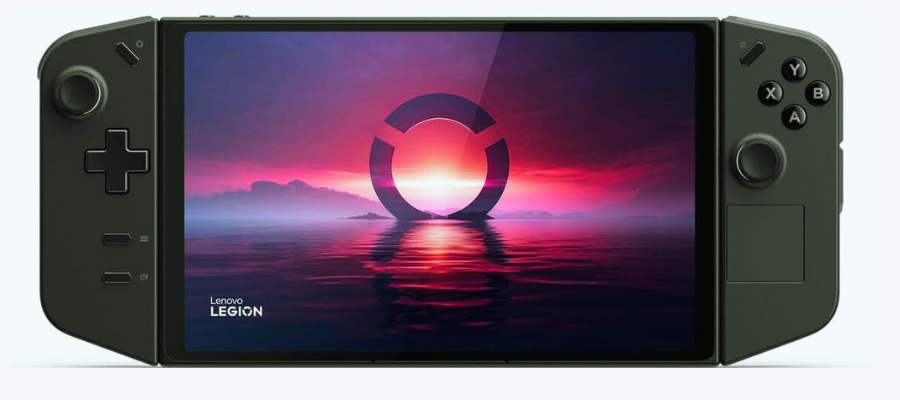
    Lenovo Legion Go 8.8″

    Brand: Lenovo
    Screen Size: 8.8 inches
    Color: Black
    RAM: 16 GB
    Operating System: Windows 11 Home
    CPU: 3.3 GHz processor
    Storage: Solid state hard drive (SSD)

    However, its strengths come with some caveats, making it a compelling option for a specific kind of user. This extensive Lenovo Legion Go review delves into the device’s capabilities, limitations, and target audience to help you decide if it’s the right fit for you.

    Display and Refresh Rate
    Lenovo Legion Go Review

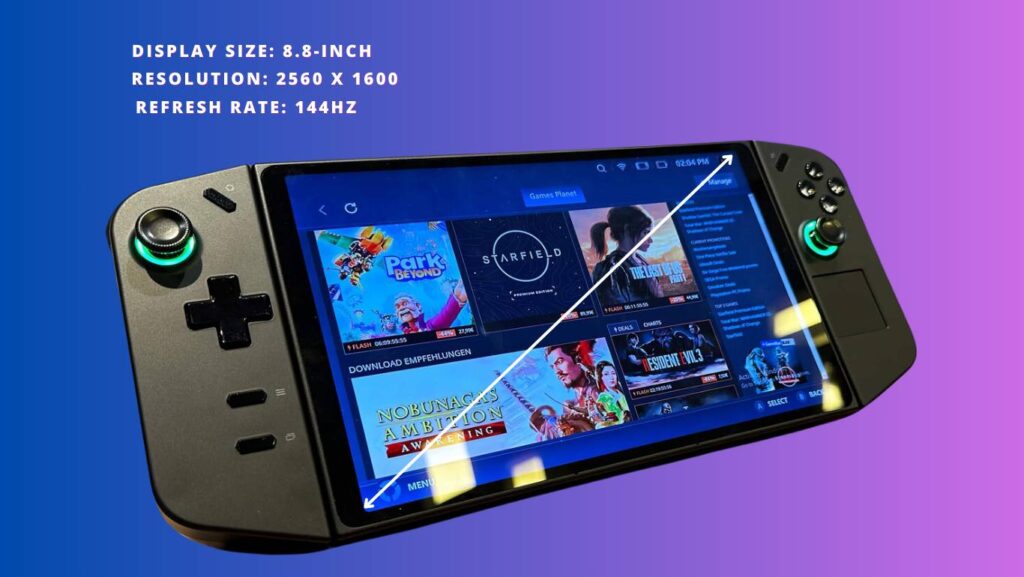
    The crown jewel of the Legion Go is undoubtedly its 8.8-inch display. Unlike its competitors with 7-inch screens, the Legion Go offers a stunning QHD+ resolution (2560 x 1600) for incredibly sharp visuals. Coupled with an industry-leading 144Hz refresh rate, the display delivers butter-smooth gameplay, especially for fast-paced titles.

    The 16:10 aspect ratio offers a unique viewing experience compared to traditional 16:9 displays, providing a slightly taller canvas that feels immersive for various game genres. The 500 nits brightness display ensures excellent visibility even in well-lit environments.

    Performance and Software

    At the heart of the Legion Go lies the AMD Ryzen Z1 processor. While not the absolute top-of-the-line option, it delivers capable performance for a portable gaming console. Paired with 16GB of LPDDR5 RAM, the Legion Go can handle most modern titles at 1080p resolution with high settings and maintains smooth frame rates in many less demanding games even at the native QHD+ resolution.

    However, users pushing the device to its limits with the most demanding AAA titles at QHD+ might encounter occasional frame drops. This trade-off between power and portability is crucial to remember when comparing the Legion Go to bulkier gaming laptops.
    Lenovo Legion Go

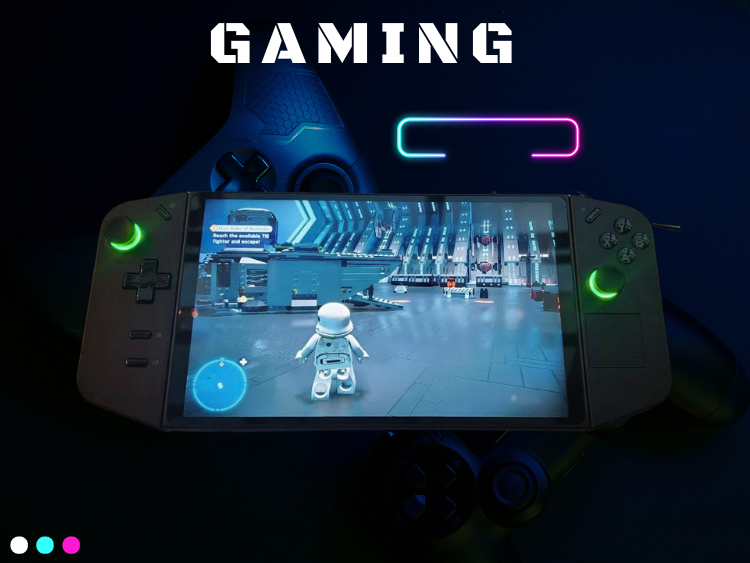
    The Legion Go utilizes Lenovo Vantage software for managing system performance, fan settings, and RGB lighting. Additionally, the Legion Go is cloud-gaming compatible, allowing users to stream games from services like Xbox Cloud Gaming and NVIDIA GeForce Now for an expansive library of titles. However, its Legion Space software dedicated to gaming features is still under development.

    Compared to competitors like the Steam Deck and ROG Ally, Legion Space currently lacks features like extensive gamepad remapping capabilities or the ability to save custom mappings for individual games. Additionally, users have reported issues like stuttering SD card readers and the absence of proper gyro support at launch.

    Despite these shortcomings, Lenovo has shown commitment to improving the software. They have been transparent with the community, actively addressing bugs and implementing new features based on user feedback. For instance, they have addressed initial launch issues like requiring users to manually update the software or reach for specific buttons on the device.

    They are also working on features like adjustable fan curves, joystick deadzone adjustments, and FPS limiters. This ongoing development process offers hope for future improvements to the Legion Go’s software experience.

    Design and Ergonomics: Lenovo Legion Go Review
    Lenovo Legion Go Review

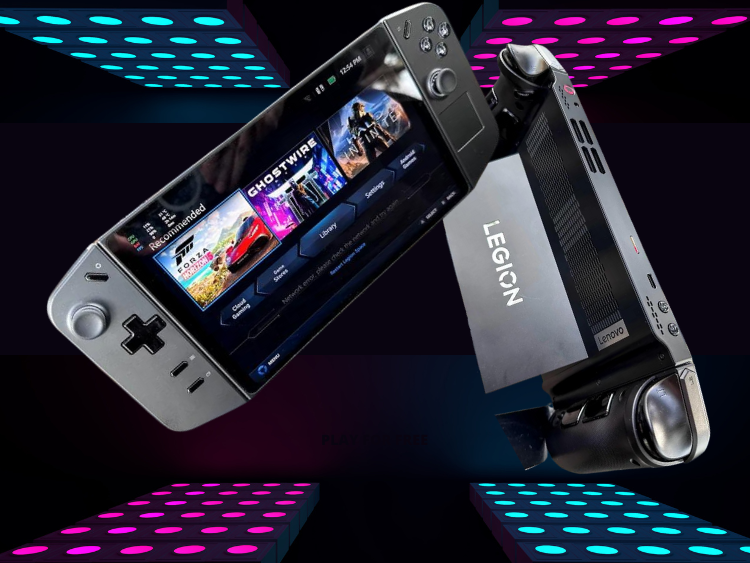
    The Legion Go boasts a detachable controller design, offering both handheld and traditional console-like gaming experiences. The controllers are well-sized and feature responsive buttons, analog sticks, and triggers.

    However, some users might find the overall design a bit bulky and heavy compared to other mobile gaming options, especially considering its weight of 1.88 pounds, which is half a pound heavier than the Steam Deck and ROG Ally. The 10-point touch screen allows for intuitive control in certain games and provides versatility when navigating the Windows interface.

    The Legion Go includes a sturdy kickstand that allows users to prop the device up on a table for comfortable tabletop gaming or even vertical positioning for reading. This versatility adds to the device’s appeal for users who want a multifunctional entertainment device beyond just gaming.

    Battery Life and Connectivity

    The Legion Go’s battery life is decent, lasting around 3–4 hours on average, depending on usage and settings. This falls short of the Steam Deck, which can offer closer to 5 to 6 hours of gameplay on similar titles. It supports fast charging via its USB-C port, allowing users to quickly recharge during breaks.

    In terms of connectivity, the Legion Go offers Wi-Fi 6 for smooth online gaming and Bluetooth 5.1 for connecting wireless peripherals. It also boasts two USB-C ports with 40Gbps of USB4 bandwidth, allowing users to plug in a keyboard, SSD, or even a Thunderbolt 3 external GPU without removing their charger lead. This connectivity advantage is worth considering for users who plan to use the Legion Go for tasks beyond gaming.

    Read Also: PS5 Performance Review 2024: A Complete Analysis

    Windows vs. SteamOS

    The Legion Go runs on Windows 11 Home, which offers flexibility and familiarity for users accustomed to the Windows ecosystem. This allows them to access a wider range of software and games beyond those specifically designed for handheld gaming platforms.

    However, Windows 11 isn’t necessarily optimized for handheld gaming in the same way that Valve’s SteamOS on the Steam Deck is. This can manifest in issues like games not launching in full-screen mode or requiring additional configuration for optimal performance.

    Ultimately, the choice between Windows and SteamOS depends on individual preferences and needs. If you prioritize extensive software options and the flexibility of a traditional PC experience, Windows might be a good fit.

    However, if you prioritize a more streamlined and gaming-focused experience optimized for handheld use, the Steam Deck’s SteamOS might be a better choice.

    Pros and Cons of the Lenovo Legion Go

    While the Lenovo Legion Go boasts impressive features for a handheld gaming PC, it’s not without its drawbacks. Let’s break down the key advantages and limitations to help you decide if it’s the right choice for you.

    Pros:

    • Large, high-resolution display: The Legion Go boasts an impressive 8.8-inch QHD+ display, offering stunning visuals and a more immersive gaming experience compared to smaller-screened competitors.
    • Detachable controllers: The ability to detach the controllers provides versatility, allowing users to switch between handheld and traditional console-like gaming experiences.
    • Windows 11 compatibility: Running on Windows 11, the Legion Go offers wider software and game compatibility compared to dedicated handheld gaming consoles.
    • Functional Windows tablet: The touchscreen and Windows 11 make it usable beyond gaming, allowing users to browse the web, read ebooks, and stream video.
    • Decent performance: While not the absolute top performer, the Legion Go delivers capable performance for a handheld gaming PC, handling most modern titles at 1080p with high settings.
    • Unique mouse mode: The detachable controller can transform into a five-button vertical mouse, offering an alternative control option for specific tasks.
    • Extensive connectivity: Two USB-C ports with 40Gbps bandwidth allow for connecting various peripherals like keyboards, external storage, and even a Thunderbolt 3 GPU.

    Cons:

    • Shorter battery life: Compared to some competitors, the Legion Go’s battery life falls short, lasting around 3-4 hours on average, which might be limiting for extended gaming sessions.
    • Software quirks: The Legion Space software is still under development and lacks features like extensive gamepad remapping capabilities currently offered by competitors.
    • Windows not optimized for handheld gaming: While offering broader software compatibility, Windows 11 isn’t necessarily optimized for handheld gaming like SteamOS on the Steam Deck, potentially leading to issues like games not launching in full screen.
    • Bulkier design: Weighing 1.88 pounds, the Legion Go is heavier than some competitors and might not be ideal for users who prioritize ultra-portability.
    • Unreliable sleep mode: Users have reported issues with the device waking up unexpectedly from sleep mode, further impacting battery life.
    • Limited mouse mode functionality: The transformation process for the mouse mode isn’t entirely seamless, and the small touchpad on the remaining controller might not be suitable for extended use compared to dedicated laptops.

    By weighing these pros and cons, you can make an informed decision about whether the Lenovo Legion Go aligns with your needs and preferences as a potential handheld gaming PC.

    Who Should Consider the Lenovo Legion Go?

    • Desire a functional Windows tablet: The Windows 11 operating system and touchscreen functionality allow for use beyond gaming, making it a suitable option for tasks like web browsing, reading, and streaming video.
    • Prioritize extensive software compatibility: Windows offers access to a wider range of software and games compared to dedicated handheld gaming consoles.
    • Are comfortable managing battery life: While not the worst, the Legion Go’s battery life falls short of some competitors, and users might need to be mindful of power consumption for extended gaming sessions.
    • Are receptive to software updates and improvements: Lenovo has shown commitment to improving the Legion Go’s software, and users should be comfortable with potential updates and bug fixes.

    Who Might Want to Look Elsewhere?

    While the Legion Go offers a compelling package, it might not be the ideal choice for everyone. Users who:

    • Prioritize pure power and performance: The Legion Go might not be as powerful as some high-end gaming laptops in a more portable form factor.
    • Demand exceptional battery life: For extended gaming sessions without access to a power outlet, the Legion Go’s battery life might be insufficient.
    • Prefer a more streamlined and gaming-focused experience: SteamOS on the Steam Deck might be a better choice for users who prioritize a system optimized for handheld gaming.
    • Dislike bulky devices: The Legion Go is heavier than some competitors and might not be suitable for users who prefer ultra-portable options.

    Conclusion

    The Lenovo Legion Go is a compelling option for gamers seeking a powerful and versatile handheld gaming PC. It is a capable handheld gaming PC offering a large, high-resolution display, detachable controllers, and Windows 11 versatility. Its high-resolution display, smooth refresh rate, and cloud gaming capabilities make it a standout choice. However, its bulkier design and occasional performance limitations at the highest resolution might deter some users. Its shorter battery life, software quirks, and Windows-specific considerations make it essential to weigh the pros and cons carefully before making a purchase decision. Ultimately, the Lenovo Legion Go caters to a specific niche of gamers looking for a powerful and portable gaming solution for both local and cloud-based titles.

  • PS5 Performance Review 2024: A Complete Analysis

    PS5 Performance Review 2024: A Complete Analysis

    Is the PS5 a next-gen champion or a laggy letdown? We put the console through its paces with a gauntlet of blockbuster games to deliver a no-holds-barred PS5 performance review.

    PS5 Performance Review

    From pulse-pounding boss battles to expansive open-world games, we analyze FPS, load times, performance modes, and graphical settings across genres to see if the PS5 lives up to the hype. This complete analysis leaves no pixel unturned in a showdown that reveals whether the PS5 has the power to deliver those triumphant gaming moments or stumble under the weight of next-gen’s loftiest ambitions.

    Get ready to find out if the PS5 is a conqueror or a pretender in this candid verdict based on industry benchmarks and rigorous real-world testing.

    Specifications of PlayStation 5 Console
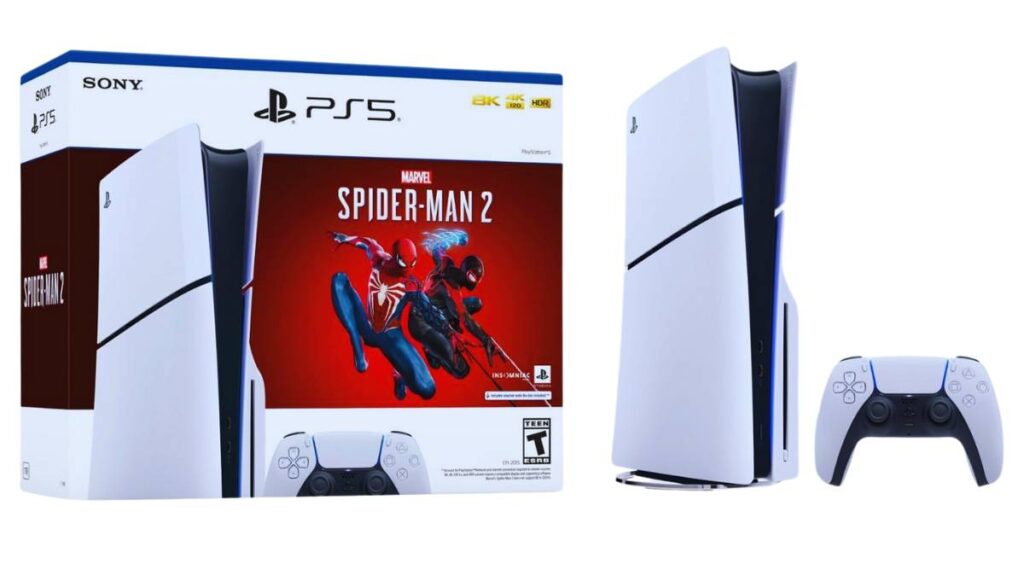
    NamePlayStation 5 Console –  Marvel’s Spider-Man 2 Bundle (slim)
    Type of Item Video Game
    Model numberCFI-2000
    Weight10.73 pounds
    ManufacturerSony Interactive Entertainment
    Battery1 Lithium Ion batteries required.
    Storage1 TB
    Box Contents1 DualSense Wireless Controller, 2 Horizontal Stand Feet, HDMI Cable, AC Power Cord, USB cable, printed materials, ASTRO’s PLAYROOM

    Hardware and Specs Recap : PS5 Performance Review

    Before we charge into the fray of real-world gameplay, let’s pop the hood and inspect the high-powered hardware giving the PS5 its next-gen swagger. Make no mistake – beastly specs don’t guarantee victory, but they sure bring some heavy artillery to the fight.

    • CPU: This is the calculating brain directing the action, and the PS5 packs an 8-core AMD Zen 2 commander, clocked at 3.5GHz. What does this mean for you? Smoother multitasking, smarter enemy AI, and advanced physics that make those explosions look oh-so-pretty.
    • GPU: Next, we’ve got the graphical muscle to push all those pixels to look sharp enough to cut glass. The PS5 wields an AMD RDNA 2 GPU, unlocked to 10.28 teraflops of visual horsepower. And in plain English – this sucker can handle higher resolutions, detailed textures, and lighting effects that truly dazzle.
    • RAM: You can think of RAM as the actual battlefield, the space where all the action happens. The PS5 comes locked and loaded with 16GB of GDDR6 memory, ready to juggle expansive game worlds, smooth scene transitions, and all those complex character models without missing a beat.
    • SSD: But the real game-changing weapon here is that wicked fast SSD drive. Gone are the days of glaring at loading screens and willing yourself into the game through sheer impatience. The PS5’s 825GB SSD offers near-instant transportation, turning excruciating load times into blink-and-you’ll-miss-it hops between gameplay arenas.

    However, remember, that 825GB can fill up fast with modern games. Consider external storage options to keep your digital library humming along smoothly.

    Read Also: The Best Noise Cancelling Headphones for Airplane Travel 2024

    Performance Benchmarks

    Now, the gloves are off! It’s time to step into the data-driven arena where smooth frame rates rule and stutters spell defeat. We sliced and diced the PS5’s performance across three battlegrounds: 4K Thunderdome, Visual Fidelity Face-Off, and 1080p Bullet Ballet. Get ready for numbers, analysis, and sizzling gameplay that spotlights the PS5’s successes (and potential pitfalls) in next-gen combat.

    4K Thunderdome: Smooth Operator?

    Here we prioritize silky motion over visual splendor, targeting a flawless 60FPS. Titles like Elden Ring and Ghostwire Tokyo proved a worthy challenge. Elden Ring maintained a solid 55-60FPS, with occasional slowdown when too many enemies cluttered the battlefield. Ghostwire Tokyo stayed locked and loaded at 60FPS, making those neon-bathed streets a blur of demon-busting action. However, the visual tempest of God of War Ragnarok couldn’t always maintain 60 frames, dipping to the mid-50s during axe-swinging, dragon-slaying chaos.

    Visual Fidelity Face-Off: Beauty or Beast?

    This trial turns the dial to maximum graphics at the cost of frame rate consistency. Here, stunners like Gran Turismo 7 and Horizon Forbidden West grabbed the spotlight. Gran Turismo glided at a cinematic 40FPS, delivering photorealism that felt as good as it looked. Horizon hit a fair 30FPS with lavish detail, though some may find that lower frame rate jarring after Performance mode’s fluidity.

    1080p Bullet Ballet: Does Lower Res Snag the Win?

    Here we sacrifice visual fidelity for the glory of 120FPS. In fast-paced firefights like Call of Duty and Overwatch 2, this mode shined bright. We observed unwavering 120FPS gameplay, making snap headshots and last-second dodges possible. However, lowered resolution yielded noticeable drops in texture and model quality that some may find unacceptable.

    We also compared performance variances across game genres and engine types. Open world behemoths struggled more with stability versus linear adventures. Titles using complex physics saw more slowdown than story-based experiences.

    And don’t worry – we won’t just assault you with endless numbers. We’ll use charts, graphs, and sizzling gameplay clips to visualize the data for easy digestion. Think side-by-side boss battle frame rate breakdowns or buttery smooth 120FPS PVP moments captured in real time.

    Deep Dive and Analysis

    We’ve basked in the 4K glory, tasted triple-digit frame rates, and witnessed the SSD rip open new frontiers of speed. Now, let’s slice even deeper, exposing the inner workings driving the PS5’s performance pedigree – and potential weak spots.

    ps5

    Stress Testing: When Beast Mode Buckles

    Make no mistake, the PS5 packs some serious hardware muscle. But during extremely demanding situations, we noticed some strain on those next-gen sinews. Complex open world titles like Elden Ring occasionally expose CPU limitations, causing frame rate dips when too many factors collide at once. We also observed thermal throttling in intensive games after extended sessions, leading to fractional performance loss over time. Still, the console recovers quickly, but it’s clear the PS5 isn’t 100% immune to the laws of physics.

    Master Craftsmen: The Artistry of Game Engines

    Of course, how developers wield the PS5’s power plays a huge role too. Game engines all utilize the hardware differently, with strengths and weaknesses in their design ethos. Decima Engine games like Horizon Forbidden West prioritize visual splendor while maintaining mostly stable frame pacing. Meanwhile, Elden Ring’s open world ambitions push other envelopes at the cost of occasional dips when enemy counts climb too high. It will be exciting to watch studios tailor and refine their engines to tap deeper into the PS5’s potential.

    Xbox Rivalry: Neighborly Competition

    Ah yes, the Xbox Series X – a true heavyweight in its own right. In certain titles like Forza Horizon 5, Team Xbox ekes out a narrow performance advantage. But Team PlayStation scores decisive wins in exclusives like God of War Ragnarok, leveraging that sweet synergy between console and game designers. And the PS5’s excellent DualSense controller adds extra layers of immersion that some may argue sway the performance experience beyond pure numbers. Ultimately, choice comes down to individual preference and platform priorities.

    But performance is more than FPS totals alone. The PS5’s warp-speed SSD and sublime DualSense tricks enrich the experience tremendously while redefining what we should expect from next-gen hardware.

    Verdict and Recommendations: Can It Slay or Just Stumble?

    We’ve run the PS5 through a gauntlet of tests, bathed in the glory of victory, and witnessed troubling moments of defeat. So – does Sony’s lofty console claim next-gen greatness or collapse under towering expectations? As always, it depends.

    For the Competitive: If blistering 120FPS across multiplayer titles is a must, the PS5’s 1080p Performance mode packs a wicked punch – when it works. Silky smooth demon slaying awaits in supported games, but craving cutting edge visuals too may end in heartache.

    For the Easygoing Adventurer: If you seek jaw-dropping worlds to get lost in, 4K Fidelity mode brings stunning vistas alive in 21st century splendor – albeit with some occasional frame hitches. PlayStation exclusives like Horizon Forbidden West shine especially bright (if 30FPS suits your gameplay style).

    For the Value-Minded Baller: Interestingly, dropping to 1080p Performance can squeeze out surprisingly solid visuals and fluid frame rates without breaking the bank. This mode might be an unexpected treasure for budget-conscious buyers wanting next-gen thrill without buyer’s remorse.

    Make no mistake – the PS5 rocks an impressive spec sheet and has the raw power for greatness. Yet occasional bottlenecks and performance gremlins require a few concessions from early adopters. But for many gamers, the SSD speed demon, striking visuals, andimmersive DualSense controller plant the PS5 firmly on the gaming throne – for now. Future software updates could help the system continue ascending to true next-gen glory.

    5 Key Takeaways from the PS5 Performance

    After reveling in the PS5’s victories and analyzing its rare stumbles across a range of blockbuster game trials, clear performance patterns emerged that deserve highlight. These discoveries manifest as distinct fanfare moments worth celebrating, and also serve as warnings for potential pitfalls to avoid. Get ready to soak in the PS5’s definitive feats of glory – and stay alert to where it occasionally falters.

    • SSD Sonic Boom – Load times, be gone! The PS5’s lightning SSD rips open new dimensions of speed, teleporting you across breathtaking worlds in mere moments. Whether it’s instant fast travel or rapid respawns after epic boss battle fails, this console says sayonara to sluggish transitions.
    • Visual Stunners with Hairline Cracks – Make no mistake, PS5’s graphics pipeline delivers sheer beauty, harnessing power once confined to CG films. But remember, all that resplendent glory comes at a cost. Demanding 4K 30FPS eye candy will serve up the occasional frame time wobble. Perfectionists take heed.
    • Framerate for All Flavors – With a range of modes on tap, the PS5 has refresh rates for days. Whether it’s silky 120FPS to rule competitive esports or a more relaxed 30FPS to let you soak in the rich atmosphere, Sony serves up options galore based on what matters most to YOU.
    • Immersion Beyond Pixels – Let’s not forget the star player that takes PS5’s experience above and beyond: that DualSense controller. Those excellent haptics and adaptive triggers add physical, tactile magic redefining what ‘feels’ next-gen. Combined with 3D audio, it’s sensory bliss.
    • Beast Mode Occasionally Buckles – Sure, PS5 packs legit horsepower. But when pushed hard for extended periods, we noticed some strain on the hardware beast – slight thermal throttling here, an occasional bottleneck there. Remember to give your console proper airflow and cleaning love.

    Those peak moments crystallize the soul of PS5 brilliance, while also grounding expectations around what remains just out of reach in these early days. But the adventure continues as developers further tap into the hardware beast slumbering within.

    With care, patience and smart software craftsmanship, the full grandeur of the PS5’s capabilities will undoubtedly unfold over its lifecycle. For now, view this as but the first step on an ambitious march towards greater gaming possibilities. But a hugely exciting step nonetheless!

    Conclusion: A Triumph, a Stumble, or Somewhere in Between?

    We’ve put the PS5 through its paces, weighing beastly strengths against concerning cracks in its armor. This console packs seriously potent hardware to push boundaries – yet still stumbles occasionally under extreme loads. So does Sony’s mighty machine claim next-gen glory, or collapse under the towering hype?

    Well, the answer lives between extremes. The PS5 throws blistering punches with its SSD speed bag, pummeling load times into oblivion. And it rocks graphical horsepower to render drop-dead gorgeous worlds that demand your attention.

    But then occasional frame rate hitches and stability hiccups reveal moments of weakness…like a boxing heavyweight leaning on the ropes after taking body blows. It’s still standing tall, just looks less untouchable.

    The verdict? The PS5 stands firmly as a next-gen contender, though not quite the undefeated undisputed champ some may have envisioned. There’s clear greatness here, but concessions required around perfection. Competitive gamers may need to lower resolutions to hit fluidity targets. And visual fanatics must accept dreamy 4K gaming remains a 30FPS slideshow… for now, at least.

    But fret not — this story arc continues evolving. As developers tailor and optimize, the PS5 can further tap into its latent power. So while not completely flawless today, greatness still clearly lies ahead in this console journey. For now, judge its merits based on YOUR specific gaming priorities.

    And hey, why not share YOUR thoughts? What’s been your experience so far? Does our performance autopsy hit the mark or miss anything? Let us know below!