AI: Powering the Future! Tech Innovation Pro dives into Artificial Intelligence (AI). Explore machine learning, deep learning & the impact of AI on our world.
The landscape of artificial intelligence is constantly evolving, pushing the boundaries of what machines can achieve. At the forefront of this revolution lies GPT66X, a hypothetical next-generation language model poised to redefine the way we interact with machines and unlock a new era of possibilities.
This blog post is your all-access pass to the realm of GPT66X, where we’ll dissect its evolution, capabilities, impact, ethical considerations, and potential future. Whether you’re a developer, a business professional, or an AI enthusiast, this deep dive into GPT66X is set to broaden your horizons.
What is GPT66X?
The GPT-X series represents a groundbreaking line of large language models (LLMs) that have taken the field of artificial intelligence by storm. These powerful AI systems are trained on massive datasets of text and code, allowing them to learn and understand human language with remarkable sophistication.
Imagine a vast library containing every book, article, and conversation ever written—that’s the kind of information these models devour. GPT66X stands as the latest iteration in this groundbreaking series. Building upon the successes of its predecessors, such as GPT-3, GPT66X promises to push the boundaries of language processing even further.
At its core, GPT66X functions by analyzing these immense datasets and identifying patterns and relationships within the language. This allows it to not only comprehend complex human language but also generate its own human-quality text, translate languages with incredible accuracy, and even create different kinds of creative content.
In essence, GPT66X is a powerful language tool that can understand, respond to, and even generate human-like communication.
The Genesis of The GPT66X
GPT66X is the latest iteration of the Generative Pre-trained Transformer (GPT) series developed by OpenAI. An exemplar of large-scale unsupervised learning, GPT66X’s magnitude dwarfs its predecessors, with capabilities that are moving the needle in AI’s potential in natural language processing (NLP).
With every version of the GPT series, we have witnessed an exponential increase in parameters and power. GPT66X is the star child of this evolutionary process.
From GPT1 to GPT66X, the incremental growth of the model is more than just a saga of technological advancement; it’s a testament to human ingenuity. GPT3, its immediate predecessor, was a watershed moment known for its extraordinary machine-learning abilities.
GPT66X, however, takes the baton and sprints ahead, with perplexing potential that promises to bridge the semantic gap between machine and human communication.
Capabilities of The GPT66X
Unfortunately, as GPT66X is a hypothetical concept, specific details about its architecture and training process are unavailable. However, based on the advancements observed in current GPT-X models, we can make some educated guesses.
We can expect GPT66X to utilize a similar transformer architecture, a deep learning model proven highly effective in natural language processing. This architecture allows GPT66X to analyze vast amounts of text data, understanding the relationships between words and sentences.
During training, GPT66X would likely be exposed to even more extensive and diverse datasets than its predecessors, potentially including code repositories and creative text formats. Additionally, there’s a chance GPT66X might incorporate novel algorithms or techniques to further enhance its learning capabilities and performance.
Key Features
One of GPT66X’s most impressive strengths is its ability to generate human-quality text. Imagine a machine capable of crafting realistic dialogue, composing compelling articles, or even writing different kinds of creative content, from poems to scripts.
GPT66X achieves this feat by analyzing massive amounts of text and identifying patterns in writing styles. This allows it to predict the most likely sequence of words for a given context, resulting in remarkably natural and coherent text generation.
Another key feature is its prowess in language translation. Current GPT-X models already demonstrate impressive translation capabilities, and GPT66X is expected to surpass these even further. Imagine seamlessly translating complex documents or real-time conversations across languages. GPT66X has the potential to break down communication barriers and foster a more interconnected world.
Furthermore, GPT66X might possess the ability to generate different creative text formats. Think about a tool that can help writers overcome writer’s block, suggest creative story ideas, or even draft different sections of a screenplay. By analyzing vast amounts of creative text data, GPT66X could become a valuable companion for writers and artists, sparking inspiration and aiding in the creative process.
Finally, there’s a possibility that GPT66X could even generate code. This would be a game-changer for software developers, allowing them to automate repetitive coding tasks and focus on the more complex aspects of software development. While the specifics of code generation remain hypothetical, the potential for GPT66X to assist in this field is undeniably exciting.
It’s important to remember that these are just some of the potential capabilities of GPT66X. As research in AI continues to evolve, we might see even more groundbreaking features emerge in this next-generation language model.
The Impact of GPT66X
The potential applications of GPT66X extend far beyond the realm of technical marvels. This next-generation language model has the power to revolutionize various industries, ushering in a new era of efficiency, creativity, and human-machine collaboration.
Business Applications
Imagine a world where marketing campaigns are tailored with laser precision, content creation becomes effortless, and customer service interactions are smooth and efficient. GPT66X holds the key to unlocking these possibilities.
Marketing & Advertising: Traditional marketing campaigns are a thing of the past. With GPT66X, businesses can transform their approach by harnessing vast customer data to create personalized marketing content, predict consumer behavior, and develop tailored advertising that speaks directly to target audiences. What’s more, GPT66X’s content generation capabilities streamline the creation of engaging product descriptions, social media posts, and captivating marketing copy, allowing marketing teams to save time and resources for strategic initiatives.
Customer Service: Tired of long waits and impersonal service? Enter GPT66X, the game-changer in customer service. By driving intelligent chatbots and virtual assistants, GPT66X revolutionizes customer interactions. These AI-powered assistants offer real-time responses to queries, troubleshoot common issues, and adapt interactions to suit individual customer preferences. The result? A more efficient and satisfying customer service experience for all involved.
Beyond Business: A Glimpse into Other Industries
The impact of GPT66X transcends the business world. Here’s a glimpse of its potential influence in other fields:
Research & Education: GPT66X can assist researchers by analyzing vast datasets and identifying patterns that might be missed by the human eye. In education, it could personalize learning experiences, provide real-time feedback to students, and even act as a virtual tutor.
Healthcare: Imagine a future where GPT66X helps doctors analyze medical records, translate complex medical documents, and even personalize treatment plans. Its potential applications in healthcare research and drug discovery are also vast.
Creative Industries: From assisting writers with overcoming writer’s block to composing music or generating new design ideas, GPT66X has the potential to become a powerful tool for artists and creatives of all kinds.
These are just a few examples of the far-reaching impact GPT66X could have on various industries. As we delve deeper into this powerful technology, the possibilities for innovation and progress seem limitless.
GPT66X and Ethical Consideration
GPT66X’s burgeoning capabilities go hand-in-hand with a growing list of ethical considerations. High-stakes issues like the convolution and dissemination of misinformation, perpetuating biases, and the socio-economic impact of AI automation require careful navigation. OpenAI and researchers worldwide are working to imbue GPT66X with ethical guardrails to ensure responsible use.
As with any powerful technology, the development of GPT66X necessitates careful consideration of ethical implications.
Potential biases within the training data could lead to biased outputs, highlighting the importance of responsible AI development practices. Additionally, the capabilities of GPT66X raise questions about automation and the future of work.
However, by proactively addressing these concerns, we can ensure that GPT66X serves as a force for good, augmenting human capabilities and fostering a more collaborative future.
The Future of GPT66X
The arrival of GPT66X and similar AI models represents a pivotal moment in human history. These advancements have the potential to reshape our world, influencing everything from how we communicate and work to how we conduct research and explore creativity.
Imagine a future where language barriers are a thing of the past, where AI assistants handle mundane tasks, and where scientific breakthroughs are accelerated by AI’s analytical prowess. GPT66X and its future iterations hold the key to unlocking these possibilities.
The Path to GPT67X
It’s clear that as AI continues to leap forward, GPT66X is merely a stepping stone. The hypothetical GPT67X is a vivid marker of the future, one that not only commands language at an unmatched scale but also harnesses the power to reason, reflect, and react—akin to a true AI cognitive entity. The day is near when GPT67X may not only comprehend texts but also compose them with profound understanding.
The potential of GPT66X is nothing short of exhilarating. It represents a significant leap forward in AI language processing, paving the way for a future filled with innovation and progress. As we continue to explore the capabilities of this groundbreaking technology, we can only imagine the remarkable advancements that await on the horizon. GPT66X is not just a glimpse into the future; it’s an invitation to actively shape it.
Conclusion
GPT66X is more than a mere tool; it’s a harbinger of a new era in human-AI interaction. Its burgeoning applications and potential future are as awe-inspiring as they are thought-provoking. With power comes responsibility, and the road ahead will require diligence, creativity, and a commitment to the ethical deployment of AI.
The relationship between GPT66X and humanity is in its infancy, but the potential it holds is boundless. Whether as a companion to our creativity or a catalyst for innovation, GPT66X is poised to leave an indelible mark on the fabric of our technological growth.
Now, more than ever, is the time to observe, learn, and, if sparked by the enigma of GPT66X, join the ranks of those who shape its future. The world of AI beckons, and GPT66X stands at the threshold, inviting us to step into the unknown.
What is GPT66X?
GPT66X is a hypothetical next-generation large language model (LLM) in the series of GPT-X models developed by OpenAI (or similar organization). These AI systems are trained on massive datasets of text and code, allowing them to understand and generate human-like language with exceptional capabilities.
What can GPT66X do?
While specific functionalities are unknown, GPT66X is expected to excel in various tasks, including: 1. Generating human-quality text formats like articles, scripts, poems, and even code (potentially). 2. Translating languages with remarkable accuracy, potentially breaking down communication barriers. 3. Assisting creative professionals by overcoming writer’s block, suggesting ideas, and even drafting content. 4. Powering intelligent chatbots and virtual assistants for improved customer service experiences.
When will GPT66X be available?
As GPT66X is a hypothetical concept, there’s no official information about its release date. However, the continuous advancements in AI language processing suggest that similar models with impressive capabilities might emerge in the coming years.
How will GPT66X impact different industries?
The potential applications of GPT66X are vast. It could revolutionize industries like: Business: Personalized marketing campaigns, efficient content creation, and improved customer service interactions. Education: Personalized learning experiences, real-time feedback for students, and virtual tutoring. Healthcare: Analyzing medical records, translating documents, and personalizing treatment plans. Research: Identifying patterns in data sets and accelerating scientific breakthroughs.
Are there any concerns surrounding GPT66X?
Ethical considerations around GPT66X include potential biases in its training data leading to biased outputs. Additionally, its advanced capabilities raise questions about automation and the future of work. However, responsible development practices can mitigate these concerns.
In the world of technology, few frontiers remain as intriguing as the intersection of artificial intelligence and human perception. A particularly fascinating application is AI’s capacity to assess attractiveness—a timeless human trait that’s been notoriously hard to pin down.
From the dawn of civilization to the modern era, the definition of ‘attractive’ has morphed with time, culture, and individual quirks.
Attractiveness is a multifaceted and culturally influenced concept that varies significantly from person to person. Artificial intelligence (AI) has ventured into the complex realm of human perception by attempting to assess attractiveness through facial features and characteristics.
This raises an intriguing question: Can artificial intelligence rate attractiveness accurately? Does AI truly understand and rate attractiveness? Let’s delve deeper into this captivating intersection of technology and human perception.
Decoding Beauty’s Layers
Attractiveness is a complex phenomenon that holds immense power in our lives. We crave it, yet its definition dances on a tightrope between universal desire and intensely personal preference.
From influencing the outcome of a job interview to sparking romantic connections, attractiveness holds a key we all want to unlock.
Beyond the Measurable
While we often try to quantify attractiveness through facial symmetry, proportioned features, and adherence to mathematical formulas like the “golden ratio,” these are just surface-level brushstrokes on a far richer canvas. True attractiveness extends far beyond the realm of mere physical attributes.
Imagine attractiveness as a symphony. Facial features might be the notes, but the true magic lies in the intangible harmony that emerges from their interplay. It’s the captivating charisma, the confidence that radiates outward, and the unique spark that make someone stand out from the crowd. These qualities resonate with us on a deeper level, defying easy definition or algorithmic capture.
The Rise of Facial Analysis Tools
The quest to quantify and analyze attractiveness has led to the rise of facial analysis tools. These AI-powered systems promise to dissect our features with clinical precision, offering a data-driven perspective on beauty.
Qoves Studio: A Case Study
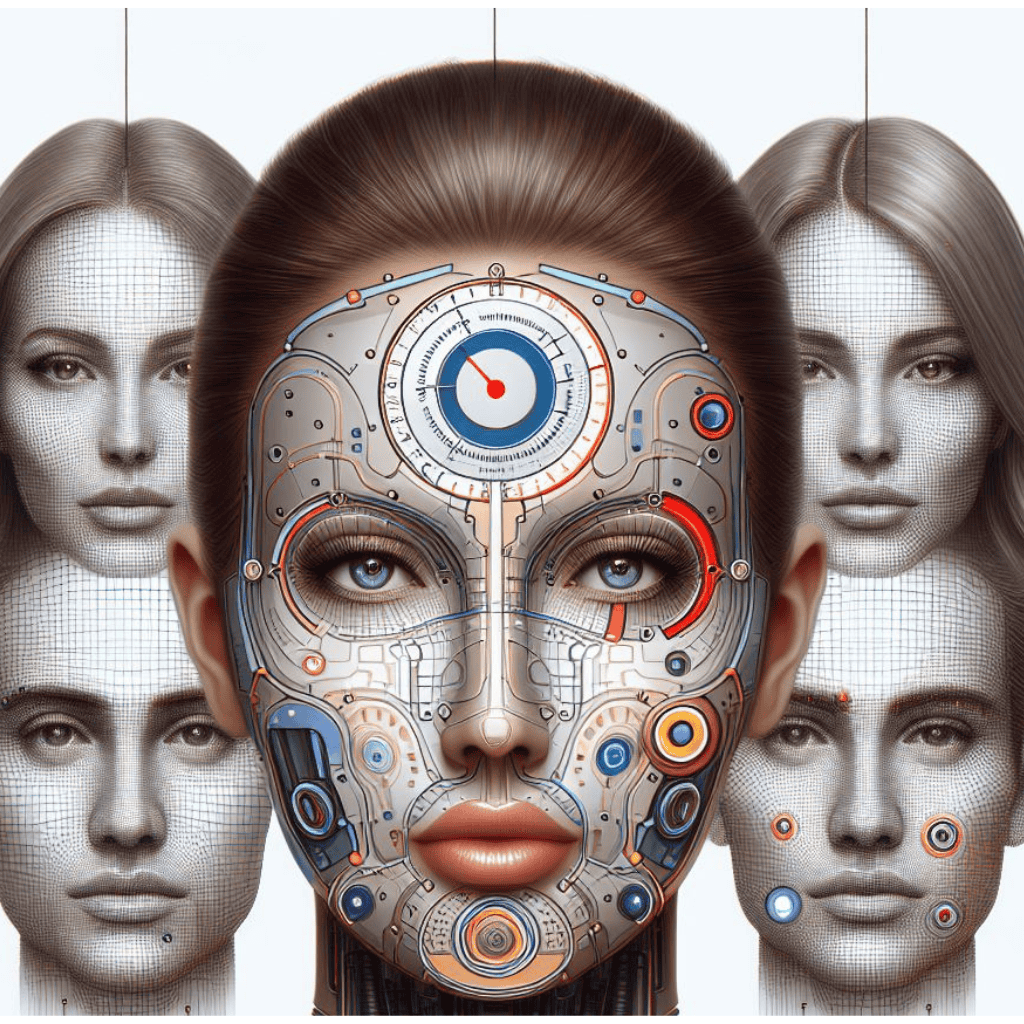
One such player in this field is Qoves Studio. Their AI-driven facial assessment system operates with lightning speed, analyzing uploaded photos within milliseconds. The results? A detailed report card outlining a laundry list of perceived flaws. From the well-known nasolabial folds (smile lines) to less familiar concerns like under-eye contour depression and periocular discoloration, Qoves Studio aims to identify every possible imperfection.
But the analysis continues beyond there. The system then recommends solutions, ranging from targeted beauty products to, in more extreme cases, surgical interventions. This creates a one-stop shop for users seeking to address these perceived flaws and achieve their ideal aesthetic.
However, it’s important to consider the limitations inherent in such an approach.
The Limitations of the Machine Gaze
While facial analysis tools offer a seemingly objective assessment, it’s crucial to recognize their limitations. These systems are trained on vast datasets of faces, often influenced by societal beauty standards. This inherent bias can skew the results, potentially overlooking unique features or cultural variations in what constitutes attractiveness.
Furthermore, these tools focus solely on the physical, neglecting the intangible aspects that make someone captivating. They cannot capture the spark of personality, the confidence that shines through, or the ineffable charisma that draws us in.
Ultimately, these tools offer a narrow view of beauty, akin to analyzing the individual notes of a symphony without appreciating the harmonious interplay that creates the music’s magic.
This section connects back to the article’s main theme – that attractiveness is a complex concept that goes beyond the physical. It highlights how AI tools might need help to capture the essence of what makes someone truly attractive.
Can AI See What We Miss?
Computer vision has made significant strides in facial recognition and analysis. This has opened the door to the intriguing possibility of AI unlocking the secrets of physical attractiveness. Machine learning algorithms, trained on massive datasets of faces, can now identify facial characteristics often associated with attractiveness across various cultures.
By meticulously analyzing the relationships between pixels, AI can potentially “see” what the human eye might miss. This analysis could uncover universal markers of beauty based on prevailing cultural standards. For instance, the algorithms might identify features like facial symmetry, clear skin, and specific proportions of facial features as indicators of attractiveness.
However, the key question remains: Do these metrics truly capture the essence of beauty? Cultural preferences for attractiveness are constantly evolving, and what’s considered beautiful in one society might not be in another. Additionally, focusing solely on these metrics neglects the significant role played by individual preferences and subjective interpretations of beauty.
While AI offers a fascinating glimpse into the quantifiable aspects of physical beauty, it’s important to remember that attractiveness is multifaceted. The true magic lies beyond the measurable—in a person’s unique spark, captivating personality, and overall charisma.
Limitations of AI Attractiveness Assessment
While AI’s ability to analyze faces is impressive, its effectiveness in accurately assessing attractiveness faces significant limitations. Let’s delve into two key challenges:
Subjectivity and Bias:
Attractiveness is far from a universal concept. What one person finds captivating, another might find ordinary. AI algorithms, however, need help grasping this level of subjectivity. They need a nuanced understanding of human cultural and individual preferences, which can lead to biased assessments.
For example, suppose the AI is trained on a dataset that predominantly features faces from a specific ethnicity or adheres to a narrow beauty standard. In that case, its evaluation will likely reflect those biases. Imagine an AI trained primarily on photos from Western fashion magazines; it might prioritize Eurocentric features as attractiveness markers, overlooking other cultures’ beauty standards.
Context and Emotional Factors:
Attractiveness isn’t static. It can be significantly influenced by context and emotional factors. Imagine someone radiating confidence during a presentation; they might be perceived as more attractive than usual. Conversely, feeling nervous on a first date might project a different aura. AI currently struggles to account for these contextual nuances and intangible factors like personality, confidence, and emotional state.
These factors play a crucial role in how we perceive others, and their absence in AI assessments limits their ability to capture the true essence of attractiveness. Ultimately, AI offers a glimpse into the measurable aspects of physical beauty. Still, it’s a narrow view that neglects the rich tapestry of human perception and the multifaceted nature of what makes someone attractive.
AI’s Role in the Beauty Industry
While the limitations of AI in attractiveness assessment are undeniable, AI is revolutionizing the beauty industry in exciting ways. It’s a powerful tool that goes beyond analyzing physical features, instead focusing on enhancing the outward expressions of our unique beauty.
Imagine a world where:
Virtual Try-On Becomes Reality: AI-powered apps allow you to virtually try different makeup looks before touching a product. Want to experiment with a bold red lip or a smoky eye? No problem! See how the colors complement your complexion and discover your perfect shade.
Personalized Skincare Solutions: Forget the one-size-fits-all approach. AI assistants can analyze your skin type, considering texture, oiliness, and sun damage. Based on this analysis, they can recommend a customized skincare routine with products designed to target your specific concerns.
Makeup Magic for Your Unique Features: No more flipping through endless makeup tutorials. AI makeup assistants can analyze your facial features and suggest styles that flatter your unique contours. Learn to highlight your best assets and create looks that make you feel confident and beautiful.
The Power of Recommendation: AI algorithms can analyze past purchases and preferences to suggest new beauty products you might love. Discover hidden gems and stay on top of the latest trends tailored to your tastes.
These are just a few examples of AI transforming the beauty industry. By focusing on personalization and offering a more data-driven approach, AI empowers us to embrace and enhance our beauty. It’s a tool that can guide us on our unique beauty journeys, not dictate a single standard.
The Future of Beauty
The future of beauty is not a dystopian vision of robots dictating our appearance. Instead, it’s a world where AI and human ingenuity collaborate to create a more personalized and empowering beauty experience. As AI technology evolves rapidly, we can expect even more sophisticated applications catering to our needs and preferences.
Imagine a future where:
AI Analyzes, We Personalize:
AI’s ability to analyze vast faces and beauty trends datasets will become even more refined. This data and information about your skin type, lifestyle, and personal preferences will be used to create truly customized beauty solutions. Imagine AI makeup tutorials that adapt to your changing skin conditions or skincare regimens that adjust based on your environment and daily activities.
Beyond Physical Attributes:
AI’s reach will extend beyond analyzing physical features. Imagine AI assistants considering your personality, style, and emotional state when recommending beauty products and routines. An AI stylist could suggest a bold lipstick shade to boost your confidence for an important presentation or recommend calming skincare products to help you unwind after a stressful day.
Augmented Reality Becomes Reality:
The lines between the physical and digital will continue to blur. Augmented reality (AR)-powered mirrors will allow you to virtually experiment with different hairstyles, hair colors, and even non-permanent cosmetic procedures. This technology will empower you to make informed decisions about your appearance and explore a world of possibilities before committing to a change.
Democratization of Beauty:
AI can play a crucial role in democratizing the beauty industry. Imagine AI-powered apps that translate beauty tutorials into multiple languages or offer accessibility features for visually impaired users. Additionally, AI can analyze and recommend beauty products across a wider range of price points, ensuring everyone has access to create their unique look.
However, it’s crucial to remember that AI is a tool, and the guiding hand behind it will always be human. Designers, developers, and beauty experts will shape how AI interacts with the beauty industry. They will ensure that AI is used ethically and inclusively, celebrating the multifaceted nature of human attraction. AI should empower users to explore their unique beauty, not dictate a standard.
The future of beauty is a collaboration. It’s about harnessing the power of AI to enhance our human creativity and expertise, ultimately creating a more personalized and fulfilling journey towards feeling confident and beautiful in our skin.
Conclusion
In summary, while AI has shown promising capabilities in assessing attractiveness through facial recognition and analysis, its accuracy could be more reliable due to cultural differences, the subjective nature of attractiveness, and ethical concerns. However, with further advancements in technology and a more comprehensive and diverse dataset, AI has the potential to improve its accuracy in the future.
Remember that true beauty lies beyond algorithms—our uniqueness, imperfections, and the stories etched on our faces. AI can be a valuable companion on this journey, illuminating the interplay between cultural standards and individual preferences, but the final arbiter of beauty will always remain delightfully human.
Stay tuned to TechInnovationPro.com for more in-depth insights into the latest advancements in artificial intelligence, machine learning, and other cutting-edge technologies!
What is Machine Learning? And how do I become an ML Engineer? All your questions were answered! Master the ML workflow, libraries, projects, and salary secrets!
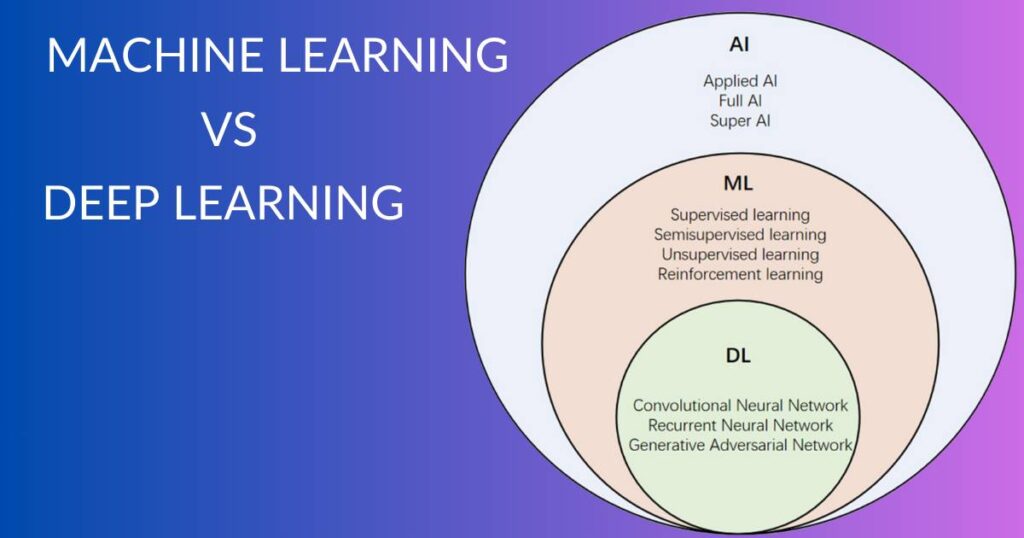
Machine learning (ML) is a subfield of artificial intelligence (AI) that focuses on the development of computer algorithms that can learn from data and improve their performance on a specific task over time. Imagine a child learning to identify different types of cars. Initially, they might need you to point out each car and tell them its name. But over time, they start to identify the patterns that distinguish cars from other objects, and eventually, they can do it on their own.
Imagine a computer that not only follows instructions but also learns from them. That’s the magic of machine learning (ML), a field of artificial intelligence (AI) where algorithms evolve with experience, unlocking a world of possibilities.
Before we delve into its intricate workings, let’s crack the code on its core concepts.
Learning on Autopilot: Unlike traditional, rule-based programs, ML algorithms don’t need explicit instructions. Instead, they devour training data, and sets of examples used to identify patterns and build models. Think of these models as brain maps, constantly refining their understanding of the world through the data they consume. This allows them to make predictions, whether it’s classifying an email as spam, recommending the perfect movie for you, or recognizing a loved one’s face in a photo.
A Historical Timeline: Though the term “machine learning” first surfaced in the 1950s, its roots date back centuries. Early pioneers like Ada Lovelace laid the groundwork for theoretical algorithms, while Alan Turing envisioned “learning machines” capable of intelligent behavior. Key breakthroughs throughout the 20th century, like artificial neural networks and statistical learning methods, paved the way for the explosive growth we witness today.
Everyday Encounters with ML: Look around, and you’ll see machine learning fingerprints everywhere. Search engines predict your next query based on past searches, recommendation systems suggest music you might love, and image recognition powers your phone’s face unlock. The list goes on: from speech recognition in voice assistants to spam filters shielding your inbox, ML has become an invisible friend, quietly enhancing our lives.
Embarking on a career as a Machine Learning Engineer is an exciting journey that requires a combination of education, skills development, and practical experience. In this guide, we will outline the essential steps to help you pave the way to becoming a proficient Machine Learning Engineer.
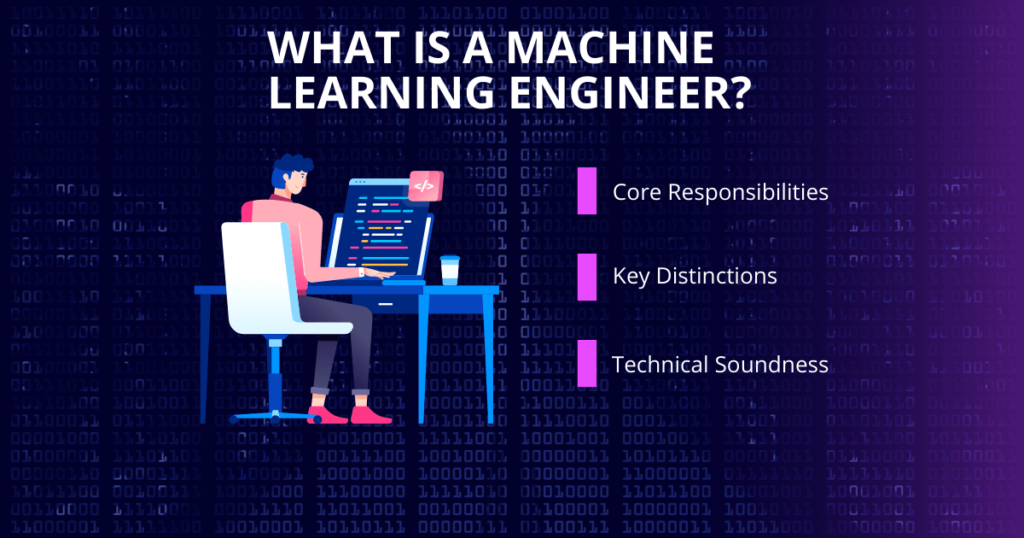
What is a Machine Learning engineer?
A Machine Learning Engineer is a professional at the intersection of software engineering and machine learning, specializing in creating programs that empower computers to learn and adapt autonomously. Much like software engineers, they exhibit proficiency in programming languages and are well-versed in tools such as IDEs, GitHub, and Docker.
Core Responsibilities:
Programming Proficiency: Machine learning engineers are adept programmers, utilizing their skills to develop software that enables computers to learn from data.
Integration of Software Engineering and ML: The distinguishing feature of a machine learning engineer is the fusion of software engineering expertise with in-depth knowledge of machine learning principles.
Focus on Self-Learning Systems: Unlike traditional software engineers, machine learning engineers center their efforts on creating programs that facilitate self-learning in computers.
Data-to-Product Conversion: The primary objective is to convert data into a tangible product. Machine learning engineers play a crucial role in transforming raw data into predictive models and automated systems.
Research and Development: Engaged in continuous research, machine learning engineers explore innovative approaches to improve and refine self-learning algorithms.
Model Building and Design: Machine learning engineers are involved in the entire lifecycle of model development, from conceptualization and design to implementation and optimization.
Key Distinctions:
Autonomous Learning Emphasis: The primary focus is on developing systems that can autonomously learn and adapt, distinguishing them from conventional software engineering roles.
Predictive Modeling: Machine learning engineers specialize in creating predictive models, enabling computers to make informed decisions based on patterns and data.
Automation of Processes: They contribute to the automation of various processes by leveraging machine learning algorithms, leading to increased efficiency and accuracy.
Technical Soundness:
Research-Driven Approach: Machine learning engineers approach problem-solving with a research-oriented mindset, staying abreast of the latest advancements in both machine learning and software engineering.
Technical Design and Implementation: Proficient in designing and implementing technically sound solutions, machine learning engineers ensure that the developed systems meet the desired objectives.
In summary, a Machine Learning engineer is a skilled professional who harmoniously blends the principles of software engineering with the intricacies of machine learning, working towards the goal of transforming data into intelligent, self-learning products and systems.
Cracking the Machine Learning Code: Algorithms, Models, and Methods
Explore the intricate world of ML, from cutting-edge algorithms to advanced models. Elevate your understanding with insightful methods. Let the journey to mastering Machine Learning begin!
Behind the Curtain of Algorithms: But how do these algorithms learn? Imagine a vast network of interconnected nodes, each representing a “neuron” in a digital brain. As data flows through, these nodes adjust their connections, strengthening some and weakening others, until patterns emerge. This iterative process, known as optimization, helps the model refine its understanding of the data.
Model Mayhem: Just like tools in a toolbox, different ML models serve distinct purposes. Neural networks, mimicking the human brain’s structure, excel at complex tasks like image recognition and language translation. Support vector machines, on the other hand, are champions of classification, drawing clear boundaries between distinct data points. Other models, like Bayesian networks and decision trees, offer unique strengths, each tailor-made for specific problems.
Learning Paradigms: But how do these models “know” what to learn? This depends on the learning paradigm. Supervised learning is the teacher-student relationship, where labeled data (with both inputs and outputs) guides the model towards making accurate predictions. Think of spam filters trained on labeled emails—each “spam” or “not spam” example teaches the model to identify new emails correctly.
Unsupervised learning throws away the training wheels. With unlabeled data, the model must discover patterns on its own. Imagine clustering customer data to identify distinct market segments—the model finds hidden groupings without any prior labels. Finally, reinforcement learning takes a trial-and-error approach. Imagine an AI playing a game; its actions receive rewards or penalties, shaping its future decisions through a “learn by doing” process.
Methodological Toolbox: Now, let’s explore the arsenal of methods these models wield. Classification puts data into pre-defined categories, like sorting emails or identifying objects in images. Regression models relationships between variables, predicting trends like stock prices or housing values. Clustering uncovers hidden patterns and groupings, ideal for market segmentation or anomaly detection. Finally, dimensionality reduction tackles data overload by condensing complex datasets into manageable forms, facilitating better understanding and analysis.
ML vs. Traditional Software: A Face-Off: So, why choose ML over traditional software? ML’s superpowers lie in its adaptability and flexibility. It thrives on data, constantly improving its predictions over time. However, traditional software still reigns supreme in tasks requiring well-defined rules and deterministic outcomes. The key is understanding where each shines—think of ML as a creative problem solver, while traditional software excels at predictable, rule-based tasks.
Limitations and Challenges: Of course, ML isn’t perfect. Its dependence on data exposes vulnerabilities like bias and interpretability. Biases in training data can lead to unfair or discriminatory outcomes, highlighting the need for responsible data sourcing and model development. Additionally, understanding how complex models arrive at their conclusions can be challenging, making it difficult to explain their decisions or gain trust in their predictions.
This is just the first step in our journey through the intricate world of machine learning algorithms. In the next section, we’ll dive deeper into the practical aspects of ML development, from data handling to real-world case studies, and explore the exciting future possibilities this field holds.
The Machine Learning Development Workflow
Building an effective machine learning model isn’t simply an act of inspiration; it’s a meticulously crafted journey from data collection to real-world application. Buckle up as we dissect the key stages of this fascinating process:
1. Data, the Indispensable Fuel: Every ML journey starts with data, the raw material fueling the learning process. Collection involves gathering relevant data from various sources, be it internal databases, sensors, web scraping, or external datasets. But data isn’t always pristine. Cleaning becomes crucial in tackling issues like missing values, inconsistencies, and duplicates. Imagine scrubbing a dirty canvas before painting; clean data lays the foundation for a clear and accurate model.
2. Model Training: Where Magic Happens: Now, the cleaned data gets fed to the chosen algorithm. This is where the training phase kicks in. Think of it as the model going to school, learning from the data to identify patterns and relationships. This iterative process, involving optimization techniques, fine-tunes the model’s parameters, gradually sharpening its predictive abilities.
3. Deployment: From Sandbox to Reality: Once trained, the model graduates to the real world. Deployment involves integrating it into the target application, be it a website, mobile app, or even physical machinery. This can involve challenges like scaling the model to handle large volumes of data, ensuring its security and reliability, and monitoring its performance in production.
Real-World Case Studies: ML in Action
Now, let’s witness the power of ML in action, exploring how companies are harnessing its magic:
Netflix: Recommends movies and shows you’ll love based on your past viewing habits, a testament to the power of collaborative filtering algorithms.
Spotify: Creates personalized playlists that match your musical taste, using clustering techniques to group similar songs and identify your preferences.
Fraud Detection: Banks and financial institutions utilize anomaly detection algorithms to identify suspicious transactions and prevent fraud in real time.
Medical Diagnosis: AI-powered systems are being developed to analyze medical images and assist doctors in diagnosis, potentially leading to earlier and more accurate detection of diseases.
These are just a glimpse into the vast potential of ML. As the field continues to evolve, we can expect even more transformative applications in healthcare, climate change, and beyond.
Remember, the ML development workflow is an iterative process. Data insights can inform model refinement, leading to improved performance and real-world impact. The key lies in fostering a culture of continuous learning and experimentation, which will allow us to unlock the full potential of this revolutionary technology.
How to Become a Machine Learning Engineer?
So, the magic of machine learning has captivated you, and you’re eager to join the ranks of those building these intelligent systems. But where do you start? Don’t worry, aspiring engineer, for the path to becoming an ML whiz is paved with excitement and resources. Let’s unveil the essential steps you can take to turn your passion into a fulfilling career:
Undergraduate Degree
For aspiring machine learning engineers, a bachelor’s degree in mathematics, data science, computer science, or computer programming is ideal. Related fields like statistics or physics can also be applicable. Business degrees can be a starting point, but technical training in essential sciences is necessary for a comprehensive skill set.
Master’s or Ph.D.
While a Master’s degree or Ph.D. is not strictly necessary to become a machine learning engineer, it can significantly enhance your opportunities and skill set. Many machine learning roles may require or prefer advanced degrees, especially for research-focused positions or specialized domains within the field.
Hands-On Experience
Practical experience is invaluable for gaining proficiency in machine learning. Hands-on engagement with algorithms and software design allows you to apply theoretical knowledge to real-world scenarios, fostering a deeper understanding of machine learning concepts.
Advanced Mathematics Knowledge
Machine learning engineers must possess advanced knowledge of mathematics and strong data analytical skills. A solid grasp of mathematical concepts is crucial for developing and fine-tuning Machine Learning algorithms.
Fundamentals of Computer Science
Understanding the basics of computer science is essential for Machine Learning engineers. This includes knowledge of data structures, data modeling, algorithms, software, and computer architecture, forming the backbone of a successful career in machine learning.
Automation Practices
Familiarity with essential automation practices is beneficial for those aspiring to excel in the field of machine learning. This understanding enables you to streamline processes and enhance efficiency in developing Machine Learning solutions.
System Design Concepts
System design concepts are critical for machine learning engineers. Knowing how to architect systems ensures the efficient implementation of machine learning models and solutions within broader technological frameworks.
Additional Skills for Machine Learning Engineers
Data Modeling and Evaluation
Developing expertise in data modeling and evaluation is essential. This skill involves creating effective models and assessing their performance, a crucial aspect of refining machine learning solutions.
Application of Machine Learning Algorithms
Aspiring machine learning engineers should learn how to apply machine learning algorithms to various problems. This can be achieved through hands-on practice using datasets, machine learning libraries, and online learning resources.
By combining these qualifications and skills with a structured learning approach, aspiring machine learning engineers can embark on a successful journey in this dynamic and evolving field.
Remember, becoming an ML engineer is a marathon, not a sprint. Be patient, persistent, and passionate. Celebrate your wins, learn from your mistakes, and, above all, enjoy the journey of unlocking the secrets of machine learning. With dedication and the right toolkit, you too can join the ranks of these AI alchemists, shaping the future with every line of code and every innovative model you build.
How to Become a Machine Learning Engineer Without a Degree?
There are several ways to become a Machine Learning engineer without a degree. Here are some steps you can take:
Learn to code: Python is a popular language for machine learning. You can start by learning the basics of Python programming language and then move on to more advanced topics.
Enroll in a machine learning course: There are many online courses available that can teach you the fundamentals of machine learning. Some popular platforms include Coursera, Udemy, and edX.
Try a personal machine learning project: Once you have a basic understanding of machine learning, try building a project on your own. This will help you gain practical experience and build your portfolio.
Join online machine learning communities or participate in a contest: Joining online communities such as Kaggle or GitHub can help you connect with other machine learning enthusiasts and learn from their experiences.
Apply to machine learning internships and jobs: Once you have gained enough knowledge and experience, start applying for machine learning internships or jobs. You can also consider freelancing or working on your own projects.
Remember, becoming a machine learning engineer without a degree is possible but requires hard work, dedication, and a willingness to learn.
How long does it take to become a machine learning engineer?
The time it takes to become a machine learning engineer can vary depending on your background, experience, and the amount of time you can dedicate to learning. According to Syracuse University, it can take about 18 months to two years to become a machine learning engineer. However, this is just an estimate and the actual time it takes can be shorter or longer depending on your individual circumstances.
To become a machine learning engineer, you need to have a strong foundation in programming and mathematics. You can start by learning the basics of Python programming language and then move on to more advanced topics.
There are many online courses available that can teach you the fundamentals of machine learning, such as Coursera, Udemy, and edX. Once you have a basic understanding of machine learning, try building a project on your own. This will help you gain practical experience and build your portfolio.
Joining online communities such as Kaggle or GitHub can help you connect with other Machine Learning enthusiasts and learn from their experiences. Once you have gained enough knowledge and experience, start applying for machine learning internships or jobs. You can also consider freelancing or working on your own projects.
Remember, becoming a machine learning engineer requires hard work, dedication, and a willingness to learn. Good luck!
What are some Machine Learning libraries I can use?
There are many Machine Learning libraries available that can help you with your projects. Here are some popular ones:
NumPy: A popular Python library for multi-dimensional array and matrix processing. It’s ideal for machine learning and artificial intelligence (AI) projects, allowing users to manipulate the matrix to easily improve machine learning performance.
2. Scikit-learn: A very popular machine learning library that is built on NumPy and SciPy. It supports most of the classic supervised and unsupervised learning algorithms, and it can also be used for data mining, modeling, and analysis.
3. TensorFlow: An open-source software library for dataflow and differentiable programming across a range of tasks. It is a symbolic math library, and is also used for machine learning applications such as neural networks.
4. Keras: A high-level neural networks API, written in Python and capable of running on top of TensorFlow, CNTK, or Theano. It was developed with a focus on enabling fast experimentation.
5. PyTorch: An open-source machine learning library based on the Torch library. It is primarily developed by Facebook’s AI Research lab. PyTorch provides two high-level features: tensor computation (like NumPy) with strong GPU acceleration and deep neural networks built on a tape-based autodiff system.
You can find more information about these libraries and others on websites likeCoursera, Educba, and upGrad. Good luck with your projects! 😊
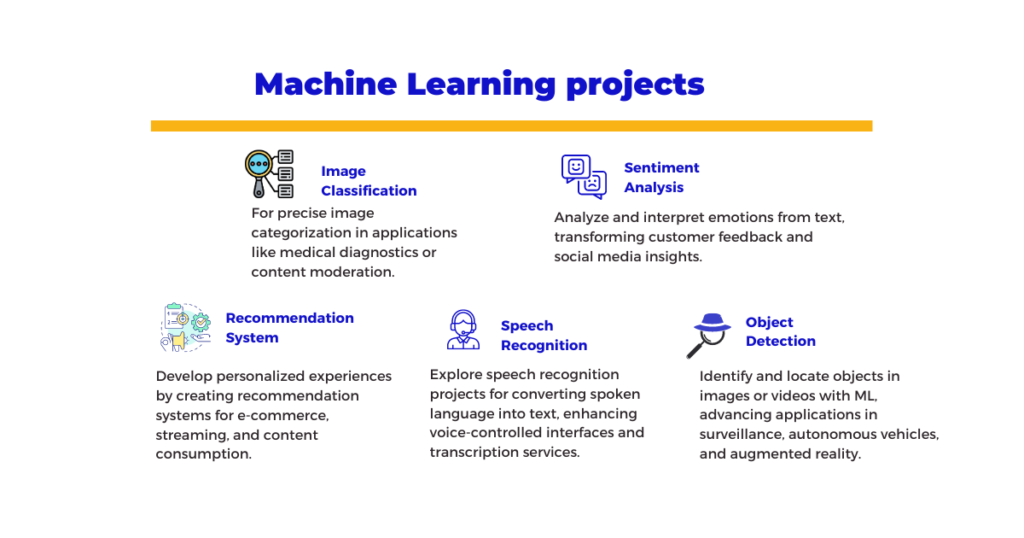
What are some Machine Learning projects I can work on?
There are many machine learning projects that you can work on. Here are some ideas to get you started:
Image classification: Build a model that can classify images into different categories. For example, you can build a model that can identify different types of flowers.
Sentiment analysis: Develop a model that can analyze text and determine the sentiment behind it. For example, you can build a model that can determine whether a movie review is positive or negative.
Recommendation system: Build a model that can recommend products or services to users based on their preferences. For example, you can build a model that can recommend movies to users based on their viewing history.
Speech recognition: Develop a model that can recognize speech and convert it into text. For example, you can build a model that can transcribe audio recordings into text.
Object detection: Build a model that can detect objects in images or videos. For example, you can build a model that can detect cars in traffic footage.
According to various salary aggregate sites, the average salary for a machine learning engineer in the United States ranges from $116,416 to $140,180 depending on experience, industry, and location. The average salary for a machine learning engineer in the United States is $161,555 per year. The salary range for a machine learning engineer is $44K-$170K.
It’s important to note that the salary of a machine learning engineer can be influenced by many factors, such as experience, industry, and geographic location. According to Glassdoor, the experience breaks down as follows:
0-1 years: $127,350
1-3 years: $144,572
4-6 years: $150,193
7-9 years: $154,779
10-14 years: $162,356
15+ years: $170,603
Machine learning engineers are in high demand in many industries, including healthcare, transportation, finance, agriculture, and cybersecurity. If you’re interested in pursuing a career in machine learning engineering, you can expect to make much more than the median salary in the United States.
Conclusion
We’ve embarked on a whirlwind journey through the fascinating world of machine learning, exploring its inner workings, potential applications, and real-world examples. Now, as we stand at the crossroads of the present and future, let’s reflect on the key takeaways and peer into the exciting possibilities that lie ahead.
A Recap of Wonders: Machine learning has unveiled its magic, demonstrating its ability to learn, adapt, and evolve. We’ve witnessed how algorithms decipher patterns in data, generating predictions from spam filtering to image recognition. Different models, like neural networks and support vector machines, tackle diverse tasks, while supervised, unsupervised, and reinforcement learning offer unique learning paradigms.
We’ve also acknowledged the strengths and limitations of ML, its dependence on data, and the challenges of bias and interpretability. Importantly, we’ve delved into the intricate development workflow, from data collection and cleaning to model training and deployment, highlighting the critical role of continuous learning and refinement.
Open Questions Remain: Despite its advancements, several questions remain open for exploration. Can we achieve true artificial general intelligence, replicating the vast learning capabilities of the human brain? How do we mitigate biases and ensure the ethical development of ML systems? Can we make complex models more interpretable, fostering trust and transparency? These are crucial questions that will shape the future trajectory of this field.
Predictions for an ML-Powered Future: As we gaze into the crystal ball, the future seems ablaze with the potential of machine learning. Imagine personalized healthcare with AI-powered diagnosis and treatment plans. Envision self-driving cars that navigate city streets with superhuman precision. Picture an education system tailored to individual learning styles, maximizing the potential of every student. These are just a few glimpses of the transformative world that awaits, where ML acts as a silent co-pilot, enhancing every aspect of our lives.
The journey of machine learning has just begun. As we continue to delve deeper into its intricacies, harness its potential responsibly, and address its challenges, we stand poised to unlock a future brimming with possibilities. This is not just a technological revolution; it’s a chance to reshape our world for the better, one algorithm at a time.
What exactly is machine learning?
Machine learning is a subfield of artificial intelligence (AI) that focuses on the development of algorithms and statistical models that enable computer systems to improve their performance on a specific task through experience and learning from data, without being explicitly programmed. In other words, machine learning allows computers to learn patterns and make predictions or decisions based on data inputs.
What are the real-world applications of machine learning?
From recommending your next favorite movie to detecting fraudulent transactions, ML powers diverse applications across various industries. It helps doctors diagnose diseases more accurately, personalizes your online experience, and even fuels self-driving cars!
What skills do I need to become a machine learning engineer?
Strong mathematical and coding skills are essential, especially in areas like statistics, linear algebra, and programming languages like Python or R. Additionally, understanding data structures, algorithms, and software engineering principles is crucial. Bonus points for a grasp of business acumen to understand the practical needs of different applications.
Do I need a degree to become an ML engineer?
While a degree in computer science, data science, or mathematics can provide a strong foundation, it’s not a mandatory requirement. The field welcomes self-driven learners who acquire relevant skills through online courses, bootcamps, and hands-on projects. Dedication, passion for learning, and a knack for problem-solving are key ingredients for success.
Where do I start my journey to becoming an ML engineer?
Start by building your knowledge base through online courses, books, and tutorials. Focus on core concepts like training data, algorithms, and different types of learning. Next, get your hands dirty with personal projects, participating in online communities like Kaggle, and taking on freelance gigs. Finally, stay relevant by continuously learning new tools and keeping up with the ever-evolving landscape of ML.
What if AI could unlock medical mysteries that have baffled doctors for decades? Imagine an algorithm that can scan patient data and detect illness earlier than the sharpest human eye. Or intelligent robots working tirelessly to analyze cancer treatments, identify new cures, and save lives.
The healthcare field has long been ripe for a revolution. An aging population is battling chronic disease. Rising costs that restrict patient access. Systemic inequalities impact the most vulnerable. The need for innovation has never been more urgent.
Enter AI—artificial intelligence. Once the stuff of science fiction, this extraordinary technology is now very real, and very promising for the future of medicine. AI systems can process vast amounts of complex data, and find patterns and connections beyond human capability. Machines never tire and never get distracted. And with the wealth of health data available today, their potential to pinpoint cures and optimize treatments is astounding.
For patients, this offers new hope in the fight against everything from cancer to diabetes, to Alzheimer’s. For doctors, AI promises to free up precious time, allowing greater focus on hands-on patient care. And for the medical system overall, the benefits of cost and efficiency could revolutionize the way we look at healthcare.
So get ready for a thrilling ride into this brave new frontier! AI is the all-powerful engine, and better health for all is the destination. Discoveries once deemed impossible may soon be within our grasp. It’s not hyperbole to say AI can unleash medical superpowers beyond our wildest imagination!
The Role of Technology and AI in Healthcare
Remember the bulky desktop computers of the past that took up entire rooms? My, how times have changed! Today, advanced technology and AI are shrinking down to fit neatly into the pockets and palms of healthcare professionals everywhere. And they’re bringing some serious superpowers along for the ride!
No longer are nurses and doctors tethered to chunky workstations – now lightweight mobile devices follow them from room to room, packed with AI assistants eager to lend a hand. At the tap of a finger, these sidekicks can pull up a patient’s full medical history, analyze test results, suggest treatments, and more. Healthcare pros have instant access to an arsenal of support tools they can wield as skillfully as Marvel’s Avengers!
Cloud computing fuels these magical devices even further by enabling them to link into powerful off-site systems that find insights in oceans of data. Together, AI and the cloud form a kind of Voltron that allows healthcare workers to diagnose and cure like never before!
Big shots are taking notice too. Tech titans like Microsoft’s Satya Nadella and Apple’s Tim Cook are placing their bets on healthcare, unleashing funding and expertise to usher in a new era. An era where short-staffed clinics can serve more people…where overworked professionals get relief…and where patients get the precise, personalized care they deserve.
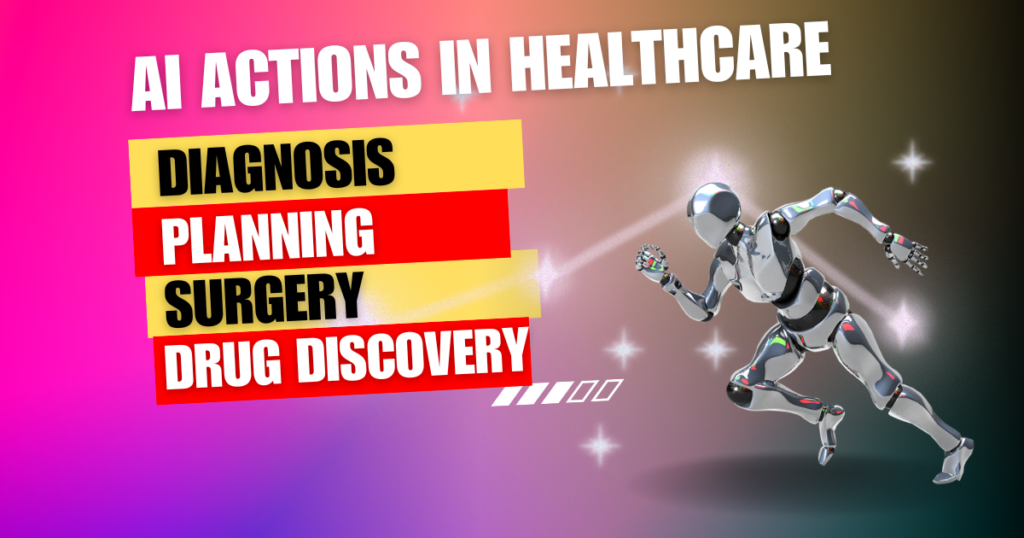
Diagnosis: Unleashing AI’s Superpowers in Healthcare: Ever wished for a medical superhero with eyes as sharp as an eagle and a mind that rivals the genius of Einstein? Well, AI is here to make that dream a reality. Picture this: no more squinting at blurry X-rays or enduring weeks of nail-biting waits for lab results. AI swoops in like a digital eagle, analyzing medical images with superhuman precision. It spots tumors that might have gone incognito and detects fractures that were attempting a stealth move. But that’s not all—it’s like having a crystal ball for your health. AI predicts heart attacks before they even think about striking, spots the early whispers of Alzheimer’s, and can identify rare diseases faster than flipping through a medical textbook. Imagine living in a world where a simple scan unveils your health future with uncanny accuracy, allowing doctors to intervene before symptoms even make an entrance. That’s the power of AI, turning healthcare into a proactive journey.
Treatment Planning: Your Health, Your Way – Thanks to AI: Goodbye, one-size-fits-all medicine; hello, tailor-made treatment plans! AI algorithms are like personal stylists for your health, crafting therapies as unique as your fingerprint. They dive into your genetic makeup, sift through your medical history, and even take note of your lifestyle choices to create treatments that fit you like a glove. No more crossing your fingers with generic regimens or playing medication roulette. AI brings precision to the party, ensuring the right treatment lands on the right target at the right time. It’s like having a health plan customized just for you, maximizing your chances of bouncing back stronger than ever.
Surgery: AI-Assisted Magic in the Operating Room: Move over, traditional surgery; it’s time for AI-assisted magic! Picture this: nimble robotic arms guided by the keen eye of AI, performing surgeries with surgical precision. Forget days of recovery – these minimally invasive procedures are like disappearing acts, leaving you wondering if you ever underwent surgery at all. Whether it’s delicate brain surgery or complex joint replacements, AI is stealing the spotlight in the operating room, making the seemingly impossible possible. Surgeons, meet your AI co-pilots; they’ve got steady hands and scalpel smarts that redefine the future of surgical excellence.
Drug Discovery: AI – The Rocket Fuel for Medical Breakthroughs: Tired of waiting decades for miracle cures? Enter AI, the rocket ship propelling us into a new era of drug discovery. Say farewell to years of laborious lab work and the sluggish pace of drug development. AI sifts through mountains of data, identifying potential drug candidates and predicting their effectiveness at warp speed. It’s not just stopping there – AI can even design medications tailored to your unique genetic code, bringing the concept of personalized medicine to life. Brace yourselves; the future of medicine is arriving faster than you can say “breakthrough,” and AI is at the helm, shaping it one molecule at a time.
Mental Health: AI, Your Compassionate Companion: Mental health struggles can often feel like a lonely journey, but fear not – AI is here to be your steadfast companion. Picture this: chatbots with the wisdom of a therapist and virtual assistants offering personalized mindfulness exercises. AI is transforming the mental health landscape, providing a friend who listens without judgment, offering evidence-based coping mechanisms, and delivering 24/7 support for anxiety, depression, and more. Imagine having a compassionate, non-judgmental friend right in your pocket or on your bedside table, ready to lend a helping hand whenever you need it. The future of mental health support is here, and AI is extending a friendly hand to guide you through it.
Benefits of AI in Healthcare
In the realm of healthcare, Artificial Intelligence (AI) emerges as a transformative force, yielding an array of advantages. Its influence extends to refining operational efficiency, user interactions, diagnostic processes, and overall safety within healthcare systems. Let’s delve into the multifaceted benefits that AI brings to the healthcare domain:
Augmented Operational Efficiency: Healthcare entities leverage AI to optimize a spectrum of operations, spanning from mundane back-office tasks to the intricacies of patient care. Through the integration of AI and automation, the tedious aspects of daily tasks are alleviated, granting personnel more time for direct patient engagement and face-to-face interactions.
Mitigated Errors: The discerning capabilities of AI contribute significantly to error reduction in healthcare. By scrutinizing extensive datasets, AI can pinpoint patterns and anomalies, offering a proactive approach to identifying errors, such as miscalculations in patient self-administration of medications.
Elevated Patient Care Standards: AI plays a pivotal role in enhancing patient care by tailoring treatment plans to individual needs and forecasting patient survival rates. This personalized approach signifies a paradigm shift towards more effective and patient-centric healthcare delivery.
Streamlined Communication Channels: The integration of AI facilitates the automation of administrative and clinical workflows. This not only enriches the overall patient experience but also enhances the day-to-day functionality of healthcare facilities, streamlining communication and coordination.
Facilitation of Novel Discoveries: AI empowers researchers with the ability to unravel new treatment modalities and potential cures for diseases. Through the meticulous analysis of voluminous data sets, AI identifies intricate patterns that may elude human perception, propelling the healthcare sector towards groundbreaking discoveries.
In conclusion, the integration of AI into healthcare not only marks a technological evolution but also signifies a redefinition of standards, promising a future where efficiency, precision, and patient-centricity converge for the betterment of healthcare services.
How AI is Diagnosing Diseases Faster & Predicting Outbreaks
Remember that scene in Star Trek where Dr. McCoy whips out his tricorder and instantly diagnoses Klingon heartburn? While we haven’t quite reached tricorder territory, AI in healthcare is rapidly turning science fiction into reality, and the implications are nothing short of groundbreaking.
Diagnosing Diseases at Superhuman Speed: Imagine AI algorithms analyzing medical scans with eagle-eyed precision, spotting tumors invisible to the human eye, or identifying rare diseases in a fraction of the time it takes now. This isn’t a fantasy; it’s happening! AI-powered tools are already aiding doctors in early and accurate diagnoses, potentially saving lives and improving patient outcomes.
Predicting Outbreaks Before They Happen: Remember the scramble during the pandemic? AI can help us stay ahead of the curve by analyzing vast datasets of disease patterns, travel information, and environmental factors. This allows for early warnings of potential outbreaks, giving us precious time to prepare for and mitigate their impact. Think of it as having a real-life, disease-fighting crystal ball!
Personalized Drugs: One-size-fits-all medicine is slowly becoming a thing of the past. With AI analyzing a patient’s unique genetic makeup and medical history, we’re on the cusp of creating personalized drugs. These drugs would be specifically designed to target the root cause of a disease in an individual, potentially leading to more effective and less harmful treatments.
But is it all sunshine and rainbows? Like any powerful technology, AI in healthcare comes with its own set of challenges. Data privacy, ethical considerations, and the potential for bias in algorithms are all concerns that need to be addressed. However, the potential benefits far outweigh the risks, and with careful development and implementation, AI has the power to revolutionize healthcare for the better.
What are some challenges of using AI in Healthcare?
While the promise of AI-powered healthcare glitters like a futuristic utopia, it’s important to remember that no revolution is without its roadblocks. As we embrace this technological marvel, we must also confront the potential pitfalls and ethical dilemmas that lurk in the shadows.
Data Privacy: Your Scans, Your Story, Whose Hands?: AI thrives on data, and healthcare provides a treasure trove of sensitive information. From blood test results to genetic blueprints, our medical records paint an intimate portrait of our lives. Ensuring the privacy and security of this data is paramount. We must establish robust safeguards against breaches, empower patients with control over their data, and foster transparency about how their information is used.
Transparency and Trust: Black Box Blues?: AI algorithms can be powerful, but they can also be opaque. How do we trust a machine that spits out diagnoses with little explanation? Without transparency in how these algorithms work, mistrust and bias can fester. We need developers to shed light on their algorithms, explain their decision-making processes, and involve medical professionals in their development to ensure they align with human values and ethical principles.
Job Displacement: Robots Stealing Stethoscopes?: Automation is often a double-edged sword. While AI promises to revolutionize healthcare, it might also lead to job displacement in certain sectors. We must acknowledge this potential challenge and prepare for it. Upskilling and reskilling programs for healthcare workers, coupled with ethical guidelines for responsible AI implementation, can help ensure a smooth transition and protect livelihoods.
Bias in the Code: Algorithms with Unconscious Prejudice?: AI algorithms are only as good as the data they’re trained on. Unfortunately, biases and prejudices can sneak into datasets, leading to discriminatory outcomes in healthcare. Imagine an AI recommending fewer preventative treatments for patients from marginalized communities. We must combat algorithmic bias by diversifying training datasets, fostering inclusive development teams, and constantly testing and monitoring AI systems for fairness and equity.
These challenges are not insurmountable, but they demand serious consideration and proactive solutions. Responsible development, ongoing public discourse, and ethical frameworks are crucial to harnessing the power of AI in healthcare for the benefit of all. The future of medicine may be powered by algorithms, but it must be guided by human values, empathy, and a commitment to ethical advancement.
The Future of AI in Healthcare: Where Humans and Machines Co-Pilot Wellness
Close your eyes. Imagine a world where medical diagnoses are instantaneous, delivered by AI doctors analyzing your genome in real-time. Picture personalized, AI-designed medicines, crafted to your unique biology, targeting diseases with pinpoint accuracy. Envision AI-powered robots, nimble surgeons performing complex procedures with microscopic precision, leaving you with barely a whisper of a scar. Welcome to the future of healthcare, a symphony composed by human ingenuity and conducted by the powerful algorithms of AI.
In this future, AI won’t replace doctors, it will be their superhuman partner. Imagine AI assistants deciphering complex medical literature, suggesting diagnoses, and even proposing treatment plans, all while allowing doctors to focus on the human touch, the empathy, and the nuanced decision-making that only they can provide. This collaboration between humans and machines will be the engine of medical progress, pushing the boundaries of what’s possible.
Get ready for AI-powered nanobots patrolling your bloodstream, hunting down diseased cells before they even have a chance to multiply. Witness AI wearables predicting your health emergencies before they happen, giving you the precious gift of prevention. And prepare to be awestruck by AI therapists building deep connections with patients, offering personalized therapy regimens tailored to their specific needs and emotional landscapes.
The future of healthcare with AI is not just about efficiency and precision; it’s about accessibility and human connection. Imagine AI-powered medical drones delivering life-saving supplies to remote villages, or virtual clinics connecting patients in war-torn regions to specialists across the globe. This is a future where everyone, regardless of location or income, has access to the best possible healthcare.
And what about the ethical concerns? Don’t worry, the future of AI in healthcare is being built on a foundation of robust ethical frameworks and public dialogues. Transparency will be the keyword, with algorithms explainable and biases actively monitored and mitigated. Data privacy will be paramount, with patients empowered to control their information and AI held accountable for its use.
So, are you ready to step into this future? The future where AI isn’t just a science fiction trope, but a trusted partner in our journey towards optimal health? Buckle up, humanity, because the future of healthcare is waiting, and it’s powered by the extraordinary potential of AI. Let’s embrace this technological revolution with open minds and open hearts, knowing that together, humans and machines can create a healthier, happier, and more hopeful tomorrow.
What are some prerequisites for the AI in Healthcare Specialization?
The AI in Healthcare Specialization provided by Stanford University through Coursera comprises a series of five courses. These modules delve into diverse subjects, including recognizing challenges faced by healthcare providers that can be addressed through machine learning, assessing the impact of AI on patient care safety, quality, and research, and applying the fundamental elements of AI to foster innovation and comprehension of emerging technologies. Tailored for both healthcare professionals and computer science experts, these courses aim to foster collaboration between these two disciplines.
While there are no prerequisites for enrollment in this specialization, a foundational grasp of statistics, probability, and programming is recommended. For those eager to explore the realm of AI in healthcare further, consider the following resources:
Coursera’s article on AI in Health Care: Applications, Benefits, and Examples offers a comprehensive overview of how AI is reshaping healthcare, present and future. The article covers types of AI implementations, applications in healthcare, benefits for patients and providers, and potential career opportunities in the field.
IBM’s blog post on The benefits of AI in healthcare provides insights into the diverse applications of AI in healthcare, from answering patient queries to assisting in surgeries, developing new pharmaceuticals, and enhancing overall efficiency and communication.
McKinsey & Company’s report on Transforming healthcare with AI critically evaluates the impact of AI on healthcare across Europe and beyond. This assessment is based on proprietary research and analyses conducted by EIT Health and McKinsey & Company.
Conclusion: A Brave New World of Healthcare – Powered by AI
We’ve caught a glimpse of the future, and it’s nothing short of amazing. AI isn’t just stepping into the role of a doctor – it’s rewriting the entire medical story. From lightning-fast diagnoses to personalized treatment plans, from robots with scalpel finesse to AI companions guiding us through mental health struggles, the potential of AI in healthcare is nothing short of revolutionary.
Yet, it’s not all sunshine and algorithms. Navigating the ethical challenges of data privacy, algorithmic bias, and potential job displacement requires careful consideration. Responsible development, transparency, and a commitment to human values serve as our guiding stars on this exciting journey.
The future of healthcare with AI isn’t a predetermined script – it’s a blank canvas waiting for our collective brushstrokes. Let’s paint a picture where technology enhances human compassion, where precision diagnoses lead to personalized care, and where everyone, regardless of circumstance, has access to top-notch health services.
So, will AI be the hero in our healthcare story? That’s a decision for us to make. Let’s engage in thoughtful discussions, demand ethical development, and actively shape a future where humans and machines co-pilot our well-being. Remember, the power to revolutionize healthcare doesn’t just lie in algorithms – it lies in our choices, our voices, and our unwavering commitment to a healthier future for all.
Ready to be part of this AI-powered healthcare revolution? Dive deeper into specific applications, explore the voices of those already benefiting from these advancements, and raise your voice to ensure ethical development. The future of healthcare is waiting, and it’s time to take the reins, together.
Simplify your life with the help of these 5 AI assistant apps for Android, offering a range of features to make your tasks easier and more efficient.
Forget juggling to-do lists, drowning in emails, and wrestling with smart home settings. The future of personal organization is here, and it’s nestled comfortably in your Android phone. Artificial intelligence assistants are no longer sci-fi dreams; they’re pocket-sized wizards ready to streamline your everyday chaos. And guess what? You don’t need spells or potions—just the right app.
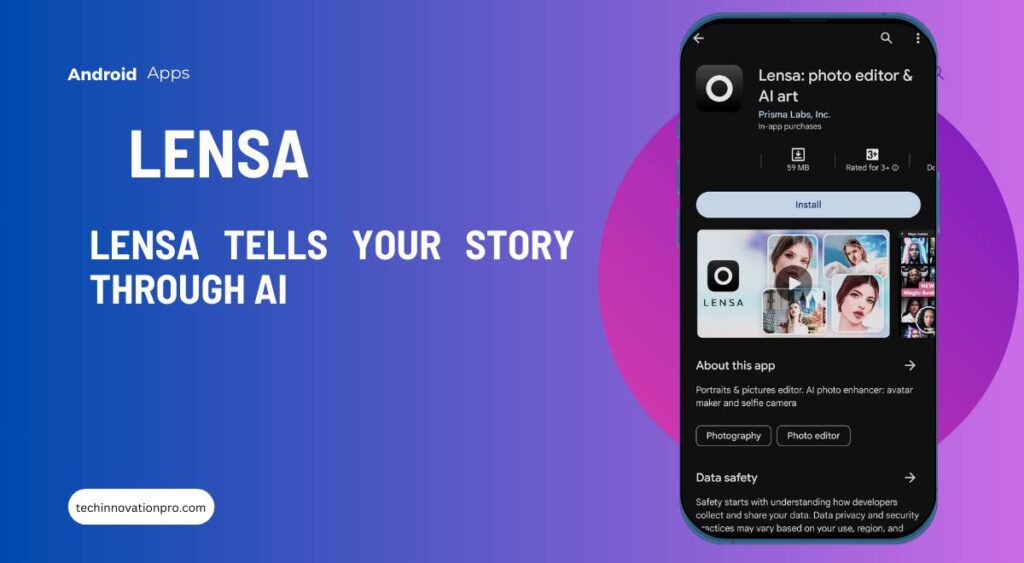
So, ditch the mental clutter and say hello to a smoother, simpler you. Here are 5 AI assistant apps—Notion (project management), IFTTT (automation), Calm (meditation), SoundHound (music recognition), and Lensa (photo editing)—that will transform your Android into a productivity powerhouse, a life-hacking machine, and maybe even a bit of a zen garden.
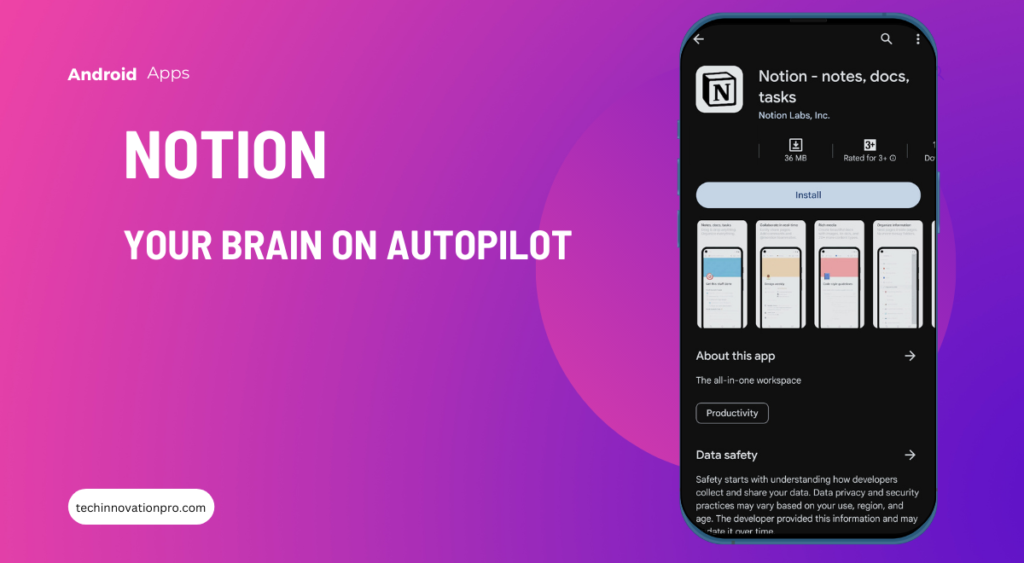
Notion: One of the best AI Assistant Apps for taking Notes, Docs, Tasks
Ditch the mental clutter and let Notion, your notes, documents, and task autopilot, fly your productivity plane.
Imagine a digital notebook that remembers everything, organizes itself, and even collaborates with your coworkers. Notion is that dream come true. This app isn’t just a note app; it’s a project management hub, a task organizer, a wiki on steroids, and a whiteboard for brainstorming—all rolled into one beautiful interface.
Think of it as your brain’s external hard drive. Jot down ideas in notes, create to-do lists with reminders that actually nag you (thank you very much, Notion), and drag and drop tasks between boards to visualize your workflow. Need to collaborate with your team? Notion’s got you covered, allowing seamless real-time editing and discussion on any project.
Do you remember that nagging feeling of a forgotten task haunting you in the middle of the night? Notion can handle that too. Set recurring deadlines, automate repetitive tasks, and even receive smart notifications that remind you of upcoming meetings or unfinished work based on your schedule. It’s like having a personal assistant in your pocket, only without the judgmental side-eye when you ask for the third time when you left your keys.
So, whether you’re a solopreneur juggling a million ideas or a corporate warrior battling the email beast, Notion can be your digital sanctuary. It’s the all-in-one app that declutters your mind, organizes your chaos, and keeps you laser-focused on what matters most. Trust me, your brain will thank you for the upgrade.
Here are some important features of Notion AI:
Offline access: “Notion stays by your side even when the internet doesn’t, ensuring your notes and tasks are always accessible, wherever you go.”
AI capabilities: “Notion’s smart search helps you find needles in information haystacks, while its intuitive database views transform chaotic data into organized dashboards.”
Customizability: “Notion isn’t a one-size-fits-all affair. It bends to your needs, letting you build any system for life or work, from minimalist notes to complex project plans.”
Integrations: “Notion doesn’t play well alone. It seamlessly integrates with Google Drive, Trello, Slack, and more, bringing all your favorite tools together under one digital roof.”
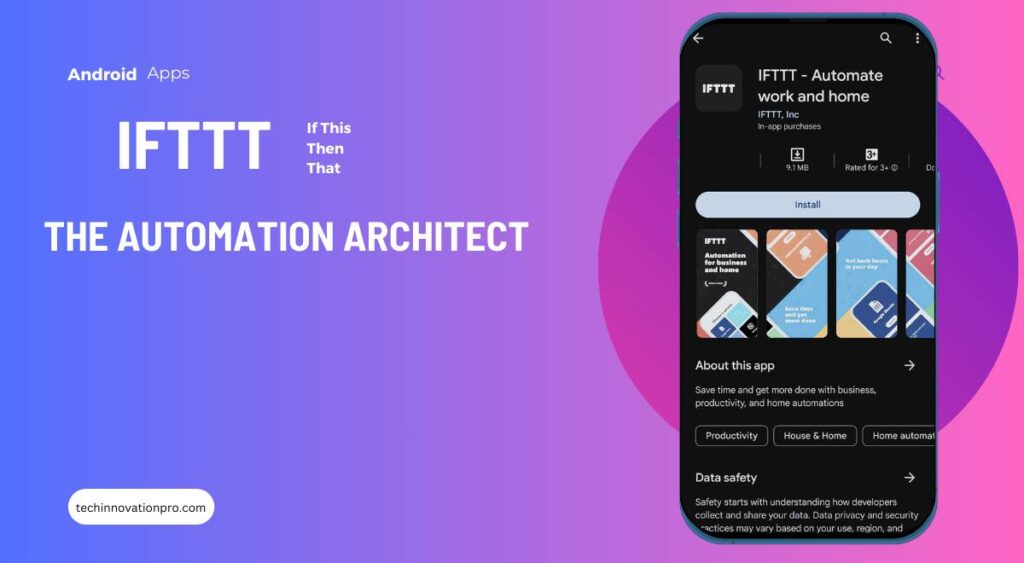
Remember that scene in Back to the Future where Marty McFly walks into his futuristic kitchen and a robotic arm makes him breakfast? Well, IFTTT (If This, Then That) is bringing that level of automation to your non-flying-car reality. This app acts as a digital bridge between all your favorite tools and services, letting you create “recipes” that trigger actions based on specific events.
Think of it as a personal Rube Goldberg machine, but one that makes your life easier. Did you finish your workout? IFTTT can automatically update your fitness tracker and send a celebratory tweet. Is the phone battery running low? IFTTT can dim your screen and silence notifications until you plug it in. The possibilities are endless, from controlling your smart home devices to tracking packages and managing your finances—all without lifting a finger.
One of my favorite IFTTT recipes turns my bedroom lights into a gentle sunrise alarm, slowly increasing the brightness to mimic the morning dawn. No more jarring alarm clock jolts! And with integrations for everything from social media to productivity apps, IFTTT can automate the mundane and let you focus on what really matters.
But beyond the convenience, IFTTT sparks a certain kind of creative joy. It’s like playing with digital building blocks, connecting different services in unexpected ways to create personalized automation that fits your unique needs. So, get your tinkering hat on and unleash your inner mad scientist—the world of IFTTT awaits!
Stay tuned for the next three amazing Artificial Intelligence assistants and discover how they can make your life a smooth, stress-free symphony!
This AI assistant app will work as your inner oasis in the digital desert.
Ever feel like your phone is a stress magnet, pulling you into a vortex of deadlines, notifications, and social media drama? Enter Calm, your personal pocket-sized zen garden. This app is more than just a meditation library; it’s a sanctuary for your mind, offering a curated collection of tools and exercises to combat anxiety, improve sleep, and cultivate inner peace.
Forget incense sticks and chanting mantras.Calm offers guided meditations for every mood and moment, from quick 5-minute breathwork breaks to immersive 30-minute visualizations. Whether you’re a meditation newbie or a seasoned yogi, there’s something for everyone. The app even tailors its recommendations based on your sleep patterns and activity level, so you get the perfect dose of mindfulness tailored just for you.
But calm isn’t just about sitting cross-legged and humming. It offers sleep stories narrated by celebrities like Stephen Fry and Matthew McConaughey to lull you into a peaceful slumber. And if you’re struggling to focus, its calming nature sounds and music tracks can help drown out the mental chatter and boost your productivity.
Think of Calm as a personal oasis you can carry with you everywhere. It’s a refuge from the noise of the world, a gentle reminder to breathe, and a gateway to a calmer, more centered you. Whether you’re commuting, waiting in line, or simply needing a moment to reset, Calm is there to offer a soothing antidote to the daily grind.
Feeling like you’re constantly lost in a sea of information overload? Don’t worry; SoundHound has your back. This app isn’t just a voice assistant; it’s your personal information detective, hunting down answers and keeping you up-to-date faster than you can say “Hey Google.”
Need to know the latest score in the big game?SoundHound can tell you in a flash. Want to catch up on the news headlines while brushing your teeth? Hound’s got you covered. Need to fact-check that dubious Facebook post before sharing it? Hound is your on-call truth detector.
But Hound is more than just a trivia whiz. It learns your preferences and adjusts its responses accordingly. Want a daily weather and traffic briefing before work? SoundHound will deliver it like clockwork. Need a personalized newsfeed curated to your interests? SoundHound can do that too. It’s like having your own miniature librarian who tailors the information universe to your specific needs.
And let’s not forget the fun factor. SoundHound is a master of wordplay and riddles, offering witty responses and engaging in playful banter. It can even translate languages on the fly, making you feel like a cosmopolitan globetrotter without leaving your couch.
So, ditch the endless Google searches and the bottomless news scroll. Hound is your one-stop shop for all things information, delivered with a dash of wit and a personalized touch. Let it be your guide through the information jungle, your answer-finding superhero, and your digital conversation companion all rolled into one.
Let’s face it, selfies can be fun, but sometimes they feel, well, ordinary. Enter Lensa, the AI-powered photo editor and art generator that transforms your run-of-the-mill portraits into artistic masterpieces and fantastical journeys, all with a few taps of your finger. Think of it as your own personal digital Michelangelo but with a penchant for playful filters and futuristic transformations.
1. Beyond Filters: AI Reimagines Your Photo Persona
Forget the basic brightness and contrast sliders. Lensa’s magic lies in its AI algorithms that analyze your features and reimagine them in a kaleidoscope of artistic styles. Want to see yourself as a watercolor painting with dreamlike swirls of color? Done. Craving a cyberpunk makeover with neon accents and glowing eyes? Lensa’s got you covered. It’s like stepping into a portal to alternate realities, each one a reflection of your inner artist’s wildest dreams.
2. From Selfies to Storytellers: Create Worlds with AI
But Lensa is more than just a fancy filter factory. It’s a storytelling machine fueled by AI imagination. Upload a picture, choose a fantastical theme like “Enchanted Forest” or “Sci-Fi Hero,” and watch as Lensa weaves your portrait into a stunning scene. You might find yourself soaring through galaxies as an astronaut, exploring mystical landscapes with ethereal creatures, or commanding armies as a futuristic warrior queen. The possibilities are truly endless, limited only by the depths of your creative spark.
3. Play, Explore, Surprise Yourself
The beauty of Lensa lies in its spirit of experimentation. There’s no right or wrong way to use it; it’s all about embracing the unexpected and delighting in the surprises. Try different styles on the same photo, share your creations with friends, and laugh together at the hilarious (and sometimes surprisingly flattering) results. It’s a playground for your imagination, a digital laboratory where you can mix and match artistic styles and themes to discover a whole new you.
So, say goodbye to predictable selfies and hello to a world of artistic reinvention. With Lensa in your pocket, your phone becomes a portal to infinite creative possibilities. It’s a reminder that sometimes the most stunning masterpieces aren’t hanging in museums; they’re waiting to be born right on your smartphone screen.
Ready to unleash your inner artist and embark on a selfie renaissance? Download Lensa and prepare to be amazed!
With these five AI maestros in your back pocket, forget about merely simplifying your life – get ready to orchestrate its symphony. Notion AI becomes your conductor, composing to-do lists that dance with deadlines, while IFTTT automates the tedious tasks, letting you savor the music of accomplishment. Calm, the maestro of serenity, quiets the mental static, while Lensa paints your creative canvas with vibrant AI hues. Finally, SoundHound, your sonic muse, translates the world’s soundtrack into actionable knowledge.
Together, they’re not just apps; they’re a virtuoso ensemble. They empower you to reclaim your time, unleash your creativity, and find zen in the digital chaos. Ditch the mental clutter, embrace the automated harmony, and explore the boundless possibilities that AI unlocks.
Remember, a simpler, richer life isn’t just a tap away – it’s a chorus waiting to be sung. So, raise your metaphorical baton, embrace the symphony of AI, and let your life become a masterpiece worth living.
In the 1950s, artificial intelligence (AI) began its captivating journey. Alan Turing, a pioneer in the field, introduced the Turing Test to gauge a machine’s ability to mimic human intelligence. Fast forward to the 1960s, AI research gained momentum with the birth of the first AI programming language called LISP, credited to John McCarthy. Early AI efforts focused on symbolic reasoning and rule-based systems, setting the stage for expert systems’ rise in the 1970s and 1980s. This journey unfolds in our exploration of artificial intelligence from mechanical minds to ethical algorithms.
A Concise History of Artificial Intelligence From Mechanical Minds to Ethical Algorithms
The fascinating journey of artificial intelligence (AI) commenced in the 1950s, when Alan Turing, a trailblazing figure in the field, introduced the Turing Test as a benchmark to assess a machine’s capacity to emulate human intelligence. By the 1960s, AI research had gained substantial momentum with the creation of the very first AI programming language, LISP, attributed to John McCarthy. The early stages of AI primarily focused on symbolic reasoning and rule-based systems, laying the groundwork for the emergence of expert systems in the 1970s and 1980s.
The 1990s witnessed a notable shift in focus, as the AI community began to gravitate toward machine learning and data-driven methodologies. This shift was largely driven by the increasing availability of digital data and the remarkable advancements in computing power. During this era, neural networks gained prominence, and the development of support vector machines enabled AI systems to glean insights from data, resulting in improved performance and adaptability.
Fast forward to the 2000s, and AI research broadened its horizons, venturing into new and exciting domains such as natural language processing, computer vision, and robotics. This expansion paved the way for the contemporary AI revolution we witness today, with AI technologies penetrating nearly every facet of our lives.”
Machine Learning vs. Deep Learning: A Breakdown
The terms “machine learning” and “deep learning” are often used interchangeably, but they represent distinct approaches within the broader realm of AI.
Machine Learning
Machine learning is the process of teaching computers to learn from data. It entails the creation of algorithms that let computers recognize patterns, anticipate outcomes, and gradually become more efficient. Machine learning algorithms have found applications in various domains, from email filtering and recommendation systems to fraud detection and autonomous vehicles.
The historical development of machine learning is a testament to human ingenuity. Early machine learning models, such as linear regression and decision trees, paved the way for more advanced techniques like neural networks and support vector machines. The availability of vast datasets and increased computational power have led to remarkable advancements in machine learning, enabling applications like natural language processing and computer vision.
Deep Learning
Deep learning, a subset of machine learning, aims to replicate the functioning of the human brain’s neural networks. It consists of artificial neural networks with multiple layers (hence the term “deep”) that can automatically extract hierarchical features from data. Significant advances in natural language processing, autonomous robotics, image and audio recognition, and other fields have been made possible through deep learning.
Historically, deep learning has been around for a while, but it has gained more prominence in the 21st century due to the availability of extensive datasets and the development of powerful hardware, particularly graphics processing units (GPUs). Deep learning is transforming fields like marketing, finance, and healthcare by becoming superior at tasks like image categorization and machine translation.
Ethical Considerations in AI Applications
In the journey of artificial intelligence from mechanical minds to ethical algorithms, it’s clear that as AI advances, ethical concerns grow more critical. Applying artificial intelligence in various domains raises significant questions regarding privacy, bias, and accountability.
AI Ethics and Regulations
The field of AI ethics has gained prominence in response to these concerns. Researchers, policymakers, and organizations are actively working to establish ethical guidelines and regulations that ensure AI technologies serve humanity without causing harm. Initiatives like “AI Ethics Principles” and “Ethics by Design” promote the responsible use of AI.
Ethical Dilemmas in AI
Historically, there have been instances where AI applications have resulted in ethical dilemmas. One prominent example is algorithmic bias, where AI systems may perpetuate discrimination or unfairness due to biased training data. Understanding these historical cases is crucial to preventing similar issues in the future.
Privacy Concerns
Regarding AI technology, privacy is a major problem. Robust rules and procedures are required to safeguard people’s personal data when AI systems gather and evaluate enormous volumes of information. Developers must prioritize implementing measures that ensure data security and privacy rights are respected.
Bias Mitigation
Bias in AI algorithms is another essential consideration. Since machine learning models learn from existing data sets, there’s a risk that the algorithms can perpetuate biases in those datasets. This is not merely a theoretical concern; it has real-world consequences. Biased AI can lead to discriminatory outcomes, unfair treatment, and the perpetuation of societal prejudices.
Developers should actively mitigate these biases and strive for fairness in their models by ensuring diverse and representative training data. The development of AI should prioritize ongoing efforts toward fairness and transparency to make sure that systems do not aggravate already-existing disparities or introduce new ones.
Accountability and Transparency
Accountability is also paramount when deploying AI technologies. It’s essential to establish clear lines of responsibility so that any negative consequences or errors caused by AI systems can be appropriately addressed. Accountability goes beyond theory and is crucial in real-world scenarios. AI systems may make life-altering decisions in healthcare, legal, or financial domains, and ensuring accountability is a fundamental aspect of responsible AI deployment.
Developers should emphasize transparency by making the decision-making process of their algorithms understandable and auditable. Understanding how AI systems arrive at their decisions is not just a matter of curiosity but a practical necessity to address issues and ensure that AI operates fairly and responsibly.
Collaboration between developers, policymakers, ethicists, researchers, and other stakeholders becomes crucial to ensure the responsible use of AI technologies. Open dialogue among these groups allows for comprehensive guidelines and regulations that address ethical concerns effectively. In the absence of such collaboration, AI development may proceed without adequate oversight and ethical considerations, potentially leading to unintended consequences.
Taking these ethical issues into account will help build public trust, support the long-term success of AI technologies in many areas, and reduce the harm that could happen.
AI-Driven Innovations in Entertainment: A Transformative Force
“In the fascinating journey of artificial intelligence from mechanical minds to ethical algorithms, the impact of AI on the entertainment industry cannot be overstated. AI-driven innovations have transformed how we experience and consume media, ushering in a significant shift in the entertainment landscape. These advancements are enhancing user experiences and revolutionizing content creation processes.
Personalized Recommendations
One of the most visible uses of AI in entertainment is content recommendation. Streaming services like Netflix and music platforms like Spotify leverage AI algorithms to analyze user preferences and behavior, providing personalized recommendations. This improves the user experience while also assisting these platforms in keeping users as subscribers. The impact of these recommendations goes beyond convenience; they shape our choices, preferences, and, ultimately, our entertainment experiences.
Immersive Virtual Reality
Additionally, AI has been important in producing compelling virtual reality experiences where users can dive into entirely new worlds and engage with content like never before. By harnessing the power of artificial intelligence, developers have created lifelike simulations that blur the line between reality and digital entertainment. These VR experiences are not just novelties; they offer new ways of storytelling and interaction, pushing the boundaries of what’s possible in entertainment.
Efficient Content Creation
AI-driven innovations have not only transformed but propelled the entertainment industry forward. Artificial intelligence is automating content creation processes. From generating scripts to automating video editing, these intelligent systems have expedited production timelines while maintaining high-quality standards. The impact on the industry is profound, as it enables content creators to be more productive and innovative. This translates to more content, more creativity, and, ultimately, more choices for consumers.
AI in Healthcare and Transportation: A Transformative Force
In addition to its impact on the workplace, AI is revolutionizing numerous industries and shaping the future in profound ways. This transformative force extends to healthcare and transportation, two sectors where AI is making a significant impact.
AI in Healthcare
AI is transforming healthcare by analyzing massive patient data sets to produce more precise diagnoses and individualized treatment regimens. It’s enabling healthcare professionals to make data-driven decisions with greater accuracy, improving patient care and outcomes. The impact on healthcare is not just theoretical; it’s a matter of life and death. Accurate diagnoses and personalized treatment plans are saving lives and improving the quality of healthcare.
AI in Transportation
In the transportation sector, AI-powered autonomous vehicles are enhancing road safety and efficiency. These vehicles rely on AI algorithms for real-time decision-making, making roads safer and more efficient. The impact on transportation is not merely a matter of convenience; it’s a matter of safety and efficiency. In addition to lowering traffic jams and fuel consumption, autonomous cars have the ability to prevent accidents and save lives.
AI Across Industries
Across various sectors, businesses recognize AI technologies’ immense potential in streamlining processes, boosting operational efficiency, and reducing costs. AI’s impact on industries is not just theoretical; it’s practical and financial. By leveraging these cutting-edge solutions, companies can automate manual tasks, maximize productivity, and stay competitive in dynamic markets. The ability of AI to analyze large datasets quickly enables organizations to make data-driven decisions with greater accuracy and confidence. This empowers businesses to stay ahead of their competition by identifying trends, predicting customer behavior, and tailoring their strategies accordingly.
The Metamorphosis of GPT: A Game-Changing Enigma
The current AI explosion owes much of its growth to the development of smarter learning techniques and the rise of big neural networks like OpenAI’s GPT series. Think of GPT-3, which debuted in 2020, as a shining example. It’s powered by a whopping 175 billion parts and can understand and create human-like language in ways we’ve never seen before.
GPT-3’s success has ignited more research in the AI field. Now, we have GPT-4, the latest version. It’s building on the strong foundation of its predecessors and taking AI capabilities to new heights. This progress is remarkable, and it’s reshaping the AI landscape in a profound way.
Conclusion
The evolution of Artificial intelligence is a captivating journey through time. By understanding its historical roots and ongoing development, we can make informed decisions about AI’s future applications and navigate the ethical considerations surrounding its use. It’s critical to carefully utilize AI’s potential as it gets more ingrained in our daily lives to make sure that society as a whole gains from it. Embracing AI, learning from its history, and staying attuned to its present innovations will be key to a brighter, AI-enhanced future.
With rapid advances in AI and ongoing discussions about ethical considerations, the responsible and innovative use of AI technology is essential. As we witness the evolution of artificial intelligence unfold before our eyes, it is clear that this technology holds immense potential for positive change. However, we must approach its development and implementation with a robust ethical framework to harness its benefits responsibly. The future of AI is bright, but it requires responsible stewardship to ensure that it continues to serve humanity in ways that are safe, fair, and beneficial.
Welcome to the world of Artificial Intelligence (AI), where things are more fascinating and less complicated than you might think. AI is like a clever friend that helps us humans with daily tasks, making decisions based on learning from different situations, just like we do. From virtual assistants in our phones to intelligent systems predicting what show we should binge-watch next, AI is everywhere! Understanding AI isn’t just for tech wizards; it’s crucial for everyone because it’s reshaping the way we live, work, and even play.
Demystifying Artificial Intelligence
Let’s dive deeper into Artificial Intelligence and break it down into bite-sized pieces. Imagine teaching a child to recognize shapes. You show them different objects until they can tell a circle from a square. That’s similar to how Machine Learning works—systems learn from data to make decisions. Now, remember the brainy networks we mentioned? Those are ‘Neural Networks,’ designed to mimic our brains, and ‘Deep Learning’ is their superhero persona, handling tasks too complex for simpler AI forms. But don’t worry; they’re not here to replace us. Despite the myths, AI isn’t an all-knowing entity. It’s a tool that we create and control, enhancing our lives in many ways.
The Evolution of AI: A Brief History
Artificial Intelligence is not a new concept. It has been a work in progress since the mid-20th century! What started as basic computer programs has evolved into systems that learn and adapt. From historic moments like IBM’s Deep Blue beating a chess grandmaster to today’s AI, which can compose music or even drive cars, the milestones are nothing short of awe-inspiring. We’re part of an ongoing journey, witnessing history in the making!
AI in Daily Life: Recognizable Applications
Let’s talk about how AI is a part of your everyday life. Do you enjoy voice texting on your smartphone? That’s AI. Have you ever been amazed by personalized playlists on your music app? Thank AI. It’s not just convenience; it’s precision, efficiency, and sometimes pure fun. Beyond our phone screens, Artificial Intelligence is in our hospitals, assisting in diagnoses, and it’s navigating our roads in smart cars. It’s making our world not just more connected, but also safer and more innovative. The seamless blending of AI into our lives enhances our experiences and pushes us towards newer, bolder frontiers.
Ethical Considerations and Public Perception
However, with great power comes great responsibility. There are valid concerns about privacy and job security in an AI-driven age. That’s why it’s vital to develop AI ethically, considering the societal impacts. Balancing AI’s possibilities with precaution can help ensure it remains a force for good, respecting our privacy and empowering rather than replacing our workforce.
Future Prospects: How AI Might Shape the World of Tomorrow
Looking ahead, AI has the potential to revolutionize healthcare by making early diagnosis and treatments accessible to all. It can also help protect the environment by monitoring ecosystems in real time. The possibilities are vast, spanning sectors we’ve yet to imagine. As AI continues to evolve, the only limit is our innovation.
Navigating a World Powered by AI: Adapting to Change
In this rapidly changing landscape, adaptability is critical. Stay curious, keep learning, and embrace the advancements. It’s through this open-mindedness that we’ll thrive alongside AI innovations.
So, here we are — at the doorstep of endless possibilities with Artificial Intelligence. It’s not just technology; it’s a companion in our evolutionary journey. Embracing this dynamic wave means staying informed and engaged. It’s about ensuring this powerful tool uplifts, protects, and inspires us all. As we stand on the brink of this new era, it’s not just a leap into the unknown; it’s a stride into a future crafted by our choices today. Are you ready to be part of this extraordinary adventure? Through this heart-to-heart, we’ve journeyed through AI’s intricacies and its profound role in shaping our collective tomorrow. Now, more than ever; our story intertwines with artificial intelligence — a narrative of growth, challenges, and immense potential.