Category: Technologies

Tech Innovation Pro explores technologies improving our lives. Discover AI, blockchain, sustainable solutions & more. Make a difference, explore now!

  • Power Up Your Child’s Mind with STEM Robots

    Power Up Your Child’s Mind with STEM Robots

    In a world increasingly driven by technology, fostering a love for science, technology, engineering, and math (STEM) in children has become more important than ever. But how can we ignite a passion for these complex subjects?
    STEM Robots

    Enter the exciting world of STEM robots! The field of robotics has undergone a significant transformation in recent years. These advanced machines, which combine principles from science, technology, engineering, and mathematics, have revolutionized various industries and sparked a new era of innovation.

    STEM robots are now used in fields such as healthcare, manufacturing, and education, with the potential to greatly improve efficiency and productivity. The rapid development and integration of these robots into our daily lives raise intriguing questions about the future of technology and its impact on society.

    In this article, we will delve into the rise of STEM robots, their types and capabilities, and the potential implications for the future. Now, we’ll delve into the transformative power of STEM robots, exploring the scientific evidence and real-world benefits they offer for children’s development.

    The Power of Playful Learning with STEM Robots

    Learning shouldn’t feel like a chore. STEM robots excel at transforming complex concepts into captivating experiences that ignite a love for knowledge in children. Research has consistently shown that playful learning with STEM robots fosters a multitude of benefits, nurturing young minds in remarkable ways.
    STEM Robots
    • Spark Curiosity and Creativity: STEM robots are inherently captivating. Their ability to move, interact with their surroundings, and respond to commands fuels a sense of wonder and a desire to explore. This natural curiosity translates into creative problem-solving as children experiment with different functionalities and programming possibilities.
    • Boost Critical Thinking and Problem-Solving Skills: At their core, robots are intricate puzzles waiting to be solved. Whether it’s navigating an obstacle course or constructing a specific sequence of movements, STEM robots challenge children to think critically and develop effective problem-solving strategies.
    • Nurture Collaboration and Teamwork: Many STEM robots are designed for collaborative play. Children can work together to build, program, and operate their robots, fostering teamwork skills and communication as they strategize and tackle challenges together.
    • Bridge the Gap Between Imagination and Reality: STEM robots empower children to bring their imaginative ideas to life. By physically constructing and programming robots, they witness the tangible results of their creative vision, solidifying their understanding of STEM concepts.
    • Develop Essential STEM Skills: From familiarizing themselves with basic coding principles to understanding the principles of mechanics and sensors, STEM robots provide a fun and interactive way to develop crucial foundational skills in science, technology, engineering, and math.

    The benefits don’t stop there! STEM robots can also enhance hand-eye coordination, perseverance, and a sense of accomplishment. They can even cater to specific learning styles, offering a unique and engaging approach to education.

    Now, we’ll unveil the exciting world of STEM robots in all their diversity, exploring the different types available and their suitability for various age groups.

    Exploring Different Types of STEM Robots

    With a dazzling array of STEM robots available, choosing the perfect one for your child can feel overwhelming. But fear not! This section will unveil the diverse landscape of STEM robots, categorized by complexity and age-appropriateness, making your decision a breeze.

    A. Pre-built Robots for Budding Inventors (Ages 4-7):

    Ideal for younger children, pre-built robots offer an exciting entry point into the world of STEM. These captivating companions come ready-to-play, often featuring vibrant colors, playful sounds, and interactive features. While pre-programmed for specific functions, many offer simple controls that allow children to explore basic coding concepts like sequencing and cause-and-effect.

    Through engaging interactions with these robots, young minds develop crucial skills like color and shape recognition, problem-solving through trial and error, and an understanding of directional movement.

    B. Build-it-Yourself Kits for Aspiring Engineers (Ages 8-12):

    As children mature, their thirst for challenge grows. Build-it-yourself kits cater to this desire, offering a rewarding hands-on experience. These kits typically come with pre-fabricated parts that snap together, allowing children to construct their very own robots.

    The difficulty level varies, with some kits offering step-by-step instructions for simpler builds, while others encourage creative exploration with more open-ended designs. Building these robots hones critical thinking, spatial reasoning, and fine motor skills. The sense of accomplishment upon completing the construction further fuels a child’s confidence and inspires them to tackle new challenges.

    C. Coding Robots for Tech-Savvy Learners (Ages 10 and Up):

    For children ready to delve deeper into the world of technology, coding robots offer a thrilling introduction to programming. These robots often come equipped with apps or software platforms that allow children to create custom commands and program their robots to perform specific actions.

    By engaging with basic coding concepts like loops, conditional statements, and functions, children develop computational thinking skills – a valuable asset in today’s technology-driven world. The possibilities for these robots are virtually endless, allowing children to create robots that navigate mazes, draw pictures, or even respond to voice commands.

    How STEM robots are revolutionizing education
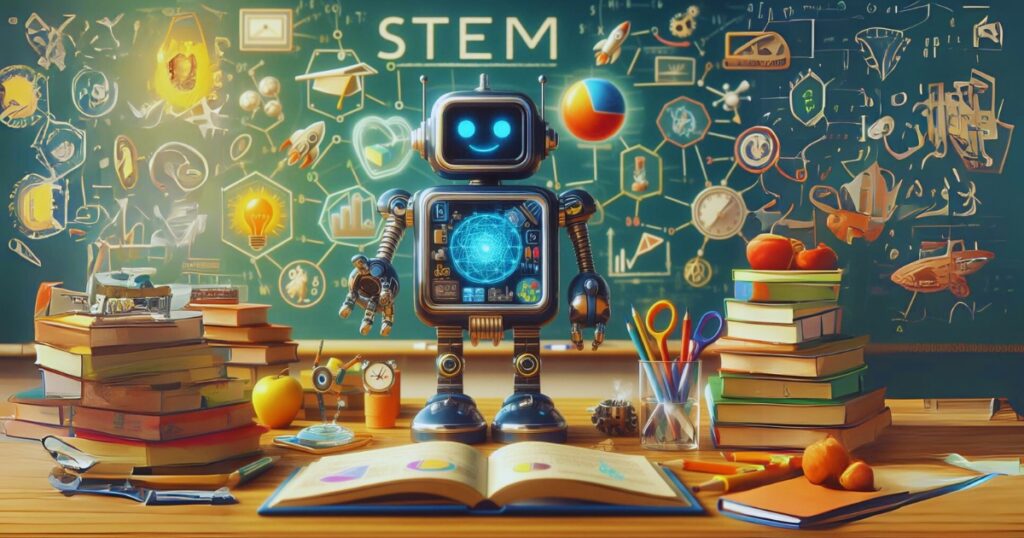
    How STEM robots are revolutionizing education.

    As we look to the future of education, STEM robots are emerging as a powerful tool in revolutionizing the way students learn and engage with scientific and technological concepts.

    These innovative robots provide hands-on experiences that actively involve students in the learning process, fostering critical thinking, problem-solving, and collaboration skills. By integrating STEM robots into classrooms, educators can create an immersive learning environment where students can experiment, explore, and apply their knowledge in real-world contexts.

    These robots offer interactive programming interfaces, allowing students to code and control their actions, providing an engaging and interactive way to understand complex STEM topics. Moreover, STEM robots promote inclusivity by catering to different learning styles, allowing students to learn at their own pace and encouraging creativity and innovation.

    By embracing STEM robots in education, we can ignite a passion for science, technology, engineering, and mathematics in the next generation, preparing them for the challenges and opportunities of the digital age.

    The future of automation and robotics.

    In the foreseeable future, automation and robotics are poised to continue their rapid advancements, transforming industries and reshaping the way we work. As technology continues to evolve, we can expect to see even more sophisticated robots that are capable of understanding and adapting to complex environments.

    These robots will possess enhanced artificial intelligence and machine learning capabilities, enabling them to make autonomous decisions and perform tasks that were once exclusively reserved for humans. With the integration of Internet of Things (IoT) technology, these robots will be able to seamlessly connect and communicate with other devices, allowing for unprecedented levels of coordination and collaboration.

    Additionally, advancements in robotics will also extend to the realm of personal robotics, where robots will become more prevalent in our daily lives, aiding in household chores, providing companionship, and even assisting in caregiving.

    The future of automation and robotics holds tremendous potential for enhancing efficiency, improving safety, and unlocking new possibilities across a wide range of industries.

    Getting Started with STEM Robotics

    The captivating world of STEM robots isn’t just for children! For curious adults and hobbyists yearning to delve deeper into robotics, the possibilities are endless. Whether you dream of building your own robots or mastering the art of robot programming, this section equips you with the essential resources to embark on your exciting journey.

    A Glimpse into the Building Blocks:

    Before diving in, let’s take a quick peek under the hood. Robots, at their core, are a fascinating combination of hardware and software. Here are some of the key components you’ll encounter:

    • Motors: These are the tiny engines that bring your robot to life, allowing it to move and interact with its surroundings. Different types of motors exist, each suited for specific tasks.
    • Sensors: These act as the robot’s eyes and ears, collecting information about the environment. Light sensors detect light levels, distance sensors measure proximity, and touch sensors respond to physical contact. These sensory inputs allow robots to react and adapt to their surroundings.
    • Controllers: Think of these as the robot’s brain. Controllers receive signals from sensors and user commands, then process that information to instruct the motors on how to move. Some controllers are pre-programmed, while others can be customized using software platforms.

    Building Your Robotics Journey:

    The world of robot building and programming is an exciting playground for the curious mind. Here’s a roadmap to get you started:

    • Embrace the Power of Online Learning: The internet is brimming with valuable resources for aspiring robot builders and programmers. Numerous online tutorials cater to all skill levels, offering step-by-step guides on building specific robots or teaching essential programming languages commonly used in robotics, like Python or Arduino. Learning platforms like Coursera and edX offer comprehensive courses on robotics fundamentals and advanced concepts.
    • Connect with the Robotics Community: You don’t have to embark on this journey alone! A wealth of online robot builder communities and forums exist, where passionate enthusiasts share knowledge, troubleshoot problems, and inspire each other. These communities are a fantastic resource for finding answers to your questions, learning from experienced builders, and staying up-to-date on the latest advancements in the field.
    • Gather Your Tools and Materials: Once you’ve identified your project and learning resources, it’s time to gather the necessary tools and materials. Many online retailers specialize in robotics components, offering everything from pre-made kits to individual motors, sensors, and controllers. You can also find starter kits that include all the essential components you need to get started on your first robot building project.

    Conclusion

    The captivating world of STEM robots offers a playground for both budding minds and curious adults. These remarkable creations seamlessly blend playtime with powerful learning experiences, igniting a passion for science, technology, engineering, and math (STEM) in individuals of all ages.

    Whether it’s the joy of interacting with a pre-built robot or the rewarding challenge of building and programming their own creations, STEM robots instill a sense of wonder and a desire to explore. They nurture critical thinking, problem-solving skills, and computational thinking – essential assets for navigating today’s ever-evolving world.

    This comprehensive guide has unveiled the vast potential of STEM robots. Parents and educators are equipped with the knowledge to choose the perfect robot companion that sparks a child’s lifelong love of STEM learning.

    Explore the resources provided, delve into popular robot kits, and find the ideal tool to ignite that spark of curiosity. Hobbyists and enthusiasts are empowered to take the first step in their robotics journey. Embrace online tutorials, connect with passionate communities, and gather the tools necessary to bring your creative visions to life.

    How have advancements in STEM technology contributed to the development of robots in various industries?

    Advancements in STEM technology have significantly contributed to the development of robots in various industries by enabling the creation of more sophisticated sensors, actuators, and programming languages that enhance robots’ capabilities and efficiency.
    These advancements have allowed robots to perform complex tasks with precision, speed, and accuracy, ultimately improving productivity, safety, and resource utilization in industries such as manufacturing, healthcare, agriculture, and transportation.
    Additionally, developments in AI and machine learning have further empowered robots to learn, adapt, and communicate effectively in dynamic environments, paving the way for increased automation and innovation across different sectors.

    What are the potential benefits and drawbacks of relying on STEM robots for tasks traditionally performed by humans?

    Using STEM robots for tasks traditionally done by humans can increase efficiency, reduce errors, and improve safety in hazardous environments. However, drawbacks include job displacement, loss of human touch, and potential ethical concerns related to autonomy and decision-making.
    Striking a balance between automation and human involvement will be crucial to maximize benefits while addressing these challenges.

    How are STEM robots being utilized in fields such as healthcare, manufacturing, and agriculture?

    STEM robots are being utilized in healthcare to assist with surgery, patient care, and medication management. In manufacturing, they are used for automation, quality control, and assembly line tasks.
    In agriculture, STEM robots are employed for precision farming, planting, harvesting, and monitoring crop health. They help increase efficiency, reduce human error, and improve overall productivity in these industries.

    What ethical considerations should be taken into account when designing and deploying STEM robots?

    When designing and deploying STEM robots, ethical considerations such as privacy protection, ensuring safety, avoiding reinforcement of harmful stereotypes, promoting inclusivity and diversity, transparency in decision-making algorithms, and addressing potential job displacement should be taken into account.
    It is crucial to prioritize ethical principles to ensure that STEM robots are developed and used in a responsible and respectful manner that benefits society as a whole.

    How can individuals prepare for a future workforce increasingly reliant on STEM robots for automation and efficiency?

    Individuals can prepare for a future workforce by developing skills that complement automation, such as critical thinking, problem-solving, creativity, and adaptability. Continuous learning and upskilling in STEM fields can also help individuals stay competitive in a job market that values technological proficiency.
    Embracing lifelong learning, staying updated on industry trends, and cultivating a growth mindset are essential for success in a workforce where automation and robotics play a significant role.
    Additionally, building strong interpersonal skills and emotional intelligence can differentiate individuals in roles that require human interaction and collaboration, areas where robots may struggle to replace human workers.
  • Intel Rapid Storage Technology for Ultimate PC Performance

    In an era where the digital world is expanding at an unprecedented rate, harnessing the capabilities of cutting-edge technology is not just a preference. It’s a necessity. One such technology that’s silently powering your PC’s performance and data management is Intel Rapid Storage Technology (RST).

    Intel Rapid Storage Technology
    Source: Infographic: Intel® Rapid Storage Technology

    Enthusiasts, gamers, and IT professionals constantly seek ways to enhance their systems, and understanding RST is key. In this guide, we’ll explore RST’s details and explain how you can unlock its full potential for optimal PC performance.

    Understanding Intel Rapid Storage Technology (RST)

    Intel Rapid Storage Technology (RST) is a software package developed by Intel Corporation that enables users to manage and configure storage devices such as hard drives, solid-state drives (SSDs), and RAID arrays. It’s specifically designed for Windows operating systems and is supported on Intel chipsets, including the latest 11th-generation processors.

    With RST, users can configure different levels of data protection and performance on their storage devices, allowing for faster read/write speeds and improved system responsiveness. It also offers advanced features such as Intel Optane Memory support, further enhancing overall system performance.

    Understanding IRST:

    • 1. Beginners: Imagine your storage devices as a band. IRST acts like the conductor, ensuring all the drives (instruments) work together seamlessly. This means that regardless of the number or type of drives (HDDs, SSDs), IRST optimizes performance and efficiency without managing each drive individually.
    • 2. Tech Enthusiasts: Dive deeper with dynamic storage acceleration. IRST offers intricate control over both performance and redundancy with RAID configurations. It’s versatile, adapting to your needs. Prioritize raw speed or data safety based on your RAID setup (RAID 0, 1, 5, etc.). IRST also unlocks the potential of Intel Optane Memory, a revolutionary technology that drastically reduces data access times and boosts responsiveness.
    • 3. IT Professionals: Managing multiple systems becomes easier with IRST. It ensures consistent performance across your network. With features like RAID and performance tuning, IRST offers resilience and protects against potential disk failures through data redundancy.

    The Benefits of RST Across User Profiles

    Unleashing the potential of Intel RST is more than just ticking a few software boxes or buying the latest hardware. It’s about taking a strategic approach to managing and optimizing your storage infrastructure.

    The benefits translate into a smoother, faster computing experience for the everyday user. For those who push their systems to their limits, RST unlocks the additional horsepower, providing the edge they need.

    • Boosting System Performance: RST accelerates data transfers for improved application and operating system load times, catering to performance-hungry applications like gaming, media editing, and virtualization. It ensures that your CPU and memory aren’t idly waiting on data from slower storage media.
    •  Data Protection and Redundancy: For those who can’t afford data loss, RST’s RAID support is a lifesaver. By mirroring data across drives or stripping it for improved read/write speeds, RAID 0 or RAID 1 configurations can significantly reduce the chances of data loss due to drive failure.
    •  Enhanced Drive Health and Longevity: Beyond immediate performance enhancements, RST features like monitoring and data migration contribute to the long-term health of your drives. Wear-leveling algorithms optimize the use of SSDs, spreading the write cycles evenly to extend their life.
    •  Configuring RST for Ultimate Performance: Configuring RST isn’t rocket science, but it does require a systematic approach to ensure you’re getting the most from your system’s storage subsystem.
    •  Setting Up Your System for RST: The first step is checking compatibility. Your system must have an Intel chipset that supports Intel RST, and the feature should be enabled in your system BIOS. You’ll then need to install the appropriate RST drivers; these can be found on the Intel website.
    •  Configuring RAID and Performance Enhancement: To set up RAID, you’ll assemble your disks, enter the Intel RST option ROM utility at system start-up, and follow the configuration wizard. It’s important to decide beforehand whether you want to focus on performance (RAID 0), redundancy (RAID 1), or a combination for versatility (RAID 5 or 10).
    •  Understanding the Performance Impact: The changes you’ll notice after setting up RST depend on your usage pattern and configuration. Regularly benchmarking your system can help quantify the performance gain and tune RAID settings to get the most out of your hardware.
    •  Real-World Applications of RST: The true testament to any technology’s prowess is its real-world application. Some case studies and examples of RST reveal its power in different scenarios.
    •  Accelerating Load Times for Gamers: PC gamers see a considerable improvement in load times for games and the overall responsiveness of their system thanks to RST. Games are swiftly loaded into memory by caching commonly accessed data for a seamless gaming experience.
    •  Video Editing and Content Creation: Professionals working with large media files find their workflow enhanced with RST. The technology ensures that data is fed to the processor and memory as quickly as possible, reducing the bottlenecks that can stall a high-intensity work session.
    •  Enterprise Solutions: In the enterprise environment, RST ensures that data warehouses and backup solutions continue to operate at peak performance, even under heavy concurrent access and during drive rebuild operations necessitated by redundancy protocols.

     Keeping Up With RST’s Evolving Role

     As with any technology, RST isn’t static. Intel regularly updates the software with new features, optimizations, and broader support for emerging storage technologies.

     Keeping Up With RST’s Expanding Toolkit

     Technology never sleeps, and IRST is no exception. Intel consistently rolls out updates that bring new features, optimizations, and even broader support for cutting-edge storage solutions. This ensures your system stays ahead of the curve and leverages the latest advancements.

     Future-Proofing Your Investment

     You’re future-proofing your system by opting for the latest hardware and keeping your IRST software updated. New chipsets and drivers constantly refine IRST’s role and capabilities, allowing you to fully exploit the potential of ever-evolving storage technologies.

     Unlocking the Power of Optane

     Intel’s revolutionary Optane Memory represents a significant leap forward in storage. Expect IRST to play a central role in harnessing Optane’s power. This dynamic duo will deliver even more substantial performance gains, streamlining your workflow.

     A Symphony of Storage Solutions

     The future of storage points towards diverse media types working together seamlessly. IRST will continue to evolve, fostering better integration and interoperability with a wider range of storage devices and interfaces. Imagine IRST as the conductor, harmonizing a symphony of HDDs, SSDs, and potentially even future storage solutions, maximizing the potential of each component.

    Read: Alienware Area 51 M: The Ultimate Gaming Machine for Hardcore Gamers!

    How to Unlock the Full Potential of Intel Rapid Storage Technology

    Now that we have a better understanding of RST and its benefits, here are some ways to unlock its full potential on your PC:

    • Enable RAID Configurations

    One of RST’s key features is its ability to enable RAID configurations. This allows you to combine multiple storage devices into a single logical drive, providing better performance and data protection. To enable RAID configurations, you need compatible hardware and follow the necessary steps in the RST software.

    • Utilize Intel Optane Memory

    Intel Optane Memory is a revolutionary technology that uses 3D XPoint memory to boost system performance. When paired with RST, it can significantly enhance overall system responsiveness by caching frequently used data and applications. It’s important to note that Intel Optane Memory is only compatible with certain Intel processors and motherboards.

    • Keep RST Drivers Up-to-date

    To ensure optimal performance, keeping your RST drivers up-to-date is crucial. New software versions often come with bug fixes and performance improvements, so regularly checking for updates is recommended.

    • Take Advantage of RST’s Power Management Features

    RST offers advanced power management features that can help reduce power consumption and improve laptop battery life. By enabling the “Aggressive Link Power Management” feature, RST will intelligently manage the power usage of storage devices, resulting in more efficient energy usage.

    • Monitor Your System Using Intel® Performance Maximizer

    For those who want to take their system performance to the next level, Intel® Performance Maximizer is a powerful tool that can help optimize your system’s hardware settings for maximum performance. It works seamlessly with RST and allows you to monitor your system’s real-time performance.

    Whether you’re an enthusiast looking to boost your gaming experience or an IT professional seeking ways to improve your data management, Intel Rapid Storage Technology can be a game-changer for your PC. By unlocking its full potential and utilizing its advanced features, you can take your system’s performance to new heights.

    In conclusion, Intel RST is a powerful and versatile tool for optimizing and protecting your data storage experience. Whether you’re a gamer seeking faster load times or an enterprise user looking for reliable data backup solutions, RST has something to offer.

    And with ongoing updates and advancements, its capabilities only continue to grow. So why wait? Start exploring the endless possibilities of RST today and take your computing experience to the next level!

  • Can artificial intelligence rate attractiveness accurately?

    Can artificial intelligence rate attractiveness accurately?

    In the world of technology, few frontiers remain as intriguing as the intersection of artificial intelligence and human perception. A particularly fascinating application is AI’s capacity to assess attractiveness—a timeless human trait that’s been notoriously hard to pin down.

    From the dawn of civilization to the modern era, the definition of ‘attractive’ has morphed with time, culture, and individual quirks.

    Can artificial intelligence rate attractiveness accurately?

    Attractiveness is a multifaceted and culturally influenced concept that varies significantly from person to person. Artificial intelligence (AI) has ventured into the complex realm of human perception by attempting to assess attractiveness through facial features and characteristics.

    This raises an intriguing question: Can artificial intelligence rate attractiveness accurately? Does AI truly understand and rate attractiveness? Let’s delve deeper into this captivating intersection of technology and human perception.

    Decoding Beauty’s Layers

    Attractiveness is a complex phenomenon that holds immense power in our lives. We crave it, yet its definition dances on a tightrope between universal desire and intensely personal preference.

    From influencing the outcome of a job interview to sparking romantic connections, attractiveness holds a key we all want to unlock.

    Beyond the Measurable

    While we often try to quantify attractiveness through facial symmetry, proportioned features, and adherence to mathematical formulas like the “golden ratio,” these are just surface-level brushstrokes on a far richer canvas. True attractiveness extends far beyond the realm of mere physical attributes.

    Imagine attractiveness as a symphony. Facial features might be the notes, but the true magic lies in the intangible harmony that emerges from their interplay. It’s the captivating charisma, the confidence that radiates outward, and the unique spark that make someone stand out from the crowd. These qualities resonate with us on a deeper level, defying easy definition or algorithmic capture.

    The Rise of Facial Analysis Tools

    The quest to quantify and analyze attractiveness has led to the rise of facial analysis tools. These AI-powered systems promise to dissect our features with clinical precision, offering a data-driven perspective on beauty.

    Qoves Studio: A Case Study

    One such player in this field is Qoves Studio. Their AI-driven facial assessment system operates with lightning speed, analyzing uploaded photos within milliseconds. The results? A detailed report card outlining a laundry list of perceived flaws. From the well-known nasolabial folds (smile lines) to less familiar concerns like under-eye contour depression and periocular discoloration, Qoves Studio aims to identify every possible imperfection.

    But the analysis continues beyond there. The system then recommends solutions, ranging from targeted beauty products to, in more extreme cases, surgical interventions. This creates a one-stop shop for users seeking to address these perceived flaws and achieve their ideal aesthetic.

    However, it’s important to consider the limitations inherent in such an approach.

    The Limitations of the Machine Gaze

    While facial analysis tools offer a seemingly objective assessment, it’s crucial to recognize their limitations. These systems are trained on vast datasets of faces, often influenced by societal beauty standards. This inherent bias can skew the results, potentially overlooking unique features or cultural variations in what constitutes attractiveness.

    Furthermore, these tools focus solely on the physical, neglecting the intangible aspects that make someone captivating. They cannot capture the spark of personality, the confidence that shines through, or the ineffable charisma that draws us in.

    Ultimately, these tools offer a narrow view of beauty, akin to analyzing the individual notes of a symphony without appreciating the harmonious interplay that creates the music’s magic.

    This section connects back to the article’s main theme – that attractiveness is a complex concept that goes beyond the physical. It highlights how AI tools might need help to capture the essence of what makes someone truly attractive.

    Can AI See What We Miss?

    Computer vision has made significant strides in facial recognition and analysis. This has opened the door to the intriguing possibility of AI unlocking the secrets of physical attractiveness. Machine learning algorithms, trained on massive datasets of faces, can now identify facial characteristics often associated with attractiveness across various cultures.

    By meticulously analyzing the relationships between pixels, AI can potentially “see” what the human eye might miss. This analysis could uncover universal markers of beauty based on prevailing cultural standards. For instance, the algorithms might identify features like facial symmetry, clear skin, and specific proportions of facial features as indicators of attractiveness.

    However, the key question remains: Do these metrics truly capture the essence of beauty? Cultural preferences for attractiveness are constantly evolving, and what’s considered beautiful in one society might not be in another. Additionally, focusing solely on these metrics neglects the significant role played by individual preferences and subjective interpretations of beauty.

    While AI offers a fascinating glimpse into the quantifiable aspects of physical beauty, it’s important to remember that attractiveness is multifaceted. The true magic lies beyond the measurable—in a person’s unique spark, captivating personality, and overall charisma.

    Limitations of AI Attractiveness Assessment

    While AI’s ability to analyze faces is impressive, its effectiveness in accurately assessing attractiveness faces significant limitations. Let’s delve into two key challenges:

    Subjectivity and Bias:

    Attractiveness is far from a universal concept. What one person finds captivating, another might find ordinary. AI algorithms, however, need help grasping this level of subjectivity. They need a nuanced understanding of human cultural and individual preferences, which can lead to biased assessments.

    For example, suppose the AI is trained on a dataset that predominantly features faces from a specific ethnicity or adheres to a narrow beauty standard. In that case, its evaluation will likely reflect those biases. Imagine an AI trained primarily on photos from Western fashion magazines; it might prioritize Eurocentric features as attractiveness markers, overlooking other cultures’ beauty standards.

    Context and Emotional Factors:

    Attractiveness isn’t static. It can be significantly influenced by context and emotional factors. Imagine someone radiating confidence during a presentation; they might be perceived as more attractive than usual. Conversely, feeling nervous on a first date might project a different aura. AI currently struggles to account for these contextual nuances and intangible factors like personality, confidence, and emotional state.

    These factors play a crucial role in how we perceive others, and their absence in AI assessments limits their ability to capture the true essence of attractiveness. Ultimately, AI offers a glimpse into the measurable aspects of physical beauty. Still, it’s a narrow view that neglects the rich tapestry of human perception and the multifaceted nature of what makes someone attractive.

    AI’s Role in the Beauty Industry

    While the limitations of AI in attractiveness assessment are undeniable, AI is revolutionizing the beauty industry in exciting ways. It’s a powerful tool that goes beyond analyzing physical features, instead focusing on enhancing the outward expressions of our unique beauty.

    Imagine a world where:

    • Virtual Try-On Becomes Reality: AI-powered apps allow you to virtually try different makeup looks before touching a product. Want to experiment with a bold red lip or a smoky eye? No problem! See how the colors complement your complexion and discover your perfect shade.
    •  Personalized Skincare Solutions: Forget the one-size-fits-all approach. AI assistants can analyze your skin type, considering texture, oiliness, and sun damage. Based on this analysis, they can recommend a customized skincare routine with products designed to target your specific concerns.
    •  Makeup Magic for Your Unique Features: No more flipping through endless makeup tutorials. AI makeup assistants can analyze your facial features and suggest styles that flatter your unique contours. Learn to highlight your best assets and create looks that make you feel confident and beautiful.
    •  The Power of Recommendation: AI algorithms can analyze past purchases and preferences to suggest new beauty products you might love. Discover hidden gems and stay on top of the latest trends tailored to your tastes.

    These are just a few examples of AI transforming the beauty industry. By focusing on personalization and offering a more data-driven approach, AI empowers us to embrace and enhance our beauty. It’s a tool that can guide us on our unique beauty journeys, not dictate a single standard.

    The Future of Beauty

    The future of beauty is not a dystopian vision of robots dictating our appearance. Instead, it’s a world where AI and human ingenuity collaborate to create a more personalized and empowering beauty experience. As AI technology evolves rapidly, we can expect even more sophisticated applications catering to our needs and preferences.

    Imagine a future where:

    • AI Analyzes, We Personalize:

    AI’s ability to analyze vast faces and beauty trends datasets will become even more refined. This data and information about your skin type, lifestyle, and personal preferences will be used to create truly customized beauty solutions. Imagine AI makeup tutorials that adapt to your changing skin conditions or skincare regimens that adjust based on your environment and daily activities.

    • Beyond Physical Attributes:

    AI’s reach will extend beyond analyzing physical features. Imagine AI assistants considering your personality, style, and emotional state when recommending beauty products and routines. An AI stylist could suggest a bold lipstick shade to boost your confidence for an important presentation or recommend calming skincare products to help you unwind after a stressful day.

    • Augmented Reality Becomes Reality:

    The lines between the physical and digital will continue to blur. Augmented reality (AR)-powered mirrors will allow you to virtually experiment with different hairstyles, hair colors, and even non-permanent cosmetic procedures. This technology will empower you to make informed decisions about your appearance and explore a world of possibilities before committing to a change.

    • Democratization of Beauty:

    AI can play a crucial role in democratizing the beauty industry. Imagine AI-powered apps that translate beauty tutorials into multiple languages or offer accessibility features for visually impaired users. Additionally, AI can analyze and recommend beauty products across a wider range of price points, ensuring everyone has access to create their unique look.

    However, it’s crucial to remember that AI is a tool, and the guiding hand behind it will always be human. Designers, developers, and beauty experts will shape how AI interacts with the beauty industry. They will ensure that AI is used ethically and inclusively, celebrating the multifaceted nature of human attraction. AI should empower users to explore their unique beauty, not dictate a standard.

    The future of beauty is a collaboration. It’s about harnessing the power of AI to enhance our human creativity and expertise, ultimately creating a more personalized and fulfilling journey towards feeling confident and beautiful in our skin.

    Conclusion

    In summary, while AI has shown promising capabilities in assessing attractiveness through facial recognition and analysis, its accuracy could be more reliable due to cultural differences, the subjective nature of attractiveness, and ethical concerns. However, with further advancements in technology and a more comprehensive and diverse dataset, AI has the potential to improve its accuracy in the future.

    Remember that true beauty lies beyond algorithms—our uniqueness, imperfections, and the stories etched on our faces. AI can be a valuable companion on this journey, illuminating the interplay between cultural standards and individual preferences, but the final arbiter of beauty will always remain delightfully human.

    Stay tuned to TechInnovationPro.com for more in-depth insights into the latest advancements in artificial intelligence, machine learning, and other cutting-edge technologies!

  • Cloud Network Technology: Strategies and Solutions

    Cloud Network Technology: Strategies and Solutions

    Navigating through the landscape of cloud network technology reveals a realm of innovative strategies and robust solutions designed to propel businesses forward.

    From the intricate design of cloud network architecture to the tailored security measures safeguarding data, companies are exploring diverse cloud networks to enhance their operational efficiency and scalability.

    Cloud Network Technology

    Understanding the nuances of virtual networks, from SDN (Software-Defined Networking) to hybrid cloud networking, is crucial for optimizing performance and managing costs effectively.

    Integrating AI and machine learning, alongside strategies for efficient cost management during migration, further enriches this landscape. In this article, we will discover powerful techniques and practical solutions in the realm of cloud networking.

    Exploring the Types of Cloud Networks for Business

    Embarking on the journey toward adopting cloud network technology requires a nuanced understanding of its diverse ecosystems, specifically public, private, and hybrid cloud basics.

    This understanding forms the bedrock upon which businesses can align their operational needs and objectives with the most suitable cloud solution.

    Navigating through the cloud’s intricate landscape, from cloud network architecture to cloud security, demands a strategy that not only addresses immediate needs but is also scalable for future growth.

    As we delve deeper into the types of cloud networks, remember, that the choice between a virtual network, a cloud WAN, or a hybrid cloud networking solution isn’t merely about data storage locations; it’s about crafting a network that resonates with the pace and scale of your business aspirations.

    This section lays a comprehensive foundation, guiding you through these critical choices to ensure your business not only thrives but excels in leveraging cloud capabilities.

    Understanding Public, Private, and Hybrid Cloud Basics

    Grasping the basic concepts of public, private, and hybrid cloud networks forms the cornerstone of any digital transformation strategy. For a long time, my journey in deciphering the complexities of cloud network technology reinforced the importance of aligning business infrastructure with cloud environments that best fulfill organizational goals and requirements.

    Public clouds offer a vast, on-demand infrastructure managed by third-party providers, eliminating the need for businesses to invest in and maintain their own physical servers. In contrast, private clouds provide a dedicated environment controlled entirely by the organization, offering a greater level of security and customization.

    Meanwhile, hybrid cloud networking bridges the gap, combining the scalability and cost-efficiency of public clouds with the control and security of private clouds, creating a flexible and dynamic networking ecosystem tailored to a business’s unique needs.

    Matching Your Business Needs to the Right Cloud Solution

    Identifying the right cloud solution for your business is akin to piecing together a puzzle where each piece represents a different aspect of your operational needs. Whether it’s the agility and expansiveness of cloud WAN, the meticulous control and privacy offered by a private cloud, or the innovative approach of SDN (Software-Defined Networking), the goal is to find a solution that not only fits today’s objectives but also adapts to future demands.

    Through my experience, leveraging a hybrid cloud networking strategy often emerges as a powerful solution, especially for businesses navigating the complexities of integrating legacy systems with modern cloud applications. This approach allows for a seamless blend of network virtualization technologies, including cloud VPNs for secure remote access and multi-cloud networking strategies to optimize performance and costs.

    Ultimately, the choice is driven by a thorough assessment of cloud security requirements, data accessibility needs, and the overarching ambition to harness the cloud’s potential for innovation and growth.

    Ensuring Security in Your Cloud Network Infrastructure

    Securing cloud network infrastructure isn’t just about erecting barriers; it’s about creating a robust framework that ensures the integrity and confidentiality of data as it moves through the virtual expanse of the cloud.

    As I’ve navigated through the complexities of cloud networking, it’s become increasingly clear that the foundation of a secure cloud environment hinges on not only where data is stored but also on how it is accessed and transmitted.

    By focusing on best practices for secure data storage and transmission, including the adoption of multi-factor authentication and comprehensive encryption strategies, businesses can significantly mitigate risks, turning their cloud network into a fortress that safeguards their most valuable assets while fostering an environment of trust and reliability.

    Best Practices for Secure Data Storage and Transmission

    In my journey through the landscape of cloud network technology, I’ve learned that the art of securing data in transition presents a unique set of challenges. Emphasizing encryption becomes paramount, as it transforms sensitive information into unreadable text for anyone without the decryption key, ensuring that data remains protected as it traverses across the cloud.

    Another critical lesson was the importance of adopting a holistic viewpoint toward access control mechanisms within the cloud network. By meticulously crafting who has permission to both view and manage data, I’ve seen first-hand how businesses significantly lower the risk of unauthorized access, reinforcing the security framework surrounding their cloud-based assets.

    Implementing Multi-Factor Authentication and Encryption

    In my professional journey, implementing multi-factor authentication (MFA) became a pivotal strategy in enhancing the security of cloud network infrastructures. By integrating this layer, I made it considerably harder for unauthorized users to gain access, as it requires them to provide two or more verification factors to authenticate their identity, far beyond just a password.

    Alongside MFA, diving deep into encryption strategies taught me the non-negotiable importance of protecting data at rest and in transit. By converting sensitive information into a code accessible only through a decryption key, I fortified the cloud environment against breaches and leaks, fostering a secure ecosystem for sensitive data across the virtual landscape.

    Optimizing Performance in Cloud Network Environments

    Cloud Network Technology

    In my exploration of cloud network technology, a pivotal focus has been on enhancing performance across the board.

    A common hurdle I’ve encountered involves the latency inherent in distributed networks—how it can impair user experience and slow down operations.

    My strategy to counteract this involves two critical techniques: reducing latency through strategic interventions and leveraging the power of Content Delivery Networks (CDNs) to accelerate access to data.

    Each method has proven to be instrumental in smoothing out performance peaks and troughs, ensuring that the network’s speed matches the pace of business demands.

    Techniques for Reducing Latency in Distributed Networks

    In my journey through the nuanced realm of cloud network technology, an innovative real-world approach has been adopting SDN (Software-Defined Networking) to dynamically manage and optimize the network. SDN’s ability to programmatically configure network resources and prioritize data packets significantly cuts down latency, proving to be a game-changer in maintaining high-speed operations across distributed networks.

    Another strategy that has markedly influenced the performance metrics within cloud environments is the strategic placement of cloud VPN endpoints. By situating these access points closer to the user’s location, the communication path is shortened, inherently reducing travel time for data. This adjustment can lead to a palpable decrease in latency and an enhanced overall user experience, showcasing the tangible benefits of a meticulously planned cloud network architecture.

    Leveraging Content Delivery Networks for Improved Speeds

    In my quest to uplift cloud network performance, embracing Content Delivery Networks (CDNs) emerged as a critical momentum builder. These networks adeptly cache content at numerous points across the globe, ensuring users receive data from the nearest server, significantly boosting speed and reducing server load.

    My implementation of CDNs has vividly transformed the accessibility and reliability of digital resources, redefining user experiences by minimizing delays in content delivery. This approach harnesses geographical diversity to optimize network efficiency, a testament to the innovative realm of network virtualization and its capacity to elevate the performance standards of cloud networking environments.

    The Role of AI and Machine Learning in Cloud Networking

    The transformative impact of AI and machine learning in cloud network technology cannot be overstated, especially as businesses seek more sophisticated ways to optimize and secure their cloud environments.

    Cloud Network Technology

    By integrating AI tools for automating network management tasks, organizations can not only streamline operations but also significantly reduce the risk of human error.

    Similarly, machine learning algorithms play a vital role in enhancing predictive analytics, providing insights that allow for proactive adjustments to network configurations based on real-time data.

    This fusion of AI and machine learning is revolutionizing the way we approach cloud network architecture, paving the way for more intelligent, autonomous systems that adapt and evolve in response to an organization’s changing needs.

    Automating Network Management Tasks With AI Tools

    In my career, I’ve witnessed the transformational power of integrating AI tools into routine network management tasks. This innovation brings a new level of efficiency, enabling networks to self-monitor, self-configure, and even self-heal, dramatically reducing the time IT teams spend on day-to-day maintenance.

    Embracing AI-driven automation has also allowed me to preemptively identify network vulnerabilities and performance issues before they escalate.

    This preemptive approach, powered by sophisticated AI algorithms, shifts the paradigm from reactive to proactive network management, ensuring seamless operations and a superior user experience.

    Enhancing Predictive Analytics With Machine Learning Algorithms

    In my line of work, the application of machine learning algorithms has been a critical factor in amplifying predictive analytics capabilities within cloud network environments. These algorithms analyze patterns and trends from vast datasets, allowing us to forecast future network demands and challenges with remarkable accuracy.

    This foresight enables me to tailor network resources and configurations preemptively, ensuring the infrastructure can handle upcoming loads or threats without a hitch. The integration of machine learning into cloud networking has not only streamlined operational efficiency but also elevated the predictability and reliability of network performance.

    Managing Costs While Migrating to a Cloud Network

    Migrating to a cloud network presents an exciting frontier for enhancing business operations, yet managing the associated costs demands a strategic approach.

    In my experience, the transition to cloud-based infrastructure, while promising significant benefits, also introduces complexities in cost management and optimization.

    Identifying cost-effective strategies for this migration is crucial to ensuring that businesses not only benefit from the technological advantages but also maintain financial viability and efficiency throughout the process.

    The pursuit of finding the balance between leveraging advanced cloud network features and managing expenditures has propelled me to explore and implement practical solutions designed to mitigate costs without compromising on the quality or scalability of the cloud infrastructure.

    Identifying Cost-Effective Strategies for Migration

    In my professional journey towards optimizing cloud network migrations, I’ve discovered that a thorough assessment of existing infrastructure is imperative. Such evaluations allow me to pinpoint areas where transitioning to the cloud would not only enhance efficiency but also lead to significant cost savings, avoiding unnecessary expenditures on migrating resources that are already operating optimally on-premise.

    Another pivotal strategy I’ve employed involves negotiating scalable contracts with cloud service providers. This flexibility ensures that the business only pays for the resources it actually uses, preventing overinvestment in capacity that might not be needed immediately but can be scaled up as the organization grows and its cloud networking demands evolve.

    Conclusion

    Navigating cloud network technology with strategic acumen and selecting the appropriate solutions is crucial for businesses aiming to leverage the cloud’s potential effectively.

    By understanding the distinct characteristics and benefits of public, private, and hybrid clouds, businesses can align their operational needs and future goals with the right cloud environment, ensuring scalability, security, and performance.

    Employing hybrid cloud strategies and embracing innovations such as SDN, cloud VPNs, and multi-cloud networking can optimize both cost and efficiency, providing a tailored approach to meeting specific business requirements.

    Additionally, prioritizing security through encryption, multi-factor authentication, and best practices in data management protects valuable assets in the cloud. Optimizing performance by reducing latency and leveraging CDNs enhances user experience and operational speed.

    Furthermore, integrating AI and machine learning into cloud networking automates tasks, enhances predictive analytics, and fosters a more responsive, autonomous network infrastructure.

    Lastly, managing migration costs effectively ensures that businesses can enjoy the technological and operational benefits of cloud networking without compromising their financial health.

    Overall, a strategic approach to navigating cloud network technology lays a foundation for innovation, growth, and long-term success in the digital landscape.

  • Unlock Factory Efficiency: The Power of IoT in Manufacturing

    Unlock Factory Efficiency: The Power of IoT in Manufacturing

    In the dynamic realm of modern manufacturing, where every second counts and efficiency reigns supreme, the Industrial Internet of Things (IIoT) emerges as a transformative force. IoT in Manufacturing is not just about machines and data; it’s about revolutionizing the way factories operate, making them smarter, more efficient, and cost-effective.

    IoT in Manufacturing

    Imagine a factory floor where machines converse fluently, orchestrating their activities autonomously. This isn’t science fiction; it’s the reality of connected manufacturing through IoT sensors.

    In this article, we delve into the profound impact of IIoT on the manufacturing industry. Buckle up as we explore how IoT supercharges efficiency, slashes costs, and propels factories into the era of Industry 4.0. From predictive maintenance to digital twins, we’ll unravel the intricacies of this technological revolution.

    Let’s delve into how IIoT supercharges efficiency and slashes costs across the manufacturing sector.

    The Impact of IoT in the Manufacturing Industry

    • Efficiency and Productivity: Imagine a factory floor where machines communicate seamlessly, orchestrating their activities autonomously. This is the power of connected manufacturing through IoT sensors. These sensors enable real-time data exchange, allowing machines to optimize their performance. A McKinsey report predicts that IoT applications in manufacturing could generate a staggering $1.2 to $3.7 trillion annual impact by 2025. This translates to a massive boost for the manufacturing industry, potentially unlocking trillions of dollars in economic value. Efficiency gains are not just incremental; they’re transformative.
    • Predictive Maintenance: Predictive maintenance, fueled by IoT technologies, is a game-changer. By analyzing data from sensors, manufacturers can predict equipment failures before they happen. Imagine slashing breakdowns by 70% and cutting maintenance costs by 25%! That’s the power of predictive maintenance, according to Deloitte. Imagine the savings and uninterrupted production cycles!
    • Energy and Sustainability: IoT isn’t just about machinery; it’s about resource optimization. Even portable toilet companies are going green! Armal, a manufacturer in this industry, used real-time data to cut their energy use by almost 40%. Imagine what this technology can do for your factory. Sustainable practices are no longer a luxury; they’re a necessity for competitive manufacturing.
    • Supply Chain Optimization: In today’s fast-paced world, supply chains need to be agile. IoT solutions enhance operational efficiency, improve production speeds, and automate repetitive tasks. 78% of supply chain leaders seek technology to achieve these goals. Nearly 8 out of 10 supply chain leaders are looking to unlock the efficiency and speed of tomorrow’s factories. That’s where IoT comes in. By automating repetitive tasks, optimizing operations, and accelerating production, IoT solutions are the key to gaining a competitive edge. The connected factory ensures smoother logistics and reduced lead times.

    Industry 4.0 and Beyond

    Industry 4.0 isn’t a distant dream; it’s here. The convergence of IoT, cloud computing, and machine learning has birthed smart manufacturing. Factories are no longer just assembly lines; they’re intelligent ecosystems. Let’s explore what drives this transformation:

    • Smart Manufacturing: It’s not just about making things; it’s about making them smarter. Smart factories optimize processes, minimize waste, and adapt swiftly to changing demands.
    • Data Analytics in Manufacturing: Data isn’t just raw numbers; it’s actionable insights. Analyzing production data helps factories make informed decisions, spot trends, and fine-tune operations.
    • Cloud Computing in Manufacturing: The cloud isn’t just for storage; it’s a dynamic platform for real-time collaboration, scalability, and remote monitoring. It’s where data becomes accessible power.
    • Machine Learning in Manufacturing: Machines learn from data, adapt, and improve. Whether it’s quality control or demand forecasting, machine learning optimizes processes.
    • Digital Twin: Imagine a virtual replica of your factory. Digital twins simulate real-world scenarios, allowing manufacturers to test changes, predict outcomes, and optimize performance.

    The era of smart manufacturing is upon us. IIoT isn’t just a buzzword; it’s a revolution. As factories embrace these technologies, they unlock efficiency, reduce costs, and pave the way for a sustainable future. So, gear up for Industry 4.0 – where machines don’t just produce; they innovate!

    Innovative Use Cases for Modern Manufacturing

    Imagine a factory that can predict problems before they happen, optimize production on the fly, and even catch human errors before they cause issues. That’s the power of modern manufacturing! Here’s how some innovative technologies are changing the game:

    • Say Goodbye to Downtime:
      • Smart machines: Sensors embedded in equipment track things like vibration, temperature, and energy use. This allows advanced software to predict breakdowns before they occur, preventing costly downtime.
      • Real-time insights: Manufacturers can constantly monitor their factory floor, making quicker and more informed decisions to keep things running smoothly.
    • Optimizing Production for Maximum Output:
      • No bottlenecks here: With a constant stream of data, manufacturers can identify areas slowing down production. Adjustments can be made to maximize output and keep everything flowing efficiently.
      • Machine performance at your fingertips: Track individual machine performance in real time to identify any underperformers or machines needing adjustments. This ensures optimal use of resources.
    • Human Error? No More!
      • Automating repetitive tasks: Manufacturing often involves repetitive tasks like moving materials or operating machines. These tasks are prone to errors. Luckily, the Internet of Things (IoT) can automate these tasks, eliminating human error entirely.
    • Making Smarter Decisions with Real-Time Data:
      • Instant insights: IoT and other data-generating technologies provide manufacturers with a constant stream of real-time data. This allows for immediate insights to make faster and more accurate decisions on the factory floor.
    • Saving Money While Making Great Products:
      • Reduced costs: IoT helps prevent equipment failures that can halt production and waste money. It also allows for just-in-time deliveries, reducing storage costs. Additionally, by analyzing quality control data, manufacturers can identify and fix problems early, reducing scrap and rework costs.
    • Sensors: The Eyes and Ears of Your Factory:
      • Monitoring everything: Sensors can track machine temperatures, vibration levels, pressure, and even product quality throughout the production line. This allows for early detection of issues and ensures consistent high-quality output.
    • Supply Chain Smoother Than Ever:
      • Real-time tracking: Imagine a network of sensors following your products everywhere – from warehouses to trucks. This allows for real-time location tracking, optimized delivery routes, and ensuring proper storage conditions for all your goods.

    These are just a few examples of how modern manufacturing is using cutting-edge tech to become more efficient, cost-effective, and reliable. The future of manufacturing is bright, and it’s all thanks to innovation!

    Industrial Future Using IoT Data Analytics

    IoT in Manufacturing

    The future factory floor is a symphony of interconnected devices, each playing its part. Sensors embedded in machines become the factory’s nervous system, feeding real-time data into a central hub.

    Here, advanced analytics algorithms become the brain, interpreting the whispers and turning them into actions. Predictive maintenance becomes the norm, with machines serviced before a breakdown disrupts the flow.

    Inventory, once a guessing game, transforms into a precisely orchestrated dance, with materials arriving just in time to eliminate waste. The physical walls of the factory dissolve in this future, replaced by a digital tapestry woven from real-time data.

    Imagine holographic projections of assembly lines overlaid on the physical world, highlighting bottlenecks and inefficiencies. Engineers, no longer confined to a single location, collaborate virtually from anywhere on the globe, manipulating these digital phantoms to optimize production.

    Augmented reality headsets transform factory workers into walking instruction manuals, with critical information and repair procedures superimposed on their field of vision. The factory itself becomes a living organism, constantly learning and evolving, adapting to market demands with the agility of a digital chameleon.

    Renowned companies using IoT in manufacturing

    1. Industrial Automation Giants: Siemens, Bosch, ABB, Rockwell Automation (These companies are at the forefront of providing industrial automation solutions that integrate seamlessly with IoT)
    2. Tech Titans: IBM, Microsoft, Amazon (These tech giants offer powerful cloud platforms for building and deploying industrial IoT applications)
    3. Manufacturing Powerhouses: General Electric (GE), Caterpillar, Boeing (These companies are leveraging IoT to optimize their manufacturing processes and develop innovative products)
    4. Aerospace Leaders: Airbus (Airbus is a prime example of a company using IoT to create its “Factory of the Future”)

    This list is not exhaustive, but it highlights some of the major players who are shaping the future of manufacturing with IoT.

    Read: What Innovation Changed the Textile Industry?

    Challenges of Integrating IoT in Manufacturing

    Every invention has some drawbacks; the goal is to overcome these drawbacks to achieve desired outcomes. Despite these challenges, the potential benefits of IoT in manufacturing are undeniable. By addressing these hurdles, manufacturers can cultivate a future of industrial excellence, ripe with efficiency, productivity, and innovation.

    However, here are some issues that we should handle carefully to prevent any unintended consequences.

    1. Security Vulnerability: Imagine a vast network of interconnected devices – a treasure trove for cybercriminals. With increased connectivity comes a magnified risk of cyber-attacks. Manufacturers need robust security measures to protect sensitive data and prevent disruptions to critical operations.
    2. Data Deluge: IoT devices generate a massive amount of data. Imagine factories overflowing with information – sensor readings, performance metrics, and equipment logs. Manufacturers need data management strategies to store, analyze, and extract value from this data deluge.
    3. Interoperability Blues: Picture a factory floor where devices speak different languages. A lack of standardized protocols across manufacturers and devices can lead to integration headaches. Imagine sensors not communicating effectively or struggling to connect with existing systems. Finding solutions that ensure seamless communication between devices is crucial.
    4. Costly Cultivation: Implementing IoT can be an expensive proposition. Imagine the initial investment in sensors, data infrastructure, and security measures. The cost of integrating and maintaining this new ecosystem needs careful consideration.
    5. Workforce Weeds: New technologies require a skilled workforce. Imagine a gap between existing skills and the demands of IoT-driven manufacturing. Manufacturers need to invest in training programs to equip their workforce with the skills needed to manage and optimize IoT systems.

    Conclusion

    The integration of IoT technology into manufacturing processes heralds a profound transformation in the industry. Through real-time data monitoring, predictive analytics, and seamless connectivity, IoT empowers manufacturers to optimize operations, enhance efficiency, and drive innovation.

    From predictive maintenance and supply chain optimization to smart factories and personalized production, the potential of IoT in manufacturing is vast and far-reaching. Embracing IoT not only unlocks new levels of productivity and competitiveness but also fosters a paradigm shift towards agile, sustainable, and customer-centric manufacturing ecosystems.

    As we stand at the brink of this technological revolution, harnessing the power of IoT is not merely an option but an imperative for manufacturers aiming to thrive in the dynamic landscape of the future.

    What is IoT in manufacturing?

    Imagine your factory floor as a living organism. IoT equips this organism with a nervous system of sensors that collect data on its health and performance. This data is then analyzed by a central brain (the analytics platform) that generates insights on how the organism can function more efficiently. The result? A smarter factory that optimizes production, minimizes waste and keeps downtime to a minimum.

    How does IoT help in manufacturing?

    IoT acts as a digital nervous system for your factory. Sensors collect a wealth of data on everything from machine performance to environmental conditions. This data is then analyzed to identify areas for improvement. IoT can:
    Increase efficiency: By optimizing production processes and identifying bottlenecks.
    Improve production speeds: Through real-time monitoring and adjustments based on data.
    Automate tasks: Repetitive tasks can be automated, freeing up workers for more complex activities.
    Reduce waste: By optimizing material usage and identifying areas of excess.
    Improve inventory management: Real-time data allows for better forecasting and minimizes the risk of stockouts or overstocking.

    How is IoT used in manufacturing?

    Here’s a breakdown of the typical IoT setup in manufacturing:
    Sensors: These are installed on machines and throughout the factory floor. They collect data on things like temperature, vibration, and energy consumption.
    Gateways: These devices aggregate the data from the sensors and transmit it securely to the cloud.
    Analytics Platform: This platform analyzes the data from the sensors to identify trends, predict issues, and generate insights.
    User Interface: This interface allows operators to visualize the data and take action based on the insights generated.

    How to implement IoT in manufacturing?

    There’s no single approach, as it depends on your specific needs. However, there’s a general roadmap:
    Identify areas for improvement: Start by pinpointing areas where efficiency can be boosted or downtime reduced.
    Choose the right sensors and software: Select sensors that gather relevant data and choose software that integrates with your existing systems.
    Develop a plan for data security: Ensure your data is protected from cyber threats.
    Integrate the system with existing infrastructure: Connect the IoT system to your existing manufacturing software and equipment.
    Train your workforce: Employees need to understand how to use the new system and interpret the data it generates.

    How can IoT minimize downtime in manufacturing?

    Traditionally, maintenance happens on a schedule or after a breakdown occurs. IoT sensors embedded in machines collect real-time data on performance and wear. By analyzing this data, manufacturers can predict equipment failures before they happen. This allows for preventative maintenance, catching problems early and fixing them before they cause costly downtime.
  • Secure Your Sky: Mastering Cloud Web Security in 2024

    Secure Your Sky: Mastering Cloud Web Security in 2024

    The digital landscape has soared to new heights. More and more businesses are migrating their operations to the cloud, entrusting it with their critical web applications, data, and infrastructure. This paradigm shift, while offering undeniable advantages in scalability and agility, necessitates a robust security apparatus—enter Cloud Web Security.

    Cloud Web Security

    Cloud Web Security stands as the vigilant protector in this digital realm. It’s a comprehensive strategy encompassing a suite of tools and best practices designed to safeguard web-based applications, data, and the underlying infrastructure residing within the cloud environment.

    Just as a physical security system shields a commercial building, Cloud Web Security acts as an invisible force field, deflecting cyberattacks and thwarting malicious attempts to infiltrate the cloud.

    Cloud Security VS Cloud Web Security

    Cloud web security and cloud security, although closely related, address distinct aspects of safeguarding the cloud environment. Let’s explore their differences:

    Cloud Security: Cloud security refers to the umbrella of practices, technologies, and policies designed to safeguard data, applications, and infrastructure residing in the cloud environment.

    • Broader Scope: Encompasses the overall protection of data, applications, and infrastructure residing within the cloud.
    • Focus: Secures the entire cloud ecosystem, including data at rest, in transit, and during processing.
    • Responsibility: Shared between the cloud service provider (CSP) and the organization using the cloud service.
    • Measures: Involves data encryption, access control mechanisms, identity and access management (IAM), threat detection & prevention, and adherence to compliance regulations.

    Cloud Web Security: Cloud web security builds upon the foundation of cloud security, specifically focusing on protecting web-based elements within the cloud environment.

    • Specific Focus: Secures web applications and resources deployed on the cloud platform.
    • Protects Against: Web-based threats like injection attacks, cross-site scripting (XSS), denial-of-service (DoS) attacks, and malicious code.
    • Implementation: Often involves web application firewalls (WAFs), secure coding practices, and vulnerability scanning of cloud-based web applications.

    Key Differences:

    • Scope: Cloud security addresses the entire cloud environment, while cloud web security specifically focuses on securing web applications within the cloud.
    • Responsibility: Cloud security involves a shared responsibility model, whereas cloud web security primarily falls under the organization’s responsibility.

    Here’s an analogy:

    • Cloud security is like securing your house (the cloud environment) with alarms, security doors, and a monitored security system.
    • Cloud web security is like installing additional security measures on your home’s specific entry points (web applications) like reinforced doors and high-security locks.

    In essence, cloud security forms the foundation, while cloud web security strengthens specific aspects within the cloud environment. Both are crucial for ensuring a comprehensive security posture in the cloud.

    Importance of Cloud Web Security

    The adoption of cloud services has revolutionized how businesses operate. However, this shift also introduces security risks. Here’s why cloud web security matters:

    1. Data Protection: Sensitive information, such as customer data, financial records, and intellectual property, resides in the cloud. Robust security measures are essential to prevent unauthorized access and data breaches.
    2. Availability and Reliability: Cloud services must be available and reliable. Downtime due to security incidents can disrupt business operations and harm reputation.
    3. Compliance: Organizations must adhere to industry-specific regulations (e.g., GDPR, HIPAA). Proper cloud security ensures compliance.
    4. Shared Responsibility: While cloud service providers (CSPs) offer secure infrastructure, customers share the responsibility for securing their applications and data.

    Benefits of Cloud Web Security

    In today’s perilous digital landscape, cyber threats lurk around every corner. Cloud Web Security serves as an unwavering defense against a barrage of malicious activities. Here’s how it bolsters your cloud defenses:

    • Shielding Against Digital Onslaught: Cloud Web Security safeguards your web applications from Distributed Denial-of-Service (DDoS) attacks, where malicious actors attempt to overwhelm your systems with a flood of traffic, rendering them inaccessible to legitimate users.
    • Eradicating Malicious Code: Cloud Web Security employs advanced techniques to identify and thwart malware injection attempts, where attackers embed malicious code into your applications to steal data or disrupt operations.
    • Fortress Around Your Data: Data breaches are a significant concern in the digital age. Cloud Web Security encrypts data at rest and in transit, acting as an impenetrable shield against unauthorized access, ensuring the confidentiality and integrity of your sensitive information.

    Beyond Security

    Cloud Web Security isn’t confined solely to safeguarding your digital assets. It plays a pivotal role in ensuring adherence to an ever-evolving regulatory landscape. By implementing robust cloud security measures, organizations can demonstrate their commitment to meeting industry standards and complying with data privacy regulations like the General Data Protection Regulation (GDPR).

    Scalability and Cost-Effectiveness

    One of the significant advantages of cloud-based security solutions lies in their inherent scalability. As your business grows and your cloud footprint expands, Cloud Web Security scales seamlessly to accommodate your evolving needs. Additionally, cloud-based security solutions can offer potential cost benefits. By eliminating the need for upfront investment in hardware and software infrastructure, businesses can leverage the expertise and resources of cloud security providers, often at a predictable and cost-effective rate.

    By implementing a comprehensive Cloud Web Security strategy, organizations can venture confidently into the ever-expanding digital frontier. Remember, securing your cloud environment isn’t just about protecting data; it’s about safeguarding your business reputation, fostering trust with your customers, and ensuring the unhindered operation of your mission-critical applications. As the reliance on cloud services continues to surge in 2024 and beyond, mastering Cloud Web Security becomes an essential tenet for guaranteeing a secure and prosperous digital future.

    Key Components of Cloud Web Security

    Cloud security for websites

    In the dynamic landscape of cloud web security, understanding the key components is essential for safeguarding your digital assets. Let’s explore the critical elements that contribute to a robust security posture:

    1. Access Control and Authentication

    Effective access control ensures that only authorized users can access cloud resources. Consider the following components:

    • Multi-Factor Authentication (MFA): MFA requires users to provide multiple forms of identification before granting access. Common factors include passwords, SMS codes, biometrics, or hardware tokens. By combining these factors, MFA significantly enhances security.
    • Identity and Access Management (IAM): IAM is the cornerstone of access control. It allows organizations to manage user permissions and roles systematically. With IAM, you can define who can access specific resources, set fine-grained permissions, and enforce the principle of least privilege.

    2. Data Encryption

    Encryption is a fundamental practice to protect data from unauthorized access. Consider the following aspects:

    • At Rest: Encrypt data stored in databases, object storage, and backups. Whether it’s customer records, financial data, or intellectual property, encryption ensures that even if an unauthorized party gains access to the storage, the data remains indecipherable.
    • In Transit: Use secure protocols (such as HTTPS) for data transmission. When data moves between clients, servers, or services, encryption prevents eavesdropping and tampering. It’s crucial for maintaining confidentiality and integrity.

    3. Network Security

    Securing the cloud network infrastructure is paramount. Consider the following components:

    • Virtual Private Clouds (VPCs): Isolate resources within a private network. VPCs allow you to create logically isolated environments where you can deploy your applications securely. They provide network segmentation, control over IP addressing, and fine-grained security groups.
    • Firewalls: Control inbound and outbound traffic. Firewalls act as gatekeepers, filtering traffic based on predefined rules. They prevent unauthorized access, block malicious requests, and ensure compliance with security policies.
    • Network Segmentation: Divide networks to limit lateral movement. By segmenting your network, you reduce the attack surface. If an intruder gains access to one segment, they won’t automatically have access to the entire network.
    • Security Groups and ACLs: Define rules for traffic flow. Security groups and access control lists (ACLs) allow you to specify which resources can communicate with each other. They act as virtual firewalls at the instance level, controlling traffic at the network interface level.

    Now, let’s delve into the critical aspects of Cloud Web Security, focusing on common threats, best practices, and incident response:

    Common Threats and Risks

    While the cloud offers undeniable advantages, it also introduces a new battleground for cyber threats. Cloud Web Security becomes paramount in safeguarding your valuable data and applications from a multitude of adversaries.

    Cloud Web Security

    Here, we delve into some of the most common threats and risks organizations face in the cloud environment:

    Data Breaches and Unauthorized Access

    Data breaches are a constant cause for concern, occurring when sensitive information stored in the cloud is accessed, stolen, or exposed without proper authorization. These breaches can stem from various factors:

    1. Misconfigured Permissions: Inadequate security protocols or granting excessive access rights can lead to unintended data exposure. Example: A public cloud storage bucket misconfigured to allow public read access, potentially exposing sensitive customer information like financial records or personally identifiable data (PII). A misconfigured Amazon S3 bucket allows public access to confidential customer records.

    2. Credential Theft: Malicious actors actively employ various techniques to steal login credentials (usernames and passwords). Example: A phishing campaign successfully tricks an employee into revealing their cloud login credentials, enabling unauthorized access to sensitive data.

    3. Insider Threats: Internal actors, including employees, contractors, or partners with malicious intent, can exploit their access to compromise data. Example: A disgruntled employee with access to a customer database downloads and leaks confidential financial information to a competitor.

    Malware and Insider Threats

    The cloud environment is not immune to malware infiltration. Malicious software (malware) can find its way into cloud systems through various means:

    1. Cloud Malware Types: Ransomware, trojans, and spyware are some common types of malware that can wreak havoc on cloud-based systems. Example: A cloud server compromised by ransomware encrypts critical data, rendering it inaccessible until a ransom is paid. A compromised cloud server hosts malware that spreads across the organization’s network.

    2. Insider Threats: A Double-Edged Sword: While external threats are significant, insider threats pose a unique challenge due to their inherent level of access and potential for both malicious and unintentional harm: Malicious Insiders: These individuals intentionally exploit their access to steal data, disrupt operations, or plant malware within the cloud environment. Unintentional Insiders: Negligence or lack of proper training can lead to accidental data exposure. Example: A contractor tasked with managing a cloud database accidentally shares sensitive customer information due to a configuration error.

    These scenarios highlight the critical need for a robust Cloud Web Security strategy. By implementing a layered defense that includes access controls, data encryption, and user awareness training, organizations can significantly mitigate these risks and safeguard their cloud-based assets. Remember, a vigilant approach is crucial in the face of ever-evolving cyber threats.

    Read More: Cloud Network Security | Tech Innovation Pro

    Best Practices for Cloud Web Security

    Keeping your cloud environment safe is crucial, and we’ve got your back. Securing your cloud environment requires constant vigilance. Here are two essential practices to supercharge your Cloud Web Security:

    Cloud Web Security

    Regular Security Audits and Assessments

    Imagine a security guard meticulously examining every corner of your cloud infrastructure. Regular security audits and assessments function similarly. Imagine you’re giving your entire digital house (the cloud) a thorough inspection now and then. That’s what security audits and assessments do. They involve:

    1. Vulnerability Scanning: Think of these as automated security guards constantly patrolling your cloud for weaknesses. They identify potential security gaps in your setup, like unlocked doors or hidden crawl spaces.
      • Regularly scan cloud resources for vulnerabilities.
      • Use automated tools to identify weaknesses in configurations.
      • Example: Running vulnerability scans on your cloud servers weekly is like getting regular security reports highlighting areas that need extra attention.
    2. Penetration Testing: Picture ethical hackers trying their best to break into your cloud, just like a security expert testing your home alarm system. Penetration tests uncover vulnerabilities that real attackers might exploit.
      • Simulate attacks to identify security gaps.
      • Ethical hackers attempt to exploit vulnerabilities.
      • Example: Hiring a penetration testing firm is like inviting security ninjas to try and bypass your defenses, pinpointing areas where intruders might sneak in.
    3. Compliance Checks: Regularly reviewing your security policies and controls is like checking a compass – it ensures you’re following the right security path and haven’t strayed off course.
      • Ensure compliance with industry standards (e.g., PCI DSS, ISO 27001).
      • Regularly review policies and controls.
      • Example: Making sure your cloud setup meets GDPR (protecting user privacy in Europe) shows your commitment to keeping user information safe.

    Continuous Monitoring and Incident Response

    So, we’ve talked about checking your cloud’s defenses regularly, but what about constant vigilance? That’s where continuous monitoring comes in. Imagine having security cameras set up throughout your digital house (the cloud), keeping a watchful eye 24/7. Here’s how it works:

    1. Real-Time Monitoring: These “security cameras” are advanced tools that constantly monitor your cloud activity for anything out of the ordinary. They’re like having hawk eyes, detecting suspicious activity like unauthorized access attempts or unusual login patterns.
      • Implement tools for continuous monitoring.
      • Detect anomalies, unauthorized access, and suspicious activities promptly.
      • Example: Setting up alerts to notify you whenever someone tries to log in from an unexpected location helps you catch potential security breaches early on.
    2. Having a Plan B: Even with the best security measures, unexpected situations can arise. That’s why having a comprehensive incident response plan is crucial. Think of it as your personal “fire drill” for the cloud.
      • Develop a comprehensive incident response plan.
      • Define roles, responsibilities, and communication channels.
      • Example: Imagine a data breach occurs. By following your pre-defined steps, you can quickly contain the situation, minimize the damage, and get things back on track.

    Equipping Yourself for the Journey

    Cloud Web S ecurity

    Mastering cloud web security is an ongoing pursuit. Here’s your comprehensive toolkit for success:

    • Embrace Certifications: Consider pursuing certifications like the Certified Cloud Security Professional (CCSP) or the AWS Certified Security – Specialty to validate your expertise and demonstrate your commitment to cloud security best practices. These certifications can also enhance your career prospects in the in-demand field of cloud security.
    • Stay Updated: The cloud security landscape is constantly evolving. Subscribe to security blogs from reputable vendors and industry publications. Attend industry events, both physical and virtual, to connect with security professionals and learn about the latest threats and defense strategies. Actively seek out the latest knowledge by participating in online forums and communities dedicated to cloud security.
    • Practice Makes Perfect: Set up a lab environment to experiment with security tools and configurations. This hands-on experience will solidify your understanding of cloud security concepts and allow you to test different security approaches in a safe environment. There are many free and paid cloud sandbox environments available that can be used for this purpose.

    Conclusion

    The digital landscape has soared to new heights, and with this ascension comes the immense responsibility of safeguarding our valuable assets in the cloud. Cloud Web Security isn’t a mere option; it’s the cornerstone of a secure digital future.

    Key Takeaways for Unwavering Cloud Security:

    • Shared Responsibility: Remember, securing the cloud isn’t a solitary endeavor. Cloud providers offer a robust foundation, but the onus lies with users to configure their environment securely and vigilantly protect their data.
    • Knowledge is Power: The ever-evolving threat landscape necessitates staying informed about the latest cyber threats and best practices in Cloud Security.
    • Proactive Defense: Implementing a comprehensive Cloud Web Security strategy is paramount. Regular security audits, robust data encryption, and real-time monitoring are the cornerstones of a fortified digital defense.

    By prioritizing Cloud Web Security, you not only safeguard your mission-critical applications, data, and infrastructure but also contribute to a more secure online environment for everyone. Investing in web cloud security and cloud application security strengthens the entire digital ecosystem, fostering trust and protecting the integrity of the web.

    As we navigate the ever-expanding digital frontier, prioritizing Cloud Web Security becomes an essential tenet for every organization. By understanding the shared responsibility, staying informed about evolving threats, and implementing robust security measures, you can ensure a secure and prosperous digital future.

    Remember, online security starts with securing your cloud environment – and with the right approach, you can transform your cloud into a safe and reliable haven for your data and applications.

    What are the benefits of Cloud Web Security?

    Cloud Web Security Benefits:
    Enhanced Protection: Protects data from breaches using encryption and access controls.
    Scalability: Easily adjusts security measures to meet changing needs.
    Threat Detection & Prevention: Advanced tools identify and block cyberattacks.

    How Does Cloud Web Security Work?

    Cloud-based tools analyze web traffic for malware, phishing, and other threats.
    Security measures like firewalls and intrusion prevention stop suspicious activity.
    Cloud-Based Web Filtering:
    Filters web traffic to block access to malicious websites and content.
    Cloud Web Security Scanner:
    Analyzes websites for vulnerabilities and security risks.
    Cloud Web Security Connector:
    Integrates cloud security services with existing IT infrastructure.

    What is cloud-based web filtering?

    Cloud-based web filtering acts as a gatekeeper for your organization’s internet traffic. It’s like a security guard in the cloud. Here’s a breakdown:
    Location: Hosted on a remote server (the cloud) by a security provider.
    Function: Analyzes web traffic in real-time.
    Action: Blocks access to harmful websites and content:Malicious sites containing malware or phishing attempts.
    Inappropriate content based on pre-defined categories (e.g., gambling, adult content).

    What are the 4 types of cloud computing?

    Types of Cloud Computing:
    Public Cloud: Shared resources delivered over the internet (e.g., Amazon Web Services).
    Private Cloud: Dedicated cloud infrastructure for a single organization.
    Hybrid Cloud: Combines public and private cloud resources.
    Multi-Cloud: Utilizes multiple public cloud providers.
  • Interoperable Blockchain: The Data Revolution

    Interoperable Blockchain: The Data Revolution

    Imagine a world where data flows freely between different systems, organizations, and even industries. A world where secure and transparent communication happens seamlessly, regardless of the platform or protocol used. This isn’t a utopian dream; it’s the reality promised by interoperable blockchain, a groundbreaking technology poised to revolutionize the way we share information and collaborate.

    But before we delve into the exciting possibilities, let’s take a step back.

    What is an Interoperable Blockchain?

    In simple terms, interoperable blockchain refers to the capability of different blockchain networks to communicate and interact with each other. This means they can not only send and receive digital assets like tokens, but also exchange data, execute smart contracts, and interact with each other’s functionalities seamlessly.

    Interoperable Blockchain

    In the context of blockchain, “interoperable” means the ability of different blockchain networks to connect and interact with each other. This goes beyond simply transferring tokens between them, like sending Bitcoin between different exchanges. Instead, interoperable blockchains can:

    • Exchange data: They can share information stored on their ledgers, enabling applications to utilize data from multiple chains.
    • Execute smart contracts: They can trigger actions across different chains, simplifying complex workflows that span multiple platforms.
    • Interact with functionalities: They can utilize features and services offered by other chains, even if built on different technologies.

    Think of it this way: Imagine different countries speaking different languages. Traditional blockchains are like these countries, unable to directly communicate. Interoperability removes communication barriers, allowing seamless interaction and information exchange.

    This technology is still in its early stages, but the potential is undeniable. It’s like the early days of the internet, when people first grasped the power of connecting computers across the globe. Interoperable blockchain holds the same promise for data and communication, breaking down walls and building bridges for a more collaborative and transparent future.

    How Interoperable Blockchain Makes Communication Flow

    So, how exactly does this interoperable magic happen? Imagine two different blockchains as walled gardens, each with its own unique ecosystem and rules. Interoperable blockchain technology acts as the architect, building bridges that allow these gardens to connect and exchange information seamlessly. But unlike any ordinary bridge, these come in various forms, each with its own strengths and limitations.

    Interoperable Blockchain

    Here’s a glimpse into the different approaches to breaking down blockchain silos:

    1. Sidechains: Think of these as separate lanes dedicated to high-speed traffic. They operate alongside the main blockchain, offering scalability and flexibility for specific tasks. For example, the Cosmos SDK allows developers to build custom blockchains (sidechains) connected to its central Cosmos Hub, facilitating faster transactions without compromising security.

    2. Bridges: These act as two-way translators, enabling direct communication between different blockchains. They come in various forms, like:

    • Centralized bridges: These are managed by a single entity, ensuring fast transactions but raising concerns about trust and centralization.
    • Decentralized bridges: These rely on distributed networks for security and trust, but transaction times can be slower. Popular examples include Ren Protocol and Wanchain.

    3. Oracles: Think of these as trusted messengers, bringing real-world data onto the blockchain. They bridge the gap between the decentralized world and external sources, providing crucial information for smart contracts to function. Chainlink and Band Protocol are prominent players in this field.

    These are just a few examples, and the interoperable landscape is constantly evolving. Exciting projects like Polkadot and Cosmos are building entire ecosystems of interoperable blockchains, aiming to create a truly connected blockchain universe.

    But with any groundbreaking technology, challenges do arise. One key hurdle is standardization: how do we ensure different bridges and protocols speak the same language? Fortunately, organizations like the Interchain Alliance are working on solutions to create common ground.

    Security is another crucial concern. As complex systems are built, ensuring their integrity and resisting potential vulnerabilities requires constant vigilance and innovation.

    Despite these challenges, the developments are encouraging. Interoperable platforms are facilitating real-world applications in various sectors:

    • Decentralized finance (DeFi) platforms are leveraging interoperable bridges to access liquidity across different blockchains, opening up a wider range of opportunities for users.
    • Non-fungible tokens (NFTs) are crossing borders, enabling seamless movement between different marketplaces thanks to interoperable solutions.
    • Supply chain management is experiencing a transformation, with interoperable platforms ensuring transparent and efficient tracking of goods across borders.

    These are just the early chapters in the story of interoperable blockchain. As technology matures and challenges are overcome, we can expect a future where data flows freely and securely across different platforms and industries. Imagine the possibilities: seamless collaboration on global projects, secure and transparent voting systems, and even a decentralized internet where individuals have complete control over their data.

    The excitement is palpable! Buckle up, because the future of data sharing and communication is looking more connected and empowering than ever before. Are you ready to be a part of it?

    Breaking Down Silos, Fueling Transformation Across Industries

    Imagine a world where information flows freely and securely, breaking down barriers and fostering collaboration across industries. This, my friends, is the transformative potential of interoperable blockchain.

    By connecting previously isolated blockchains, it unlocks a wealth of possibilities, streamlining processes, enhancing transparency, and revolutionizing countless sectors. Let’s embark on a journey through some of these exciting use cases:

    1. Supply Chain Management

    Picture a scenario where every step of a product’s journey, from raw materials to your doorstep, is transparently tracked on an interoperable blockchain. Imagine knowing the origin of your coffee beans, the working conditions on farms, and the carbon footprint of each shipment. This is the reality that interoperable blockchain brings. Platforms like VeChain and OriginTrail are already enabling:

    • Enhanced traceability: Track goods in real-time, ensuring authenticity and combating counterfeiting.
    • Improved accountability: Identify bottlenecks and inefficiencies, optimize logistics, and ensure ethical sourcing.
    • Greater transparency: Consumers gain trust by knowing exactly what they’re buying and its journey.

    2. Financial Services

    Cross-border transactions often involve hefty fees, delays, and cumbersome paperwork. But interoperable blockchain is changing the game. Platforms like Stellar and RippleNet are facilitating:

    • Faster and cheaper transactions: Move money across borders instantly and securely, bypassing traditional intermediaries.
    • Increased financial inclusion: Reach unbanked populations and provide access to financial services.
    • Improved compliance: Automate regulatory checks and reduce fraud risks with transparent transactions.

    3. Healthcare

    Imagine securely sharing your medical data with specialists across institutions, regardless of their platform. This is the promise of interoperable blockchain in healthcare. Projects like Medchain and Hyperledger Fabric are enabling:

    • Secure and efficient data sharing: Patients control their data, granting access to authorized healthcare providers.
    • Personalized medicine: Leverage shared data for research and the development of targeted treatments.
    • Improved clinical trials: Efficiently recruit and manage participants, ensuring data integrity and transparency.

    4. Internet of Things (IoT)

    Billions of connected devices generate vast amounts of data, often locked in proprietary silos. But with an interoperable blockchain, imagine seamless communication and data exchange between them. Platforms like IOTA and Ocean Protocol are facilitating:

    • Secure and trustless communication: Devices interact directly, eliminating the need for central authorities.
    • Efficient data monetization: Devices can securely sell their data, creating new economic models.
    • Automated processes: Trigger smart contracts based on real-time data, enabling intelligent environments.

    These are just glimpses into the transformative power of interoperable blockchains. The possibilities are endless, from ensuring food safety to streamlining energy grids, powering decentralized governance, and revolutionizing voting systems.

    Real-world examples are already sprouting:

    • Walmart uses VeChain to track food provenance, enhancing safety and consumer trust.
    • RippleNet powers cross-border payments for major financial institutions like Santander and Standard Chartered.
    • Medchain facilitates secure medical data exchange for hospitals and patients in Estonia.
    • IOTA enables secure data exchange and micropayments between connected devices in smart cities.

    The journey has just begun, and the future is exhilarating. As interoperable blockchain matures and overcomes technical hurdles, we stand on the precipice of a paradigm shift.

    Read Also: Metal Blockchain: The Future of Metal Industry

    Benefits and Challenges of Interoperable Blockchain

    As with any groundbreaking technology, interoperable blockchain isn’t without its challenges. But before we delve into the potential hurdles, let’s celebrate the dazzling array of benefits it promises:

    Unveiling the Powerhouse:

    • Improved Data Sharing and Collaboration: Say goodbye to siloed information! Interoperable platforms break down communication barriers, enabling seamless data exchange across industries and organizations. Imagine collaborating on global projects with complete transparency and trust. It’s a game-changer for supply chains, healthcare, and scientific research.
    • Increased Efficiency and Cost Savings: Eliminate bureaucratic red tape and streamline processes. Automated smart contracts and instant transactions powered by interoperable blockchain translate to significant cost savings and faster turnaround times. Picture cross-border transactions settling in seconds, not days, or imagine automating complex logistics chains with unmatched efficiency.
    • Enhanced Security and Transparency: Forget data breaches and privacy concerns. The inherent security features of blockchain technology, coupled with interoperability, create a robust ecosystem where data is tamper-proof and transparent. Imagine patients owning and controlling their medical data, or consumers knowing exactly where their food comes from with complete confidence.
    • New Business Models and Opportunities: Prepare to unlock a treasure trove of innovation! Interoperable platforms open doors to previously unimaginable business models. Think data marketplaces where devices securely sell their information, or decentralized insurance protocols offering tailored coverage based on real-time data. The possibilities are as endless as human ingenuity.

    Facing the Challenges Head-on:

    Now, let’s acknowledge the roadblocks on the path to blockchain utopia:

    • Standardization and Interoperability Standards: Different bridges and protocols need a common language to truly connect. The lack of universal standards can hinder seamless communication and create compatibility issues. Organizations like the Interchain Alliance are working on solutions, but it’s an ongoing quest.
    • Scalability and Performance Limitations: Current blockchain technology can struggle with handling massive transaction volumes. While scaling solutions are constantly evolving, finding the right balance between security, decentralization, and scalability remains a challenge for interoperable blockchain platforms.
    • Regulatory Landscape and Legal Implications: The legal and regulatory frameworks surrounding blockchain technology are still nascent. Adapting existing regulations to accommodate interoperable platforms will require collaboration between governments, businesses, and technology developers. It’s a complex dance, but essential for fostering trust and adoption.

    The Interoperable Balancing Act

    Navigating these challenges requires a collaborative effort. Developers must continue innovating, standardizing protocols, and optimizing scalability. Regulatory bodies need to create clear and adaptable frameworks, fostering innovation while protecting consumers.

    And lastly, individuals like you and me need to stay informed, engaged, and participate in shaping the future of this powerful technology.

    Despite the challenges, the potential of interoperable blockchain is undeniable. It’s a revolutionary force poised to transform the way we share information, collaborate, and conduct business.

    So, roll up your sleeves and join the conversation! Together, we can build a future where interconnectedness, transparency, and trust form the foundation of a more efficient and equitable world. Remember, the future is built, not inherited, and interoperable blockchain offers us the tools to build it together.

    The Thriving Future of Interoperable Blockchain

    Picture a world where data flows freely, seamlessly weaving between industries, organizations, and individuals. Imagine trust built on transparency, collaboration flourishing across borders, and innovation fueled by accessible information.

    Interoperable Blockchain

    This, my friends, is the exhilarating future envisioned by interoperable blockchain. As we stand at the precipice of this technological revolution, the possibilities seem endless, and the journey ahead promises to be nothing short of fascinating.

    A Future Interwoven with Potential:

    The ongoing development of interoperable blockchain technology holds immense promise across various sectors:

    • The rise of blockchain ecosystems: Projects like Polkadot and Cosmos are building entire ecosystems of interoperable blockchains, fostering a truly connected future. Imagine seamlessly switching between different platforms for specific needs, unlocking a wider range of functionalities and opportunities.
    • Advanced interoperability solutions: Developers are constantly innovating, exploring new approaches like atomic swaps and cross-chain oracles to achieve even more seamless and secure communication between blockchains. Think of data flowing effortlessly between different systems, regardless of their underlying technology.
    • Decentralized governance and voting: Imagine transparent and secure voting systems powered by interoperable blockchain, empowering citizens and fostering trust in democratic processes. Picture secure and auditable elections with real-time results, accessible to everyone.
    • The dawn of data sovereignty: Individuals will have greater control over their data, choosing who they share it with and reaping the benefits of its value. Imagine owning your online identity, deciding how your data is used, and participating in data marketplaces on your own terms.

    More Than Just Technology: Building a Collaborative World:

    The true impact of interoperable blockchain goes beyond technological advancements. It has the potential to fundamentally reshape our society, fostering a more collaborative and interconnected world:

    • Breaking down barriers: Silos will crumble as diverse organizations and individuals connect and collaborate seamlessly. Imagine research projects spanning across institutions, or joint ventures overcoming geographical boundaries with ease.
    • Empowering communities: Individuals will have a voice and the ability to participate in decision-making processes. Imagine decentralized communities tackling global challenges with collective action and shared resources.
    • Building trust: Transparency and accountability will become the norm, fostering trust between individuals, institutions, and even governments. Imagine a world where information is readily available and verifiable, promoting ethical and responsible behavior.

    An Optimistic Outlook for the Future:

    The road ahead for interoperable blockchain is not without its challenges. Scalability, standardization, and regulatory frameworks need to evolve alongside the technology. But with ongoing advancements, collaborative efforts, and a shared vision, these hurdles can be overcome.

    So, let’s embrace the future with optimism! As interoperable blockchain matures and expands its reach, we have the opportunity to build a world where information flows freely, collaboration thrives, and trust is the cornerstone of every interaction. Are you ready to be part of this exciting journey?

    Join the conversation, engage with the technology, and let’s shape a future where interconnection and empowerment pave the way for a brighter tomorrow. Remember, the future is ours to create, and interoperable blockchain offers us the tools to build it together.

    What is Blockchain interoperability?

    Blockchain interoperability refers to the ability of different blockchain networks to communicate and share data seamlessly. It enables a smooth exchange of information and transactions across various blockchain platforms, enhancing efficiency and functionality in the decentralized ecosystem.

    What is an example of Blockchain interoperability?

    One example of blockchain interoperability is the Cosmos network, which facilitates communication and interaction between different blockchains through its interoperability protocol, enabling seamless data transfer and transactions across multiple blockchain networks.

    Why is interoperability important in cryptocurrencies?

    Interoperability is important in cryptocurrencies because it allows different blockchain networks and cryptocurrencies to communicate and interact with each other. This enables seamless exchange of value across various platforms, enhances liquidity, increases utility for users, and fosters innovation by creating a more interconnected and efficient ecosystem for decentralized finance (DeFi) and other blockchain applications.

    What are some popular projects or protocols working on blockchain interoperability?

    Popular projects and protocols focusing on blockchain interoperability include Cosmos (Cosmos Network), Polkadot, Ethereum 2.0 (with its shard chains), interoperability solutions like Interledger Protocol (ILP), and bridges like Ren Protocol and Chainlink.
  • What is Machine Learning? How to Become an ML Engineer?

    What is Machine Learning? How to Become an ML Engineer?

    What is Machine Learning? And how do I become an ML Engineer? All your questions were answered! Master the ML workflow, libraries, projects, and salary secrets!

    What is Machine Learning? How to Become an ML Engineer?

    Machine learning (ML) is a subfield of artificial intelligence (AI) that focuses on the development of computer algorithms that can learn from data and improve their performance on a specific task over time. Imagine a child learning to identify different types of cars. Initially, they might need you to point out each car and tell them its name. But over time, they start to identify the patterns that distinguish cars from other objects, and eventually, they can do it on their own.

    Imagine a computer that not only follows instructions but also learns from them. That’s the magic of machine learning (ML), a field of artificial intelligence (AI) where algorithms evolve with experience, unlocking a world of possibilities.

    Before we delve into its intricate workings, let’s crack the code on its core concepts.

    Learning on Autopilot: Unlike traditional, rule-based programs, ML algorithms don’t need explicit instructions. Instead, they devour training data, and sets of examples used to identify patterns and build models. Think of these models as brain maps, constantly refining their understanding of the world through the data they consume. This allows them to make predictions, whether it’s classifying an email as spam, recommending the perfect movie for you, or recognizing a loved one’s face in a photo.

    A Historical Timeline: Though the term “machine learning” first surfaced in the 1950s, its roots date back centuries. Early pioneers like Ada Lovelace laid the groundwork for theoretical algorithms, while Alan Turing envisioned “learning machines” capable of intelligent behavior. Key breakthroughs throughout the 20th century, like artificial neural networks and statistical learning methods, paved the way for the explosive growth we witness today.

    Everyday Encounters with ML: Look around, and you’ll see machine learning fingerprints everywhere. Search engines predict your next query based on past searches, recommendation systems suggest music you might love, and image recognition powers your phone’s face unlock. The list goes on: from speech recognition in voice assistants to spam filters shielding your inbox, ML has become an invisible friend, quietly enhancing our lives.

    Embarking on a career as a Machine Learning Engineer is an exciting journey that requires a combination of education, skills development, and practical experience. In this guide, we will outline the essential steps to help you pave the way to becoming a proficient Machine Learning Engineer.

    What is a Machine Learning engineer?

    What is a Machine Learning Engineer- What is Machine Learning How to Become an ML Engineer-min

    A Machine Learning Engineer is a professional at the intersection of software engineering and machine learning, specializing in creating programs that empower computers to learn and adapt autonomously. Much like software engineers, they exhibit proficiency in programming languages and are well-versed in tools such as IDEs, GitHub, and Docker.

    Core Responsibilities:

    1. Programming Proficiency: Machine learning engineers are adept programmers, utilizing their skills to develop software that enables computers to learn from data.
    2. Integration of Software Engineering and ML: The distinguishing feature of a machine learning engineer is the fusion of software engineering expertise with in-depth knowledge of machine learning principles.
    3. Focus on Self-Learning Systems: Unlike traditional software engineers, machine learning engineers center their efforts on creating programs that facilitate self-learning in computers.
    4. Data-to-Product Conversion: The primary objective is to convert data into a tangible product. Machine learning engineers play a crucial role in transforming raw data into predictive models and automated systems.
    5. Research and Development: Engaged in continuous research, machine learning engineers explore innovative approaches to improve and refine self-learning algorithms.
    6. Model Building and Design: Machine learning engineers are involved in the entire lifecycle of model development, from conceptualization and design to implementation and optimization.

    Key Distinctions:

    • Autonomous Learning Emphasis: The primary focus is on developing systems that can autonomously learn and adapt, distinguishing them from conventional software engineering roles.
    • Predictive Modeling: Machine learning engineers specialize in creating predictive models, enabling computers to make informed decisions based on patterns and data.
    • Automation of Processes: They contribute to the automation of various processes by leveraging machine learning algorithms, leading to increased efficiency and accuracy.

    Technical Soundness:

    • Research-Driven Approach: Machine learning engineers approach problem-solving with a research-oriented mindset, staying abreast of the latest advancements in both machine learning and software engineering.
    • Technical Design and Implementation: Proficient in designing and implementing technically sound solutions, machine learning engineers ensure that the developed systems meet the desired objectives.

    In summary, a Machine Learning engineer is a skilled professional who harmoniously blends the principles of software engineering with the intricacies of machine learning, working towards the goal of transforming data into intelligent, self-learning products and systems.

    Cracking the Machine Learning Code: Algorithms, Models, and Methods

    Explore the intricate world of ML, from cutting-edge algorithms to advanced models. Elevate your understanding with insightful methods. Let the journey to mastering Machine Learning begin!

    • Behind the Curtain of Algorithms: But how do these algorithms learn? Imagine a vast network of interconnected nodes, each representing a “neuron” in a digital brain. As data flows through, these nodes adjust their connections, strengthening some and weakening others, until patterns emerge. This iterative process, known as optimization, helps the model refine its understanding of the data.
    • Model Mayhem: Just like tools in a toolbox, different ML models serve distinct purposes. Neural networks, mimicking the human brain’s structure, excel at complex tasks like image recognition and language translation. Support vector machines, on the other hand, are champions of classification, drawing clear boundaries between distinct data points. Other models, like Bayesian networks and decision trees, offer unique strengths, each tailor-made for specific problems.
    • Learning Paradigms: But how do these models “know” what to learn? This depends on the learning paradigm. Supervised learning is the teacher-student relationship, where labeled data (with both inputs and outputs) guides the model towards making accurate predictions. Think of spam filters trained on labeled emails—each “spam” or “not spam” example teaches the model to identify new emails correctly.
    • Unsupervised learning throws away the training wheels. With unlabeled data, the model must discover patterns on its own. Imagine clustering customer data to identify distinct market segments—the model finds hidden groupings without any prior labels. Finally, reinforcement learning takes a trial-and-error approach. Imagine an AI playing a game; its actions receive rewards or penalties, shaping its future decisions through a “learn by doing” process.
    • Methodological Toolbox: Now, let’s explore the arsenal of methods these models wield. Classification puts data into pre-defined categories, like sorting emails or identifying objects in images. Regression models relationships between variables, predicting trends like stock prices or housing values. Clustering uncovers hidden patterns and groupings, ideal for market segmentation or anomaly detection. Finally, dimensionality reduction tackles data overload by condensing complex datasets into manageable forms, facilitating better understanding and analysis.
    • ML vs. Traditional Software: A Face-Off: So, why choose ML over traditional software? ML’s superpowers lie in its adaptability and flexibility. It thrives on data, constantly improving its predictions over time. However, traditional software still reigns supreme in tasks requiring well-defined rules and deterministic outcomes. The key is understanding where each shines—think of ML as a creative problem solver, while traditional software excels at predictable, rule-based tasks.
    • Limitations and Challenges: Of course, ML isn’t perfect. Its dependence on data exposes vulnerabilities like bias and interpretability. Biases in training data can lead to unfair or discriminatory outcomes, highlighting the need for responsible data sourcing and model development. Additionally, understanding how complex models arrive at their conclusions can be challenging, making it difficult to explain their decisions or gain trust in their predictions.

    This is just the first step in our journey through the intricate world of machine learning algorithms. In the next section, we’ll dive deeper into the practical aspects of ML development, from data handling to real-world case studies, and explore the exciting future possibilities this field holds.

    The Machine Learning Development Workflow

    Building an effective machine learning model isn’t simply an act of inspiration; it’s a meticulously crafted journey from data collection to real-world application. Buckle up as we dissect the key stages of this fascinating process:

    1. Data, the Indispensable Fuel: Every ML journey starts with data, the raw material fueling the learning process. Collection involves gathering relevant data from various sources, be it internal databases, sensors, web scraping, or external datasets. But data isn’t always pristine. Cleaning becomes crucial in tackling issues like missing values, inconsistencies, and duplicates. Imagine scrubbing a dirty canvas before painting; clean data lays the foundation for a clear and accurate model.

    2. Model Training: Where Magic Happens: Now, the cleaned data gets fed to the chosen algorithm. This is where the training phase kicks in. Think of it as the model going to school, learning from the data to identify patterns and relationships. This iterative process, involving optimization techniques, fine-tunes the model’s parameters, gradually sharpening its predictive abilities.

    3. Deployment: From Sandbox to Reality: Once trained, the model graduates to the real world. Deployment involves integrating it into the target application, be it a website, mobile app, or even physical machinery. This can involve challenges like scaling the model to handle large volumes of data, ensuring its security and reliability, and monitoring its performance in production.

    Real-World Case Studies: ML in Action

    Now, let’s witness the power of ML in action, exploring how companies are harnessing its magic:

    • Netflix: Recommends movies and shows you’ll love based on your past viewing habits, a testament to the power of collaborative filtering algorithms.
    • Spotify: Creates personalized playlists that match your musical taste, using clustering techniques to group similar songs and identify your preferences.
    • Fraud Detection: Banks and financial institutions utilize anomaly detection algorithms to identify suspicious transactions and prevent fraud in real time.
    • Medical Diagnosis: AI-powered systems are being developed to analyze medical images and assist doctors in diagnosis, potentially leading to earlier and more accurate detection of diseases.

    These are just a glimpse into the vast potential of ML. As the field continues to evolve, we can expect even more transformative applications in healthcare, climate change, and beyond.

    Remember, the ML development workflow is an iterative process. Data insights can inform model refinement, leading to improved performance and real-world impact. The key lies in fostering a culture of continuous learning and experimentation, which will allow us to unlock the full potential of this revolutionary technology.

    How to Become a Machine Learning Engineer?

    So, the magic of machine learning has captivated you, and you’re eager to join the ranks of those building these intelligent systems. But where do you start? Don’t worry, aspiring engineer, for the path to becoming an ML whiz is paved with excitement and resources. Let’s unveil the essential steps you can take to turn your passion into a fulfilling career:

    Undergraduate Degree 

    For aspiring machine learning engineers, a bachelor’s degree in mathematics, data science, computer science, or computer programming is ideal. Related fields like statistics or physics can also be applicable. Business degrees can be a starting point, but technical training in essential sciences is necessary for a comprehensive skill set.

    Master’s or Ph.D.

    While a Master’s degree or Ph.D. is not strictly necessary to become a machine learning engineer, it can significantly enhance your opportunities and skill set. Many machine learning roles may require or prefer advanced degrees, especially for research-focused positions or specialized domains within the field.

    Hands-On Experience

    Practical experience is invaluable for gaining proficiency in machine learning. Hands-on engagement with algorithms and software design allows you to apply theoretical knowledge to real-world scenarios, fostering a deeper understanding of machine learning concepts.

    Advanced Mathematics Knowledge

    Machine learning engineers must possess advanced knowledge of mathematics and strong data analytical skills. A solid grasp of mathematical concepts is crucial for developing and fine-tuning Machine Learning algorithms.

    Fundamentals of Computer Science

    Understanding the basics of computer science is essential for Machine Learning engineers. This includes knowledge of data structures, data modeling, algorithms, software, and computer architecture, forming the backbone of a successful career in machine learning.

    Automation Practices

    Familiarity with essential automation practices is beneficial for those aspiring to excel in the field of machine learning. This understanding enables you to streamline processes and enhance efficiency in developing Machine Learning solutions.

    System Design Concepts

    System design concepts are critical for machine learning engineers. Knowing how to architect systems ensures the efficient implementation of machine learning models and solutions within broader technological frameworks.

    Additional Skills for Machine Learning Engineers

    Data Modeling and Evaluation

    Developing expertise in data modeling and evaluation is essential. This skill involves creating effective models and assessing their performance, a crucial aspect of refining machine learning solutions.

    Application of Machine Learning Algorithms

    Aspiring machine learning engineers should learn how to apply machine learning algorithms to various problems. This can be achieved through hands-on practice using datasets, machine learning libraries, and online learning resources.

    By combining these qualifications and skills with a structured learning approach, aspiring machine learning engineers can embark on a successful journey in this dynamic and evolving field.

    Remember, becoming an ML engineer is a marathon, not a sprint. Be patient, persistent, and passionate. Celebrate your wins, learn from your mistakes, and, above all, enjoy the journey of unlocking the secrets of machine learning. With dedication and the right toolkit, you too can join the ranks of these AI alchemists, shaping the future with every line of code and every innovative model you build.

    How to Become a Machine Learning Engineer Without a Degree?

    There are several ways to become a Machine Learning engineer without a degree. Here are some steps you can take:

    1. Learn to code: Python is a popular language for machine learning. You can start by learning the basics of Python programming language and then move on to more advanced topics.
    2. Enroll in a machine learning course: There are many online courses available that can teach you the fundamentals of machine learning. Some popular platforms include Coursera, Udemy, and edX.
    3. Try a personal machine learning project: Once you have a basic understanding of machine learning, try building a project on your own. This will help you gain practical experience and build your portfolio.
    4. Join online machine learning communities or participate in a contest: Joining online communities such as Kaggle or GitHub can help you connect with other machine learning enthusiasts and learn from their experiences.
    5. Apply to machine learning internships and jobs: Once you have gained enough knowledge and experience, start applying for machine learning internships or jobs. You can also consider freelancing or working on your own projects.

    Remember, becoming a machine learning engineer without a degree is possible but requires hard work, dedication, and a willingness to learn.

    Read Also: Artificial Intelligence: Mechanical Minds to Ethical Algorithms

    How long does it take to become a machine learning engineer?

    The time it takes to become a machine learning engineer can vary depending on your background, experience, and the amount of time you can dedicate to learning. According to Syracuse University, it can take about 18 months to two years to become a machine learning engineer. However, this is just an estimate and the actual time it takes can be shorter or longer depending on your individual circumstances.

    To become a machine learning engineer, you need to have a strong foundation in programming and mathematics. You can start by learning the basics of Python programming language and then move on to more advanced topics. 

    There are many online courses available that can teach you the fundamentals of machine learning, such as Coursera, Udemy, and edX. Once you have a basic understanding of machine learning, try building a project on your own. This will help you gain practical experience and build your portfolio. 

    Joining online communities such as Kaggle or GitHub can help you connect with other Machine Learning enthusiasts and learn from their experiences. Once you have gained enough knowledge and experience, start applying for machine learning internships or jobs. You can also consider freelancing or working on your own projects.

    Remember, becoming a machine learning engineer requires hard work, dedication, and a willingness to learn. Good luck!

    What are some Machine Learning libraries I can use?

    There are many Machine Learning libraries available that can help you with your projects. Here are some popular ones:

    NumPy-What is Machine Learning How to Become an ML Engineer
    1. NumPy: A popular Python library for multi-dimensional array and matrix processing. It’s ideal for machine learning and artificial intelligence (AI) projects, allowing users to manipulate the matrix to easily improve machine learning performance.

    2. Scikit-learn: A very popular machine learning library that is built on NumPy and SciPy. It supports most of the classic supervised and unsupervised learning algorithms, and it can also be used for data mining, modeling, and analysis.

    Scikit-learn for What is Machine Learning How to Become an ML Engineer
    TensorFlow for What is Machine Learning and How to Become an ML Engineer

    3. TensorFlow: An open-source software library for dataflow and differentiable programming across a range of tasks. It is a symbolic math library, and is also used for machine learning applications such as neural networks.

    4. Keras: A high-level neural networks API, written in Python and capable of running on top of TensorFlow, CNTK, or Theano. It was developed with a focus on enabling fast experimentation.

    Keras for What is Machine Learning and How to Become an ML Engineer
    PyTorch for What is Machine Learning and How to Become an ML Engineer

    5. PyTorch: An open-source machine learning library based on the Torch library. It is primarily developed by Facebook’s AI Research lab. PyTorch provides two high-level features: tensor computation (like NumPy) with strong GPU acceleration and deep neural networks built on a tape-based autodiff system.

    You can find more information about these libraries and others on websites like CourseraEducba, and upGrad. Good luck with your projects! 😊

    What are some Machine Learning projects I can work on?

    Machine Learning projects for What is Machine Learning and How to Become an ML Engineer

    There are many machine learning projects that you can work on. Here are some ideas to get you started:

    1. Image classification: Build a model that can classify images into different categories. For example, you can build a model that can identify different types of flowers.
    2. Sentiment analysis: Develop a model that can analyze text and determine the sentiment behind it. For example, you can build a model that can determine whether a movie review is positive or negative.
    3. Recommendation system: Build a model that can recommend products or services to users based on their preferences. For example, you can build a model that can recommend movies to users based on their viewing history.
    4. Speech recognition: Develop a model that can recognize speech and convert it into text. For example, you can build a model that can transcribe audio recordings into text.
    5. Object detection: Build a model that can detect objects in images or videos. For example, you can build a model that can detect cars in traffic footage.

    You can find more ideas and projects on websites like GeeksforGeeksThe Clever Programmer, and DataCamp. Good luck with your projects! 😊

    How much do Machine Learning engineers earn?

    According to various salary aggregate sites, the average salary for a machine learning engineer in the United States ranges from $116,416 to $140,180 depending on experience, industry, and location. The average salary for a machine learning engineer in the United States is $161,555 per year. The salary range for a machine learning engineer is $44K-$170K.

    It’s important to note that the salary of a machine learning engineer can be influenced by many factors, such as experience, industry, and geographic location. According to Glassdoor, the experience breaks down as follows:

    • 0-1 years: $127,350
    • 1-3 years: $144,572
    • 4-6 years: $150,193
    • 7-9 years: $154,779
    • 10-14 years: $162,356
    • 15+ years: $170,603

    Machine learning engineers are in high demand in many industries, including healthcare, transportation, finance, agriculture, and cybersecurity. If you’re interested in pursuing a career in machine learning engineering, you can expect to make much more than the median salary in the United States.

    Conclusion

    We’ve embarked on a whirlwind journey through the fascinating world of machine learning, exploring its inner workings, potential applications, and real-world examples. Now, as we stand at the crossroads of the present and future, let’s reflect on the key takeaways and peer into the exciting possibilities that lie ahead.

    A Recap of Wonders: Machine learning has unveiled its magic, demonstrating its ability to learn, adapt, and evolve. We’ve witnessed how algorithms decipher patterns in data, generating predictions from spam filtering to image recognition. Different models, like neural networks and support vector machines, tackle diverse tasks, while supervised, unsupervised, and reinforcement learning offer unique learning paradigms.

    We’ve also acknowledged the strengths and limitations of ML, its dependence on data, and the challenges of bias and interpretability. Importantly, we’ve delved into the intricate development workflow, from data collection and cleaning to model training and deployment, highlighting the critical role of continuous learning and refinement.

    Open Questions Remain: Despite its advancements, several questions remain open for exploration. Can we achieve true artificial general intelligence, replicating the vast learning capabilities of the human brain? How do we mitigate biases and ensure the ethical development of ML systems? Can we make complex models more interpretable, fostering trust and transparency? These are crucial questions that will shape the future trajectory of this field.

    Predictions for an ML-Powered Future: As we gaze into the crystal ball, the future seems ablaze with the potential of machine learning. Imagine personalized healthcare with AI-powered diagnosis and treatment plans. Envision self-driving cars that navigate city streets with superhuman precision. Picture an education system tailored to individual learning styles, maximizing the potential of every student. These are just a few glimpses of the transformative world that awaits, where ML acts as a silent co-pilot, enhancing every aspect of our lives.

    The journey of machine learning has just begun. As we continue to delve deeper into its intricacies, harness its potential responsibly, and address its challenges, we stand poised to unlock a future brimming with possibilities. This is not just a technological revolution; it’s a chance to reshape our world for the better, one algorithm at a time.

    What exactly is machine learning?

    Machine learning is a subfield of artificial intelligence (AI) that focuses on the development of algorithms and statistical models that enable computer systems to improve their performance on a specific task through experience and learning from data, without being explicitly programmed. In other words, machine learning allows computers to learn patterns and make predictions or decisions based on data inputs.

    What are the real-world applications of machine learning?

    From recommending your next favorite movie to detecting fraudulent transactions, ML powers diverse applications across various industries. It helps doctors diagnose diseases more accurately, personalizes your online experience, and even fuels self-driving cars!

    What skills do I need to become a machine learning engineer?

    Strong mathematical and coding skills are essential, especially in areas like statistics, linear algebra, and programming languages like Python or R. Additionally, understanding data structures, algorithms, and software engineering principles is crucial. Bonus points for a grasp of business acumen to understand the practical needs of different applications.

    Do I need a degree to become an ML engineer?

    While a degree in computer science, data science, or mathematics can provide a strong foundation, it’s not a mandatory requirement. The field welcomes self-driven learners who acquire relevant skills through online courses, bootcamps, and hands-on projects. Dedication, passion for learning, and a knack for problem-solving are key ingredients for success.

    Where do I start my journey to becoming an ML engineer?

    Start by building your knowledge base through online courses, books, and tutorials. Focus on core concepts like training data, algorithms, and different types of learning. Next, get your hands dirty with personal projects, participating in online communities like Kaggle, and taking on freelance gigs. Finally, stay relevant by continuously learning new tools and keeping up with the ever-evolving landscape of ML.
  • Big Data Architect: Everything You Need to Know

    Big Data Architect: Everything You Need to Know

    Big Data architects are the masterminds behind the infrastructure that tames the data tsunami. They design and implement sophisticated systems that can ingest, store, process, and analyze massive datasets, transforming chaos into clarity.

    In this article, we embark on an exploration of the captivating realm inhabited by Big Data architects. Our journey will take us through the fundamental role these professionals play in shaping data landscapes and shedding light on the promising career path within the domain of Big Data.

    Big Data Architect

    Additionally, we’ll delve into the intricacies of Big Data salaries, certifications, and the essential skills that pave the way for success in this dynamic and evolving field. Join us as we navigate the multifaceted world of Big Data architecture, uncovering its nuances and the keys to a rewarding career in this ever-expanding domain.

    Master big data, and build your architect blueprint. Technologies, skills, salaries, paths of a Big Data Architect– all unveiled. Dive in and sculpt your data-driven future.

    What Does a Big Data Architect Do?

    A Big Data architect is tasked with designing the infrastructure and systems to effectively manage, process, and derive meaningful insights from this massive volume of data. This includes implementing storage solutions, integration processes, and analytical tools to ensure that organizations can harness the power of Big Data for informed decision-making and strategic advancements.

    The role of a Big Data architect is pivotal in creating architectures that can handle the challenges posed by the scale and diversity of Big Data. Now, we will discuss in detail their role.

    • Designing the Blueprint: The Big Data architect makes the master plan, like an engineer planning a new city. They design pipelines to bring in data smoothly from many sources. They build storage that can hold huge amounts of structured and unstructured data. They ensure all data flows to the right place. They also choose processing tools to turn raw data into useful insights. They manage complex workflows to analyze giant datasets efficiently.
    • Technology Toolbox: A Big Data Architect’s tool belt is more than just screwdrivers and wrenches. Their arsenal boasts cutting-edge technologies like Apache Kafka, which acts as a nerve center for real-time data movement, ensuring insights flow as swiftly as the data itself. They speak the languages of databases, NoSQL, and SQL alike, choosing the optimal storage solution for each data type and purpose.
    • The Bridge Between Business and Tech: The architect connects business needs and technical possibilities. They listen to stakeholders, understand their vision, and translate it into data-driven solutions. They grasp business goals like optimizing marketing, predicting customer behavior, or finding operational inefficiencies. Then they build the tech architecture to deliver those insights. They speak both business and technical language, ensuring the data infrastructure drives real business impact.

    Why Big Data Architects are Indispensable?

    Big Data architects are really important in today’s tech world. They do more than just handle data—they help find valuable stuff hidden in it. Think of them as guides in a big sea of data, using special tools to discover things that are hard to see.

    They can predict things like customers leaving, catch fraud happening right away, and make marketing really exact. Big Data architects are like magicians turning raw data into something super valuable. This helps a lot with new ideas and makes businesses stand out.

    But it’s not just about finding cool patterns. They also make sure these discoveries help businesses in real ways. Imagine making factories better using live data, stopping machines from breaking, and avoiding big problems. Big Data architects make this happen. Their work affects how much money a business makes, how well it runs, and how happy customers are. They’re like builders of a future where decisions are all based on smart insights.

    And they don’t stop there. Big Data architects are like protectors, ready for whatever new tech comes. They plan ahead so that the systems they create can handle new stuff like blockchain, the Internet of Things, or super-smart AI. They make sure everything stays strong and can change when needed. They know the future is always moving, not stuck in one place. In short, Big Data architects are vital—they’re the builders of cool ideas, better businesses, and a future where data is super powerful.

    The Big Data Architect Career Path

    The journey to becoming a Big Data architect is an exciting one, paved with continuous learning and the thrill of pushing the boundaries of data-driven possibilities. If you’re drawn to this exciting realm, becoming a Big Data architect could be your perfect career blueprint. But where do you start? Let’s navigate the path together.

    Education and Skills:

    • Formal Foundation: A bachelor’s degree in computer science, information technology, data science, or related fields provides a solid foundation in programming, databases, data analysis, and computer architecture. Master’s programs and specialized boot camps offer further learning and career-specific skills.
    • Sharpening the Tools: Hone your expertise in key technologies like SQL, Hadoop, Spark, Kafka, and cloud platforms like AWS, Azure, or GCP. Hands-on experience through projects and internships is invaluable.
    • Statistical Prowess: Develop proficiency in statistics and data visualization to navigate the complex world of data. Learn to uncover patterns, tell compelling stories with charts and graphs, and effectively communicate insights to diverse audiences.
    • Bridging the Gap: Strong communication and collaboration skills are vital. You’ll bridge the gap between technical expertise and business needs, translating complex data into actionable insights for stakeholders.

    Charting Your Course:

    • Entry Points: Fresh graduates or professionals seeking a career change can enter through positions like Data Analyst, Data Engineer, or Junior Big Data Architect. Gaining experience and building a portfolio are keys to climbing the ladder.
    • Career Progression: As you navigate the data landscape, advancement could lead to Senior Big Data Architect, Enterprise Architect, Chief Data Officer, or even venturing into data science or related specialties. The possibilities are vast.
    • Skill Sharpening: Continuous learning is your mantra. Online courses, certifications like Cloudera Certified Professional (CCP) or Apache Spark Certified Developer, and active participation in online communities and conferences keep you at the forefront of the ever-evolving big data scene.

    Big Data Certifications

    In the world of big data, knowledge is power, but validated expertise holds the key to unlocking doors of opportunity. Big data certifications act as your professional passport, showcasing your skills and boosting your resume in the eyes of potential employers. So, if you’re looking to build a career as a Big Data architect and accelerate your ascent, consider polishing your credentials with these valuable certifications:

    1. Cloudera Certified Professional (CCP):

    Imagine this certification as your master’s degree in big data architecture. The CCP program tests your proficiency in designing, building, and managing Hadoop infrastructure, the cornerstone of the big data ecosystem. Earning this badge signifies industry-recognized expertise, opening doors to senior-level roles and commanding top salaries.

    2. Apache Spark Certified Developer Associate:

    Think of Spark as the rocket engine of big data, and this certification as your pilot’s license. Mastering Spark, the high-performance data processing framework, empowers you to analyze vast datasets in real time, making you a sought-after asset for any organization navigating the fast-paced world of big data.

    3. AWS Certified Big Data Specialty:

    If you’re a cloud aficionado, this certification is your golden ticket. It validates your ability to design and implement big data solutions on Amazon Web Services, the reigning champion of cloud infrastructure. Employers across industries crave professionals with this cloud-focused expertise, making you a prime candidate for lucrative opportunities.

    4. Microsoft Certified Azure Data Engineer Associate:

    Not a fan of Amazon? No problem! The Microsoft Azure platform reigns supreme in some corners of the cloud universe, and this certification proves your mettle in building and managing big data solutions using Azure’s robust data services. With Azure’s rising popularity, mastering this platform gives you a competitive edge in the job market.

    5. Open Certified Data Scientist (OCDS):

    Want to bridge the gap between big data analysis and data science? This vendor-neutral certification validates your proficiency in the entire data science lifecycle, from data wrangling and cleansing to model building and evaluation. It positions you as a versatile data expert capable of extracting actionable insights from complex datasets, making you a valuable asset for any data-driven organization.

    Beyond the Badge:

    Remember, certifications are just the first step. Continuously hone your skills, stay updated on emerging technologies, and build a strong portfolio showcasing your practical expertise. Combine your validated knowledge with real-world experience, and you’ll be well on your way to becoming a Big Data architect in high demand.

    Take the first step towards building your certified roadmap to success in the world of big data. Invest in your knowledge, showcase your expertise, and watch your career take flight!

    Big Data Architect Salaries

    The allure of big data extends beyond the thrill of unlocking hidden insights; it also translates to real-world rewards, and Big Data architects sit at the helm of this lucrative realm. If you’re considering this career path, understanding the earning potential is key to building your financial blueprint.

    The average Big Data Architect salary in the US stands at a healthy $160,950 annually or $77.38 per hour, according to Talent.com. Those just starting as big data architects make approximately $135,000 per year. Most experienced big data architects take home up to $192,500 per year. However, much like the data they wrangle, salaries can vary significantly based on several factors:

    • Experience: Early-career architects can expect to start around $112,326, while seasoned professionals with extensive experience can reach $192,500 per year.
    • Location: Big data hubs like Washington, California, New York, Maryland, and Virginia tend to offer higher salaries, with major metropolitan areas boasting figures exceeding $150,000. As of January 2024, ZipRecruiter reports top-paying cities for big data architects in the US. Leading the list are San Jose, Oakland, and Hayward, CA. Other lucrative options include San Francisco, CA, Baltimore, MD, and Jersey City, NJ, according to Zippia.
    • Industry: Specialization plays a role, with sectors like tech, finance, and healthcare offering some of the most lucrative opportunities. According to Glassdoor, Amazon, IBM, and DXC Technology are the top 10 highest-paying companies for big data architects in the US. Glassdoor also says that information technology is one of the top-paying industries for big data architects. 
    • Skills & Certifications: Demonstrating mastery of advanced technologies like Spark or Kafka, coupled with industry-recognized certifications, can significantly boost your value and earning potential.

    Beyond the Numbers:

    While the numbers paint a promising picture, remember that financial rewards are just one piece of the puzzle. Big Data Architects enjoy:

    • Job Security: The demand for skilled architects is skyrocketing, with the Bureau of Labor Statistics projecting 12% job growth over the next decade, much faster than the average for all occupations.
    • Career Growth: Advancement opportunities abound, with the potential to climb the ladder to senior architect, chief data officer, or even venture into data science specialties.
    • Intellectual Challenge: The ever-evolving landscape of big data keeps the job intellectually stimulating, demanding continuous learning and adaptation.
    • Making a Difference: Your work directly impacts organizations, shaping data-driven decisions that can improve efficiency, optimize operations, and even transform lives.

    The blueprint to a rewarding Big Data architect career starts with investing in your skills and experience. Seek opportunities to hone your expertise in key technologies, build your portfolio through projects, and pursue relevant certifications. Networking with other professionals and staying updated on industry trends are also crucial for career advancement.

    Read Also: What is Data Science?

    The Big Data Architect’s Toolkit

    Navigating the vast ocean of big data requires more than just a compass; it demands a well-equipped toolkit filled with the right skills. For Big Data architects, this toolkit is a blend of technical prowess and soft skills, allowing them to chart a course through complex data landscapes and deliver actionable insights. So, let’s explore the essential tools you need to add to your own Big Data Architect toolkit:

    Technical Prowess:

    • Programming Languages: SQL remains the bedrock, enabling you to query and manipulate relational databases. But mastering languages like Python, Java, or Scala opens doors to advanced data analysis and distributed computing frameworks.
    • Big Data Technologies: Familiarity with Hadoop, Spark, Kafka, and NoSQL databases is crucial. Understanding their strengths and weaknesses allows you to design efficient data pipelines and architectures.
    • Cloud Platforms: The cloud is the future of data storage and processing. Familiarity with AWS, Azure, or GCP empowers you to build scalable and cost-effective data solutions.
    • Data Analysis and Visualization: Tools like TableauPower BI, and Python libraries like Matplotlib and Seaborn equip you to transform raw data into compelling stories and insights for stakeholders.
    • Statistics and Probability: Understanding statistical concepts like hypothesis testing and regression analysis allows you to draw meaningful conclusions from data and make informed decisions.

    Soft Skills:

    • Communication and Collaboration: You’re the bridge between technical data and business needs. Effective communication with diverse stakeholders, from executives to data scientists, is paramount.
    • Problem-solving and Critical Thinking: Big Data is inherently messy. You need the analytical skills to identify problems, troubleshoot issues, and develop creative solutions.
    • Project Management and Leadership: Big data projects involve teams and deadlines. Mastering project management methodologies and leading teams effectively ensure smooth execution.
    • Continuous Learning: The big data landscape is constantly evolving. A growth mindset and a commitment to continuous learning are essential to staying ahead of the curve.

    Read Also: Cloud Network Security

    Big Data Technologies

    Imagine a carpenter tackling a complex project without the right tools. Just like any craftsman needs a hammer, saw, and chisel, Big Data architects rely on a powerful arsenal of technologies to tame the deluge of data. Let’s explore some of the essential tools in their toolbox:

    1. Hadoop: The Distributed Workhorse

    Big Data Architect: hadoop

    Think of Hadoop as the lumberyard of the big data world. It provides a distributed file system that breaks down massive datasets into smaller chunks and distributes them across a cluster of computers. This parallel processing power allows Big Data architects to analyze massive datasets quickly and efficiently. It’s like having hundreds of workers simultaneously tackle different parts of a large construction project, significantly speeding up the overall process.

    2. Spark: The Speedy Analyzer

    While Hadoop excels at storing and distributing data, Spark shines at analyzing it. Imagine Spark as a high-powered drill, effortlessly crunching through those data chunks. It offers in-memory processing, meaning data is stored in RAM for faster computation, significantly increasing processing speed compared to Hadoop’s disk-based approach. This makes Spark ideal for real-time analytics and iterative tasks where quick insights are crucial.

    Big Data Architect: Spark

    3. Kafka: The Streamlining Streamlining Agent

    Big Data Architect- Kafka

    Think of Kafka as the conveyor belt of the data processing pipeline. It continuously ingests and routes data streams like a fast-moving river, ensuring they reach the right destinations for analysis. Whether it’s sensor data from IoT devices, social media updates, or website clickstream data, Kafka keeps the information flowing smoothly without overwhelming other systems.

    4. NoSQL Databases: The Flexible Storage Solutions

    Big Data Architect NoSQL Database

    Imagine traditional SQL databases as neatly organized filing cabinets, while NoSQL databases are like flexible storage bins. Traditional databases struggle with the unstructured and diverse nature of big data. NoSQL databases, on the other hand, offer greater flexibility and scalability, readily accommodating different data types and formats. They’re ideal for storing social media posts, sensor readings, and other non-traditional data sources.

    5. Cloud Platforms: The Scalable Infrastructure

    Think of cloud platforms like Google Cloud Platform or Amazon Web Services as the expansive canvas on which Big Data architects build their data infrastructure. These platforms offer on-demand access to virtual servers, storage, and other resources, allowing architects to scale their systems up or down as needed. This flexibility and cost-effectiveness make cloud platforms crucial for building robust and adaptable big data infrastructures.

    Big Data Architect: Cloud Platform

    Beyond the Tools

    These technologies are just instruments in the hands of a skilled Big Data architect. Their real power lies in the architect’s ability to select the right tools for the job, combine them into an efficient workflow, and ensure smooth data flow from ingestion to analysis. They act as conductors, orchestrating the data symphony across platforms and technologies and extracting the valuable insights hidden within the data’s cacophony.

    By understanding the strengths and weaknesses of each technology, Big Data architects can design systems that handle the ever-growing volume, velocity, and variety of data in today’s world. Whether it’s optimizing marketing campaigns, predicting customer behavior, or identifying operational inefficiencies, these technological tools, wielded by the expertise of Big Data architects, are shaping the data-driven future of every industry.

    Conclusion

    In the age of big data, information is not just power; it’s the very fabric of how we live, work, and make decisions. But data, in its raw state, is like a vast, uncharted ocean—gloomy and full of hidden potential. It’s the Big Data Architect who acts as the navigator, charting the course, building the bridges, and guiding us toward the invaluable insights buried within.

    These masterminds of the data age are much more than just technologists. They are strategists, translators, and visionaries who understand the language of both machines and humans. They possess the technical prowess to design and implement complex data infrastructure, the analytical ability to unlock hidden patterns in chaos, and the business acumen to translate those insights into tangible outcomes.

    They are the architects of the future, where every decision is fueled by data-driven precision, where customer experiences are crafted with laser-sharp personalization, and where operational efficiency soars to unprecedented heights. Their work not only drives revenue and optimizes business processes but also shapes the fabric of our daily lives – from predicting traffic patterns to personalizing healthcare interventions.

    The world of Big Data architecture is not just a career path; it’s an invitation to be a part of something bigger. It’s an opportunity to be at the forefront of innovation, solve complex challenges, and shape the future with the power of information.

    If you’re looking for a career that is both intellectually stimulating and deeply impactful, look no further. The world of Big Data architecture awaits, with its vast oceans of information and the promise of shaping the insights that will guide us all toward a brighter tomorrow.

  • Robotic Knee Replacement Surgery 2024: What You Need to Know

    Robotic Knee Replacement Surgery 2024: What You Need to Know

    Knee pain holding you back? Dive into this Robotic knee replacement surgery guide to understand the procedure, benefits, recovery process, and how to decide if it’s the key to reclaiming your active life. Take control of your knee health today!

    The days of invasive, excruciating knee surgeries are gradually fading into the past. A new era of precision and comfort has arrived, spearheaded by the innovative technology of robotic knee replacement surgery.

    Robotic knee replacement uses a surgeon-guided robotic arm for precise bone preparation and implant placement, aiming for faster recovery and improved joint function.

    Imagine this: a surgeon guiding a robotic arm with unwavering accuracy, meticulously placing and aligning your new knee joint, all while minimizing tissue damage and maximizing your post-operative comfort. This is the reality of robotic knee replacement, a procedure quickly gaining traction thanks to its unparalleled benefits and transformative outcomes.

    Gone are the days of large incisions and extensive blood loss associated with traditional knee replacement. Robotic surgery relies on smaller incisions, allowing for a minimally invasive approach that reduces tissue trauma, minimizes blood loss, and translates to faster recovery times and less pain.

    But the advantages extend far beyond speed and comfort. The robotic arm, guided by pre-operative 3D imaging and the surgeon’s expertise, operates with unmatched precision. This translates to perfectly aligned knee components, improved joint function and range of motion, and a significantly lower risk of complications.

    So, if you’re struggling with debilitating knee pain and considering surgery, it’s time to explore the cutting edge of joint repair. Robotic knee replacement surgery offers a powerful alternative, ushering in a new era of hope and mobility for patients like you.

    In the following sections of this guide, we’ll delve deeper into:

    • Who is a candidate for robotic knee replacement?
    • What to expect during the procedure
    • The key benefits compared to traditional surgery
    • Recovery and rehabilitation tips
    • Important factors to consider

    This comprehensive guide will equip you with the knowledge and confidence to make informed decisions about your knee health and explore the potential of robotic surgery to regain your freedom and joy in movement.

    Who is a Candidate for Robotic Knee Replacement?

    Not everyone with knee pain automatically qualifies for robotic knee replacement. This high-tech procedure is best suited for individuals suffering from advanced stages of knee joint degeneration, where non-surgical measures like medication, physical therapy, or injections have proven ineffective.

    The primary conditions that often pave the way for robotic knee replacement include:

    • Severe osteoarthritis: This progressive joint disease causes cartilage breakdown, leading to excruciating pain, stiffness, and limited mobility. When conservative treatments fail to provide relief, and daily activities become significantly impacted, robotic knee replacement surgery can offer a lasting solution.
    • Rheumatoid arthritis: This autoimmune condition inflames the joint lining, causing swelling, pain, and deformity. In advanced cases, the inflammation can significantly damage the knee joint, warranting surgical intervention.
    • Post-traumatic arthritis: Following a severe knee injury, such as a fracture or ligament tear, cartilage damage can occur and gradually develop into arthritis. For individuals with persistent pain and joint instability despite rehabilitation, robotic knee replacement can restore function and alleviate pain.

    Determining if robotic surgery is the right fit for you involves a comprehensive evaluation by your orthopedic surgeon. This will typically include:

    • Detailed medical history: Understanding your overall health and previous medical conditions is crucial for assessing surgical suitability.
    • Physical examination: The surgeon will assess your knee’s range of motion, tenderness, and stability to determine the extent of the damage.
    • Imaging tests: X-rays and MRIs provide detailed views of the joint structure and cartilage deterioration, aiding in surgical planning.
    • Blood tests: These assess overall health and rule out any potential complications during surgery.

    Additionally, factors like your age, activity level, and overall fitness play a role in determining candidacy. Younger, active individuals who lead demanding lifestyles may benefit more from the precise and durable implants used in robotic surgery.

    Ultimately, the decision to proceed with robotic knee replacement is a collaborative one, driven by open communication between you and your surgeon. By carefully evaluating your individual needs and considering all options, you can confidently choose the path to a pain-free, mobile future.

    In the next section, we’ll delve deeper into the intricacies of the robotic knee replacement procedure itself, exploring the steps involved and the advanced technology powering it.

    Navigating the Choice: Exploring Different Types of Knee Replacement

    Your journey towards pain-free movement through knee replacement starts with understanding your options. While robotic technology is revolutionizing the field, it’s crucial to be familiar with the different types of knee replacement surgeries available:

    1. Total Knee Replacement (TKR):

    • The most common type, replacing the entire damaged joint surface with artificial components.
    • Suitable for patients with advanced arthritis affecting all three compartments of the knee.
    • Offers significant pain relief and improved mobility.

    2. Partial Knee Replacement (PKR):

    • Replaces only the damaged portion of the knee joint, typically the inner compartment.
    • Less invasive than TKR, with potentially faster recovery times.
    • Ideal for patients with early to moderate arthritis focused on a single compartment.
    • Offers good pain relief and functionality with minimal bone removal.

    3. Unicompartmental Knee Arthroplasty (UKA):

    • Similar to PKR, this replaces only one compartment of the knee, often the medial (inner) side.
    • Highly specialized procedure requiring specific anatomical conditions.
    • Offers excellent long-term results for qualified patients, with even faster recovery than PKR.

    4. Complex or Revision Knee Replacement:

    • Addresses complications or failures from previous knee replacements.
    • Requires specialized techniques and implants to address unique challenges.
    • Aims to restore joint stability and function after unsuccessful prior surgeries.

    5. Patellofemoral Arthroplasty (PFA):

    • Focuses solely on replacing the kneecap (patella) and the groove it glides in (femoral trochlea).
    • Suitable for patients with isolated arthritis in the patellofemoral joint.
    • Minimally invasive, with shorter recovery times than TKR.

    6. Robotic-Assisted Knee Replacement (RAKR):

    • Utilizes a surgeon-guided robotic arm for precise bone preparation and implant placement.
    • Can be applied to any type of knee replacement (TKR, PKR, UKA, etc.).
    • Offers potential advantages like increased precision, minimally invasive approach, and faster recovery.
    • May not be available everywhere due to cost and limited adoption.

    The choice between these options depends on several factors:

    • Severity and location of arthritis
    • Individual anatomy and bone health
    • Previous surgeries and medical history
    • Activity level and lifestyle goals

    Open communication with your doctor is key. They will assess your specific case and recommend the type of knee replacement best suited to your needs and expectations. This ensures you embark on the journey towards a pain-free future with the most beneficial and lasting solution.

    The Key Steps of The Robotic Knee Replacement Surgery

    Robotic Knee Replacement

    The day of your robotic knee replacement surgery arrives, and with it, a wave of both excitement and apprehension. Knowing what to expect at each stage can alleviate anxiety and pave the way for a smoother experience. So, let’s embark on this journey together, step by step:

    Pre-operative Preparation:

    • A week before surgery: You’ll undergo routine blood tests, an EKG, and a chest X-ray to ensure your overall health is optimal for the procedure.
    • The day before surgery: Discuss anesthesia options with your doctor and stop taking any medications that may interfere with blood clotting. Prepare an overnight bag with comfortable clothes and necessities.
    • On the day of surgery: Arrive at the hospital approximately two hours before the scheduled time. Your doctor will review your medical history and anesthesia plan, and answer any last-minute questions you may have.

    The Procedure:

    Robotic Knee Replacement steps
    1. General anesthesia: You’ll be put to sleep to ensure comfort throughout the surgery.
    2. Positioning: You’ll be positioned comfortably on your back, with your knee secured in a specialized holder.
    3. Incisions: Your surgeon will make small incisions around your knee joint.
    4. Bone preparation: Using the robotic arm guided by pre-operative 3D maps, your surgeon will carefully remove the damaged cartilage and bone surfaces.
    5. Implant placement: Precisely measured and sterilized implants are positioned with the robotic arm’s unwavering accuracy, ensuring perfect alignment and stability.
    6. Joint alignment: The robotic arm meticulously fine-tunes the positioning of the implants, optimizing joint stability and range of motion.
    7. Closure: The incisions are carefully closed with stitches or staples.

    Recovery:

    • Hospital stay: You’ll typically spend one to two nights in the hospital under the care of medical professionals.
    • Pain management: Receive medication to manage post-surgical pain effectively.
    • Physical therapy: Begin gentle exercises guided by a physiotherapist to promote healing and regain joint mobility.
    • Discharge: When your condition stabilizes and you can safely manage stairs and basic activities, you’ll be discharged home with detailed recovery instructions.

    Remember: This is a general overview, and your individual experience may vary depending on your specific case and surgeon’s preferences. Don’t hesitate to ask your doctor questions and clarify any concerns you might have along the way.

    By understanding the process and preparing yourself mentally and physically, you can approach your robotic knee replacement surgery with confidence and optimism. In the next section, we’ll explore the key benefits this advanced technology offers compared to traditional knee replacement methods.

    Benefits of Robotic Knee Replacement

    Traditional knee replacement surgery, while a life-changing solution for many, isn’t without its drawbacks. Large incisions, extensive tissue damage, and prolonged recovery times can add a layer of apprehension to the journey. But with the arrival of robotic knee replacement surgery, a new dawn of precision, speed, and comfort has emerged.

    Here’s why robotic surgery is setting a new standard for regaining your freedom and joy in movement:

    1. Surgical Pinpoint Precision: Imagine your surgeon wielding a scalpel with the unwavering accuracy of a robotic arm. That’s the magic of robotic technology. Guided by pre-operative 3D maps, the robotic arm removes damaged bone and cartilage with near-perfect precision, minimizing unnecessary tissue compromise. This translates to:

    • Better implant fit and alignment: Precise placement ensures optimal joint stability and reduces the risk of complications like implant loosening or instability.
    • Enhanced joint mechanics: Perfectly aligned components promote natural-feeling movement and improved range of motion.
    • Minimized risk of nerve or blood vessel damage: The robotic arm’s delicate maneuvers reduce the chance of injuring surrounding structures, further improving recovery and long-term outcomes.

    2. Minimally Invasive Approach: Imagine replacing extensive, open incisions for smaller, keyhole-like portals. The robotic approach relies on these smaller access points, significantly reducing tissue trauma and blood loss compared to traditional surgery. This leads to:

    • Faster healing: Less tissue disruption means your body can focus on its natural healing process, leading to a shorter recovery time and quicker return to your daily activities.
    • Reduced risk of infection: Smaller incisions minimize the potential entry point for bacteria, lowering the risk of post-operative infections.
    • Less scarring: Smaller incisions generally translate to less visible scarring, enhancing your aesthetic outcomes.

    3. A Shield Against Pain and Blood Loss: Imagine a surgery where blood loss is minimized and pain management is more effective. Robotic knee replacement utilizes advanced techniques that achieve just that:

    • Reduced blood loss: The precise nature of the procedure and smaller incisions contribute to significantly less blood loss compared to traditional surgery. This lowers the risk of needing blood transfusions and associated complications.
    • More effective pain management: Minimized tissue damage leads to less post-operative pain. Additionally, robotic surgery allows for targeted pain management techniques, further promoting your comfort.

    4. Embracing a Faster Journey Back to Activity: Picture yourself ditching the crutches and regaining your mobility sooner than ever. Robotic knee replacement boasts faster recovery times due to:

    • Reduced tissue trauma: Less muscle and surrounding tissue damage translates to quicker healing and less rehabilitation needed.
    • Earlier physiotherapy: With less pain and faster healing, you can begin physical therapy exercises sooner, accelerating your progress towards regaining strength and range of motion.
    • Shorter hospital stay: Due to the minimally invasive nature and faster recovery, you’ll likely spend less time in the hospital after robotic surgery compared to traditional methods.

    5. Unlocking Untapped Potential: Improved Joint Function and Range of Motion: Imagine bending your knee deeper, climbing stairs with ease, and experiencing pain-free movement. Robotic surgery paves the way for:

    • Enhanced joint stability: The precise placement of implants and superior alignment lead to a more stable joint, allowing for greater confidence and functionality.
    • Increased range of motion: Improved joint mechanics fostered by robotic surgery translate to wider range of motion, enabling you to perform everyday activities with ease.
    • Long-lasting results: The precision and stability achieved with robotic surgery contribute to potentially longer implant lifespan and a more durable joint repair.

    By embracing the advanced benefits of robotic knee replacement, you can step into a future where pain-free movement and newfound mobility are not just hopes, but tangible realities. In the next section, we’ll explore the recovery process and provide invaluable tips to navigate your journey towards regaining your full potential.

    Risks and Complications

    While robotic knee replacement offers revolutionary advantages, it’s essential to approach any surgery with an informed mind. Transparency about potential risks and complications empowers you to make confident decisions and navigate your recovery with realistic expectations.

    Here’s a look at some potential risks associated with robotic knee replacement, similar to those encountered in traditional surgery:

    • Infection: Although minimized due to the minimally invasive approach, there’s still a small risk of infection at the incision site. This typically requires antibiotic treatment and, in rare cases, additional surgery.
    • Blood clots: Deep vein thrombosis (DVT) is a risk factor after any surgery, and robotic knee replacement is no exception. Wearing compression stockings and engaging in early mobilization exercises can significantly lower the risk.
    • Implant loosening or instability: While rare, implant loosening or instability can occur over time, potentially requiring revision surgery.
    • Stiffness or limited range of motion: Post-operative stiffness is manageable through consistent physical therapy exercises. In rare cases, additional procedures might be necessary to improve range of motion.
    • Nerve or blood vessel damage: The robotic arm’s precision significantly reduces this risk compared to traditional surgery. However, there’s still a very small possibility of nerve or blood vessel injury during the procedure.

    It’s important to remember that these risks are generally rare and often comparable to those associated with traditional knee replacement surgery. Additionally, advances in technology and surgical techniques are constantly improving the safety and efficacy of robotic procedures.

    Open communication with your doctor is crucial throughout your journey. Discuss your individual risk factors and any concerns you might have. Additionally, these resources can provide further information about potential risks and complications of robotic knee replacement.

    (For more information on potential risks and complications of robotic knee replacement, you can consult resources from the American Academy of Orthopaedic Surgeons, the American College of Surgeons, and the National Institutes of Health.)

    By having realistic expectations, educating yourself about potential risks, and maintaining open communication with your doctor, you can confidently navigate the recovery process and embrace the life-changing benefits robotic knee replacement has to offer.

    Read Also: AI in Healthcare: New Possibilities in Healthcare

    Recovery Tips for a Triumphant Return

    You’ve embarked on the journey of robotic knee replacement, and now it’s time to navigate the exciting path of recovery. Remember, this is a partnership between you and your healthcare team, so embrace their guidance and celebrate every milestone along the way. Here are some invaluable tips to ensure a smooth and successful journey back to your fullest potential:

    Physical Therapy and Rehabilitation Exercises:

    • Embrace the Power of Physio: This is your new mantra! Regular physical therapy is crucial for regaining strength, flexibility, and range of motion in your new knee. Your therapist will design a personalized exercise program tailored to your specific needs and progress.
    • Start Small, Achieve Big: Don’t be intimidated by complex exercises. Begin with gentle movements like leg lifts and ankle pumps, gradually progressing to activities that mimic your daily routines. Consistency is key – small, regular efforts lead to significant gains over time.
    • Listen to Your Body: While pushing yourself is part of the process, respect your body’s limitations. If you experience pain, discomfort, or swelling, slow down and inform your therapist. Recovery is a marathon, not a sprint, so pace yourself and celebrate every step of the way.

    Pain Management Strategies:

    • Medication Marvels: Your doctor will prescribe pain medication to manage post-operative discomfort. Follow the instructions carefully and don’t hesitate to reach out if the pain feels beyond manageable. Remember, proper pain management allows you to participate in physical therapy more effectively and facilitates faster recovery.
    • Ice is Your Ally: Cold therapy reduces inflammation and promotes healing. Apply ice packs to your knee for 15-20 minutes at a time, several times a day. Remember to never place ice directly on your skin – a towel barrier is your best friend.
    • Elevating Elevation: Keeping your knee elevated above your heart level helps reduce swelling and promotes drainage. Invest in comfortable pillows or specialized wedges to elevate your knee while resting or sleeping.

    Returning to Daily Activities:

    • The Gradual Climb Back: Start small – ditch the crutches when you feel confident, reintroduce simple tasks like showering and cooking, and gradually build up to activities you enjoy. Walking short distances will become easier over time, and soon you’ll be tackling stairs and conquering daily routines with your newly empowered knee.
    • Listen to Your Doctor: Don’t rush the process. Your doctor will provide a timeline for resuming specific activities based on your individual progress. Trust their expertise and avoid pushing yourself too hard, as it can hinder your recovery.
    • Embrace Support: Don’t be afraid to lean on your loved ones for help during this time. Delegate tasks, accept assistance, and allow yourself to focus on your recovery. Remember, a supportive network is your strength and can significantly influence your emotional and physical well-being.

    By following these tips, maintaining clear communication with your healthcare team, and embracing a positive mindset, you can navigate the recovery process with confidence and emerge stronger and more mobile than ever before. As you regain your strength and rediscover your freedom of movement, remember that this journey is a testament to your courage and resilience. Celebrate every milestone, big or small, and bask in the joy of reclaiming your active life.

    The Conclusion of Your Journey

    Robotic knee replacement surgery isn’t just a procedure; it’s a gateway to a future brimming with newfound mobility and pain-free movement. We explored the revolutionary advances this technology offers, unveiling a world where:

    • Unwavering precision: The robotic arm guides your surgeon with unparalleled accuracy, ensuring optimal implant placement and improved joint mechanics.
    • Minimally invasive approach: Smaller incisions translate to faster healing, less blood loss, and reduced risk of infection, paving the way for a smoother recovery.
    • Faster return to activity: Embrace shorter hospital stays, quicker rehabilitation, and a faster journey back to the activities you love.
    • Enhanced joint function and range of motion: Experience improved stability, wider range of motion, and long-lasting results for a truly transformative experience.

    But remember, choosing the right path for your knee health is a personal decision. While robotic surgery presents a groundbreaking option, explore all avenues and consult with a qualified orthopedic surgeon. Discuss your individual needs, understand your options, and determine if robotic surgery is the key that unlocks your future of pain-free movement.

    Take the first step toward a brighter future. Research further, consult with your doctor, and embrace the empowering possibilities that robotic knee replacement surgery offers. Remember, knowledge is your guiding light on this journey, and informed decisions pave the way to a life filled with mobility, joy, and endless possibilities.

    What is Robotic Knee Replacement Surgery?

    Robotic knee replacement surgery utilizes a surgeon-guided robotic arm for precise bone preparation and implant placement.

    How Does Robotic Surgery Differ from Traditional Knee Replacement?

    Robotic surgery differs by using smaller incisions, reducing tissue trauma, blood loss, and promoting faster recovery compared to traditional methods.

    What Conditions Can Robotic Knee Replacement Address?

    Robotic knee replacement can address conditions like severe osteoarthritis, rheumatoid arthritis, and post-traumatic arthritis.

    How Long Does the Recovery Process Take After Robotic Knee Replacement?

    Recovery involves one to two nights in the hospital, pain management, physical therapy, and a gradual return to daily activities.

    Is Robotic Knee Replacement Suitable for Everyone with Knee Pain?

    No, robotic knee replacement is best suited for those with advanced knee joint degeneration where other treatments have proven ineffective.

    How Can Patients Optimize Their Recovery Experience?

    Patients can optimize recovery through consistent physical therapy, effective pain management, and gradually resuming activities while respecting their body’s limits.

    What is the success rate of robotic knee surgery?

    Typically, knee replacement surgery boasts an average success rate of approximately 95%. However, opting for robotic knee surgery significantly lowers the complication rate associated with the procedure.

    Which knee replacement is best?

    The most prevalent material combination for knee implants is metal-on-plastic. Specifically, cobalt-chromium is the commonly chosen metal due to its biocompatibility and high durability. In the realm of plastics, Polyethylene is the preferred choice over other options.

    How much does a robotic knee cost?

    The reported cost estimates for Total Knee Arthroplasty (TKA) procedures vary, ranging from $12,380 for government-covered insurance to $16,094 for private or commercial payers.