Category: Technologies

Tech Innovation Pro explores technologies improving our lives. Discover AI, blockchain, sustainable solutions & more. Make a difference, explore now!

  • AI in Healthcare: New Possibilities in Healthcare

    AI in Healthcare: New Possibilities in Healthcare

    AI in Healthcare

    What if AI could unlock medical mysteries that have baffled doctors for decades? Imagine an algorithm that can scan patient data and detect illness earlier than the sharpest human eye. Or intelligent robots working tirelessly to analyze cancer treatments, identify new cures, and save lives.

    The healthcare field has long been ripe for a revolution. An aging population is battling chronic disease. Rising costs that restrict patient access. Systemic inequalities impact the most vulnerable. The need for innovation has never been more urgent.

    Enter AI—artificial intelligence. Once the stuff of science fiction, this extraordinary technology is now very real, and very promising for the future of medicine. AI systems can process vast amounts of complex data, and find patterns and connections beyond human capability. Machines never tire and never get distracted. And with the wealth of health data available today, their potential to pinpoint cures and optimize treatments is astounding.

    For patients, this offers new hope in the fight against everything from cancer to diabetes, to Alzheimer’s. For doctors, AI promises to free up precious time, allowing greater focus on hands-on patient care. And for the medical system overall, the benefits of cost and efficiency could revolutionize the way we look at healthcare.

    So get ready for a thrilling ride into this brave new frontier! AI is the all-powerful engine, and better health for all is the destination. Discoveries once deemed impossible may soon be within our grasp. It’s not hyperbole to say AI can unleash medical superpowers beyond our wildest imagination!

    The Role of Technology and AI in Healthcare

    Remember the bulky desktop computers of the past that took up entire rooms? My, how times have changed! Today, advanced technology and AI are shrinking down to fit neatly into the pockets and palms of healthcare professionals everywhere. And they’re bringing some serious superpowers along for the ride!

    No longer are nurses and doctors tethered to chunky workstations – now lightweight mobile devices follow them from room to room, packed with AI assistants eager to lend a hand. At the tap of a finger, these sidekicks can pull up a patient’s full medical history, analyze test results, suggest treatments, and more. Healthcare pros have instant access to an arsenal of support tools they can wield as skillfully as Marvel’s Avengers!

    Cloud computing fuels these magical devices even further by enabling them to link into powerful off-site systems that find insights in oceans of data. Together, AI and the cloud form a kind of Voltron that allows healthcare workers to diagnose and cure like never before!

    Big shots are taking notice too. Tech titans like Microsoft’s Satya Nadella and Apple’s Tim Cook are placing their bets on healthcare, unleashing funding and expertise to usher in a new era. An era where short-staffed clinics can serve more people…where overworked professionals get relief…and where patients get the precise, personalized care they deserve.
    AI in Healthcare
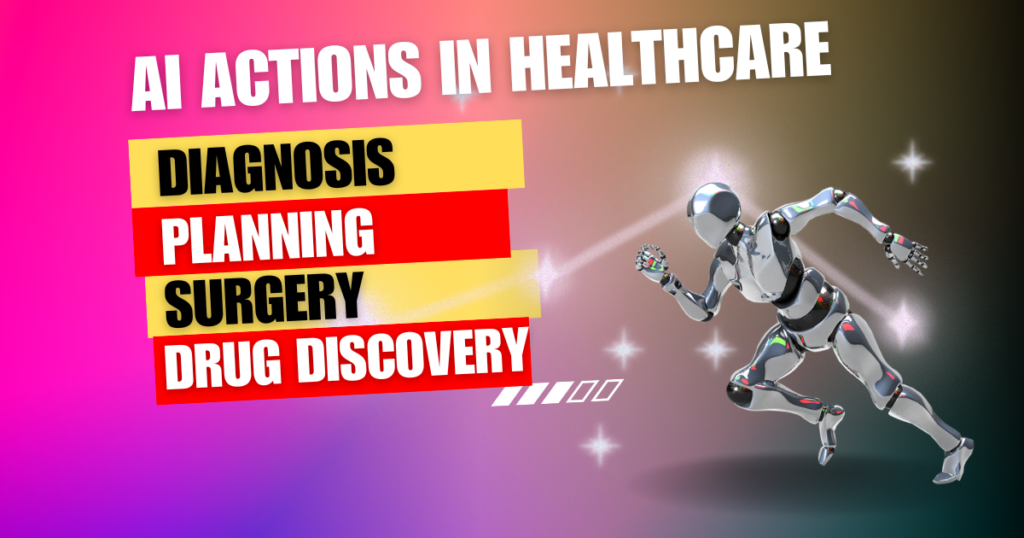
    1. Diagnosis: Unleashing AI’s Superpowers in Healthcare:
      Ever wished for a medical superhero with eyes as sharp as an eagle and a mind that rivals the genius of Einstein? Well, AI is here to make that dream a reality. Picture this: no more squinting at blurry X-rays or enduring weeks of nail-biting waits for lab results. AI swoops in like a digital eagle, analyzing medical images with superhuman precision. It spots tumors that might have gone incognito and detects fractures that were attempting a stealth move. But that’s not all—it’s like having a crystal ball for your health. AI predicts heart attacks before they even think about striking, spots the early whispers of Alzheimer’s, and can identify rare diseases faster than flipping through a medical textbook. Imagine living in a world where a simple scan unveils your health future with uncanny accuracy, allowing doctors to intervene before symptoms even make an entrance. That’s the power of AI, turning healthcare into a proactive journey.
    2. Treatment Planning: Your Health, Your Way – Thanks to AI:
      Goodbye, one-size-fits-all medicine; hello, tailor-made treatment plans! AI algorithms are like personal stylists for your health, crafting therapies as unique as your fingerprint. They dive into your genetic makeup, sift through your medical history, and even take note of your lifestyle choices to create treatments that fit you like a glove. No more crossing your fingers with generic regimens or playing medication roulette. AI brings precision to the party, ensuring the right treatment lands on the right target at the right time. It’s like having a health plan customized just for you, maximizing your chances of bouncing back stronger than ever.
    3. Surgery: AI-Assisted Magic in the Operating Room:
      Move over, traditional surgery; it’s time for AI-assisted magic! Picture this: nimble robotic arms guided by the keen eye of AI, performing surgeries with surgical precision. Forget days of recovery – these minimally invasive procedures are like disappearing acts, leaving you wondering if you ever underwent surgery at all. Whether it’s delicate brain surgery or complex joint replacements, AI is stealing the spotlight in the operating room, making the seemingly impossible possible. Surgeons, meet your AI co-pilots; they’ve got steady hands and scalpel smarts that redefine the future of surgical excellence.
    4. Drug Discovery: AI – The Rocket Fuel for Medical Breakthroughs:
      Tired of waiting decades for miracle cures? Enter AI, the rocket ship propelling us into a new era of drug discovery. Say farewell to years of laborious lab work and the sluggish pace of drug development. AI sifts through mountains of data, identifying potential drug candidates and predicting their effectiveness at warp speed. It’s not just stopping there – AI can even design medications tailored to your unique genetic code, bringing the concept of personalized medicine to life. Brace yourselves; the future of medicine is arriving faster than you can say “breakthrough,” and AI is at the helm, shaping it one molecule at a time.
    5. Mental Health: AI, Your Compassionate Companion:
      Mental health struggles can often feel like a lonely journey, but fear not – AI is here to be your steadfast companion. Picture this: chatbots with the wisdom of a therapist and virtual assistants offering personalized mindfulness exercises. AI is transforming the mental health landscape, providing a friend who listens without judgment, offering evidence-based coping mechanisms, and delivering 24/7 support for anxiety, depression, and more. Imagine having a compassionate, non-judgmental friend right in your pocket or on your bedside table, ready to lend a helping hand whenever you need it. The future of mental health support is here, and AI is extending a friendly hand to guide you through it.

    Benefits of AI in Healthcare

    In the realm of healthcare, Artificial Intelligence (AI) emerges as a transformative force, yielding an array of advantages. Its influence extends to refining operational efficiency, user interactions, diagnostic processes, and overall safety within healthcare systems. Let’s delve into the multifaceted benefits that AI brings to the healthcare domain:

    1. Augmented Operational Efficiency: Healthcare entities leverage AI to optimize a spectrum of operations, spanning from mundane back-office tasks to the intricacies of patient care. Through the integration of AI and automation, the tedious aspects of daily tasks are alleviated, granting personnel more time for direct patient engagement and face-to-face interactions.
    2. Mitigated Errors: The discerning capabilities of AI contribute significantly to error reduction in healthcare. By scrutinizing extensive datasets, AI can pinpoint patterns and anomalies, offering a proactive approach to identifying errors, such as miscalculations in patient self-administration of medications.
    3. Elevated Patient Care Standards: AI plays a pivotal role in enhancing patient care by tailoring treatment plans to individual needs and forecasting patient survival rates. This personalized approach signifies a paradigm shift towards more effective and patient-centric healthcare delivery.
    4. Streamlined Communication Channels: The integration of AI facilitates the automation of administrative and clinical workflows. This not only enriches the overall patient experience but also enhances the day-to-day functionality of healthcare facilities, streamlining communication and coordination.
    5. Facilitation of Novel Discoveries: AI empowers researchers with the ability to unravel new treatment modalities and potential cures for diseases. Through the meticulous analysis of voluminous data sets, AI identifies intricate patterns that may elude human perception, propelling the healthcare sector towards groundbreaking discoveries.

    In conclusion, the integration of AI into healthcare not only marks a technological evolution but also signifies a redefinition of standards, promising a future where efficiency, precision, and patient-centricity converge for the betterment of healthcare services.

    How AI is Diagnosing Diseases Faster & Predicting Outbreaks

    Remember that scene in Star Trek where Dr. McCoy whips out his tricorder and instantly diagnoses Klingon heartburn? While we haven’t quite reached tricorder territory, AI in healthcare is rapidly turning science fiction into reality, and the implications are nothing short of groundbreaking.

    • Diagnosing Diseases at Superhuman Speed: Imagine AI algorithms analyzing medical scans with eagle-eyed precision, spotting tumors invisible to the human eye, or identifying rare diseases in a fraction of the time it takes now. This isn’t a fantasy; it’s happening! AI-powered tools are already aiding doctors in early and accurate diagnoses, potentially saving lives and improving patient outcomes.
    • Predicting Outbreaks Before They Happen: Remember the scramble during the pandemic? AI can help us stay ahead of the curve by analyzing vast datasets of disease patterns, travel information, and environmental factors. This allows for early warnings of potential outbreaks, giving us precious time to prepare for and mitigate their impact. Think of it as having a real-life, disease-fighting crystal ball!
    • Personalized Drugs: One-size-fits-all medicine is slowly becoming a thing of the past. With AI analyzing a patient’s unique genetic makeup and medical history, we’re on the cusp of creating personalized drugs. These drugs would be specifically designed to target the root cause of a disease in an individual, potentially leading to more effective and less harmful treatments.

    But is it all sunshine and rainbows? Like any powerful technology, AI in healthcare comes with its own set of challenges. Data privacy, ethical considerations, and the potential for bias in algorithms are all concerns that need to be addressed. However, the potential benefits far outweigh the risks, and with careful development and implementation, AI has the power to revolutionize healthcare for the better.

    What are some challenges of using AI in Healthcare?

    While the promise of AI-powered healthcare glitters like a futuristic utopia, it’s important to remember that no revolution is without its roadblocks. As we embrace this technological marvel, we must also confront the potential pitfalls and ethical dilemmas that lurk in the shadows.

    • Data Privacy: Your Scans, Your Story, Whose Hands?: AI thrives on data, and healthcare provides a treasure trove of sensitive information. From blood test results to genetic blueprints, our medical records paint an intimate portrait of our lives. Ensuring the privacy and security of this data is paramount. We must establish robust safeguards against breaches, empower patients with control over their data, and foster transparency about how their information is used.
    • Transparency and Trust: Black Box Blues?: AI algorithms can be powerful, but they can also be opaque. How do we trust a machine that spits out diagnoses with little explanation? Without transparency in how these algorithms work, mistrust and bias can fester. We need developers to shed light on their algorithms, explain their decision-making processes, and involve medical professionals in their development to ensure they align with human values and ethical principles.
    • Job Displacement: Robots Stealing Stethoscopes?: Automation is often a double-edged sword. While AI promises to revolutionize healthcare, it might also lead to job displacement in certain sectors. We must acknowledge this potential challenge and prepare for it. Upskilling and reskilling programs for healthcare workers, coupled with ethical guidelines for responsible AI implementation, can help ensure a smooth transition and protect livelihoods.
    • Bias in the Code: Algorithms with Unconscious Prejudice?: AI algorithms are only as good as the data they’re trained on. Unfortunately, biases and prejudices can sneak into datasets, leading to discriminatory outcomes in healthcare. Imagine an AI recommending fewer preventative treatments for patients from marginalized communities. We must combat algorithmic bias by diversifying training datasets, fostering inclusive development teams, and constantly testing and monitoring AI systems for fairness and equity.

    These challenges are not insurmountable, but they demand serious consideration and proactive solutions. Responsible development, ongoing public discourse, and ethical frameworks are crucial to harnessing the power of AI in healthcare for the benefit of all. The future of medicine may be powered by algorithms, but it must be guided by human values, empathy, and a commitment to ethical advancement.

    Read Also: Disruptive Innovation in Healthcare Technology

    The Future of AI in Healthcare: Where Humans and Machines Co-Pilot Wellness

    Close your eyes. Imagine a world where medical diagnoses are instantaneous, delivered by AI doctors analyzing your genome in real-time. Picture personalized, AI-designed medicines, crafted to your unique biology, targeting diseases with pinpoint accuracy. Envision AI-powered robots, nimble surgeons performing complex procedures with microscopic precision, leaving you with barely a whisper of a scar. Welcome to the future of healthcare, a symphony composed by human ingenuity and conducted by the powerful algorithms of AI.

    In this future, AI won’t replace doctors, it will be their superhuman partner. Imagine AI assistants deciphering complex medical literature, suggesting diagnoses, and even proposing treatment plans, all while allowing doctors to focus on the human touch, the empathy, and the nuanced decision-making that only they can provide. This collaboration between humans and machines will be the engine of medical progress, pushing the boundaries of what’s possible.

    Get ready for AI-powered nanobots patrolling your bloodstream, hunting down diseased cells before they even have a chance to multiply. Witness AI wearables predicting your health emergencies before they happen, giving you the precious gift of prevention. And prepare to be awestruck by AI therapists building deep connections with patients, offering personalized therapy regimens tailored to their specific needs and emotional landscapes.

    The future of healthcare with AI is not just about efficiency and precision; it’s about accessibility and human connection. Imagine AI-powered medical drones delivering life-saving supplies to remote villages, or virtual clinics connecting patients in war-torn regions to specialists across the globe. This is a future where everyone, regardless of location or income, has access to the best possible healthcare.

    And what about the ethical concerns? Don’t worry, the future of AI in healthcare is being built on a foundation of robust ethical frameworks and public dialogues. Transparency will be the keyword, with algorithms explainable and biases actively monitored and mitigated. Data privacy will be paramount, with patients empowered to control their information and AI held accountable for its use.

    So, are you ready to step into this future? The future where AI isn’t just a science fiction trope, but a trusted partner in our journey towards optimal health? Buckle up, humanity, because the future of healthcare is waiting, and it’s powered by the extraordinary potential of AI. Let’s embrace this technological revolution with open minds and open hearts, knowing that together, humans and machines can create a healthier, happier, and more hopeful tomorrow.

    What are some prerequisites for the AI in Healthcare Specialization?

    The AI in Healthcare Specialization provided by Stanford University through Coursera comprises a series of five courses. These modules delve into diverse subjects, including recognizing challenges faced by healthcare providers that can be addressed through machine learning, assessing the impact of AI on patient care safety, quality, and research, and applying the fundamental elements of AI to foster innovation and comprehension of emerging technologies. Tailored for both healthcare professionals and computer science experts, these courses aim to foster collaboration between these two disciplines.

    While there are no prerequisites for enrollment in this specialization, a foundational grasp of statistics, probability, and programming is recommended. For those eager to explore the realm of AI in healthcare further, consider the following resources:

    1. Coursera’s article on AI in Health Care: Applications, Benefits, and Examples offers a comprehensive overview of how AI is reshaping healthcare, present and future. The article covers types of AI implementations, applications in healthcare, benefits for patients and providers, and potential career opportunities in the field.
    2. IBM’s blog post on The benefits of AI in healthcare provides insights into the diverse applications of AI in healthcare, from answering patient queries to assisting in surgeries, developing new pharmaceuticals, and enhancing overall efficiency and communication.
    3. McKinsey & Company’s report on Transforming healthcare with AI critically evaluates the impact of AI on healthcare across Europe and beyond. This assessment is based on proprietary research and analyses conducted by EIT Health and McKinsey & Company.

    Conclusion: A Brave New World of Healthcare – Powered by AI

    We’ve caught a glimpse of the future, and it’s nothing short of amazing. AI isn’t just stepping into the role of a doctor – it’s rewriting the entire medical story. From lightning-fast diagnoses to personalized treatment plans, from robots with scalpel finesse to AI companions guiding us through mental health struggles, the potential of AI in healthcare is nothing short of revolutionary.

    Yet, it’s not all sunshine and algorithms. Navigating the ethical challenges of data privacy, algorithmic bias, and potential job displacement requires careful consideration. Responsible development, transparency, and a commitment to human values serve as our guiding stars on this exciting journey.

    The future of healthcare with AI isn’t a predetermined script – it’s a blank canvas waiting for our collective brushstrokes. Let’s paint a picture where technology enhances human compassion, where precision diagnoses lead to personalized care, and where everyone, regardless of circumstance, has access to top-notch health services.

    So, will AI be the hero in our healthcare story? That’s a decision for us to make. Let’s engage in thoughtful discussions, demand ethical development, and actively shape a future where humans and machines co-pilot our well-being. Remember, the power to revolutionize healthcare doesn’t just lie in algorithms – it lies in our choices, our voices, and our unwavering commitment to a healthier future for all.

    Ready to be part of this AI-powered healthcare revolution? Dive deeper into specific applications, explore the voices of those already benefiting from these advancements, and raise your voice to ensure ethical development. The future of healthcare is waiting, and it’s time to take the reins, together.
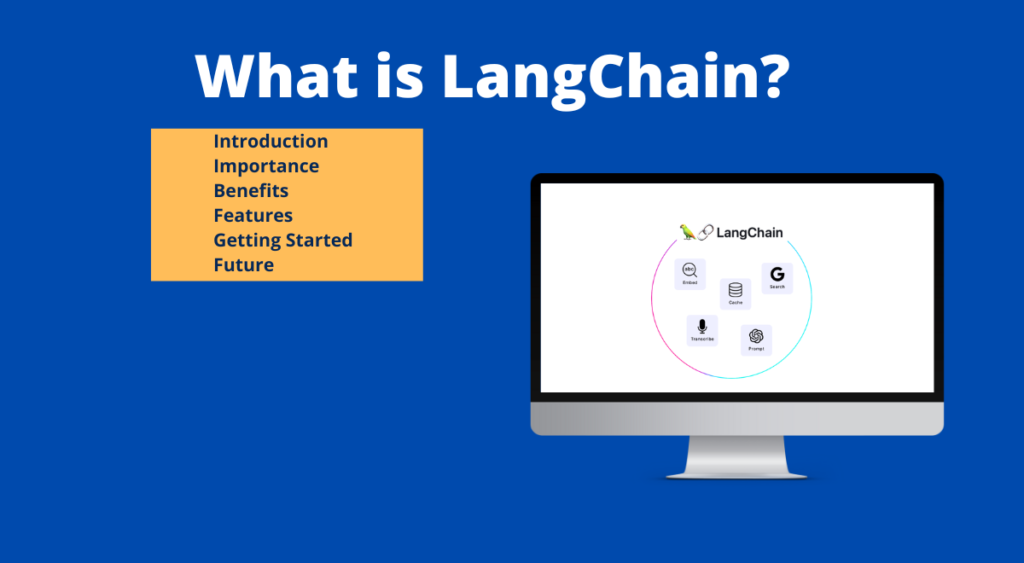
  • What Is LangChain? The Future of Language Learning

    What Is LangChain? The Future of Language Learning

    What is LangChain, and why is it a game-changer for language learning? LangChainthe open-source platform for developing applications. In this article, we will discuss everything you need to know about LangChain: why it’s important, the benefits it offers, how to use it, and its future in facilitating conversations with AI in different languages, ultimately accelerating your language skills.

    In the era of Artificial Intelligence (AI), revolutionizing traditional learning methods is no longer a futuristic dream. LangChain, an open-source framework fueled by Large Language Models (LLMs), emerges as a game-changer in the realm of language acquisition. But what exactly is LangChain, and how can it empower your language-learning journey? Let’s delve into this powerful tool and unveil its potential to unlock fluency in any language you desire.

    What is LangChain?

    LangChain is a revolutionary framework that transforms the potential of large language models into personalized tutors, dynamic knowledge portals, and engaging conversational partners. It simplifies development, keeps knowledge fresh with live data, and takes language learning beyond static methods.

    At its core, Langchain is an open-source framework specifically designed to streamline the development of applications powered by Large Language Models (LLMs) like Bard. These sophisticated AI models, trained on massive datasets of text and code, possess the remarkable ability to generate human-quality text, translate languages, write different creative formats of content, and answer your questions in an informative way. However, harnessing the full potential of LLMs can be a complex and time-consuming task for developers.

    Here’s Where Langchain Shines

    Think of Langchain as the missing link, simplifying the interaction between developers and LLMs. It does this by providing a modular toolkit with pre-built components like functions and object classes, known as chains. These chains can be easily “chained” together to create complex language applications without requiring extensive coding knowledge. Imagine building a virtual language tutor or a real-time translation app—with Langchain, these intricate functionalities become achievable in a fraction of the time and effort.

    Addressing the Language Learning Challenge

    Traditionally, language learning often involves rote memorization and repetitive exercises, which can feel tedious and hinder motivation. Langchain disrupts this approach by introducing a more engaging and personalized learning experience.

    Here’s how:

    • Dynamic Content Generation: LLMs within Langchain can generate unique and context-specific learning materials like interactive dialogues, personalized stories, and adaptive quizzes. This eliminates the “one-size-fits-all” approach and caters to individual learning styles and preferences.
    • AI-powered Feedback and Guidance: Imagine receiving real-time feedback on your pronunciation, grammar, and writing style directly from within the learning application. LLMs integrated with Langchain can provide such personalized feedback, helping you identify areas for improvement and accelerating your learning journey.
    • Immersive Simulations and Gamification: Language learning doesn’t have to be confined to textbooks and flashcards. Langchain allows developers to create immersive simulations and game-like experiences, making the learning process fun and interactive. Imagine practicing your conversational skills in a virtual cafe or participating in an AI-driven role-playing scenario—the possibilities are truly endless.

    By empowering developers to create such innovative learning experiences, Langchain holds the potential to democratize and revolutionize language learning for everyone. Whether you’re a beginner seeking a more engaging introduction to a new language or an advanced learner looking for personalized practice, Langchain paves the way for a future where language learning is dynamic, personalized, and ultimately enjoyable.

    Why LangChain Makes a Difference in Language Learning

    While LLMs hold immense potential for language learning, developers face hurdles in harnessing their power effectively. This is where LangChain emerges as a game-changer, streamlining the process and enhancing the learning experience in several key ways:

    • Simplifying LLMs for Developers: Imagine an intricate toolbox overflowing with specialized tools—building a language-learning app with LLMs can feel like that. LangChain acts as a smart organizer, providing a cohesive framework that simplifies complex LLM integrations.
    • Developers can readily leverage various components like retrieval modules, prompt chains, and data connectors without being bogged down by code complexities. This saves time, reduces development overhead, and allows developers to focus on refining the user experience.
    • Unleashing the Power of Fresh Data: GPT models, for instance, are like sponges, soaking up information during their training phase. But just like a sponge left unused dries out, their knowledge becomes outdated over time. LangChain plugs this gap by connecting LLMs to live data sources like web searches and databases.
    • This empowers them to access the latest information, keep pace with cultural trends, and provide up-to-date answers to your questions. Imagine learning vocabulary used in trending news articles or mastering idioms from contemporary languages, all thanks to LangChain’s dynamic data integration.
    • Beyond Static Content: Traditional language learning often feels like static textbooks or rote memorization drills. LangChain injects dynamism into the process by enabling developers to build interactive AI tutors. These virtual companions can engage in realistic conversations, adapt to your mistakes, and personalize the learning journey based on your progress. They provide immediate feedback, answer your questions in real time, and make learning feel like a natural conversation, not a forced chore.

    LangChain is not just another language learning tool; it’s a transformative framework that bridges the gap between theory and practice. By offering personalized learning, engaging interactions, contextual understanding, continuous growth, and a supportive community, LangChain empowers you to finally experience the joy and effectiveness of true language acquisition.

    So why wait? Join the LangChain revolution and unlock your language potential today!

    Benefits of Using LangChain for Language Learning

    Say goodbye to the dull, repetitive language learning methods of the past! LangChain ushers in a new era where personalized learning, engaging interactions, and real-world context take center stage. Here’s how this innovative framework revolutionizes your language journey:

    • Personalized Learning: LangChain does not take a one-size-fits-all approach. It tailors lessons and difficulty levels based on your individual strengths, weaknesses, and pace of progress. The system adapts in real-time to keep you challenged but engaged, ensuring you advance efficiently.
    • Engaging Interactions: Forget about boring rote memorization. LangChain offers interactive dialogues, speech recognition exercises, creative writing prompts, and more. This immersive learning keeps you motivated with fun, life-like conversations.
    • Contextual Understanding: LangChain goes beyond vocabulary lists and grammar rules. It helps you grasp the nuances of language by providing real-world context and practical applications. You’ll learn how to use the language effectively in everyday situations.
    • Constant Access to Information: With LangChain, the world becomes your classroom. Its integration with external data sources grants you instant access to a plethora of learning materials, ensuring you’re always equipped with the latest information and cultural insights.

    LangChain is more than just a language learning tool; it’s a gateway to a personalized, engaging, and effective learning experience. So ditch the traditional methods and embrace the thrill of discovery with LangChain! Are you ready to unlock your language potential in a whole new way?tunesharemore_vertadd_photo_alternate

    Key Features of LangChain for Language Learners

    If you’re seeking a fun, engaging, and personalized approach to language learning, LangChain might be the key that unlocks your full potential. Here are some of its key features that cater specifically to learners:

    1. Conversational Practice: Engage in realistic back-and-forth dialogues with virtual tutors, honing your fluency and confidence.
    2. Grammar, Vocabulary, and Pronunciation Support: Receive helpful corrections in real time, solidifying your understanding and ironing out kinks.
    3. Adjustable Difficulty Levels: Cater to your learning pace, from beginner exercises to advanced challenges, ensuring steady progress.
    4. On-Demand Translations and Definitions: Unravel linguistic mysteries, clarify vocabulary, and understand nuances on the fly.
    5. Multilingual Support: Practice and improve your skills in various languages, including English, Spanish, French, German, Portuguese, and Mandarin.
    6. Topic Customization: Focus on the vocabulary and phrases relevant to your interests and goals, whether it’s travel, business, healthcare, or more.
    7. Personalized Learning Path: LangChain identifies your weaknesses and areas for improvement, regularly revisiting those topics to strengthen your foundation.
    8. Accessibility Across Platforms: Learn anywhere, anytime! LangChain is available through a convenient website, iOS, and Android apps.

    And behind the scenes, LangChain’s core modules work tirelessly to create these seamless experiences:

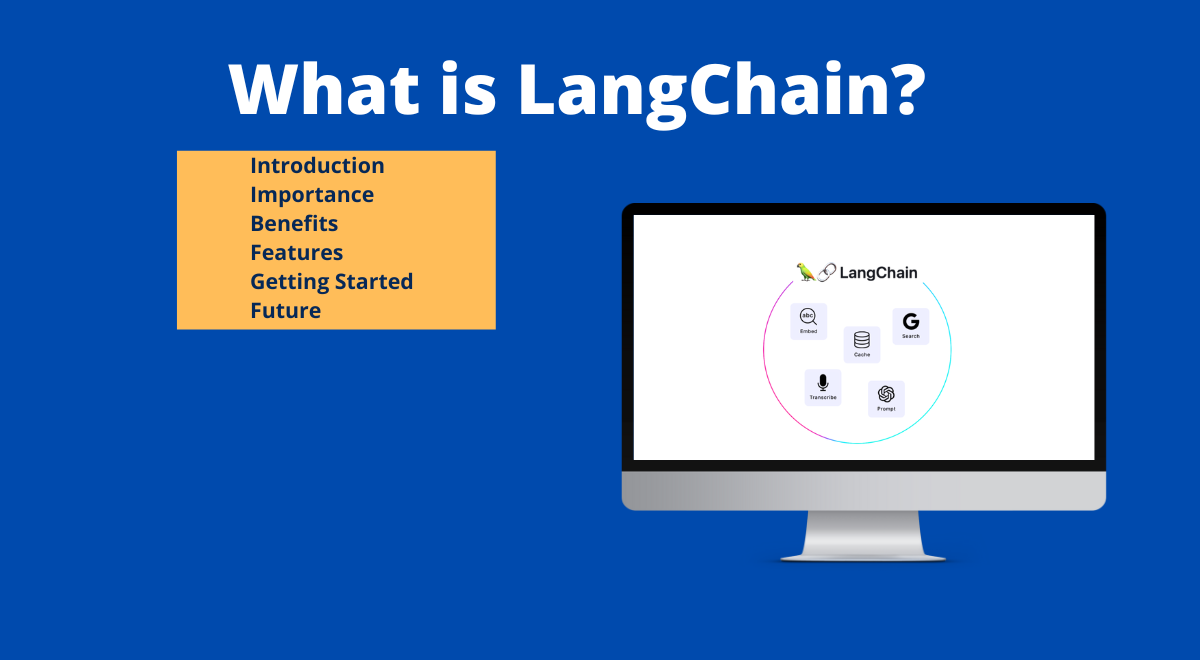
    • Model Interaction: This module, also known as model I/O, enables LangChain to communicate effectively with any language model, managing inputs, extracting relevant information from outputs, and ensuring smooth interactions.
    • Data Connection and Retrieval: LangChain doesn’t just rely on static data. It actively connects with databases, transforms and stores information, and retrieves it through queries, ensuring learners always have access to the most up-to-date knowledge.
    • Chains: Complex language learning apps often require multiple LLMs or other components. LangChain’s Chains module acts as a bridge, linking them together seamlessly to create cohesive and powerful learning experiences.
    • Agents: The Agents module empowers LLMs to make decisions and solve problems independently. It orchestrates a series of commands, guiding LLMs and other tools to respond effectively to specific requests, fostering a more dynamic and adaptive learning environment.
    • Memory: LangChain understands that context is crucial for effective communication. Its memory module enables both short-term and long-term memory for LLMs, allowing them to recall previous interactions with users and provide more personalized and relevant responses.

    With its unique blend of personalization, interactivity, contextual learning, and community support, LangChain offers a compelling alternative to traditional language learning methods. So, unlock your language potential and embark on a fun, engaging, and effective journey with LangChain!

    Read More: Metal Blockchain: Revolutionizing Cryptocurrency Transactions

    Getting Started with LangChain:

    While LangChain primarily caters to developers building language learning applications, its potential benefits extend to individual learners as well. Here are some ways you can leverage LangChain’s power:

    • Explore Existing Applications: Numerous LangChain-powered language learning apps are readily available. Look for apps aligned with your target language and learning goals. Popular options include Memrise, Duolingo, and Babbel, which have incorporated LangChain features to enhance their learning experience.
    • Participate in Online Communities: Join online communities dedicated to LangChain and LLMs for language learning. These communities offer valuable resources, tutorials, and discussions that can guide you on your journey.
    • Contribute to Open-Source Projects: If you’re tech-savvy, consider contributing to open-source LangChain projects. This allows you to directly influence the development of the framework and shape the future of language learning technology.

    Tips on Using LangChain Effectively:

    Maximize your language learning experience with these strategies:

    • Consistent Practice: Even short daily sessions of 5–10 minutes can yield significant progress. Make LangChain a part of your daily routine.
    • Embrace Conversation: Go beyond flashcards and immerse yourself in natural dialogue. Ask questions, share opinions, and let the conversation flow.
    • Identify and Conquer Weaknesses: Utilize LangChain’s feedback to pinpoint your problem areas and dedicate focused practice to mastering them.
    • Test Your Knowledge: Leverage the Quiz Mode to test your grammar and vocabulary retention, identifying areas requiring further attention.
    • Holistic Approach: Combine LangChain with other learning methods like reading graded materials, listening to podcasts, or finding language partners for a well-rounded experience.

    Remember:

    • LangChain is still under development, and its full potential is yet to be fully realized.
    • While it offers promising tools and resources, consistent effort and dedication remain crucial for successful language acquisition.
    • Explore different learning methods and tools alongside LangChain to create a well-rounded learning experience.

    Building AI Apps with LangChain: A Pro’s Guide

    Ever dream of creating cutting-edge AI applications like chatbots, data analysis tools, or even personalized language learning experiences? While the world of AI development might seem daunting, fear not! LangChain, a powerful and accessible Python framework, steps in as your friendly neighborhood guide, empowering even beginners to build AI apps like a pro.

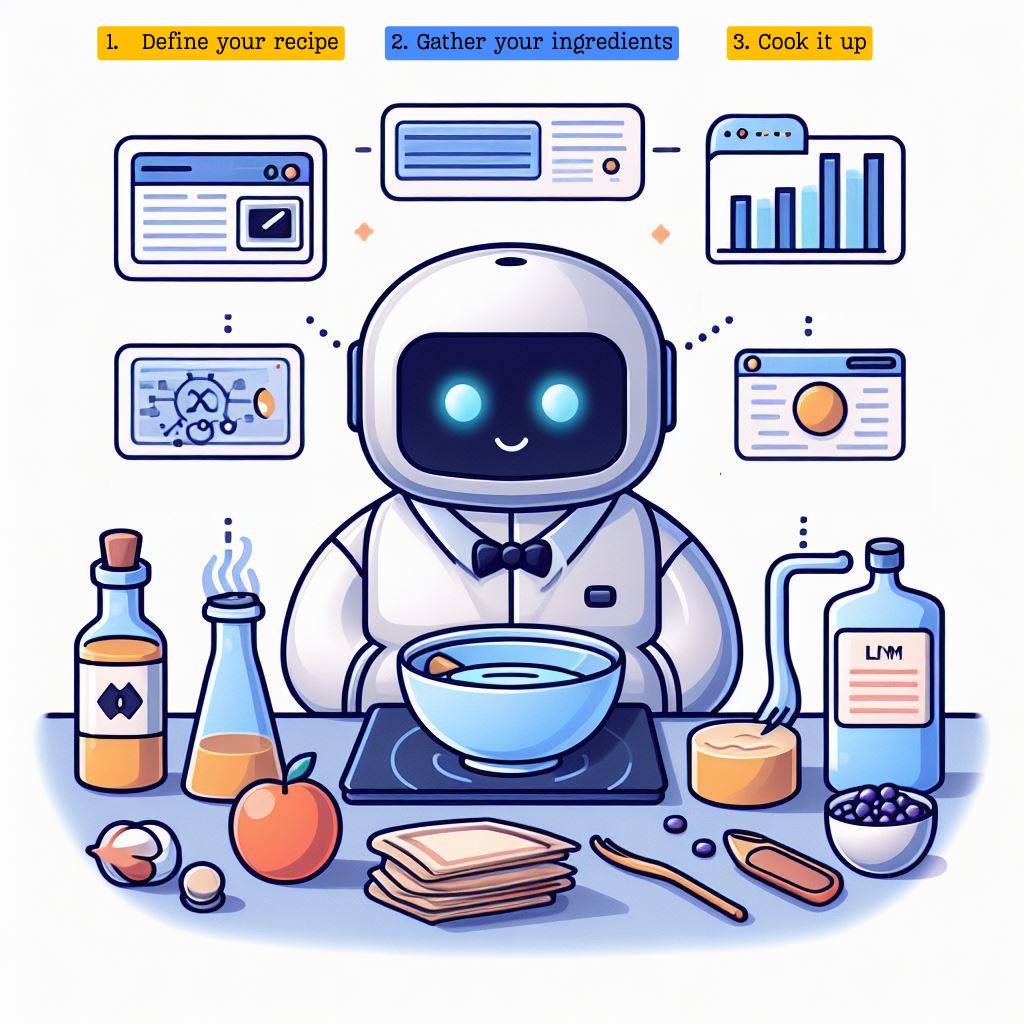
    Imagine it as your personal AI chef, expertly assembling delicious (read: powerful) applications from the finest ingredients – large language models (LLMs). These LLMs, like GPT-3 or Jurassic-1 Jumbo, are the brainiacs of the operation, capable of understanding and generating human-like text. LangChain seamlessly connects you to these models, providing a simple interface to cook up AI magic.

    Now, you might be asking, “How does LangChain work?” It’s as easy as 1, 2, 3, with a dash of AI goodness:

    1. Define your recipe: Start by outlining what your AI app needs to do. Is it a chatbot answering customer questions? A tool summarizing news articles? LangChain understands your intent and guides you through the process.
    2. Gather your ingredients: Choose the right LLM for your needs. LangChain supports various models, each with its strengths. Feeling overwhelmed? Don’t worry, the framework helps you pick the perfect one!
    3. Cook it up! This is where the real fun begins. LangChain provides clear instructions and tools to craft your app’s logic. Think of it as building with Legos, but way cooler because it involves AI!

    And that’s it! Your AI app is ready to serve, impressing everyone with its intelligence and capabilities. But LangChain’s magic doesn’t stop there:

    • No coding required: Forget complex programming languages. LangChain uses plain English-like instructions, making it accessible even to non-coders.
    • Rapid prototyping: Experiment and iterate quickly. Building and testing different app versions is a breeze with LangChain’s intuitive approach.
    • Community power: Tap into a vibrant community of developers and learners sharing tips, tricks, and even pre-built app recipes!
    Let’s break down the process in another way:
    1. Install LangChain:
    2. Understand LangChain Expression Language (LCEL):
      • LCEL is declarative and allows you to compose chains effortlessly.
      • It supports everything from simple prompt-based interactions to complex cognitive architectures.
    3. Develop Your Application:
      • Write your LangChain application using LCEL.
      • Explore off-the-shelf chains and components for common tasks.
    Use Cases for LangChain:
    1. Chatbots and Virtual Agents:
      • Create conversational AI agents that understand context and provide meaningful responses.
      • Use LangChain to build chat interfaces that leverage LLMs.
    2. Data Extraction and Summarization:
      • Extract insights from text data, summarize articles, or generate concise reports.
      • LangChain simplifies working with LLMs for these tasks.
    3. Custom Tools and Integrations:
      • Develop custom tools that enhance LLM-based applications.
      • Seamlessly integrate LangChain with external data sources and workflows.
    Personal Touch:

    As you embark on your LangChain journey, remember that creativity and experimentation are key. Don’t hesitate to tweak prompts, explore different LLMs, and infuse your unique style into your applications. LangChain empowers you to create AI experiences that resonate with users.

    So, whether you’re a seasoned developer or a curious beginner, LangChain empowers you to build AI apps like a pro. No more wondering, it’s your gateway to unleashing the power of AI and turning your innovative ideas into reality.

    Embrace the Future of Language Learning:

    Forget stale pages and monotonous drills. LangChain is ushering in a new era of language learning, an era where personalized, engaging experiences pave the way to fluency. This innovative framework unlocks the power of large language models, transforming them into personalized tutors, conversational partners, and dynamic knowledge portals.

    Imagine immersive dialogues where mistakes become stepping stones to mastery and learning dances to the rhythm of your individual goals. LangChain connects you to a vibrant data stream, keeping your knowledge fresh and relevant to the ever-evolving world. It’s a language laboratory nestled within the pulse of the present.

    But LangChain doesn’t stop at passive absorption. It challenges you with adaptive quizzes, personalized challenges, and creative prompts that ignite your linguistic spark. This is learning with an edge, where every misstep fuels your progress and every triumph unlocks new horizons.

    So, bid farewell to the limitations of traditional methods. Embrace LangChain. It’s your key to a world where fluency isn’t just a dream; it’s a journey waiting to be embarked upon. Start exploring, start building, and start speaking—the future of language learning is here, and it’s powered by LangChain.

  • 5 AI Assistant Apps for Android : Simplify Your Life

    5 AI Assistant Apps for Android : Simplify Your Life

    Simplify your life with the help of these 5 AI assistant apps for Android, offering a range of features to make your tasks easier and more efficient.

    Forget juggling to-do lists, drowning in emails, and wrestling with smart home settings. The future of personal organization is here, and it’s nestled comfortably in your Android phone. Artificial intelligence assistants are no longer sci-fi dreams; they’re pocket-sized wizards ready to streamline your everyday chaos. And guess what? You don’t need spells or potions—just the right app.

    So, ditch the mental clutter and say hello to a smoother, simpler you. Here are 5 AI assistant apps—Notion (project management), IFTTT (automation), Calm (meditation), SoundHound (music recognition), and Lensa (photo editing)—that will transform your Android into a productivity powerhouse, a life-hacking machine, and maybe even a bit of a zen garden.

    Notion: One of the best AI Assistant Apps for taking Notes, Docs, Tasks

    AI Assistant Apps

    Ditch the mental clutter and let Notion, your notes, documents, and task autopilot, fly your productivity plane.

    Imagine a digital notebook that remembers everything, organizes itself, and even collaborates with your coworkers. Notion is that dream come true. This app isn’t just a note app; it’s a project management hub, a task organizer, a wiki on steroids, and a whiteboard for brainstorming—all rolled into one beautiful interface.

    • Think of it as your brain’s external hard drive. Jot down ideas in notes, create to-do lists with reminders that actually nag you (thank you very much, Notion), and drag and drop tasks between boards to visualize your workflow. Need to collaborate with your team? Notion’s got you covered, allowing seamless real-time editing and discussion on any project.
    • Do you remember that nagging feeling of a forgotten task haunting you in the middle of the night? Notion can handle that too. Set recurring deadlines, automate repetitive tasks, and even receive smart notifications that remind you of upcoming meetings or unfinished work based on your schedule. It’s like having a personal assistant in your pocket, only without the judgmental side-eye when you ask for the third time when you left your keys.

    So, whether you’re a solopreneur juggling a million ideas or a corporate warrior battling the email beast, Notion can be your digital sanctuary. It’s the all-in-one app that declutters your mind, organizes your chaos, and keeps you laser-focused on what matters most. Trust me, your brain will thank you for the upgrade.

    Here are some important features of Notion AI:

    • Offline access: “Notion stays by your side even when the internet doesn’t, ensuring your notes and tasks are always accessible, wherever you go.”
    • AI capabilities: “Notion’s smart search helps you find needles in information haystacks, while its intuitive database views transform chaotic data into organized dashboards.”
    • Customizability: “Notion isn’t a one-size-fits-all affair. It bends to your needs, letting you build any system for life or work, from minimalist notes to complex project plans.”
    • Integrations: “Notion doesn’t play well alone. It seamlessly integrates with Google Drive, Trello, Slack, and more, bringing all your favorite tools together under one digital roof.”

    IFTTT: Automate Work and Home

    AI Assistant Apps- IFTTT

    Remember that scene in Back to the Future where Marty McFly walks into his futuristic kitchen and a robotic arm makes him breakfast? Well, IFTTT (If This, Then That) is bringing that level of automation to your non-flying-car reality. This app acts as a digital bridge between all your favorite tools and services, letting you create “recipes” that trigger actions based on specific events.

    • Think of it as a personal Rube Goldberg machine, but one that makes your life easier. Did you finish your workout? IFTTT can automatically update your fitness tracker and send a celebratory tweet. Is the phone battery running low? IFTTT can dim your screen and silence notifications until you plug it in. The possibilities are endless, from controlling your smart home devices to tracking packages and managing your finances—all without lifting a finger.
    • One of my favorite IFTTT recipes turns my bedroom lights into a gentle sunrise alarm, slowly increasing the brightness to mimic the morning dawn. No more jarring alarm clock jolts! And with integrations for everything from social media to productivity apps, IFTTT can automate the mundane and let you focus on what really matters.
    • But beyond the convenience, IFTTT sparks a certain kind of creative joy. It’s like playing with digital building blocks, connecting different services in unexpected ways to create personalized automation that fits your unique needs. So, get your tinkering hat on and unleash your inner mad scientist—the world of IFTTT awaits!

    Stay tuned for the next three amazing Artificial Intelligence assistants and discover how they can make your life a smooth, stress-free symphony!

    Calm: Sleep, Meditate, Relax

    AI assistant apps-Calm

    This AI assistant app will work as your inner oasis in the digital desert.

    Ever feel like your phone is a stress magnet, pulling you into a vortex of deadlines, notifications, and social media drama? Enter Calm, your personal pocket-sized zen garden. This app is more than just a meditation library; it’s a sanctuary for your mind, offering a curated collection of tools and exercises to combat anxiety, improve sleep, and cultivate inner peace.

    Forget incense sticks and chanting mantras. Calm offers guided meditations for every mood and moment, from quick 5-minute breathwork breaks to immersive 30-minute visualizations. Whether you’re a meditation newbie or a seasoned yogi, there’s something for everyone. The app even tailors its recommendations based on your sleep patterns and activity level, so you get the perfect dose of mindfulness tailored just for you.

    But calm isn’t just about sitting cross-legged and humming. It offers sleep stories narrated by celebrities like Stephen Fry and Matthew McConaughey to lull you into a peaceful slumber. And if you’re struggling to focus, its calming nature sounds and music tracks can help drown out the mental chatter and boost your productivity.

    Think of Calm as a personal oasis you can carry with you everywhere. It’s a refuge from the noise of the world, a gentle reminder to breathe, and a gateway to a calmer, more centered you. Whether you’re commuting, waiting in line, or simply needing a moment to reset, Calm is there to offer a soothing antidote to the daily grind.

    SoundHound: Chat AI App

    AI assistant apps- SoundHound

    Feeling like you’re constantly lost in a sea of information overload? Don’t worry; SoundHound has your back. This app isn’t just a voice assistant; it’s your personal information detective, hunting down answers and keeping you up-to-date faster than you can say “Hey Google.”

    Need to know the latest score in the big game? SoundHound can tell you in a flash. Want to catch up on the news headlines while brushing your teeth? Hound’s got you covered. Need to fact-check that dubious Facebook post before sharing it? Hound is your on-call truth detector.

    But Hound is more than just a trivia whiz. It learns your preferences and adjusts its responses accordingly. Want a daily weather and traffic briefing before work? SoundHound will deliver it like clockwork. Need a personalized newsfeed curated to your interests? SoundHound can do that too. It’s like having your own miniature librarian who tailors the information universe to your specific needs.

    And let’s not forget the fun factor. SoundHound is a master of wordplay and riddles, offering witty responses and engaging in playful banter. It can even translate languages on the fly, making you feel like a cosmopolitan globetrotter without leaving your couch.

    So, ditch the endless Google searches and the bottomless news scroll. Hound is your one-stop shop for all things information, delivered with a dash of wit and a personalized touch. Let it be your guide through the information jungle, your answer-finding superhero, and your digital conversation companion all rolled into one.

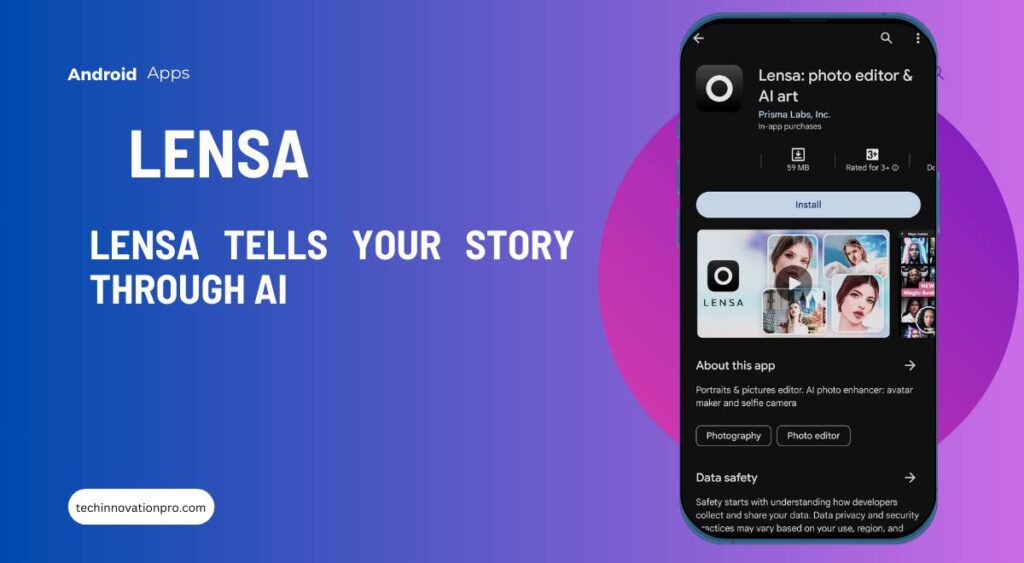
    Lensa: Photo Editor and AI Art

    AI assistant apps- Lensa

    Let’s face it, selfies can be fun, but sometimes they feel, well, ordinary. Enter Lensa, the AI-powered photo editor and art generator that transforms your run-of-the-mill portraits into artistic masterpieces and fantastical journeys, all with a few taps of your finger. Think of it as your own personal digital Michelangelo but with a penchant for playful filters and futuristic transformations.

    1. Beyond Filters: AI Reimagines Your Photo Persona

    Forget the basic brightness and contrast sliders. Lensa’s magic lies in its AI algorithms that analyze your features and reimagine them in a kaleidoscope of artistic styles. Want to see yourself as a watercolor painting with dreamlike swirls of color? Done. Craving a cyberpunk makeover with neon accents and glowing eyes? Lensa’s got you covered. It’s like stepping into a portal to alternate realities, each one a reflection of your inner artist’s wildest dreams.

    2. From Selfies to Storytellers: Create Worlds with AI

    But Lensa is more than just a fancy filter factory. It’s a storytelling machine fueled by AI imagination. Upload a picture, choose a fantastical theme like “Enchanted Forest” or “Sci-Fi Hero,” and watch as Lensa weaves your portrait into a stunning scene. You might find yourself soaring through galaxies as an astronaut, exploring mystical landscapes with ethereal creatures, or commanding armies as a futuristic warrior queen. The possibilities are truly endless, limited only by the depths of your creative spark.

    3. Play, Explore, Surprise Yourself

    The beauty of Lensa lies in its spirit of experimentation. There’s no right or wrong way to use it; it’s all about embracing the unexpected and delighting in the surprises. Try different styles on the same photo, share your creations with friends, and laugh together at the hilarious (and sometimes surprisingly flattering) results. It’s a playground for your imagination, a digital laboratory where you can mix and match artistic styles and themes to discover a whole new you.

    So, say goodbye to predictable selfies and hello to a world of artistic reinvention. With Lensa in your pocket, your phone becomes a portal to infinite creative possibilities. It’s a reminder that sometimes the most stunning masterpieces aren’t hanging in museums; they’re waiting to be born right on your smartphone screen.

    Ready to unleash your inner artist and embark on a selfie renaissance? Download Lensa and prepare to be amazed!

    Conclusion: Unlocking a Simpler, Smarter You

    With these five AI maestros in your back pocket, forget about merely simplifying your life – get ready to orchestrate its symphony. Notion AI becomes your conductor, composing to-do lists that dance with deadlines, while IFTTT automates the tedious tasks, letting you savor the music of accomplishment. Calm, the maestro of serenity, quiets the mental static, while Lensa paints your creative canvas with vibrant AI hues. Finally, SoundHound, your sonic muse, translates the world’s soundtrack into actionable knowledge.

    Together, they’re not just apps; they’re a virtuoso ensemble. They empower you to reclaim your time, unleash your creativity, and find zen in the digital chaos. Ditch the mental clutter, embrace the automated harmony, and explore the boundless possibilities that AI unlocks.

    Remember, a simpler, richer life isn’t just a tap away – it’s a chorus waiting to be sung. So, raise your metaphorical baton, embrace the symphony of AI, and let your life become a masterpiece worth living.

  • What is Nanotechnology: Essential Overview You need to know

    What is Nanotechnology: Essential Overview You need to know

    Explore nanotechnology’s basics, applications, challenges, and future possibilities in this essential guide. Your gateway to groundbreaking knowledge awaits!

    Nanotechnology is the manipulation of matter at the nanoscale, which is approximately 1 to 100 nanometers. One billionth of a metre is called a nanometer. The diameter of a human hair is about 100 micrometers or 100,000 nanometers. At this infinitesimal scale, matter exhibits unique properties, such as enhanced strength, lighter weight, and increased conductivity.

    What is Nanotechnology

    Nanotechnology is the science and engineering of designing, producing, and using structures, devices, and systems at the nanoscale. It is defined as the manipulation of matter at the nanoscale and is a rapidly developing field with applications in various industries, such as medicine, electronics, materials, and energy. If you’re wondering, ‘What is nanotechnology?’ it involves working with materials at the atomic and molecular levels. Some examples of nanomaterials include carbon nanotubes, graphene, and quantum dots.

    Real-World Applications of Nanotechnology Today

    Here are some examples of real-world applications of nanotechnology today:

    • Medicine: Nanoparticles can be used to deliver drugs to specific cells in the body, which can improve the effectiveness of treatment and reduce side effects. Additionally, new imaging methods and diagnostic tools are being developed using nanotechnology.
    • Electronics: Nanotechnology is used to create smaller, faster, and more energy-efficient electronic devices. For example, nanoparticles are used in lithium-ion batteries to increase their energy density and lifespan.
    • Materials: Nanotechnology is used to create new materials with enhanced properties, such as strength, lightness, and durability. For example, carbon nanotubes are used to create lightweight and strong composites that are used in aircraft and spacecraft.
    • Energy: Nanotechnology is being used to develop new renewable energy technologies and improve the efficiency of existing energy sources. For example, nanomaterials are used in solar cells to improve their efficiency and reduce their cost.

    How Small Are Nanomaterials? Explain the Nanometer Scale

    Nanoparticles

    Imagine shrinking yourself down to the size of a speck of dust. Suddenly, a human hair looms like a towering redwood, and a raindrop becomes a shimmering ocean. Welcome to the realm of nanotechnology, where the tiniest tweaks at the atomic and molecular level unlock a universe of possibilities.

    Nanoscale: Where Big Impact Starts Small

    At the heart of this revolution lies the nanometer, a unit so small it boggles the mind. One nanometer is one billionth of a meter – think of it as a single strand of hair compared to the entire Earth! It’s a scale invisible to the naked eye, yet where some of the most fascinating phenomena occur.

    Nano vs. Macro

    To grasp just how microscopic this world is, let’s take a familiar object: a human hair. This seemingly slender filament boasts a whopping 100,000 nanometers in diameter! Imagine squeezing 100,000 of these miniaturized hairs side-by-side to barely reach the width of your fingernail.

    • A red blood cell is roughly 7,000 nanometers wide, while a DNA molecule is only about 2 nanometers thick.
    • The tip of a ballpoint pen is about 10,000 nanometers wide, while a virus is around 100 nanometers across.

    Why Size Matters:

    This mind-bending smallness gives nanomaterials unique properties that their larger counterparts lack. Think of it like having superpowers:

    • Strength on a nano-scale: Nanomaterials can be incredibly strong, lighter than air, and more conductive than ever before. Imagine bridges constructed with carbon nanotubes, stronger than steel yet feather-light!
    • Playing with atoms: At the nanoscale, scientists can manipulate individual atoms and molecules, crafting materials with tailor-made properties. It’s like building with Lego blocks, but on a subatomic level!
    • Unlocking the door to the unseen: Nanomaterials can interact with biological systems on a cellular level, opening doors for targeted drug delivery and medical imaging. Imagine tiny nanorobots patrolling your bloodstream, seeking and destroying diseased cells!

    Nanotechnology is no longer a futuristic fantasy; it’s rapidly transforming our world. From revolutionizing medicine and electronics to shaping the future of energy and materials, the possibilities are endless.

    How Did Nanotechnology Get Started?

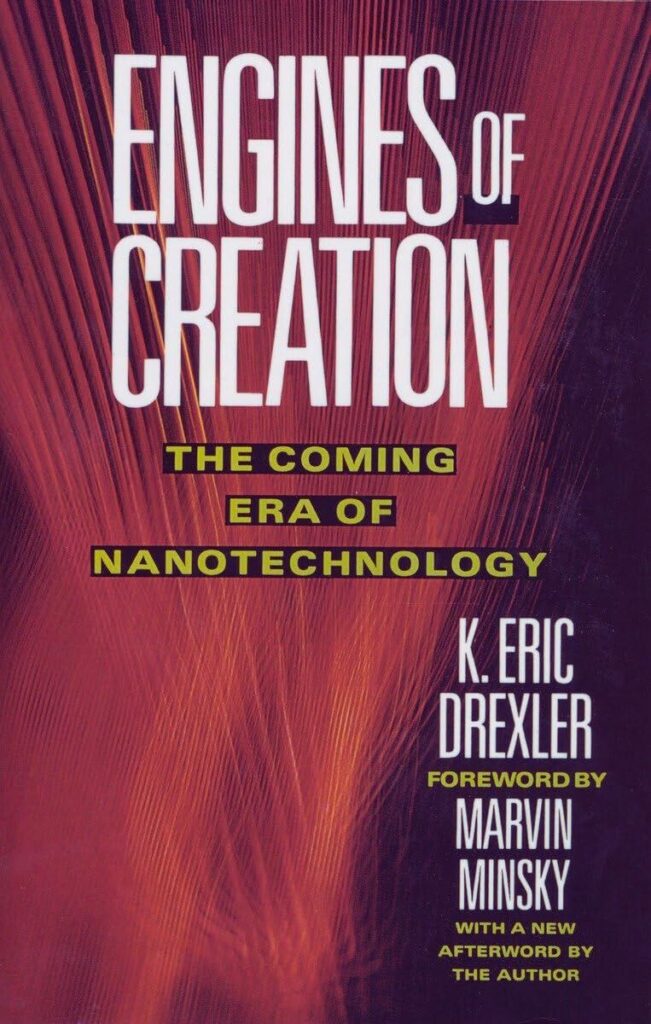
    The term “nanotechnology” was first coined by Eric Drexler in his 1986 book Engines of Creation: The Coming Era of Nanotechnology. In this book, Drexler describes a vision of a future in which nanobots, or tiny machines, would be used to build anything from new materials to entire machines.

    Although Drexler’s vision of nanotechnology has not yet been fully realised, significant progress has been made in the field over the past few decades. In the 1990s, scientists developed new techniques for manipulating matter at the nanoscale, such as scanning tunnelling microscopy and atomic force microscopy.

    In the early 2000s, the first nanomaterials, such as carbon nanotubes and graphene, were discovered. These materials have unique properties that have led to a wide range of applications in electronics, materials, and other industries.

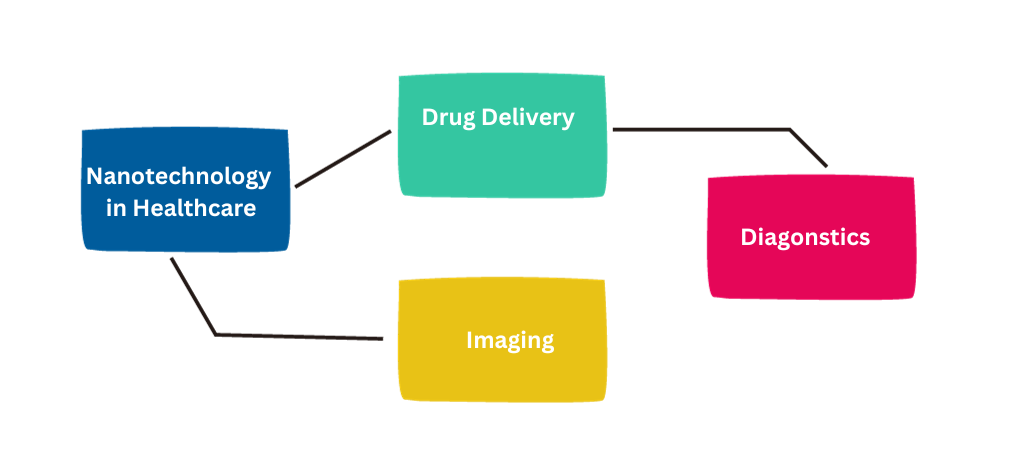
    How is Nanotech Being Used in Healthcare?

    Nanotechnology is being used in healthcare to develop new and innovative ways to diagnose and treat diseases. Here are some examples:

    What is Nanotechnology
    • Drug delivery: Nanoparticles can be used to deliver drugs to specific cells in the body, which can improve the effectiveness of treatment and reduce side effects. For example, nanoparticles are being used to deliver cancer drugs to tumor cells, while avoiding healthy cells.
    • Imaging: Nanoparticles can be used to create contrast agents that can improve the resolution and accuracy of medical imaging techniques, such as MRI and CT scans.
    • Diagnostics: Nanotechnology is being used to develop new diagnostic tools that can detect diseases at an early stage when they are most treatable. For example, nanobiosensors are being developed to detect cancer cells in the blood.

    Exploring Ethical Questions in Nanotechnology

    Delving into nanotechnology’s wonders, let’s pause to think about the ethics tied to these breakthroughs. While nanotech brings vast transformations, nuanced concerns in medicine and privacy deserve our attention.

    In medicine, nanotechnology advances drug delivery. Nanoparticles targeting specific cells promise better treatments with fewer side effects. Yet, ethical questions arise. Are we tampering too much with the human body at the molecular level? How do we ensure ethical use, preventing unintended health consequences?

    Take cancer treatment—nanoparticles delivering drugs directly to tumors show potential. Yet, we must balance innovation with ethics, safeguarding healthy cells. It’s a delicate dance needing continuous scrutiny and thoughtful rules.

    Beyond medicine, nanotech sparks privacy concerns. Sophisticated nanoscale devices may intrude at unprecedented levels. Imagine nanosensors in our bloodstream for diagnostics—how do we protect personal data? Nanotech and privacy intersect, demanding exploration of boundaries and safeguards.

    Nanotech’s ability to process molecular-level information requires robust ethical frameworks. Balancing innovation with privacy safeguards is crucial. How do we prevent misuse, like nanodevices for surveillance or data exploitation?

    In exploring nanotechnology’s ethics, we face questions beyond science. Reflecting on achievements, we must consider the responsibilities that come with such capabilities. As we marvel at progress, let’s guide our nanoscale journey with an ethical compass—valuing impact on individuals, society, and our shared humanity.

    Challenges in Nanotechnology

    Unraveling the wonders of nanotechnology reveals not just boundless possibilities but also intricate challenges that shape its trajectory. Let’s explore these hurdles, acknowledging the complexities that define the nanotech landscape.

    • Toxicity at the Nanoscale: A notable challenge is the potential toxicity of certain nanomaterials. While these materials offer remarkable properties, questions arise about their impact on living systems. How can we ensure the benefits of nanotechnology without unintended harm? Researchers grapple with understanding the interactions between nanomaterials and living organisms, aiming for innovation without compromising safety.
    • Environmental Considerations: The environmental footprint of nanotechnology is another challenge. The manufacturing and disposal of nanomaterials may introduce new complexities to ecological systems. The very properties that make nanoparticles valuable—small size and increased reactivity—pose potential threats to the environment. Navigating this challenge requires a holistic approach, considering the entire life cycle of nanomaterials. It’s about balancing innovation with environmental responsibility.
    • Technological Frontiers: In the ever-evolving nanotech landscape, researchers face technological hurdles. Tools like scanning tunneling microscopy and atomic force microscopy, while revolutionary, come with limitations. Bridging the gap between current technologies and the aspirations of working at the nanoscale demands constant refinement. Researchers walk a technological tightrope, pushing boundaries while navigating the constraints of existing tools.

    Acknowledging these challenges is not a step back but a leap forward with awareness. The journey into the full potential of nanotechnology is adorned with triumphs and tribulations. Embracing these challenges ensures a balanced perspective, steering the nanotech narrative responsibly through the delicate interplay of innovation, safety, and environmental stewardship.

    What Are the Future Possibilities of Nanotechnology?

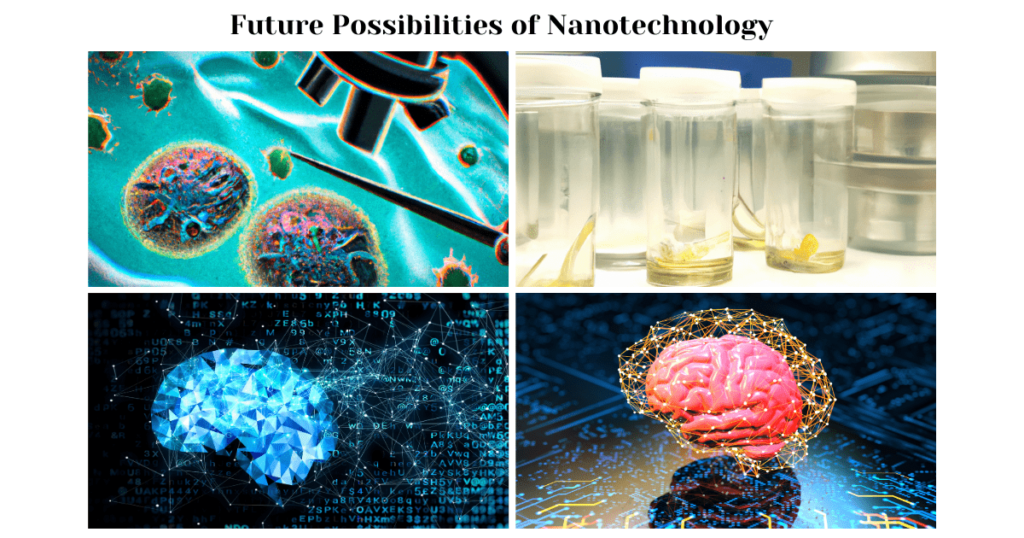
    Nanotechnology, the manipulation of matter at the atomic and molecular level, is no longer a futuristic fantasy. It’s rapidly evolving from science fiction to scientific fact, poised to revolutionize numerous industries and redefine our world. Imagine tiny machines operating within your body, crafting new tissues to heal, or computers with unimaginable processing power. This is the transformative potential of nanotechnology, and its upcoming applications are sure to leave us awestruck.

    Here are some potential upcoming applications of nanotechnology:

    • Surgery on a Cellular Scale: Nanorobots, microscopic machines designed to operate at the nanoscale, hold immense promise for medical advancements. These miniature marvels could navigate our bloodstreams, performing pinpoint surgery on diseased cells or delivering targeted drug therapies directly to affected areas. Imagine treating cancer by deploying these nanodocs, eliminating tumors with precision while minimizing side effects. The possibilities for personalized medicine become boundless with nanorobotics at the helm.
    • Tissue engineering: Tissue engineering, the art of growing functional tissues, takes a leap forward with nanotechnology. By harnessing the power of nanomaterials, scientists envision crafting replacement organs, nerves, and even entire limbs. This could bring hope to millions suffering from organ failure or debilitating injuries, offering a future where regeneration replaces irreversible damage. Imagine a world where a damaged liver could be regrown using biocompatible nanomaterials, or a severed spinal cord restored through nanofiber bridges.
    • Artificial intelligence: Artificial intelligence, the driving force behind our technological advancements, stands to benefit immensely from nanotechnology. Nanoelectronic components would offer unprecedented miniaturization and processing power, paving the way for AI systems that are far more sophisticated and energy-efficient than anything we’ve seen before. Imagine intelligent prosthetics seamlessly connected to the nervous system, or AI assistants embedded in our environment, anticipating our needs and seamlessly adapting to our lives.
    • Quantum computing: Quantum computing, harnessing the bizarre quirks of quantum mechanics, promises to shatter the limitations of traditional computers. However, creating functioning quantum systems requires incredible precision and control. Nanotechnology emerges as a crucial enabler, providing the tools to manipulate quantum bits (qubits) at the atomic level. This could unlock the door to solving previously intractable problems, revolutionizing fields like materials science, drug discovery, and even financial modeling. Imagine simulating complex molecules to design life-saving drugs, or optimizing global logistics networks with real-time quantum computations.

    Conclusion

    Nanotechnology, the manipulation of matter at the nanoscale, has the potential to revolutionise various sectors, including healthcare, electronics, and energy. Its unique properties allow for groundbreaking technologies to address pressing challenges. Nanoparticles can enhance drug delivery, imaging, and diagnostics in medicine, while nanomaterials can improve medical imaging techniques.

    Nanotechnology can also enhance the performance of electronic components, leading to more powerful and compact devices. It can also create materials with enhanced properties, enabling applications in aerospace, construction, automotive, and consumer electronics. Additionally, nanotechnology can develop renewable energy technologies and improve energy storage and distribution.

  • The Rise of Self-Driving Cars: Navigating Tricky Ethics Questions

    The Rise of Self-Driving Cars: Navigating Tricky Ethics Questions

    Self-Driving Cars

    Liability in Self-Driving Car Accidents

    Exploring Liability Scenarios:

    Legal Evolution in the Age of Autonomy:

    Conclusion

    Are self-driving cars safer than traditional vehicles?

    A1: While self-driving cars hold the promise of enhanced safety, ethical questions surrounding decision-making and cybersecurity must be addressed to ensure their overall safety.

    How can we trust the ethical decision-making of self-driving cars?

    A2: Establishing transparent and universally accepted ethical guidelines, along with rigorous testing and oversight, is essential to build trust in the decision-making capabilities of self-driving cars.

    What measures are being taken to prevent the hacking of self-driving cars?

    The automotive industry is actively investing in cybersecurity measures, including encryption, secure communication protocols, and continuous software updates, to protect self-driving cars from hacking attempts.
  • Quantum Cryptography: The World of Unbreakable Security

    Quantum Cryptography: The World of Unbreakable Security

    Quantum Cryptography

    What is Quantum Cryptography?

    Foundations of Quantum Mechanics

    Quantum Key Distribution (QKD)

    Benefits of Quantum Cryptography

    Challenges of Quantum Cryptography

    How does Quantum Cryptography Work?

    Quantum Cryptography

    Quantum Cryptography vs Traditional Cryptography

    Quantum Cryptography

    Quantum Cryptography for Everyday Users

    The future of quantum cryptography

    Conclusion

    Is quantum cryptography already in use?

    Yes, governments, the military, and some financial institutions are actively utilising quantum cryptography for secure communication.

    Can quantum cryptography be hacked?

    Theoretically, no. The principles of quantum mechanics make it extremely challenging to intercept or decipher quantum-encrypted communication.

    How does quantum cryptography affect everyday internet users?

    While not yet widespread, the integration of quantum cryptography into consumer technology could revolutionise online security for everyday internet users, ensuring unparalleled protection for personal data, transactions, and communications.
  • How is Renewable Energy Technology Transforming the World?

    How is Renewable Energy Technology Transforming the World?

    Renewal Energy
    renewable energy sources
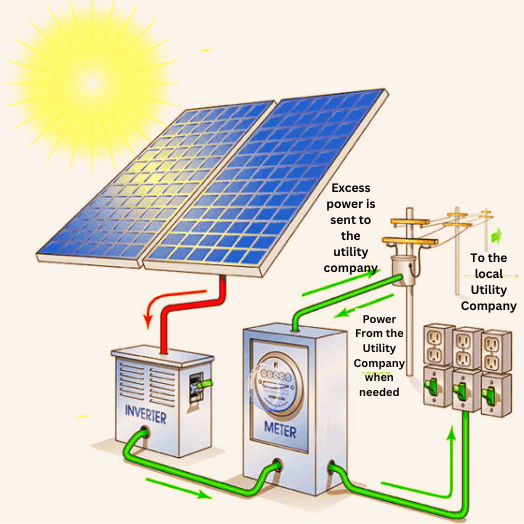
    how solar system works

    Read: What is a Smart City? Unveiling the Future

    Perovskite solar cell
    Floating offshore wind farm
    Concentrated solar power (CSP)
    tidal energy turbine
    Wave energy
  • What is a Smart City? Unveiling the Future

    What is a Smart City? Unveiling the Future

    Smart City

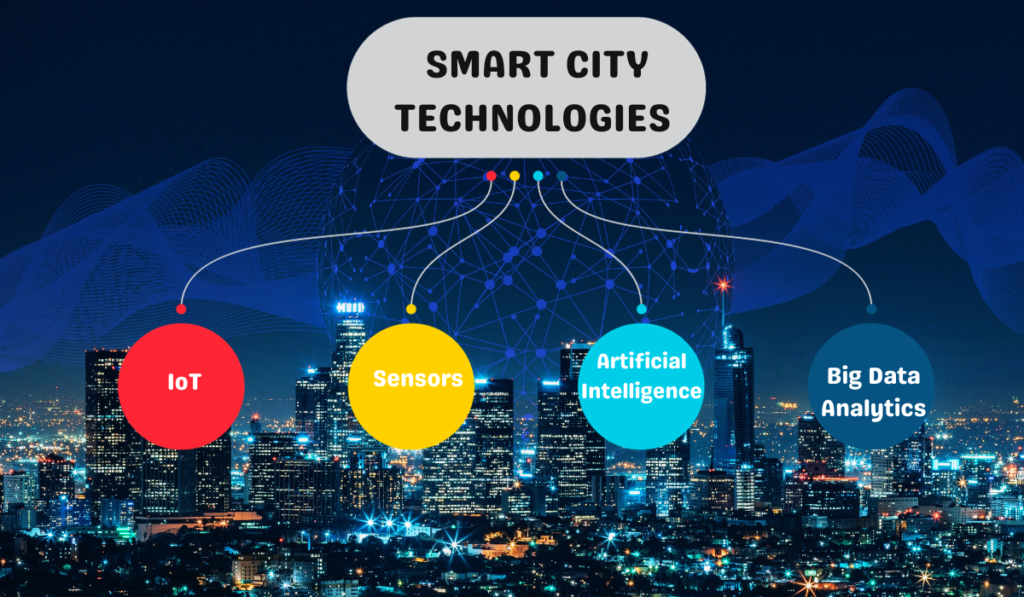
    The Key Technologies That Build Smart Cities

    Smart City Technologies

    How are Sensors and IoT Improving Urban Life?

    When did the Smart City Concept Begin?

    Where are Smart City Innovations Happening?

    Smart City-San Fransisco

    Barcelona, Spain: Barcelona is a leader in smart city development, with a number of initiatives in place to improve the quality of life for its residents. For example, the city has a smart parking system, a smart waste management system, and a smart grid.

    Singapore: Singapore is another leading smart city, with a focus on using technology to improve its sustainability and efficiency. For example, the city has a smart traffic management system that uses AI to optimise traffic flow.

    Smart City-Barcelona
    Smart City- Singapore

    San Francisco, USA: San Francisco is a leader in smart city technology, with a number of startups and companies developing new smart city solutions. For example, the city is testing a number of self-driving cars and has a number of smart parking and traffic management initiatives in place.

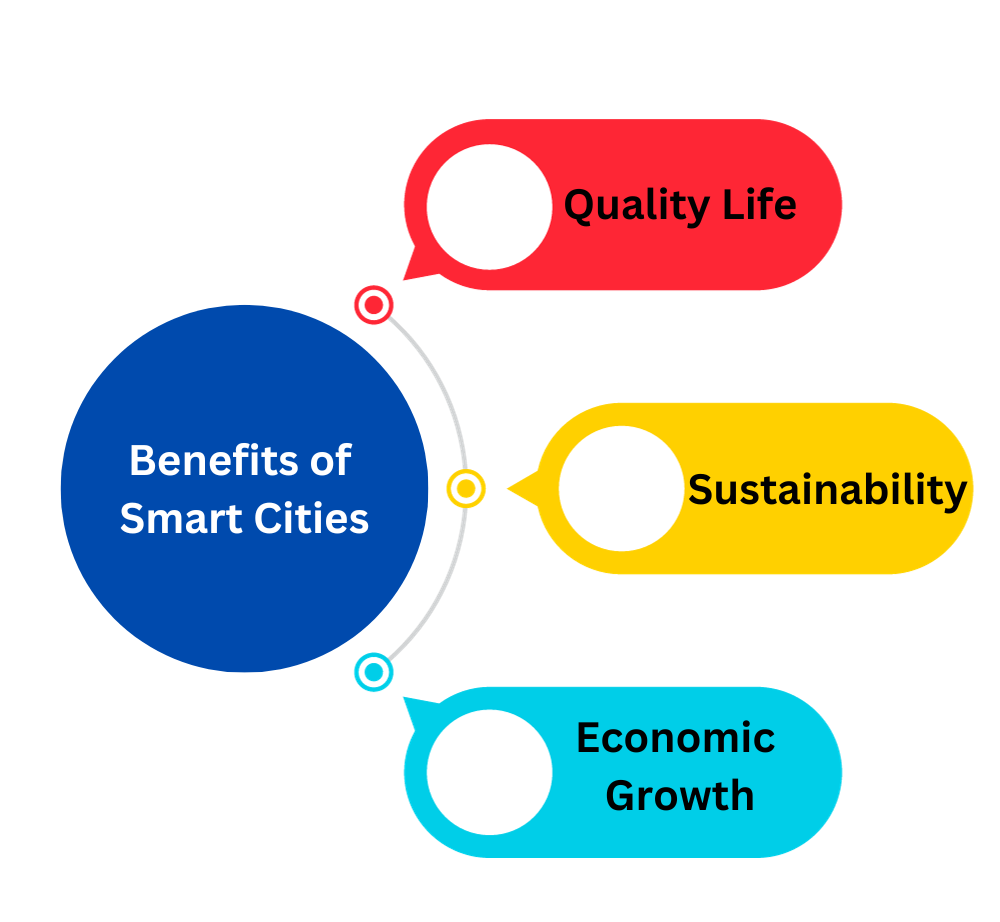
    Why Smart Cities? Discuss Benefits and Sustainability impact.

    Benefits of Smart Cities

    What’s Next for Urban Tech? Future Smart City Trends

  • What is 3D Printing? The Basics You Need to Know

    What is 3D Printing? The Basics You Need to Know

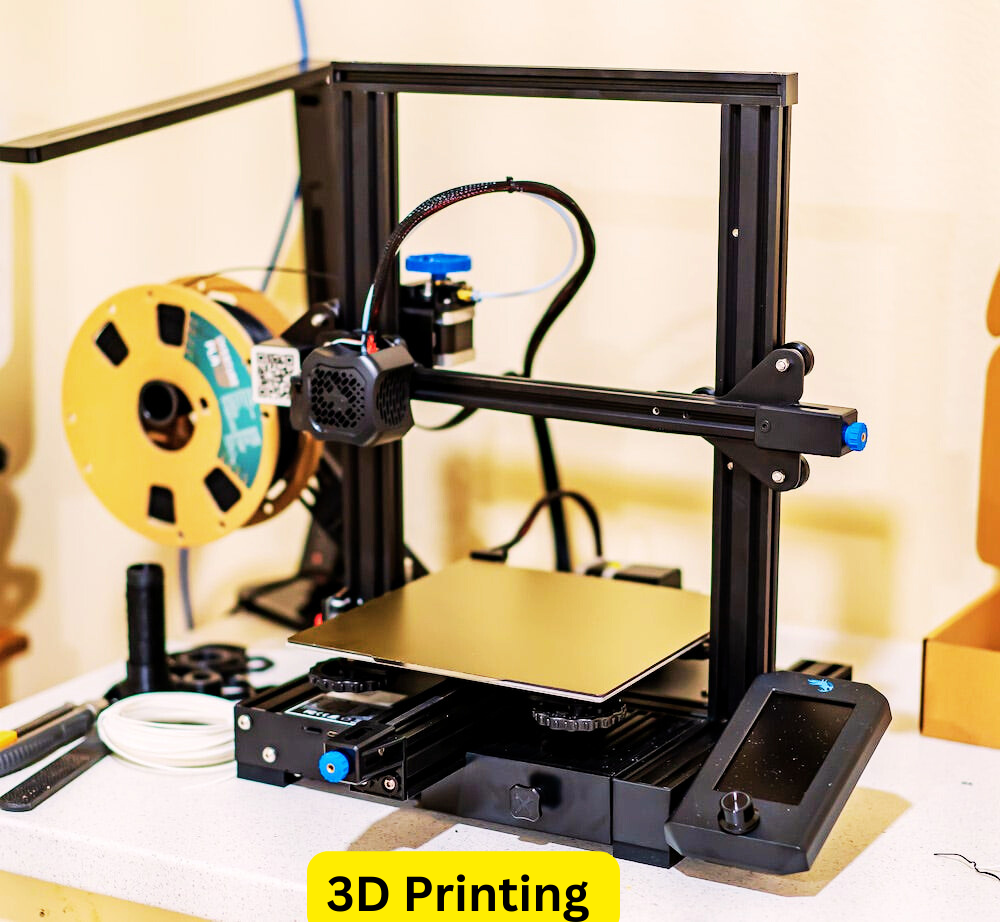
    3D Printing

    How has 3D printing evolved? A brief history and trajectory

    3D Printing

    When did 3D printing become mainstream?

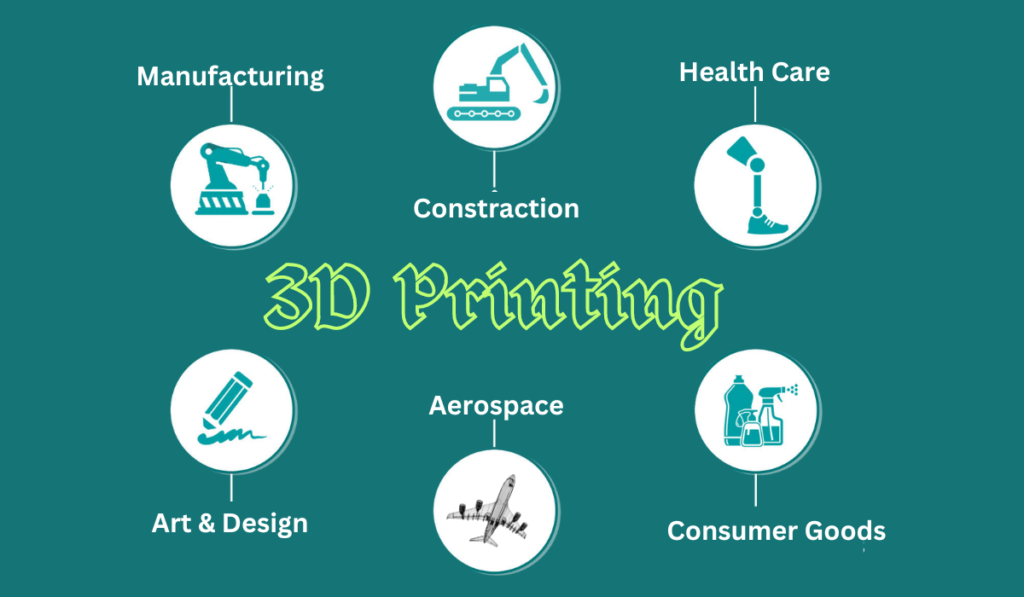
    Where is 3D printing used today?

    Usage of 3D Printing

    Why does 3D printing matter?

    How Does 3D Printing Work?

    Here’s a simplified breakdown:

    1. Design Your Masterpiece: First, you create a digital model of your object using 3D design software. Think of it as a blueprint for your creation.

    2. Slicing Up the Fun: The software then slices your design into thin, digital layers, like pages in a book. Each page represents one layer your printer will build.

    3. Printing in Action: Now comes the printing magic! Your chosen printer reads the sliced file and, depending on the technology, does one of these things:

    • Melts and extrudes plastic: Similar to a hot glue gun, the printer melts plastic filament and deposits it layer by layer, following the design instructions.
    • Cures liquid resin: A laser beam precisely scans and hardens liquid resin layer by layer, forming your object.
    • Binds powdered materials: The printer selectively binds together tiny particles of powder with glue or heat, building your design one layer at a time.

    4. Layer-by-Layer Wonders: With each layer solidifying, your object takes shape, rising from the print bed like a 3D timelapse! The process can take minutes or hours, depending on the size and complexity of your design.

    5. Voila! Your Creation Awaits: Once printing is complete, you might need to remove support structures and do some light finishing. But then, behold! You hold your unique, 3D-printed masterpiece in your hands, ready to use, display, or share!

    What You Can Make with 3D Printing

    The beauty of 3D printing lies in its limitless potential. No longer confined to traditional manufacturing constraints, your imagination truly becomes the blueprint. Here’s just a glimpse of the diverse possibilities at your fingertips:

    Functional Everyday Items:

    • Household tools and organizers: Custom hooks, phone stands, cable clips, storage containers, drawer dividers – anything to declutter and personalize your space.
    • DIY repairs and replacements: Broken doorknobs, missing furniture parts, malfunctioning gadget pieces—3D printing can often save the day (and a trip to the store).
    • Personalized wearables and accessories: Phone cases, jewelry, keychains, even shoes—unleash your inner designer and create unique pieces that reflect your style.

    Creative Expression and Art:

    • Sculptures and figurines: Bring your artistic vision to life, layer by layer. You can even replicate real-world objects with stunning detail.
    • Custom toys and game pieces: Design imaginative toys for your kids or unique game pieces for family game nights.
    • Decorative home accents: Vases, lamps, coasters, wall art – the possibilities are endless, and you can customize them to match your décor.

    Practical Applications and Prototyping:

    • Educational tools: Models of historical figures, anatomical models, puzzles, and interactive learning aids—bring complex concepts to life in a tangible way.
    • Medical and dental applications: Prosthetics, custom casts, braces, and even dental implants—3D printing is revolutionizing healthcare.
    • Prototyping and product design: Quickly and affordably create functional prototypes to test, iterate, and refine your product ideas before mass production.

    Just remember, this is just the tip of the iceberg! The world of 3D printing is constantly evolving, with new materials, techniques, and applications emerging all the time. What will you create next?

    What’s next for 3D printing?

    Conclusion

    How does 3D printing work?

    There are many different types of 3D printers, but they all work on the same basic principle. The printer first reads a digital model of the object to be printed. Then, it heats up a material, such as plastic or metal, and deposits it layer by layer onto a build platform. Once the printing process is complete, the object is removed from the build platform and finished.

    What are the different types of 3D printers?

    The three most common types of 3D printers are:
    1. FDM (fused deposition modeling): FDM printers are the most common type of 3D printer. They work by depositing a thermoplastic filament onto the build platform layer by layer.
    2. SLA (stereolithography): SLA printers use a laser to cure a liquid resin into a solid object.
    3. SLS (selective laser sintering): SLS printers use a laser to sinter a powder material into a solid object.

    What is the future of 3D printing?

    The future of 3D printing is very bright. 3D printers are becoming more affordable and accessible, and new materials and printing technologies are being developed all the time. 3D printing is already having a major impact on many industries, and its impact is only expected to grow in the years to come.
  • What is The New Space Race? Top 5 Key Players

    What is The New Space Race? Top 5 Key Players

    Discover the latest developments in the new space race, the commercial space industry, revolutionary space technologies, and the top 5 players shaping the future of space exploration.

    In this exploration of the future of space exploration, we navigate the key players in the space race, often referred to as the cosmic players, shaping the narrative of galactic exploration. From the inception of the commercial space industry to the recent triumphs propelling us toward galactic glory, we delve into the revolutionary space technologies underpinning these achievements.

    The New Space Race

    Introduction

    The term “new space race” refers to the resurgence of international competition in space exploration and development that began in the early 21st century. Unlike the Cold War-era space race between the US and the Soviet Union, which was primarily focused on national prestige and technological dominance, the new space race is driven by a wider range of factors, including:

    • Economic potential: Resources like rare minerals and potentially water ice on the Moon and Mars could be immensely valuable in the future.
    • Scientific advancement: Space exploration allows us to study the universe, our solar system, and even our own planet in new ways, leading to groundbreaking discoveries in fields like astronomy, physics, and biology.
    • Technological innovation: The challenges of space travel push the boundaries of human engineering and ingenuity, leading to the development of new technologies that benefit many aspects of life on Earth.

    What major space achievements have we seen lately?

    Here are some of the major space achievements of 2023:

    • Chandrayaan-3: India’s Chandrayaan-3 moon lander became the first mission to reach the lunar south pole, an unexplored region where reservoirs of frozen water are believed to exist. The July 2023 launch of Chandrayaan-3 demonstrated to the world not only India’s dominance in space but also the feasibility of launching a moon lander for a mere $75 million.
    • Artemis program: NASA’s Artemis program continued preparations to send the first astronauts to the Moon. In 2023, NASA celebrated astronaut Frank Rubio becoming the first American astronaut to spend more than one year in space; delivered samples from an asteroid to Earth; sent a spacecraft to study a metal-rich asteroid for the first time; and launched multiple initiatives to share climate data.
    • China’s Zhuque-2: China’s Zhuque-2 rocket became the world’s first methane-fueled rocket, demonstrating a potentially greener way to do space travel, again at a vastly reduced cost.
    • James Webb Space Telescope: The James Webb Space Telescope was launched in December 2023. Its purpose is to investigate dark energy and matter with never-before-seen detail.
    • The Euclid satellite: In July 2023, the Euclid satellite was launched. Its purpose is to investigate dark energy and matter in previously unheard-of detail.

    How do rockets and propulsion systems work in the New Space Race?

    When did the commercial space industry take off?

    The New Space Race

    Where is space exploration headed next?

    Why does space innovation matter?

    What revolutionary space technologies are fueling space travel?

    The new space race is not just about national pride or planting flags on celestial bodies. It’s a fierce competition to unlock the vast economic and scientific potential of the cosmos, and the major players are wielding an arsenal of revolutionary technologies to get there first. Here’s a glimpse into the game-changing tools propelling these nations and private companies toward galactic glory:

    New Space Race

    These are just a few of the revolutionary technologies propelling the new space race. As these advancements continue to mature and converge, we can expect to see even more audacious spacefaring feats in the years to come. From mining asteroids to building lunar cities, the possibilities are endless, and the ultimate prize: galactic glory, awaits those who dare to reach for it.

    5 Key Players in the New Space Race?

    This article unveils the key players shaping the trajectory of space exploration, each contributing unique innovations, lunar aspirations, and collaborative endeavors. Let’s talk about them one by one.

    The United States: NASA’s Ongoing Missions and Private Sector Contributions: 

    NASA remains a leader in space exploration, with ongoing missions to Mars, the Moon, and other celestial bodies. The US private sector is also playing a major role, with companies like SpaceX and Blue Origin developing reusable rockets and spacecraft.

    New Space Race

    The United States stands at the forefront of space exploration, with NASA spearheading ambitious missions to various celestial bodies. This section explores the dynamic landscape of both governmental and private sector endeavors, showcasing the collaborative efforts shaping the future of space exploration.

    NASA’s Leadership in Space Exploration: NASA, the National Aeronautics and Space Administration, continues to assert its leadership in space exploration through a series of ongoing missions that span our cosmic neighborhood. Notably, missions to Mars, the Moon, and other celestial bodies are emblematic of NASA’s commitment to advancing scientific knowledge and pushing the boundaries of human exploration.

    1. Mars Missions: NASA’s relentless pursuit of understanding the Red Planet is evident in missions like the Mars Perseverance Rover, designed to explore the Martian surface and search for signs of ancient life. These missions contribute to our evolving understanding of Mars and lay the groundwork for potential future human exploration.
    2. Lunar Exploration: The Moon remains a focal point for NASA, with plans under the Artemis program aiming to return humans to lunar soil by 2025. Beyond a mere return, NASA envisions establishing a sustainable human presence on the Moon, a crucial stepping stone for future deep-space missions.

    Private Sector’s Vital Role: In tandem with NASA’s efforts, the private sector in the United States plays a pivotal role in propelling space exploration to new heights. Companies such as SpaceX, founded by Elon Musk, and Blue Origin, founded by Jeff Bezos, have emerged as key players contributing innovative solutions and technologies to the space domain.

    1. SpaceX’s Impact: SpaceX has revolutionized space travel with groundbreaking achievements like the development of the Falcon 9 rocket, the first fully reusable orbital rocket. The Crew Dragon spacecraft, a SpaceX creation, now shuttles astronauts to the International Space Station, showcasing the potential for cost-effective and routine space access.
    2. Blue Origin’s Contributions: Blue Origin, led by Jeff Bezos, has also been instrumental in advancing reusable rocket technology. Their New Shepard rocket has demonstrated the feasibility of vertical takeoff and landing, paving the way for more sustainable and economically viable space travel.

    This collaborative synergy between NASA’s institutional expertise and the innovative drive of private companies exemplifies the United States’ commitment to pushing the boundaries of space exploration. As we delve into the intricate web of government and private sector partnerships, it becomes clear that the combined efforts of these entities are driving humanity towards an era of unprecedented cosmic discovery.

    China: Rapid Progress in Mars Exploration and Space Station Development

    China has propelled itself to the forefront of the new space race with remarkable advancements in both Mars exploration and the development of a space station. In recent years, the Chinese space program has achieved significant milestones, underscoring the nation’s ambitious goals and its emergence as a major player in the global space community.

    New Space Race

    Mars Exploration Triumphs:

    China’s foray into Mars exploration has been characterized by bold missions and groundbreaking achievements.

    1. Tianwen-1 Mission: In a bold and ambitious move, China launched the Tianwen-1 mission, an all-encompassing endeavor involving an orbiter, a lander, and the Zhurong rover. The successful deployment of the Zhurong rover on the Martian surface in 2021 marked a historic achievement, demonstrating China’s competence in interplanetary exploration.
    2. Zhurong Rover’s Scientific Mission: The Zhurong rover is equipped with sophisticated instruments designed to conduct scientific investigations on Mars. Its mission includes analyzing soil samples, studying the Martian atmosphere, and contributing valuable data to the global scientific community’s understanding of the Red Planet.

    Space Station Development:

    China’s commitment to establishing a robust presence in space extends to the construction of a modular space station.

    1. Tiangong Space Station: The Tiangong Space Station is a testament to China’s engineering prowess and dedication to sustained human presence in space. Comprising multiple modules, this ambitious space station is being assembled in orbit, showcasing China’s capabilities in space station development.
    2. Human Spaceflight Achievements: Building on its accomplishments in robotic space exploration, China has successfully sent astronauts to the Moon, demonstrating a commitment to crewed space missions. These achievements contribute to China’s status as a nation with the capacity for both robotic and human space exploration.

    Vision for the Future:

    China’s strides in space exploration are part of a broader vision to establish itself as a major space power in the coming decades.

    1. Strategic Goals: China’s space program is guided by strategic goals that encompass both scientific exploration and technological advancements. The nation aims to leverage its space capabilities for the benefit of humanity and solidify its position as a leader in space exploration.
    2. Global Collaboration: While pursuing independent space initiatives, China also recognizes the importance of global collaboration. Collaborative efforts and partnerships with other nations are envisioned as crucial components of China’s future endeavors in space exploration.

    As China continues to make rapid progress in Mars exploration and space station development, its achievements reverberate across the international space community. The nation’s commitment to scientific discovery, technological innovation, and global collaboration positions it as a key player shaping the landscape of the new space race.

    Russia: Historical Contributions, Funding Challenges, and Collaborative Prospects

    Russia, with its extensive history in space exploration, continues to hold a prominent position in the global space arena. While boasting historical contributions, particularly in human spaceflight, Russia faces contemporary challenges, including funding constraints, prompting a search for collaborative prospects to sustain its active role in the new space race.

    New Space Race

    Historical Contributions to Human Spaceflight:

    Russia’s legacy in space exploration is deeply embedded in historical milestones, especially in the realm of human spaceflight.

    1. Pioneering Achievements: Russia, formerly the Soviet Union, achieved groundbreaking feats in human space exploration, including launching the first artificial satellite, Sputnik 1, in 1957, and sending Yuri Gagarin as the first human into space in 1961. These early triumphs laid the foundation for subsequent advancements in space technology.
    2. Salyut and Mir Space Stations: Russia’s expertise in establishing and operating space stations is exemplified by the Salyut and Shuttle-Mir programs. These endeavors showcased Russia’s commitment to long-term human habitation in space and set the stage for collaborative ventures on the International Space Station (ISS).

    Funding Challenges in the Modern Era:

    Despite its illustrious history, Russia’s space program grapples with contemporary challenges, notably financial constraints that impact its ambitious initiatives.

    1. Budgetary Pressures: Economic considerations and budgetary pressures pose challenges to Russia’s space program, impacting the development and execution of ambitious space missions. The need for cost-effective strategies becomes imperative to navigate these constraints.
    2. Seeking Collaborative Solutions: Recognizing the limitations posed by budgetary constraints, Russia actively seeks collaborative solutions. Engaging with international partners in joint space missions and projects allows Russia to pool resources and share expertise, ensuring the continuation of its active role in space exploration.

    Collaborative Prospects on the Global Stage:

    Russia, acknowledging the value of international collaboration, explores prospects for partnerships with other spacefaring nations.

    1. ISS Collaboration: Russia plays a pivotal role in the International Space Station (ISS), collaborating with space agencies such as NASA and the European Space Agency. The ISS serves as a testament to the success of international cooperation in space exploration.
    2. Future Collaborations: Russia actively explores opportunities for future collaborations, looking to join forces with other nations on upcoming missions beyond Earth’s orbit. Collaborative ventures not only address funding challenges but also contribute to a shared vision of the future of space exploration.

    As Russia navigates the delicate balance between its historical contributions, funding challenges, and collaborative prospects, it remains a key player in shaping the trajectory of the new space race. The nation’s willingness to engage in collaborative efforts underscores the importance of collective endeavors in advancing humanity’s exploration of the cosmos.

    Europe: The European Space Agency’s Lunar Exploration Program

    The New Space Race

    Europe, through the endeavors of the European Space Agency (ESA), is carving a significant niche in the new space race by actively pursuing a dedicated lunar exploration program. This section illuminates ESA’s lunar initiatives, its strides in the development of launch vehicles and spacecraft, and its integral role as a major partner in the International Space Station (ISS).

    Lunar Exploration Prowess:

    1. ESA’s Lunar Exploration Program: At the forefront of Europe’s contributions to the new space race is ESA’s visionary lunar exploration program. ESA aims to unlock the secrets of the Moon and to achieve this, it has strategically crafted a series of missions dedicated to exploring and studying the lunar surface. These missions not only expand our scientific knowledge but also demonstrate Europe’s commitment to pushing the boundaries of space exploration.
    2. Scientific Objectives: ESA’s lunar exploration efforts are fueled by scientific objectives that include studying the Moon’s geology, understanding its composition, and unraveling its cosmic history. By investing in these missions, Europe positions itself as a key player in advancing our comprehension of Earth’s celestial companion.

    Advancements in Launch Vehicles and Spacecraft:

    1. ESA’s Autonomous Capabilities: In a bid to bolster its autonomy in space access and exploration, ESA is actively developing its own launch vehicles and spacecraft. This strategic pursuit enables Europe to reduce dependence on external providers and enhances its ability to tailor missions according to its scientific and exploratory goals.
    2. Technological Innovation: ESA’s development of launch vehicles and spacecraft is not just a practical necessity but a testament to Europe’s commitment to technological innovation. The agency is pushing the boundaries of space technology, contributing to the global pool of advancements that benefit future space missions.

    Integral Role in the International Space Station (ISS):

    1. Collaboration on the ISS: Europe’s involvement in the ISS is a cornerstone of its space endeavors. As a major partner, ESA actively collaborates with other space agencies to maintain and enhance the ISS, contributing vital modules and scientific experiments. This collaborative effort underscores Europe’s commitment to fostering international cooperation in space exploration.
    2. Scientific Contributions: Within the ISS, ESA engages in a myriad of scientific experiments, utilizing the unique microgravity environment to conduct research that has implications for fields ranging from medicine to materials science. These contributions not only advance our understanding of fundamental sciences but also position Europe as a key player in the ISS community.

    As Europe charts a course in the new space race, the European Space Agency’s multifaceted approach, encompassing lunar exploration, autonomous capabilities, and collaboration on the ISS, solidifies its role as a pivotal force shaping the future of space exploration on the global stage.

    India: Strides in Lunar Probes and Ambitious Plans for Reusable Launch Vehicles

    The New Space Race
    Stunning view of the moon from space with a prominent rocket in the frame, symbolizing space exploration and technological advancement.

    India, a rising star in the new space race, has made significant strides in recent years, showcasing remarkable achievements in lunar exploration and unveiling ambitious plans for the development of reusable launch vehicles. This section delves into India’s noteworthy accomplishments, emphasizing lunar probes, its upcoming crewed space mission, and its pioneering efforts in creating a reusable launch vehicle by ISRO (Indian Space Research Organization).

    Success in Lunar Probes:

    1. Chandrayaan Missions: India’s space program reached a milestone with the successful launch of the Chandrayaan missions, dedicated to lunar exploration. Chandrayaan-1, launched on October 22, 2008, made history by discovering water molecules on the lunar surface. Building on this success, Chandrayaan-2 in 2019 furthered India’s lunar exploration goals with an orbiter, lander, and rover.
    2. Scientific Contributions: India’s lunar endeavors extend beyond exploration. The data collected from these missions contributes valuable insights to the global scientific community, enhancing our understanding of the Moon’s geological and compositional characteristics.

    Ambitious Plans for Reusable Launch Vehicles:

    1. Indigenous Reusable Launch Vehicle Development: India is pioneering the development of its reusable launch vehicle. This ambitious initiative aims to reduce the cost of space access, aligning with global trends in sustainable and cost-effective space exploration.
    2. Cost-Effective Space Access: The development of a reusable launch vehicle holds the potential to revolutionize India’s space capabilities. By introducing cost-effective and reusable launch systems, India seeks to make space exploration more accessible, fostering innovation and expansion in the commercial space sector.

    Upcoming Crewed Space Mission:

    1. Gaganyaan Mission: India’s space ambitions extend to crewed space exploration, as evidenced by the Gaganyaan mission. This ambitious project aims to send Indian astronauts, or “Gagannauts” into space, marking India’s entry into human spaceflight.
    2. National Pride and Technological Advancements: The Gaganyaan mission not only signifies India’s national pride but also showcases the nation’s technological prowess in achieving crewed space travel. The mission holds the promise of inspiring future generations and solidifying India’s position as a key player in human space exploration.

    As India continues its journey in the new space race, the nation’s achievements in lunar exploration, the ambitious plans for reusable launch vehicles, and the upcoming crewed space mission underscore its emergence as a significant player on the global space exploration stage. India’s commitment to innovation, cost-effectiveness, and scientific contributions positions it as a formidable force in shaping the future of space exploration.

    Conclusion

    Imagine, in the endless depths of space, innovation like a bright star, guiding us toward incredible discoveries and a wealth of opportunities. Nations and pioneers join hands, sprinting towards a shared future—one with Martian mysteries revealed and lunar landscapes explored.

    Landing on the Moon isn’t just a giant leap; it’s a rocket boost for the space industry, driving economic growth beyond our wildest dreams. Forget a space race; this is a boundless journey! We’re talking lunar secrets, Martian mysteries, and an ever-growing economy fueled by our cosmic adventures. \

    Ready to strap in and navigate this celestial marathon? Every step takes us closer to the ultimate prize: pushing the boundaries of space together.

    1. How has SpaceX revolutionized space travel?

    SpaceX revolutionized space travel through its groundbreaking achievements, including the development of fully reusable rockets like the Falcon 9. This innovation significantly lowers the cost of space access, fostering a new era of affordability and sustainability.

    2. What is the significance of the Artemis missions?

    The Artemis missions signify NASA’s ambitious goal to return humans to the Moon by 2025. Beyond a lunar return, the program aims to establish a sustainable human presence on the Moon, laying the groundwork for future cosmic endeavors.

    3. How does space exploration benefit the economy?

    Space exploration contributes to economic growth by creating jobs and generating revenue within the space industry. Additionally, the technological advancements driven by space exploration have far-reaching impacts on various terrestrial industries.

    4. What role does AI play in spacecraft navigation?

    Artificial intelligence plays a pivotal role in spacecraft navigation by enhancing precision and autonomy. AI-driven systems enable spacecraft to navigate complex cosmic terrains with efficiency and accuracy.

    5. Where can I learn more about the new space endeavors?

    For more information on the latest space endeavors, stay updated with reputable space agencies like NASA and private companies like SpaceX. Additionally, reliable space-related publications and websites offer valuable insights into ongoing and upcoming missions.