



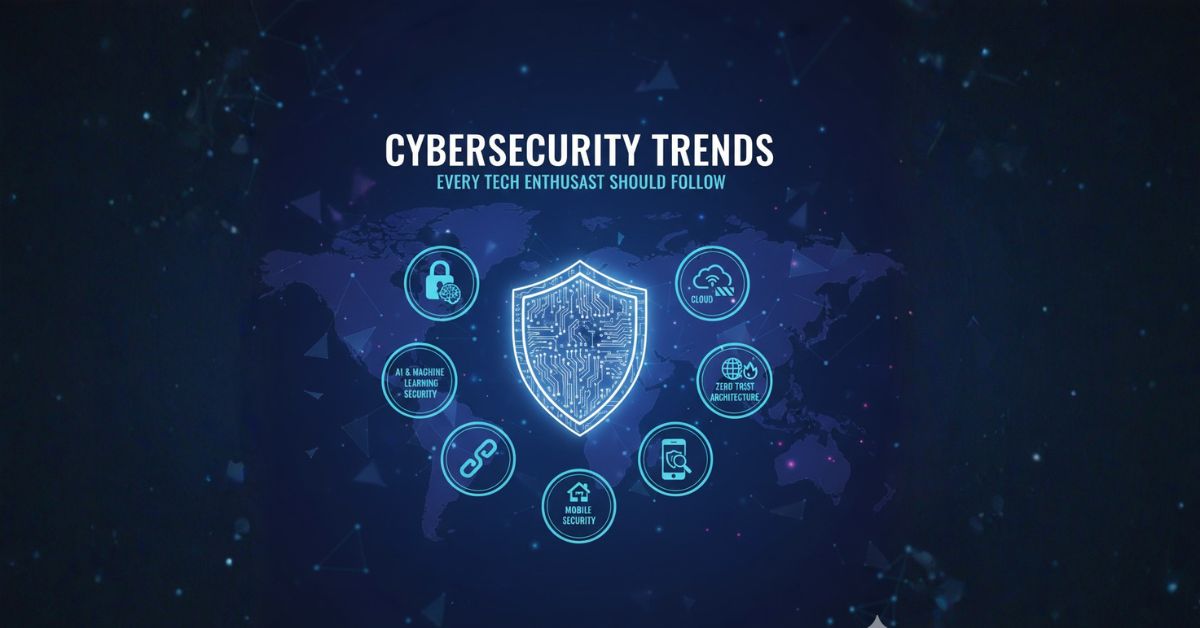
The cybersecurity landscape in 2026 is more complex than at any point in history. AI-powered attacks are faster and more personalized. Ransomware operations are targeting critical infrastructure. Quantum computing is forcing a rethink of foundational encryption. And the attack surface keeps expanding as more devices, cloud services, and supply chain components come online.According to CISA, cyber threats continue to evolve rapidly.
This article covers the cybersecurity trends that matter most right now, what they mean for individuals, businesses, and policymakers, and what actionable steps can actually reduce risk in 2026.You may also want to read about quantum computing threats.
What Is the Current State of Cybersecurity?
Cybersecurity has evolved from a technical IT function into a strategic business priority and national security concern. The cost of cybercrime globally is estimated in the trillions annually. In the U.S., ransomware attacks have disrupted hospitals, school districts, water utilities, and financial institutions. Supply chain attacks have demonstrated that no organization is too small or obscure to be targeted.
Why Cybersecurity Trends Matter More in 2026
Three developments are making 2026 a particularly consequential moment. First, AI is now a mainstream offensive tool, enabling attackers to craft convincing phishing emails and automate vulnerability discovery. Second, the post-quantum cryptography transition is becoming urgent. Third, state-sponsored cyber operations targeting U.S. critical infrastructure are increasing due to geopolitical tensions.
Top Cybersecurity Trends to Watch
AI-powered attacks and defenses: Attackers use large language models to write convincing phishing emails, generate malware variants, and automate vulnerability discovery. Defenders use AI to detect anomalous behavior, correlate threats across large datasets, and respond faster than human analysts alone can manage.
Ransomware evolution: Modern ransomware operations are professionally organized criminal enterprises using double extortion, targeting critical infrastructure where downtime pressure creates stronger incentives to pay. Total ransomware damage is measured in billions annually.
Zero trust architecture: The traditional perimeter security model is obsolete. Zero trust, where every user and device must continuously verify identity regardless of network location, is becoming the enterprise standard. Federal agencies are required to implement zero trust under Executive Order 14028.
Post-quantum cryptography migration: NIST finalized post-quantum cryptographic standards in 2024. Organizations managing sensitive data need to begin migrating encryption infrastructure now, a process that takes years.
Supply chain security: The SolarWinds and Log4j incidents demonstrated that compromising widely used software can reach thousands of organizations simultaneously. Software bills of materials, secure development requirements, and vendor risk management are becoming standard practice.
Identity and access management: Credential theft is involved in the majority of data breaches. Multi-factor authentication, passwordless authentication, and passkeys are becoming non-negotiable baseline controls.
OT and IoT security: Operational technology and IoT devices are attractive targets due to poor patching practices and long deployment lifetimes. Dedicated OT security platforms and network segmentation are essential for organizations operating physical infrastructure.
Practical Steps to Improve Cybersecurity in 2026
- Enable multi-factor authentication on all accounts, especially email and financial services
- Use a password manager and eliminate password reuse
- Keep operating systems, browsers, and applications updated promptly
- Back up critical data using the 3-2-1 rule: three copies, two different media types, one offsite
- For businesses: implement zero trust principles starting with privileged access
- For businesses: conduct regular phishing simulation and security awareness training
- For businesses: develop and test an incident response plan before you need it
Expert Take
The most effective cybersecurity posture combines strong technical controls with a realistic understanding of the human element. Most successful attacks still involve phishing, social engineering, or credential theft rather than sophisticated zero-day exploits. The security fundamentals, MFA, patching, backups, and awareness training, remain the highest-ROI investments for most organizations.
Frequently Asked Questions
What is the most important cybersecurity step I can take? Enable multi-factor authentication on your most important accounts, especially email. Email account compromise is a gateway to most other types of account takeover.
How real is the ransomware threat to small businesses? Very real. Small businesses are frequently targeted because they often have less sophisticated defenses. Ransomware-as-a-service platforms have made attacks accessible to criminal actors without advanced technical skills.
The Bottom Line
Cybersecurity in 2026 is an ongoing operational discipline, not a one-time project. Organizations and individuals that treat security as a continuous process manage risk most effectively. For further reading, explore our articles on the rise of quantum computing, blockchain real-world applications, and tech policy and regulation trends affecting U.S. innovation.