



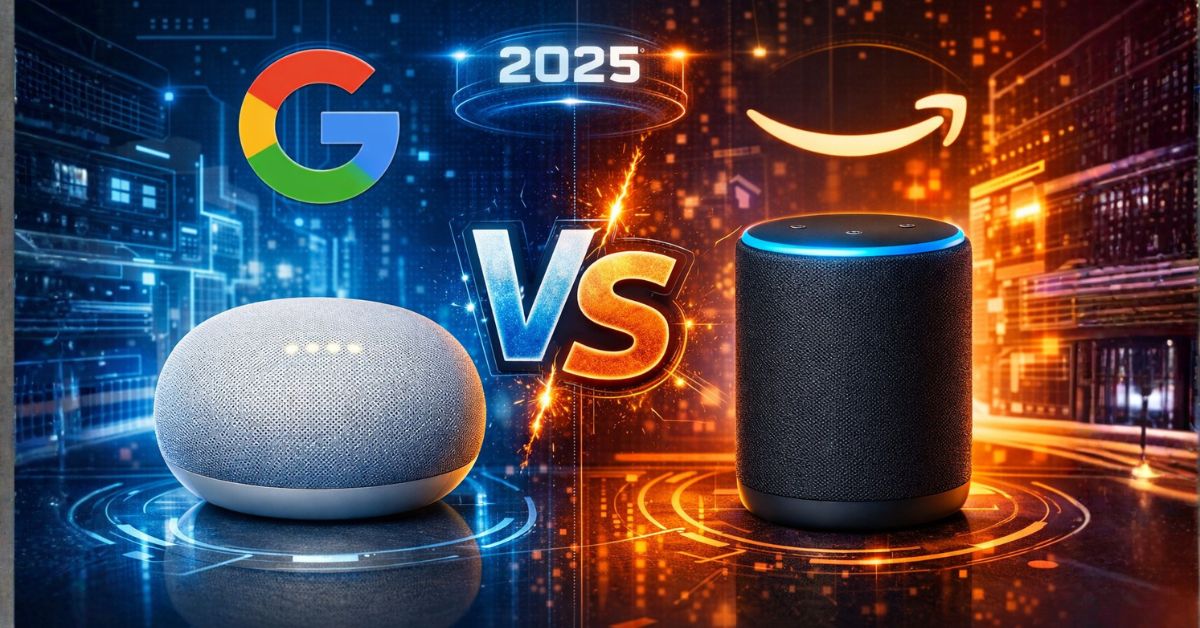
The battle between Google Nest vs Amazon Echo has become one of the most discussed topics in the smart home world. As two tech giants compete for dominance in the voice assistant space, consumers are faced with a critical decision: which smart speaker ecosystem should they invest in? Both devices have evolved dramatically since their initial releases, now offering sophisticated features that go far beyond simple voice commands. From controlling your entire home to streaming music, setting reminders, and answering complex questions, these smart speakers have become central hubs for modern living.
When it comes to smart speaker comparison, there is no simple answer about which is better. Google Nest devices leverage Google’s unmatched search capabilities and AI expertise, while Amazon Echo speakers benefit from Alexa’s massive skill library and tight integration with Amazon’s shopping and entertainment ecosystem. Your ideal choice depends on your existing devices, preferred services, and how you plan to use your speaker. In this comprehensive guide, we will break down every aspect of both platforms to help you make an informed decision for your smart home in 2025.
What is Google Nest?
Google Nest is Google’s line of smart home devices, centered around the Google Assistant voice platform. The Nest brand originally started as a smart thermostat company that Google acquired in 2014, and over the years, Google has expanded the Nest lineup to include smart speakers, displays, cameras, doorbells, and various home automation products. The current Google Nest speaker lineup includes the Nest Mini (compact and affordable), Nest Audio (mid-range with better sound), and Nest Hub series (smart displays with screens).
What sets Google Nest apart is its deep integration with Google’s ecosystem. If you use Gmail, Google Calendar, YouTube, Google Maps, and Chrome, a Nest speaker becomes a natural extension of your digital life. Google Assistant can pull information from your emails to remind you of flight times, show your calendar on a Nest Hub display, or play videos from YouTube without needing third-party apps. The Assistant’s ability to understand context and follow-up questions is particularly impressive, making conversations feel more natural than rigid command-response interactions.
What is Amazon Echo?
Amazon Echo is Amazon’s flagship smart speaker line powered by Alexa, the company’s cloud-based voice assistant. Launched in 2014, the Echo was one of the first mainstream smart speakers and helped define the category. Today’s Echo lineup is extensive, ranging from the tiny Echo Dot to the premium Echo Studio, along with screen-equipped devices like the Echo Show series. Each device runs Alexa, which can perform thousands of tasks through \”Skills\” (Alexa’s equivalent of apps).
Amazon Echo speakers excel at e-commerce integration, making it incredibly easy to reorder products from Amazon, track packages, and manage shopping lists. Alexa’s third-party skill ecosystem is enormous, with over 100,000 skills available, covering everything from meditation apps to pizza ordering. This extensive skill library means Alexa can integrate with almost any smart home device or service you can think of. Additionally, Amazon has invested heavily in making Alexa proactive, with features like Hunches that detect patterns in your behavior and suggest automations.
Feature Comparison: Google Nest vs Amazon Echo
When comparing Google Nest and Amazon Echo speakers side by side, several key areas stand out. Let’s examine sound quality, smart home control, and app ecosystems to understand how these two platforms differ.
Sound Quality: Google Nest Audio and Amazon Echo (4th gen) are closely matched in audio performance. Both deliver clear mids and highs with decent bass for their size. However, the Echo Studio is Amazon’s premium offering with Dolby Atmos support and room adaptation technology, making it the best choice for audiophiles. Google’s equivalent would be pairing Nest Audio speakers in stereo, which sounds excellent but lacks the single-device premium option.
Smart Home Control: Both platforms support thousands of smart home devices, but they differ in approach. Google emphasizes simplicity and integration with Nest’s own devices (thermostats, cameras, doorbells), creating a cohesive ecosystem. Amazon, meanwhile, has partnered with virtually every smart home brand, offering broader third-party compatibility. If you have a specific niche device, Alexa is more likely to support it out of the box.
Apps and Services: Google Assistant integrates seamlessly with Google’s services: YouTube Music, YouTube TV, Google Photos, and more. Alexa dominates in media versatility, working well with Spotify, Apple Music, Amazon Music, Audible, and most streaming services. For video calls, Google Nest Hub uses Google Duo/Meet, while Echo Show supports Amazon’s calling service plus Zoom.
| Feature | Google Nest | Amazon Echo |
|---|---|---|
| Sound Quality | Excellent (Nest Audio) | Excellent (Echo 4th gen, Studio best) |
| Smart Home Devices | Strong Google/Nest integration | Widest third-party support |
| Music Services | YouTube Music, Spotify, Pandora | Amazon Music, Spotify, Apple Music |
| Video Streaming | YouTube, Netflix (on Hub) | Prime Video, Netflix, Hulu |
| Voice Calling | Google Duo/Meet | Alexa Calling, Zoom (Show) |
| Routines | Google Routines | Alexa Routines |
| Multi-room Audio | Yes (speaker groups) | Yes (multi-room music) |
Alexa vs Google Assistant: The Voice Battle
The core difference between these smart speakers lies in their voice assistants. Google Assistant and Alexa each have distinct strengths that appeal to different types of users.
Google Assistant is widely considered the smartest voice assistant when it comes to answering questions and understanding natural language. Thanks to Google’s search engine expertise and AI advancements, Assistant can handle complex, multi-part questions and maintain context across conversations. For example, you can ask \”Who won the World Series in 2020?\” and follow up with \”How many times have they won?\” without repeating the team name. Google Assistant also excels at local search, providing detailed business information, hours, and reviews instantly.
Alexa shines in task automation and third-party integrations. While it may not always match Google’s conversational AI, Alexa’s Skills ecosystem allows it to do virtually anything through voice commands. Want to order pizza, start your car, or control a niche smart home gadget? There’s probably an Alexa Skill for that. Alexa also has more personality and entertainment features, with celebrity voices, interactive games, and a broader selection of Flash Briefings for news.
Privacy is another consideration. Both companies allow you to delete voice recordings and disable certain data collection features, but Google’s data-driven business model means it uses your interactions to improve services and ad targeting. Amazon also collects data but is primarily focused on improving Alexa’s performance and recommending products. Neither is perfect for privacy-conscious users, but both offer transparency controls.
Smart Home Compatibility
When building a smart home ecosystem, compatibility is crucial. Both Google Nest and Amazon Echo work with major smart home brands like Philips Hue, TP-Link, Samsung SmartThings, and August locks, but there are some important differences.
Amazon Echo has the edge in sheer numbers. With support for over 100,000 devices across thousands of brands, Alexa can control almost any smart home product on the market. This includes specialized devices like smart pet feeders, pool controllers, and garage door openers that may not have Google Assistant integration. Amazon’s partnerships are extensive, and the company actively works with manufacturers to ensure compatibility.
Google Nest, while supporting fewer total devices, offers tighter integration with its own product line. If you invest in Nest Thermostats, Nest Cameras, and Nest Doorbells, the experience is seamless with Google Assistant. You can view camera feeds on a Nest Hub display, adjust temperature by voice, and create sophisticated automations that work reliably. Google also supports Matter, the new universal smart home standard, ensuring future-proof compatibility.
Which One Should You Buy?
Choosing between Google Nest and Amazon Echo ultimately depends on your specific needs and existing ecosystem. Here are some scenarios to help guide your decision:
Choose Google Nest if: You are deeply invested in Google’s ecosystem (Gmail, Calendar, Photos, YouTube). You value natural language processing and want a voice assistant that can answer complex questions. You prefer simplicity and integration over endless customization. You want the best smart displays for video calling and recipe viewing. You already own Nest smart home devices.
Choose Amazon Echo if: You are an Amazon Prime member and frequently shop on Amazon. You want the widest possible smart home device compatibility. You enjoy tinkering with Skills and creating complex routines. You need premium audio quality (Echo Studio). You want a speaker that can handle shopping, package tracking, and Audible audiobooks seamlessly. You prefer a more playful assistant with celebrity voices and games.
For most users, the decision comes down to which services you use daily. If Google is your go-to for search, email, and video, Nest makes sense. If Amazon is your primary shopping platform and you value variety, Echo is the better choice. Both are excellent smart speakers with minor trade-offs.
FAQs
1. Can I use both Google Nest and Amazon Echo in the same home?
Yes, you can use both systems simultaneously. Many users keep one in different rooms or use each for their strengths—Nest for information, Echo for shopping.
2. Which has better sound quality?
For premium audio, the Echo Studio is superior. For mid-range speakers, Google Nest Audio and Amazon Echo (4th gen) are roughly equal in quality.
3. Which is better for smart home control?
Amazon Echo supports more devices overall, but Google Nest offers tighter integration with Google’s own smart home products.
4. Is Google Assistant or Alexa smarter?
Google Assistant excels at answering questions and understanding natural language, while Alexa leads in task automation and third-party integrations.
5. Which is more private?
Both collect data, but both also offer privacy controls. Google uses data for ads and services; Amazon focuses on improving Alexa and product recommendations. Review each company’s privacy settings to decide what you’re comfortable with.
Conclusion
The Google Nest vs Amazon Echo debate has no single winner—both platforms offer incredible value and capability. Google Nest delivers unmatched intelligence and seamless integration with Google services, making it ideal for users already invested in that ecosystem. Amazon Echo counters with unparalleled smart home compatibility, a massive skill library, and superior shopping features. Your choice should reflect your daily habits: if you live in Google’s world, go Nest; if Amazon and variety matter more, choose Echo. Either way, you’re getting a powerful smart speaker that will enhance your home in 2025.