Tag: Artificial Intelligence

  • GPT66X: The AI Revolution You Need to Know About

    GPT66X: The AI Revolution You Need to Know About

    The landscape of artificial intelligence is constantly evolving, pushing the boundaries of what machines can achieve. At the forefront of this revolution lies GPT66X, a hypothetical next-generation language model poised to redefine the way we interact with machines and unlock a new era of possibilities.

    This blog post is your all-access pass to the realm of GPT66X, where we’ll dissect its evolution, capabilities, impact, ethical considerations, and potential future. Whether you’re a developer, a business professional, or an AI enthusiast, this deep dive into GPT66X is set to broaden your horizons.

    What is GPT66X?

    The GPT-X series represents a groundbreaking line of large language models (LLMs) that have taken the field of artificial intelligence by storm. These powerful AI systems are trained on massive datasets of text and code, allowing them to learn and understand human language with remarkable sophistication.

    Imagine a vast library containing every book, article, and conversation ever written—that’s the kind of information these models devour. GPT66X stands as the latest iteration in this groundbreaking series. Building upon the successes of its predecessors, such as GPT-3, GPT66X promises to push the boundaries of language processing even further.

    GPT66X

    At its core, GPT66X functions by analyzing these immense datasets and identifying patterns and relationships within the language. This allows it to not only comprehend complex human language but also generate its own human-quality text, translate languages with incredible accuracy, and even create different kinds of creative content.

    In essence, GPT66X is a powerful language tool that can understand, respond to, and even generate human-like communication.

    The Genesis of The GPT66X
    genesis of gpt66x

    GPT66X is the latest iteration of the Generative Pre-trained Transformer (GPT) series developed by OpenAI. An exemplar of large-scale unsupervised learning, GPT66X’s magnitude dwarfs its predecessors, with capabilities that are moving the needle in AI’s potential in natural language processing (NLP).

    With every version of the GPT series, we have witnessed an exponential increase in parameters and power. GPT66X is the star child of this evolutionary process.

    From GPT1 to GPT66X, the incremental growth of the model is more than just a saga of technological advancement; it’s a testament to human ingenuity. GPT3, its immediate predecessor, was a watershed moment known for its extraordinary machine-learning abilities.

    GPT66X, however, takes the baton and sprints ahead, with perplexing potential that promises to bridge the semantic gap between machine and human communication.

    Capabilities of The GPT66X

    Unfortunately, as GPT66X is a hypothetical concept, specific details about its architecture and training process are unavailable. However, based on the advancements observed in current GPT-X models, we can make some educated guesses.

    We can expect GPT66X to utilize a similar transformer architecture, a deep learning model proven highly effective in natural language processing. This architecture allows GPT66X to analyze vast amounts of text data, understanding the relationships between words and sentences.

    During training, GPT66X would likely be exposed to even more extensive and diverse datasets than its predecessors, potentially including code repositories and creative text formats. Additionally, there’s a chance GPT66X might incorporate novel algorithms or techniques to further enhance its learning capabilities and performance.
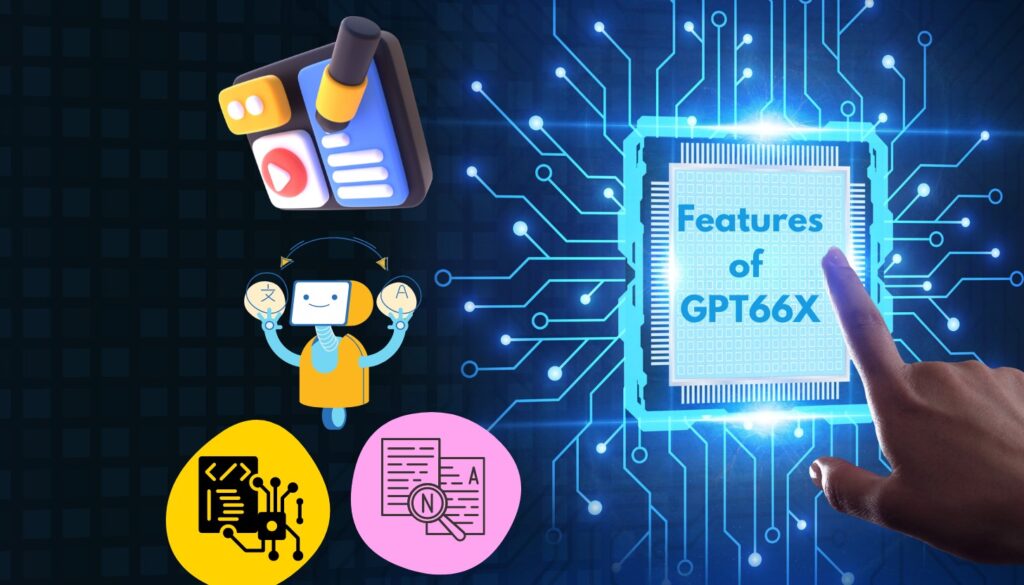
    features of gpt66x

    Key Features

    1. One of GPT66X’s most impressive strengths is its ability to generate human-quality text. Imagine a machine capable of crafting realistic dialogue, composing compelling articles, or even writing different kinds of creative content, from poems to scripts.
    2. GPT66X achieves this feat by analyzing massive amounts of text and identifying patterns in writing styles. This allows it to predict the most likely sequence of words for a given context, resulting in remarkably natural and coherent text generation.
    3. Another key feature is its prowess in language translation. Current GPT-X models already demonstrate impressive translation capabilities, and GPT66X is expected to surpass these even further. Imagine seamlessly translating complex documents or real-time conversations across languages. GPT66X has the potential to break down communication barriers and foster a more interconnected world.
    4. Furthermore, GPT66X might possess the ability to generate different creative text formats. Think about a tool that can help writers overcome writer’s block, suggest creative story ideas, or even draft different sections of a screenplay. By analyzing vast amounts of creative text data, GPT66X could become a valuable companion for writers and artists, sparking inspiration and aiding in the creative process.
    5. Finally, there’s a possibility that GPT66X could even generate code. This would be a game-changer for software developers, allowing them to automate repetitive coding tasks and focus on the more complex aspects of software development. While the specifics of code generation remain hypothetical, the potential for GPT66X to assist in this field is undeniably exciting.

    It’s important to remember that these are just some of the potential capabilities of GPT66X. As research in AI continues to evolve, we might see even more groundbreaking features emerge in this next-generation language model.

    The Impact of GPT66X

    The potential applications of GPT66X extend far beyond the realm of technical marvels. This next-generation language model has the power to revolutionize various industries, ushering in a new era of efficiency, creativity, and human-machine collaboration.

    Business Applications

    Imagine a world where marketing campaigns are tailored with laser precision, content creation becomes effortless, and customer service interactions are smooth and efficient. GPT66X holds the key to unlocking these possibilities.

    • Marketing & Advertising: Traditional marketing campaigns are a thing of the past. With GPT66X, businesses can transform their approach by harnessing vast customer data to create personalized marketing content, predict consumer behavior, and develop tailored advertising that speaks directly to target audiences. What’s more, GPT66X’s content generation capabilities streamline the creation of engaging product descriptions, social media posts, and captivating marketing copy, allowing marketing teams to save time and resources for strategic initiatives.
    • Customer Service: Tired of long waits and impersonal service? Enter GPT66X, the game-changer in customer service. By driving intelligent chatbots and virtual assistants, GPT66X revolutionizes customer interactions. These AI-powered assistants offer real-time responses to queries, troubleshoot common issues, and adapt interactions to suit individual customer preferences. The result? A more efficient and satisfying customer service experience for all involved.

    Beyond Business: A Glimpse into Other Industries

    The impact of GPT66X transcends the business world. Here’s a glimpse of its potential influence in other fields:

    • Research & Education: GPT66X can assist researchers by analyzing vast datasets and identifying patterns that might be missed by the human eye. In education, it could personalize learning experiences, provide real-time feedback to students, and even act as a virtual tutor.
    • Healthcare: Imagine a future where GPT66X helps doctors analyze medical records, translate complex medical documents, and even personalize treatment plans. Its potential applications in healthcare research and drug discovery are also vast.
    • Creative Industries: From assisting writers with overcoming writer’s block to composing music or generating new design ideas, GPT66X has the potential to become a powerful tool for artists and creatives of all kinds.

    These are just a few examples of the far-reaching impact GPT66X could have on various industries. As we delve deeper into this powerful technology, the possibilities for innovation and progress seem limitless.

    GPT66X and Ethical Consideration
    ethical consideration of gpt66x

    GPT66X’s burgeoning capabilities go hand-in-hand with a growing list of ethical considerations. High-stakes issues like the convolution and dissemination of misinformation, perpetuating biases, and the socio-economic impact of AI automation require careful navigation. OpenAI and researchers worldwide are working to imbue GPT66X with ethical guardrails to ensure responsible use.

    As with any powerful technology, the development of GPT66X necessitates careful consideration of ethical implications.

    Potential biases within the training data could lead to biased outputs, highlighting the importance of responsible AI development practices. Additionally, the capabilities of GPT66X raise questions about automation and the future of work.

    However, by proactively addressing these concerns, we can ensure that GPT66X serves as a force for good, augmenting human capabilities and fostering a more collaborative future.

    The Future of GPT66X

    The arrival of GPT66X and similar AI models represents a pivotal moment in human history. These advancements have the potential to reshape our world, influencing everything from how we communicate and work to how we conduct research and explore creativity.

    Imagine a future where language barriers are a thing of the past, where AI assistants handle mundane tasks, and where scientific breakthroughs are accelerated by AI’s analytical prowess. GPT66X and its future iterations hold the key to unlocking these possibilities.

    The Path to GPT67X

    It’s clear that as AI continues to leap forward, GPT66X is merely a stepping stone. The hypothetical GPT67X is a vivid marker of the future, one that not only commands language at an unmatched scale but also harnesses the power to reason, reflect, and react—akin to a true AI cognitive entity. The day is near when GPT67X may not only comprehend texts but also compose them with profound understanding.

    The potential of GPT66X is nothing short of exhilarating. It represents a significant leap forward in AI language processing, paving the way for a future filled with innovation and progress. As we continue to explore the capabilities of this groundbreaking technology, we can only imagine the remarkable advancements that await on the horizon. GPT66X is not just a glimpse into the future; it’s an invitation to actively shape it.

    Conclusion

    GPT66X is more than a mere tool; it’s a harbinger of a new era in human-AI interaction. Its burgeoning applications and potential future are as awe-inspiring as they are thought-provoking. With power comes responsibility, and the road ahead will require diligence, creativity, and a commitment to the ethical deployment of AI.

    The relationship between GPT66X and humanity is in its infancy, but the potential it holds is boundless. Whether as a companion to our creativity or a catalyst for innovation, GPT66X is poised to leave an indelible mark on the fabric of our technological growth.

    Now, more than ever, is the time to observe, learn, and, if sparked by the enigma of GPT66X, join the ranks of those who shape its future. The world of AI beckons, and GPT66X stands at the threshold, inviting us to step into the unknown.

    What is GPT66X?

    GPT66X is a hypothetical next-generation large language model (LLM) in the series of GPT-X models developed by OpenAI (or similar organization). These AI systems are trained on massive datasets of text and code, allowing them to understand and generate human-like language with exceptional capabilities.

    What can GPT66X do?

    While specific functionalities are unknown, GPT66X is expected to excel in various tasks, including:
    1. Generating human-quality text formats like articles, scripts, poems, and even code (potentially).
    2. Translating languages with remarkable accuracy, potentially breaking down communication barriers.
    3. Assisting creative professionals by overcoming writer’s block, suggesting ideas, and even drafting content.
    4. Powering intelligent chatbots and virtual assistants for improved customer service experiences.

    When will GPT66X be available?

    As GPT66X is a hypothetical concept, there’s no official information about its release date. However, the continuous advancements in AI language processing suggest that similar models with impressive capabilities might emerge in the coming years.

    How will GPT66X impact different industries?

    The potential applications of GPT66X are vast. It could revolutionize industries like:
    Business: Personalized marketing campaigns, efficient content creation, and improved customer service interactions.
    Education: Personalized learning experiences, real-time feedback for students, and virtual tutoring.
    Healthcare: Analyzing medical records, translating documents, and personalizing treatment plans.
    Research: Identifying patterns in data sets and accelerating scientific breakthroughs.
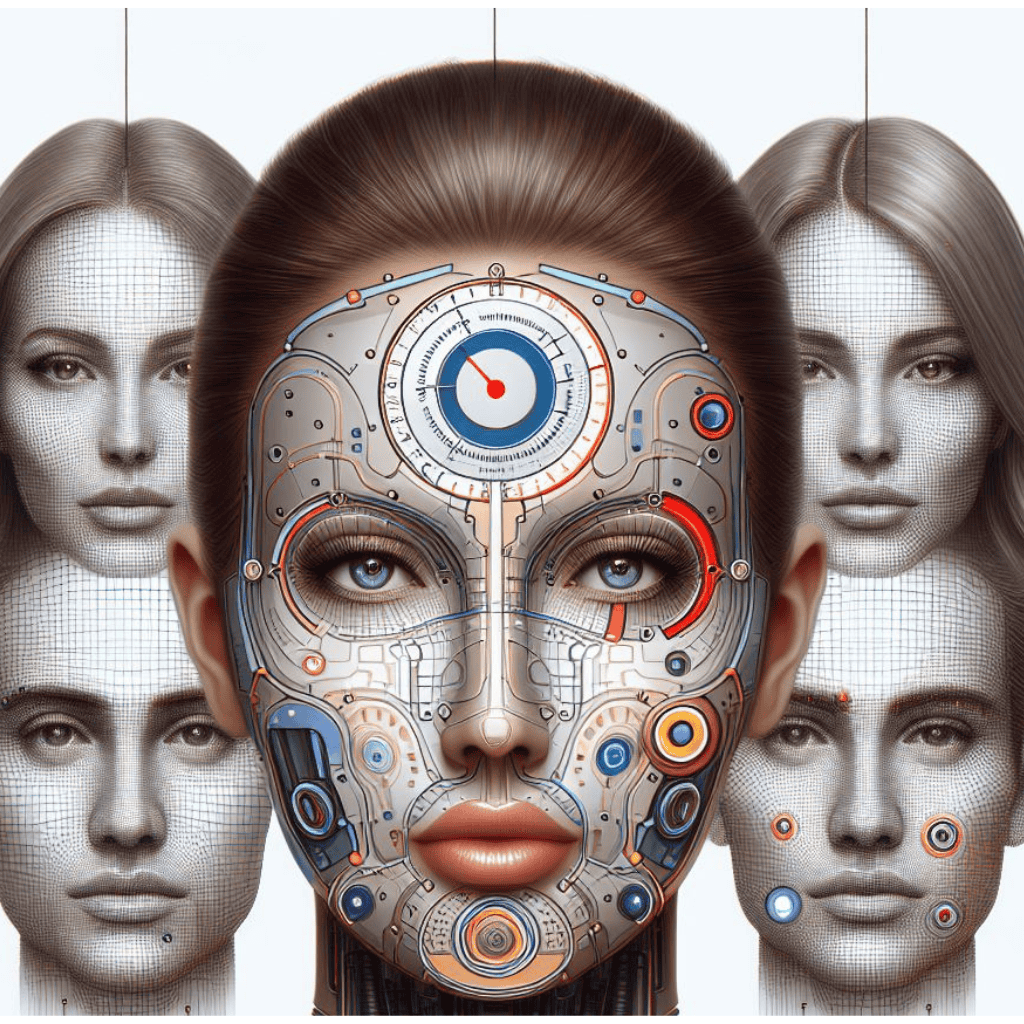
    Are there any concerns surrounding GPT66X?

    Ethical considerations around GPT66X include potential biases in its training data leading to biased outputs. Additionally, its advanced capabilities raise questions about automation and the future of work. However, responsible development practices can mitigate these concerns.
  • Can artificial intelligence rate attractiveness accurately?

    Can artificial intelligence rate attractiveness accurately?

    In the world of technology, few frontiers remain as intriguing as the intersection of artificial intelligence and human perception. A particularly fascinating application is AI’s capacity to assess attractiveness—a timeless human trait that’s been notoriously hard to pin down.

    From the dawn of civilization to the modern era, the definition of ‘attractive’ has morphed with time, culture, and individual quirks.

    Can artificial intelligence rate attractiveness accurately?

    Attractiveness is a multifaceted and culturally influenced concept that varies significantly from person to person. Artificial intelligence (AI) has ventured into the complex realm of human perception by attempting to assess attractiveness through facial features and characteristics.

    This raises an intriguing question: Can artificial intelligence rate attractiveness accurately? Does AI truly understand and rate attractiveness? Let’s delve deeper into this captivating intersection of technology and human perception.

    Decoding Beauty’s Layers

    Attractiveness is a complex phenomenon that holds immense power in our lives. We crave it, yet its definition dances on a tightrope between universal desire and intensely personal preference.

    From influencing the outcome of a job interview to sparking romantic connections, attractiveness holds a key we all want to unlock.

    Beyond the Measurable

    While we often try to quantify attractiveness through facial symmetry, proportioned features, and adherence to mathematical formulas like the “golden ratio,” these are just surface-level brushstrokes on a far richer canvas. True attractiveness extends far beyond the realm of mere physical attributes.

    Imagine attractiveness as a symphony. Facial features might be the notes, but the true magic lies in the intangible harmony that emerges from their interplay. It’s the captivating charisma, the confidence that radiates outward, and the unique spark that make someone stand out from the crowd. These qualities resonate with us on a deeper level, defying easy definition or algorithmic capture.

    The Rise of Facial Analysis Tools

    The quest to quantify and analyze attractiveness has led to the rise of facial analysis tools. These AI-powered systems promise to dissect our features with clinical precision, offering a data-driven perspective on beauty.

    Qoves Studio: A Case Study

    One such player in this field is Qoves Studio. Their AI-driven facial assessment system operates with lightning speed, analyzing uploaded photos within milliseconds. The results? A detailed report card outlining a laundry list of perceived flaws. From the well-known nasolabial folds (smile lines) to less familiar concerns like under-eye contour depression and periocular discoloration, Qoves Studio aims to identify every possible imperfection.

    But the analysis continues beyond there. The system then recommends solutions, ranging from targeted beauty products to, in more extreme cases, surgical interventions. This creates a one-stop shop for users seeking to address these perceived flaws and achieve their ideal aesthetic.

    However, it’s important to consider the limitations inherent in such an approach.

    The Limitations of the Machine Gaze

    While facial analysis tools offer a seemingly objective assessment, it’s crucial to recognize their limitations. These systems are trained on vast datasets of faces, often influenced by societal beauty standards. This inherent bias can skew the results, potentially overlooking unique features or cultural variations in what constitutes attractiveness.

    Furthermore, these tools focus solely on the physical, neglecting the intangible aspects that make someone captivating. They cannot capture the spark of personality, the confidence that shines through, or the ineffable charisma that draws us in.

    Ultimately, these tools offer a narrow view of beauty, akin to analyzing the individual notes of a symphony without appreciating the harmonious interplay that creates the music’s magic.

    This section connects back to the article’s main theme – that attractiveness is a complex concept that goes beyond the physical. It highlights how AI tools might need help to capture the essence of what makes someone truly attractive.

    Can AI See What We Miss?

    Computer vision has made significant strides in facial recognition and analysis. This has opened the door to the intriguing possibility of AI unlocking the secrets of physical attractiveness. Machine learning algorithms, trained on massive datasets of faces, can now identify facial characteristics often associated with attractiveness across various cultures.

    By meticulously analyzing the relationships between pixels, AI can potentially “see” what the human eye might miss. This analysis could uncover universal markers of beauty based on prevailing cultural standards. For instance, the algorithms might identify features like facial symmetry, clear skin, and specific proportions of facial features as indicators of attractiveness.

    However, the key question remains: Do these metrics truly capture the essence of beauty? Cultural preferences for attractiveness are constantly evolving, and what’s considered beautiful in one society might not be in another. Additionally, focusing solely on these metrics neglects the significant role played by individual preferences and subjective interpretations of beauty.

    While AI offers a fascinating glimpse into the quantifiable aspects of physical beauty, it’s important to remember that attractiveness is multifaceted. The true magic lies beyond the measurable—in a person’s unique spark, captivating personality, and overall charisma.

    Limitations of AI Attractiveness Assessment

    While AI’s ability to analyze faces is impressive, its effectiveness in accurately assessing attractiveness faces significant limitations. Let’s delve into two key challenges:

    Subjectivity and Bias:

    Attractiveness is far from a universal concept. What one person finds captivating, another might find ordinary. AI algorithms, however, need help grasping this level of subjectivity. They need a nuanced understanding of human cultural and individual preferences, which can lead to biased assessments.

    For example, suppose the AI is trained on a dataset that predominantly features faces from a specific ethnicity or adheres to a narrow beauty standard. In that case, its evaluation will likely reflect those biases. Imagine an AI trained primarily on photos from Western fashion magazines; it might prioritize Eurocentric features as attractiveness markers, overlooking other cultures’ beauty standards.

    Context and Emotional Factors:

    Attractiveness isn’t static. It can be significantly influenced by context and emotional factors. Imagine someone radiating confidence during a presentation; they might be perceived as more attractive than usual. Conversely, feeling nervous on a first date might project a different aura. AI currently struggles to account for these contextual nuances and intangible factors like personality, confidence, and emotional state.

    These factors play a crucial role in how we perceive others, and their absence in AI assessments limits their ability to capture the true essence of attractiveness. Ultimately, AI offers a glimpse into the measurable aspects of physical beauty. Still, it’s a narrow view that neglects the rich tapestry of human perception and the multifaceted nature of what makes someone attractive.

    AI’s Role in the Beauty Industry

    While the limitations of AI in attractiveness assessment are undeniable, AI is revolutionizing the beauty industry in exciting ways. It’s a powerful tool that goes beyond analyzing physical features, instead focusing on enhancing the outward expressions of our unique beauty.

    Imagine a world where:

    • Virtual Try-On Becomes Reality: AI-powered apps allow you to virtually try different makeup looks before touching a product. Want to experiment with a bold red lip or a smoky eye? No problem! See how the colors complement your complexion and discover your perfect shade.
    •  Personalized Skincare Solutions: Forget the one-size-fits-all approach. AI assistants can analyze your skin type, considering texture, oiliness, and sun damage. Based on this analysis, they can recommend a customized skincare routine with products designed to target your specific concerns.
    •  Makeup Magic for Your Unique Features: No more flipping through endless makeup tutorials. AI makeup assistants can analyze your facial features and suggest styles that flatter your unique contours. Learn to highlight your best assets and create looks that make you feel confident and beautiful.
    •  The Power of Recommendation: AI algorithms can analyze past purchases and preferences to suggest new beauty products you might love. Discover hidden gems and stay on top of the latest trends tailored to your tastes.

    These are just a few examples of AI transforming the beauty industry. By focusing on personalization and offering a more data-driven approach, AI empowers us to embrace and enhance our beauty. It’s a tool that can guide us on our unique beauty journeys, not dictate a single standard.

    The Future of Beauty

    The future of beauty is not a dystopian vision of robots dictating our appearance. Instead, it’s a world where AI and human ingenuity collaborate to create a more personalized and empowering beauty experience. As AI technology evolves rapidly, we can expect even more sophisticated applications catering to our needs and preferences.

    Imagine a future where:

    • AI Analyzes, We Personalize:

    AI’s ability to analyze vast faces and beauty trends datasets will become even more refined. This data and information about your skin type, lifestyle, and personal preferences will be used to create truly customized beauty solutions. Imagine AI makeup tutorials that adapt to your changing skin conditions or skincare regimens that adjust based on your environment and daily activities.

    • Beyond Physical Attributes:

    AI’s reach will extend beyond analyzing physical features. Imagine AI assistants considering your personality, style, and emotional state when recommending beauty products and routines. An AI stylist could suggest a bold lipstick shade to boost your confidence for an important presentation or recommend calming skincare products to help you unwind after a stressful day.

    • Augmented Reality Becomes Reality:

    The lines between the physical and digital will continue to blur. Augmented reality (AR)-powered mirrors will allow you to virtually experiment with different hairstyles, hair colors, and even non-permanent cosmetic procedures. This technology will empower you to make informed decisions about your appearance and explore a world of possibilities before committing to a change.

    • Democratization of Beauty:

    AI can play a crucial role in democratizing the beauty industry. Imagine AI-powered apps that translate beauty tutorials into multiple languages or offer accessibility features for visually impaired users. Additionally, AI can analyze and recommend beauty products across a wider range of price points, ensuring everyone has access to create their unique look.

    However, it’s crucial to remember that AI is a tool, and the guiding hand behind it will always be human. Designers, developers, and beauty experts will shape how AI interacts with the beauty industry. They will ensure that AI is used ethically and inclusively, celebrating the multifaceted nature of human attraction. AI should empower users to explore their unique beauty, not dictate a standard.

    The future of beauty is a collaboration. It’s about harnessing the power of AI to enhance our human creativity and expertise, ultimately creating a more personalized and fulfilling journey towards feeling confident and beautiful in our skin.

    Conclusion

    In summary, while AI has shown promising capabilities in assessing attractiveness through facial recognition and analysis, its accuracy could be more reliable due to cultural differences, the subjective nature of attractiveness, and ethical concerns. However, with further advancements in technology and a more comprehensive and diverse dataset, AI has the potential to improve its accuracy in the future.

    Remember that true beauty lies beyond algorithms—our uniqueness, imperfections, and the stories etched on our faces. AI can be a valuable companion on this journey, illuminating the interplay between cultural standards and individual preferences, but the final arbiter of beauty will always remain delightfully human.

    Stay tuned to TechInnovationPro.com for more in-depth insights into the latest advancements in artificial intelligence, machine learning, and other cutting-edge technologies!

  • Artificial Intelligence: Mechanical Minds to Ethical Algorithms

    Artificial Intelligence: Mechanical Minds to Ethical Algorithms

    This is an image of for Artificial Intelligence for the article "Artificial Intelligence: From Mechanical Minds to Ethical Algorithms" in Tech Innovation Pro website.

    In the 1950s, artificial intelligence (AI) began its captivating journey. Alan Turing, a pioneer in the field, introduced the Turing Test to gauge a machine’s ability to mimic human intelligence. Fast forward to the 1960s, AI research gained momentum with the birth of the first AI programming language called LISP, credited to John McCarthy. Early AI efforts focused on symbolic reasoning and rule-based systems, setting the stage for expert systems’ rise in the 1970s and 1980s. This journey unfolds in our exploration of artificial intelligence from mechanical minds to ethical algorithms.

    A Concise History of Artificial Intelligence From Mechanical Minds to Ethical Algorithms

    The fascinating journey of artificial intelligence (AI) commenced in the 1950s, when Alan Turing, a trailblazing figure in the field, introduced the Turing Test as a benchmark to assess a machine’s capacity to emulate human intelligence. By the 1960s, AI research had gained substantial momentum with the creation of the very first AI programming language, LISP, attributed to John McCarthy. The early stages of AI primarily focused on symbolic reasoning and rule-based systems, laying the groundwork for the emergence of expert systems in the 1970s and 1980s.

    The 1990s witnessed a notable shift in focus, as the AI community began to gravitate toward machine learning and data-driven methodologies. This shift was largely driven by the increasing availability of digital data and the remarkable advancements in computing power. During this era, neural networks gained prominence, and the development of support vector machines enabled AI systems to glean insights from data, resulting in improved performance and adaptability.

    Fast forward to the 2000s, and AI research broadened its horizons, venturing into new and exciting domains such as natural language processing, computer vision, and robotics. This expansion paved the way for the contemporary AI revolution we witness today, with AI technologies penetrating nearly every facet of our lives.”

    Machine Learning vs. Deep Learning: A Breakdown

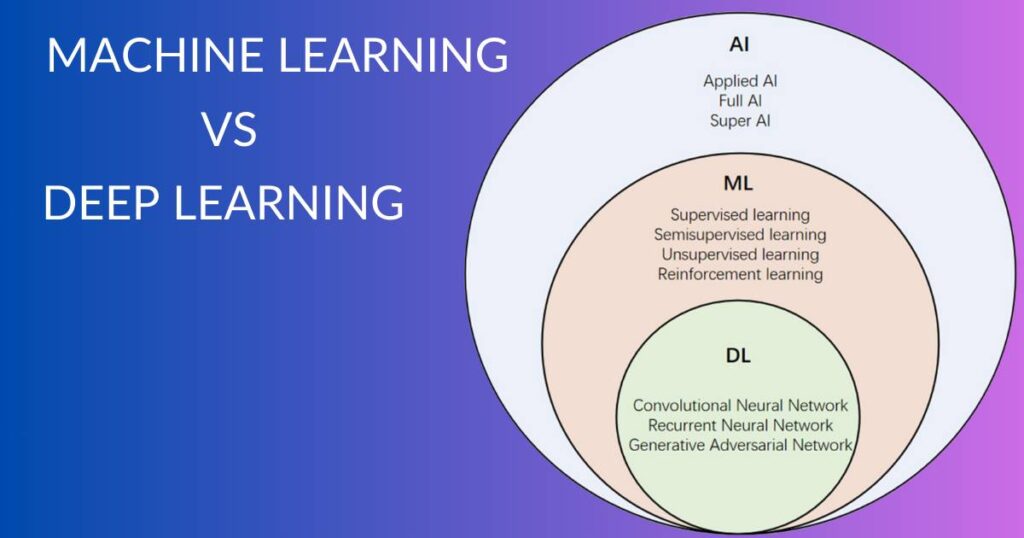
    This is an image of Machine Learning vs Deep Learning for the article "Artificial Intelligence: From Mechanical Minds to Ethical Algorithms" in Tech Innovation Pro website.


    The terms “machine learning” and “deep learning” are often used interchangeably, but they represent distinct approaches within the broader realm of AI.

    Machine Learning

    Machine learning is the process of teaching computers to learn from data. It entails the creation of algorithms that let computers recognize patterns, anticipate outcomes, and gradually become more efficient. Machine learning algorithms have found applications in various domains, from email filtering and recommendation systems to fraud detection and autonomous vehicles.

    The historical development of machine learning is a testament to human ingenuity. Early machine learning models, such as linear regression and decision trees, paved the way for more advanced techniques like neural networks and support vector machines. The availability of vast datasets and increased computational power have led to remarkable advancements in machine learning, enabling applications like natural language processing and computer vision.

    Deep Learning

    Deep learning, a subset of machine learning, aims to replicate the functioning of the human brain’s neural networks. It consists of artificial neural networks with multiple layers (hence the term “deep”) that can automatically extract hierarchical features from data. Significant advances in natural language processing, autonomous robotics, image and audio recognition, and other fields have been made possible through deep learning.

    Historically, deep learning has been around for a while, but it has gained more prominence in the 21st century due to the availability of extensive datasets and the development of powerful hardware, particularly graphics processing units (GPUs). Deep learning is transforming fields like marketing, finance, and healthcare by becoming superior at tasks like image categorization and machine translation.

    Ethical Considerations in AI Applications


    In the journey of artificial intelligence from mechanical minds to ethical algorithms, it’s clear that as AI advances, ethical concerns grow more critical. Applying artificial intelligence in various domains raises significant questions regarding privacy, bias, and accountability.

    AI Ethics and Regulations

    The field of AI ethics has gained prominence in response to these concerns. Researchers, policymakers, and organizations are actively working to establish ethical guidelines and regulations that ensure AI technologies serve humanity without causing harm. Initiatives like “AI Ethics Principles” and “Ethics by Design” promote the responsible use of AI.

    Ethical Dilemmas in AI

    Historically, there have been instances where AI applications have resulted in ethical dilemmas. One prominent example is algorithmic bias, where AI systems may perpetuate discrimination or unfairness due to biased training data. Understanding these historical cases is crucial to preventing similar issues in the future.

    Privacy Concerns

    Regarding AI technology, privacy is a major problem. Robust rules and procedures are required to safeguard people’s personal data when AI systems gather and evaluate enormous volumes of information. Developers must prioritize implementing measures that ensure data security and privacy rights are respected.

    Bias Mitigation

    Bias in AI algorithms is another essential consideration. Since machine learning models learn from existing data sets, there’s a risk that the algorithms can perpetuate biases in those datasets. This is not merely a theoretical concern; it has real-world consequences. Biased AI can lead to discriminatory outcomes, unfair treatment, and the perpetuation of societal prejudices.

    Developers should actively mitigate these biases and strive for fairness in their models by ensuring diverse and representative training data. The development of AI should prioritize ongoing efforts toward fairness and transparency to make sure that systems do not aggravate already-existing disparities or introduce new ones.

    Accountability and Transparency

    Accountability is also paramount when deploying AI technologies. It’s essential to establish clear lines of responsibility so that any negative consequences or errors caused by AI systems can be appropriately addressed. Accountability goes beyond theory and is crucial in real-world scenarios. AI systems may make life-altering decisions in healthcare, legal, or financial domains, and ensuring accountability is a fundamental aspect of responsible AI deployment.

    Developers should emphasize transparency by making the decision-making process of their algorithms understandable and auditable. Understanding how AI systems arrive at their decisions is not just a matter of curiosity but a practical necessity to address issues and ensure that AI operates fairly and responsibly.

    Collaboration between developers, policymakers, ethicists, researchers, and other stakeholders becomes crucial to ensure the responsible use of AI technologies. Open dialogue among these groups allows for comprehensive guidelines and regulations that address ethical concerns effectively. In the absence of such collaboration, AI development may proceed without adequate oversight and ethical considerations, potentially leading to unintended consequences.

    Taking these ethical issues into account will help build public trust, support the long-term success of AI technologies in many areas, and reduce the harm that could happen.

    AI-Driven Innovations in Entertainment: A Transformative Force

    “In the fascinating journey of artificial intelligence from mechanical minds to ethical algorithms, the impact of AI on the entertainment industry cannot be overstated. AI-driven innovations have transformed how we experience and consume media, ushering in a significant shift in the entertainment landscape. These advancements are enhancing user experiences and revolutionizing content creation processes.

    Personalized Recommendations

    One of the most visible uses of AI in entertainment is content recommendation. Streaming services like Netflix and music platforms like Spotify leverage AI algorithms to analyze user preferences and behavior, providing personalized recommendations. This improves the user experience while also assisting these platforms in keeping users as subscribers. The impact of these recommendations goes beyond convenience; they shape our choices, preferences, and, ultimately, our entertainment experiences.

    Immersive Virtual Reality

    This is an image of for Virtual Reality for the article "Artificial Intelligence: From Mechanical Minds to Ethical Algorithms" in Tech Innovation Pro website.

    Additionally, AI has been important in producing compelling virtual reality experiences where users can dive into entirely new worlds and engage with content like never before. By harnessing the power of artificial intelligence, developers have created lifelike simulations that blur the line between reality and digital entertainment. These VR experiences are not just novelties; they offer new ways of storytelling and interaction, pushing the boundaries of what’s possible in entertainment.

    Efficient Content Creation

    AI-driven innovations have not only transformed but propelled the entertainment industry forward. Artificial intelligence is automating content creation processes. From generating scripts to automating video editing, these intelligent systems have expedited production timelines while maintaining high-quality standards. The impact on the industry is profound, as it enables content creators to be more productive and innovative. This translates to more content, more creativity, and, ultimately, more choices for consumers.

    AI in Healthcare and Transportation: A Transformative Force

    In addition to its impact on the workplace, AI is revolutionizing numerous industries and shaping the future in profound ways. This transformative force extends to healthcare and transportation, two sectors where AI is making a significant impact.

    This is an image of for AI In Healthcare for the article "Artificial Intelligence: From Mechanical Minds to Ethical Algorithms" in Tech Innovation Pro website.

    AI in Healthcare

    AI is transforming healthcare by analyzing massive patient data sets to produce more precise diagnoses and individualized treatment regimens. It’s enabling healthcare professionals to make data-driven decisions with greater accuracy, improving patient care and outcomes. The impact on healthcare is not just theoretical; it’s a matter of life and death. Accurate diagnoses and personalized treatment plans are saving lives and improving the quality of healthcare.

    AI in Transportation

    In the transportation sector, AI-powered autonomous vehicles are enhancing road safety and efficiency. These vehicles rely on AI algorithms for real-time decision-making, making roads safer and more efficient. The impact on transportation is not merely a matter of convenience; it’s a matter of safety and efficiency. In addition to lowering traffic jams and fuel consumption, autonomous cars have the ability to prevent accidents and save lives.

    AI Across Industries

    Across various sectors, businesses recognize AI technologies’ immense potential in streamlining processes, boosting operational efficiency, and reducing costs. AI’s impact on industries is not just theoretical; it’s practical and financial. By leveraging these cutting-edge solutions, companies can automate manual tasks, maximize productivity, and stay competitive in dynamic markets. The ability of AI to analyze large datasets quickly enables organizations to make data-driven decisions with greater accuracy and confidence. This empowers businesses to stay ahead of their competition by identifying trends, predicting customer behavior, and tailoring their strategies accordingly.

    The Metamorphosis of GPT: A Game-Changing Enigma

    ChatGPT, crafted by OpenAI, is leading the charge in conversational AI. Join Tech Innovation Pro in shaping the future of tech innovation.

    The current AI explosion owes much of its growth to the development of smarter learning techniques and the rise of big neural networks like OpenAI’s GPT series. Think of GPT-3, which debuted in 2020, as a shining example. It’s powered by a whopping 175 billion parts and can understand and create human-like language in ways we’ve never seen before.

    GPT-3’s success has ignited more research in the AI field. Now, we have GPT-4, the latest version. It’s building on the strong foundation of its predecessors and taking AI capabilities to new heights. This progress is remarkable, and it’s reshaping the AI landscape in a profound way.

    Conclusion

    The evolution of Artificial intelligence is a captivating journey through time. By understanding its historical roots and ongoing development, we can make informed decisions about AI’s future applications and navigate the ethical considerations surrounding its use. It’s critical to carefully utilize AI’s potential as it gets more ingrained in our daily lives to make sure that society as a whole gains from it. Embracing AI, learning from its history, and staying attuned to its present innovations will be key to a brighter, AI-enhanced future.

    With rapid advances in AI and ongoing discussions about ethical considerations, the responsible and innovative use of AI technology is essential. As we witness the evolution of artificial intelligence unfold before our eyes, it is clear that this technology holds immense potential for positive change. However, we must approach its development and implementation with a robust ethical framework to harness its benefits responsibly. The future of AI is bright, but it requires responsible stewardship to ensure that it continues to serve humanity in ways that are safe, fair, and beneficial.

  • Artificial Intelligence: The Future World

    Artificial Intelligence: The Future World

    Artificial Intelligence

    Welcome to the world of Artificial Intelligence (AI), where things are more fascinating and less complicated than you might think. AI is like a clever friend that helps us humans with daily tasks, making decisions based on learning from different situations, just like we do. From virtual assistants in our phones to intelligent systems predicting what show we should binge-watch next, AI is everywhere! Understanding AI isn’t just for tech wizards; it’s crucial for everyone because it’s reshaping the way we live, work, and even play.


    Demystifying Artificial Intelligence

    Let’s dive deeper into Artificial Intelligence and break it down into bite-sized pieces. Imagine teaching a child to recognize shapes. You show them different objects until they can tell a circle from a square. That’s similar to how Machine Learning works—systems learn from data to make decisions. Now, remember the brainy networks we mentioned? Those are ‘Neural Networks,’ designed to mimic our brains, and ‘Deep Learning’ is their superhero persona, handling tasks too complex for simpler AI forms. But don’t worry; they’re not here to replace us. Despite the myths, AI isn’t an all-knowing entity. It’s a tool that we create and control, enhancing our lives in many ways.


    The Evolution of AI: A Brief History

    Artificial Intelligence is not a new concept. It has been a work in progress since the mid-20th century! What started as basic computer programs has evolved into systems that learn and adapt. From historic moments like IBM’s Deep Blue beating a chess grandmaster to today’s AI, which can compose music or even drive cars, the milestones are nothing short of awe-inspiring. We’re part of an ongoing journey, witnessing history in the making!


    AI in Daily Life: Recognizable Applications

    Let’s talk about how AI is a part of your everyday life. Do you enjoy voice texting on your smartphone? That’s AI. Have you ever been amazed by personalized playlists on your music app? Thank AI. It’s not just convenience; it’s precision, efficiency, and sometimes pure fun. Beyond our phone screens, Artificial Intelligence is in our hospitals, assisting in diagnoses, and it’s navigating our roads in smart cars. It’s making our world not just more connected, but also safer and more innovative. The seamless blending of AI into our lives enhances our experiences and pushes us towards newer, bolder frontiers.


    Ethical Considerations and Public Perception

    However, with great power comes great responsibility. There are valid concerns about privacy and job security in an AI-driven age. That’s why it’s vital to develop AI ethically, considering the societal impacts. Balancing AI’s possibilities with precaution can help ensure it remains a force for good, respecting our privacy and empowering rather than replacing our workforce.


    Future Prospects: How AI Might Shape the World of Tomorrow

    Artificial Intelligence is the future world


    Looking ahead, AI has the potential to revolutionize healthcare by making early diagnosis and treatments accessible to all. It can also help protect the environment by monitoring ecosystems in real time. The possibilities are vast, spanning sectors we’ve yet to imagine. As AI continues to evolve, the only limit is our innovation.


    Navigating a World Powered by AI: Adapting to Change

    In this rapidly changing landscape, adaptability is critical. Stay curious, keep learning, and embrace the advancements. It’s through this open-mindedness that we’ll thrive alongside AI innovations.

    So, here we are — at the doorstep of endless possibilities with Artificial Intelligence. It’s not just technology; it’s a companion in our evolutionary journey. Embracing this dynamic wave means staying informed and engaged. It’s about ensuring this powerful tool uplifts, protects, and inspires us all. As we stand on the brink of this new era, it’s not just a leap into the unknown; it’s a stride into a future crafted by our choices today. Are you ready to be part of this extraordinary adventure?
    Through this heart-to-heart, we’ve journeyed through AI’s intricacies and its profound role in shaping our collective tomorrow. Now, more than ever; our story intertwines with artificial intelligence — a narrative of growth, challenges, and immense potential.