Tag: Technology

Deep dives into the future of technology. TechInnovationPro.com explains complex tech concepts and offers insightful analysis. Learn more today!

  • Tesla Robotaxi: A New Era in Autonomous Transportation

    Tesla Robotaxi: A New Era in Autonomous Transportation

    In a world where innovation drives progress, Tesla stands at the forefront of transforming transportation with its bold Robotaxi initiative. This revolutionary concept is not just about cars driving themselves; it’s about reshaping how people view and interact with urban mobility. From tech enthusiasts to environmentalists, the Tesla Robotaxi promises to offer something for everyone. But what exactly is a Tesla Robotaxi? And why is it such a game-changer?

    Introduction to Tesla Robotaxi

    Tesla’s Robotaxi isn’t just another autonomous vehicle—it’s a vision of the future. At its core, the concept involves self-driving Teslas operating as on-demand ride-sharing vehicles, eliminating the need for human drivers. This innovation marks a significant step forward in both the automotive and technology sectors, promising to alter how cities function and how individuals commute.

    For Tesla, the Robotaxi represents a synthesis of their cutting-edge technology, environmental mission, and ambition to revolutionize transportation networks. It’s a project that highlights the company’s drive to push boundaries and explore new horizons in mobility. For tech enthusiasts and investors, understanding this initiative is crucial to grasping the full scope of Tesla’s innovation prowess.

    Understanding Tesla’s Approach

    The development of Tesla’s Robotaxi is deeply rooted in the company’s long-term vision for autonomous driving. Tesla’s approach leverages its existing vehicles equipped with Full Self-Driving (FSD) software, an advanced suite capable of navigating complex urban environments without human intervention. This technology underpins the Robotaxi network, creating a seamless blend of automotive excellence and artificial intelligence.

    tesla robotaxi interior
    Tesla Robotaxi Interior

    Tesla’s massive infrastructure investments, including its vast network of Superchargers and strategically positioned service centers, provide the backbone for the Robotaxi fleet. These resources ensure that the Robotaxi service can operate efficiently, minimizing downtime and maximizing accessibility for users across urban landscapes.

    Central to Tesla’s strategy is the integration of its vehicles into a shared network, allowing owners to add their cars to the Robotaxi fleet when not in use. This not only maximizes the utility of each vehicle but also offers potential financial incentives for Tesla owners, encouraging widespread adoption and participation in this groundbreaking venture.

    The Impact on Urban Commuting and Ride-Sharing

    The introduction of Tesla’s Robotaxi service promises to revolutionize urban commuting, offering a convenient, cost-effective alternative to traditional ride-sharing options. By enabling cars to autonomously ferry passengers, Tesla aims to reduce traffic congestion, decrease travel times, and enhance the overall efficiency of urban transportation systems.

    For ride-sharing users, Tesla’s Robotaxi presents a compelling proposition—access to state-of-the-art electric vehicles with autonomous capabilities. This service could democratize access to premium vehicles, providing a luxurious travel experience at a fraction of the cost associated with traditional car ownership or ride-hailing services.

    Furthermore, the widespread deployment of Robotaxis could encourage the transformation of cityscapes, as reduced car ownership leads to a decrease in the demand for parking spaces and infrastructure. Urban planners may find new opportunities to repurpose land for green spaces, bike lanes, and pedestrian pathways, fostering healthier, more sustainable living environments.

    The Potential for Investors and Businesses

    For investors, Tesla’s Robotaxi initiative presents a tantalizing opportunity to tap into a burgeoning market poised for exponential growth. With autonomous ride-sharing projected to become a multi-billion-dollar industry, Tesla’s first-mover advantage positions it as a key player in this space, offering substantial returns for investors who recognize the potential.

    Businesses, too, stand to benefit from the widespread adoption of Robotaxis. Corporate fleets could be integrated into Tesla’s network, optimizing logistics and reducing operational costs. Additionally, the data generated from autonomous operations could provide valuable insights for companies looking to enhance their market strategies and stay ahead of competitors.

    The Robotaxi initiative has the potential to create new partnerships and collaborations between Tesla and various stakeholders, ranging from tech startups to urban mobility firms. This synergy could spur innovation, leading to the development of complementary technologies and services that further enhance the value proposition of autonomous ride-sharing.

    Environmental Implications

    Tesla’s commitment to sustainability is exemplified by its Robotaxi service, which promises significant environmental benefits. By replacing internal combustion engine vehicles with electric Robotaxis, Tesla aims to reduce greenhouse gas emissions and decrease the overall carbon footprint of urban transportation.

    Autonomous electric vehicles are more energy-efficient than their traditional counterparts, optimizing routes and driving patterns to minimize energy consumption. This efficiency, combined with Tesla’s renewable energy initiatives, positions the Robotaxi service as a critical component of Tesla’s mission to accelerate the transition to sustainable energy.

    The environmental impact extends beyond immediate emissions reductions. The adoption of Robotaxis could lead to a decrease in vehicle production and resource consumption, as fewer cars are needed to meet the same transportation needs. This shift supports a circular economy model, reducing waste and promoting sustainable practices across the automotive industry.

    Challenges and Future Outlook

    Despite the promising potential of Tesla’s Robotaxi initiative, several challenges must be addressed before widespread adoption can occur. Regulatory hurdles remain a significant barrier, as governments grapple with the implications of autonomous vehicles on existing transportation frameworks and public safety.

    Safety concerns are paramount, with Tesla and other stakeholders working diligently to ensure that autonomous systems meet rigorous standards and can effectively respond to complex driving scenarios. Continued advancements in sensor technology, machine learning algorithms, and real-time data processing are essential to overcoming these challenges.

    Looking ahead, the future of autonomous vehicles, including Tesla’s Robotaxi, appears bright. As technology continues to evolve, the prospect of fully autonomous ride-sharing becomes increasingly feasible. With ongoing research and development, Tesla is well-positioned to play a leading role in shaping the future of transportation, paving the way for smarter, more sustainable urban mobility solutions.

    Conclusion

    Tesla’s Robotaxi initiative represents a paradigm shift in how we perceive transportation, blending cutting-edge technology with sustainable practices to redefine urban mobility. For tech enthusiasts, investors, and industry experts, understanding the potential of this revolutionary service is crucial to navigating the evolving landscape of autonomous vehicles.

    By offering a glimpse into the future of transportation, Tesla’s Robotaxi promises to create new opportunities and reshape cities for the better. While challenges remain, the pursuit of a safer, more efficient, and environmentally friendly transportation system is within reach.

    For those eager to explore the world of autonomous ride-sharing, Tesla’s Robotaxi offers a compelling vision of what lies ahead. Whether you’re a tech aficionado, an investor seeking new opportunities, or an urban commuter looking for more sustainable options, the Robotaxi revolution is poised to make a significant impact on the way we move and live.

    In the meantime, keep your eyes peeled for developments in Tesla’s Robotaxi initiative and consider how this innovation could transform your perspective on transportation and urban living.


  • Unwrapping the Electric 4 Wheeler Trend for Adventure Enthusiasts

    Unwrapping the Electric 4 Wheeler Trend for Adventure Enthusiasts

    Electric 4 Wheeler: The Whisper-Quiet Revolution in Off-Roading

    Imagine conquering rugged terrain with zero emissions and near-silent operation. That’s the reality of electric 4-wheelers, the hottest trend transforming off-road adventures. Whether you’re an adrenaline-seeking enthusiast or an eco-conscious family, electric 4-wheelers offer a thrilling and sustainable way to explore the great outdoors.

    Exploring the paradigm shift from conventional gasoline-powered ATVs to the rise of eco-friendly electric quad bikes.

    In a world where eco-consciousness is no longer a trend but a lifestyle, every enthusiast and family, ranging from kids to seasoned adults, seeks a balance between adventure and sustainability. The off-road vehicle market, for instance, is witnessing a significant transition from conventional gasoline-powered models to electric variants that promise a quieter ride, environmental benefits, and a tech-savvy approach to outdoor escapades.

    The surge in electric 4 wheeler interest is not merely about hopping onto the next big thing in the automotive industry. It’s a part of a larger narrative, one that intertwines the thrill of the outdoors with a commitment to protecting nature for future generations.

    This blog post will peel back the layers of the electric 4-wheeler market, catering to a broad audience including eco-conscious drivers, families with young children, and those intrigued by the innovation in vehicle technology.

    Unwrapping the Electric 4-Wheeler Trend for Adventure Enthusiasts

    Ride-on ATV Features:

    • Large Traveled Wheels: Conquer grass, dirt, driveways, and sidewalks with rear-wheel suspension.
    • Rugged, Styled Design: Built tough with realistic features for imagination and adventure.
    • Bluetooth Connection: Allows wireless media device connection for music enjoyment.
    • Realistic Functions: Foot pedal accelerator, forward/reverse function, and 2 speed selections.
    • Rechargeable Battery: Rechargeable 12V battery for 1-2 hours per charge.
    • Overall Dimensions: 33.5 (L) x 19.5 (W) x 21 (H); Weight Capacity: 55 lbs.

    Unveiling the Allure of Electric ATVs for Adult Riders

    Electric adult ATVs have revolutionized the off-road experience by harnessing the power of electromobility without compromising on performance or power. Imagine scaling rugged terrain with ease, thanks to the instant torque offered by electric engines. These quads are not just about being green; they are formidable powerhouses that redefine adventure.

    • Power and Performance

    One of the primary appeals of electric ATVs for adults is their silent yet potent performance. With zero emissions, riders can now enjoy nature’s symphony without the roar of a combustion engine. The robust electric motors provide unparalleled power delivery, ensuring a memorable off-road experience.

    • Eco-Friendly Outings

    The shift towards electric off-roaders is a pivotal step for adventure seekers who frequent unpreserved natural habitats. Electric ATVs contribute to the reduction of carbon footprint, which is crucial in areas where conservation and eco-tourism take precedence.

    • The Silent Rider

    Electric quads offer a noiseless ride, which not only contributes to a tranquil outdoor experience but also allows riders to approach wildlife without disturbing them. Silent running is a game-changer in desert safaris and wildlife reserves, creating an eco-friendly way to soak in the splendor of the outdoors.

    Nurturing a New Generation of Adventurers with Kids’ Electric 4 Wheeler

    The youth segment is not left behind in the electric off-roading revolution. Kids’ electric 4-wheelers are designed to instill a love for the outdoors from an early age while ensuring their safety and enjoyment.

    • Safety Focused Design

    Manufacturers meticulously engineer electric quads for kids with safety as the top priority. These battery-powered vehicles come with adjustable speed settings and parental controls, ensuring a safe introduction to the world of off-roading.

    • Educational and Fun

    Kids’ electric ATVs are not just toys; they are the foundation for an educational and fun outdoor experience. Children learn motor skills, hand-eye coordination, and respect for terrain, all the while having a blast in the great outdoors.

    • Eco-Education

    By starting young with eco-friendly adventures, families can foster an early understanding of sustainability. The conversations sparked by choosing electric toys can help inculcate lifelong values about the environment.

    Electric 4 Wheeler: Redefining Family Adventure

    For families that love to venture out into the wilderness together, electric ATVs offer a shared experience that is not only exciting but also cohesive in values.

    • Bonding Through Adventure

    Family rides on electric ATVs are not just about fun; they create opportunities for family members to bond over shared adventures in breathtaking natural surroundings.

    • Zero-Maintenance Batteries

    Electric quad bikes come with relatively low maintenance. The absence of oil changes and engine tune-ups facilitates more frequent and worry-free rides, making it a reliable companion for family outings.

    • Long-Lasting Charge

    Batteries in modern electric ATVs are designed for extended runs, ensuring families can make the most of their outdoor treks without the worry of running out of power. This long-lasting charge ensures that even the most remote expeditions are within reach.

    The Perfect Electric 4 Wheeler for a 6-Year-Old

    When it comes to selecting the ideal electric 4-wheeler for a 6-year-old, safety and fun should coexist seamlessly.

    electric 4 wheeler Guide


    • Size and Specifications:

      A 6-year-old requires an electric ATV that is not just age-appropriate in terms of size but also in terms of speed and control. Look for quads with a low center of gravity, all-terrain tires, and adjustable seats to accommodate growing kids.

    • Parental Guidance: Opt for models that come with parental remote controls, allowing adults to take charge of the ride at any moment. This feature offers peace of mind and ensures young riders have an enjoyable and safe first 4-wheeler experience.

    :

    Educational Edge

    The electric 4 wheeler for a 6-year-old should encourage outdoor play and a love for nature, serving as a platform for adventure and early environmental education.

    The electric 4 wheeler market is navigating toward a future where excitement and sustainability go hand in hand. Whether it’s about the powerful thrill on the adult-age machines or the introduction to adventure for the youngest riders, the electric shift promises a broader horizon of possibilities. For families and individuals looking to make their off-road escapades a bit cleaner and a lot quieter, the electric ATV is not just a purchase; it’s a statement. It’s a pledge to explore responsibly and an investment in the longevity of the planet.

    As manufacturers continue to innovate and push the boundaries of what electric off-roaders can achieve, the future looks charged with new opportunities for those who seek to venture off the beaten path, powered by the latest in eco-friendly technology. With the right knowledge and enthusiasm, one can lead the way in this sustainable revolution, ensuring that adventure is not at odds with the environment but a delightful companion to our conservation efforts.

  • Cybersecurity in the Digital Age | Tech Innovation Pro

    Cybersecurity in the Digital Age | Tech Innovation Pro

    Opportunities and Challenges in Cybersecurity
    Cyberattack on individual
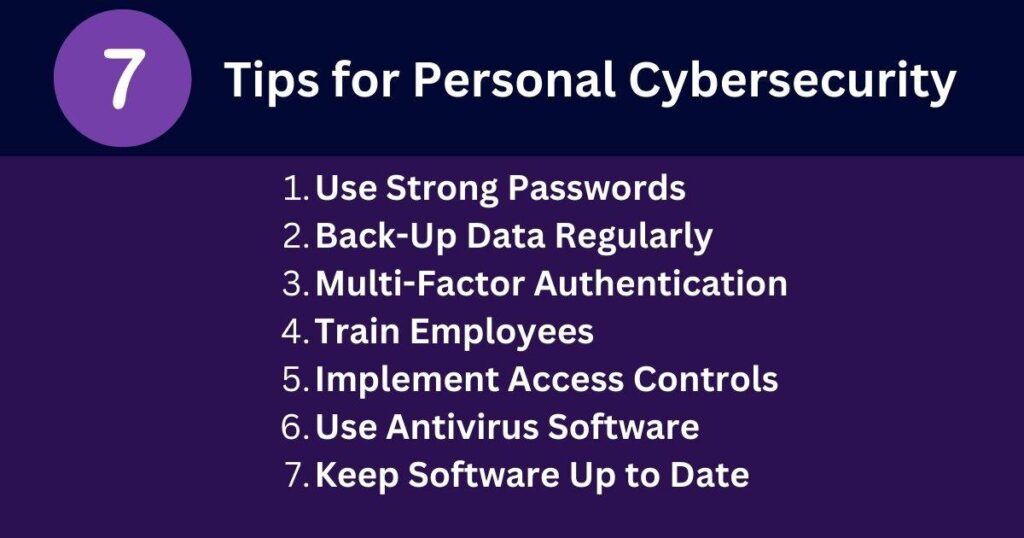
    Tips for Personal Cybersecurity
    • Keep Software Up to Date: Ensure that all software and operating systems are up-to-date with the latest security patches.
    • Use Antivirus Software: Install and regularly update antivirus software to detect and remove malware.
    • Implement Access Controls: Implement access controls to limit the number of users who have administrative privileges.
    • Train Employees: Train employees on how to identify and avoid phishing scams and other social engineering tactics used by cybercriminals.
    • Back-Up Data Regularly: Regularly back up important data to an external hard drive or cloud storage service.
    • Use Strong Passwords: Use strong passwords that are difficult to guess and change them regularly.
    • Implement Multi-Factor Authentication (MFA): Implement MFA to add an extra layer of security to user accounts.
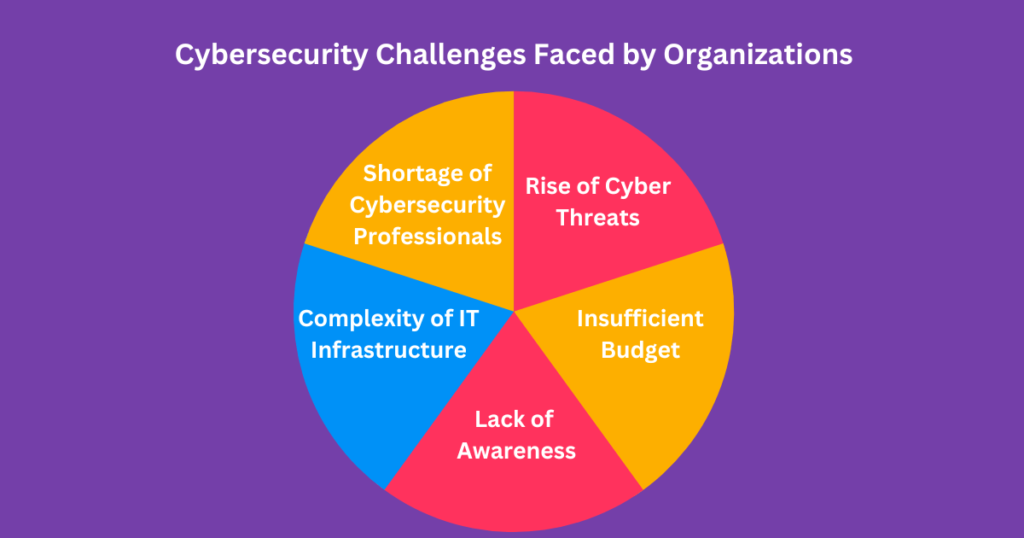
    Cybersecurity Challenges Faced by Organizations
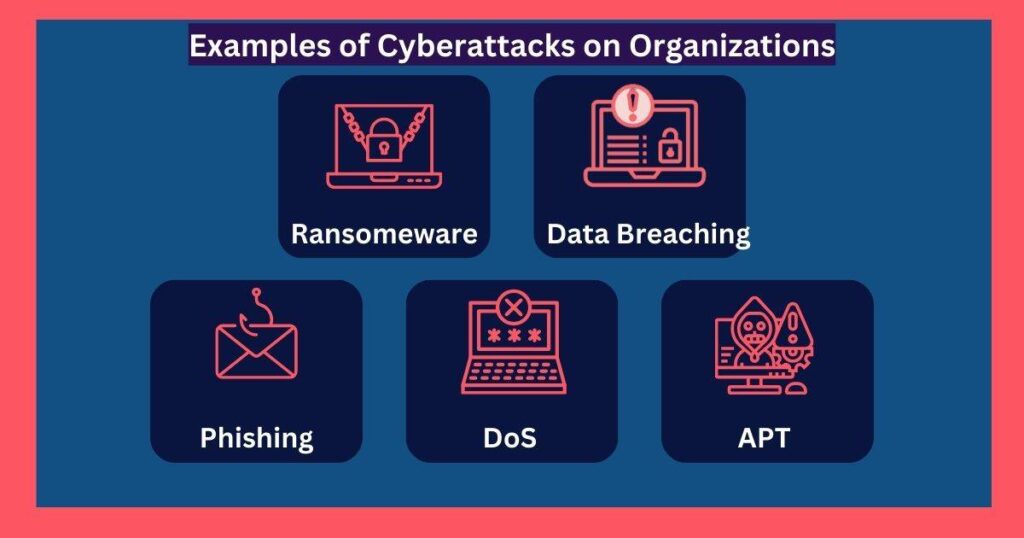
    Examples of Cybersecurity on Organization
    • Ransomware Attacks: Ransomware is a type of malware that encrypts an organization’s data and demands payment in exchange for the decryption key. In 2021, Electronic Arts, one of the world’s biggest video game publishers, was breached by hackers who stole source code used in company games.
    • Data Breaches: Data breaches occur when an organization’s sensitive data is accessed or stolen by unauthorized individuals. In 2021, McDonald’s suffered a data breach that exposed the private information of customers and employees in South Korea and Taiwan.
    • Phishing Scams: Phishing scams are fraudulent emails or messages that trick individuals into revealing sensitive information such as passwords or credit card numbers. In 2021, Peloton announced that it was targeted by hackers who stole customer data through a phishing scam.
    • Denial-of-Service (DoS) Attacks: DoS attacks occur when an organization’s servers are overwhelmed with traffic, causing them to crash or become unavailable. In 2021, Amazon Web Services (AWS) experienced a DoS attack that caused widespread outages across the internet.
    • Advanced Persistent Threats (APTs): APTs are long-term targeted attacks that aim to steal sensitive information from an organization. In 2021, the Russian hacking group APT29 was accused of targeting organizations involved in COVID-19 vaccine development.
  • Cybersecurity: The Best Digital Sentry

    Cybersecurity: The Best Digital Sentry

    Cybersecurity, in today’s hyper-connected world, where digital convenience is a significant perk, assumes a critical role. Our increasing reliance on technology presents a paradox. The more we integrate technology into our lives, the more vulnerable we become to cyber-attacks. Here’s where cybersecurity stands as a digital sentry, guarding our virtual gateways from malicious threats.


    Unraveling Cybersecurity

    At its core, cybersecurity is about protecting systems, networks, and programs from digital attacks. These cyber-attacks usually aim to access, change, or destroy sensitive information, extort money from users, or interrupt normal business processes.


    The Need for Cyber Shields

    Implementing effective cybersecurity is not just a need but a necessity. With everything from smartphones to smart homes, our world is more connected than ever and, unfortunately, more at risk. The repercussions of inadequate cyber defences can range from personal data breaches to widespread societal impact, highlighting the undeniable need for robust cyber shields.


    Threats in The Cyber World

    The realm of cyber threats is not just vast; it’s continuously evolving, with new threats emerging as technology advances.

    Types of Cyber Threats

    This image shows Cyber Threats

    From malware, phishing, and ransomware to social engineering and DDoS attacks, the assortment of threats is extensive. Understanding each helps in developing more effective countermeasures.

    Malware: Malware is a type of software intended to damage or take advantage of any server, network, or device. Ransomware, worms, trojans, and viruses are among them.

    Phishing: Phishing is a kind of social engineering assault in which victims are tricked into divulging private information, including bank account information, credit card numbers, and passwords. Usually, phone conversations, texts, or emails are used for it.

    Ransomware: Ransomware is a type of malware that encrypts a victim’s files and requests payment in exchange for the decryption key .

    Social Engineering: Social Engineering is a form of cyberattack whereby an attacker uses psychological tricks to deceive victims into disclosing private information. Phishing, pretexting, baiting, and more tactics are included.

    DDoS attack: Distributed Denial of Service (DDoS) attacks aim to flood a server or website with requests from various sources at once. Because of this, legitimate people are unable to access the website or server.


    Case Studies of Cyber Attacks

    Analyzing incidents like the infamous WannaCry ransomware attack or the Equifax data breach reveals the profound implications of these threats, impacting millions globally, tarnishing reputations, and incurring formidable financial losses.


    Fortifying Defenses: Cybersecurity Measures

    Combating the plethora of cyber threats requires a multi-faceted approach. It involves employing various strategies, tools, and practices designed to protect against attacks and vulnerabilities.


    Personal Cybersecurity

    Individuals must take proactive steps, like using strong, unique passwords, enabling multi-factor authentication, and regularly updating software to shield personal data from cyber predators.

    Personal and organizational Cybersecurity


    Organizational Cybersecurity

    For businesses, the stakes are higher, necessitating comprehensive cybersecurity strategies. This means not only employing advanced technological defences but also fostering a culture of security awareness among employees.


    Emerging Technologies in Digital Security

    Innovations such as Artificial Intelligence (AI), machine learning, and blockchain are revolutionizing cybersecurity. These technologies enhance the ability to predict, prevent, and mitigate cyber-attacks more efficiently and effectively.


    Legal Landscape and Policies

    The legal aspect of cybersecurity is intricate, given the borderless nature of the internet. Various laws and regulations have been enacted worldwide to uphold data privacy, regulate digital conduct, and ensure compliance.


    Global Cybersecurity Standards

    Standards like the General Data Protection Regulation (GDPR) and others set by organizations such as the International Standards Organization (ISO) underline the global effort toward unified cybersecurity practices.


    The Future of Cybersecurity

    As we venture into the digital future, cybersecurity fields are expected to evolve, presenting both unprecedented challenges and innovative solutions. The rise of quantum computing, for instance, could both dismantle and dramatically reinforce current security protocols.


    Preparing for Tomorrow’s Threats

    In anticipation of emerging cyber threats, continuous adaptation and learning, investment in cutting-edge technology, and comprehensive emergency response plans are crucial. Staying informed about cyber hygiene practices is not just recommended; it’s a requisite for safely navigating the digital space.

    In conclusion, cybersecurity is not a static realm; it’s a continuously evolving field that demands vigilance, awareness, and proactivity. Whether individual or organizational, cybersecurity is an undeniable necessity in our increasingly digital lives, serving as the guardian of our digital doorways. Embracing this reality and implementing robust cybersecurity measures will ensure that society thrives in the face of digital adversity.


    FAQs


    1. What is cybersecurity?
    Cybersecurity refers to the collective methods, technologies, and processes to protect internet-connected systems and data from unauthorized access or cyber-attacks.

    2. Why is cybersecurity critical?
    It’s crucial for personal, corporate, and national security as we rely more on digital platforms, and the risk of cyber theft, fraud, and sabotage increases.

    3. Can emerging technologies like AI improve cybersecurity?
    Absolutely, AI and machine learning help in predictive analysis, enabling proactive defense measures against potential cyber threats.

    4. What are the common types of cyber threats?
    The spectrum includes malware, phishing attacks, ransomware, and DDoS attacks, among others.

    5. How can I improve my cybersecurity?
    Keep your software updated, use strong passwords, be wary of suspicious emails or links, and regularly back up your data.

  • Artificial Intelligence: The Future World

    Artificial Intelligence: The Future World

    Artificial Intelligence

    Welcome to the world of Artificial Intelligence (AI), where things are more fascinating and less complicated than you might think. AI is like a clever friend that helps us humans with daily tasks, making decisions based on learning from different situations, just like we do. From virtual assistants in our phones to intelligent systems predicting what show we should binge-watch next, AI is everywhere! Understanding AI isn’t just for tech wizards; it’s crucial for everyone because it’s reshaping the way we live, work, and even play.


    Demystifying Artificial Intelligence

    Let’s dive deeper into Artificial Intelligence and break it down into bite-sized pieces. Imagine teaching a child to recognize shapes. You show them different objects until they can tell a circle from a square. That’s similar to how Machine Learning works—systems learn from data to make decisions. Now, remember the brainy networks we mentioned? Those are ‘Neural Networks,’ designed to mimic our brains, and ‘Deep Learning’ is their superhero persona, handling tasks too complex for simpler AI forms. But don’t worry; they’re not here to replace us. Despite the myths, AI isn’t an all-knowing entity. It’s a tool that we create and control, enhancing our lives in many ways.


    The Evolution of AI: A Brief History

    Artificial Intelligence is not a new concept. It has been a work in progress since the mid-20th century! What started as basic computer programs has evolved into systems that learn and adapt. From historic moments like IBM’s Deep Blue beating a chess grandmaster to today’s AI, which can compose music or even drive cars, the milestones are nothing short of awe-inspiring. We’re part of an ongoing journey, witnessing history in the making!


    AI in Daily Life: Recognizable Applications

    Let’s talk about how AI is a part of your everyday life. Do you enjoy voice texting on your smartphone? That’s AI. Have you ever been amazed by personalized playlists on your music app? Thank AI. It’s not just convenience; it’s precision, efficiency, and sometimes pure fun. Beyond our phone screens, Artificial Intelligence is in our hospitals, assisting in diagnoses, and it’s navigating our roads in smart cars. It’s making our world not just more connected, but also safer and more innovative. The seamless blending of AI into our lives enhances our experiences and pushes us towards newer, bolder frontiers.


    Ethical Considerations and Public Perception

    However, with great power comes great responsibility. There are valid concerns about privacy and job security in an AI-driven age. That’s why it’s vital to develop AI ethically, considering the societal impacts. Balancing AI’s possibilities with precaution can help ensure it remains a force for good, respecting our privacy and empowering rather than replacing our workforce.


    Future Prospects: How AI Might Shape the World of Tomorrow

    Artificial Intelligence is the future world


    Looking ahead, AI has the potential to revolutionize healthcare by making early diagnosis and treatments accessible to all. It can also help protect the environment by monitoring ecosystems in real time. The possibilities are vast, spanning sectors we’ve yet to imagine. As AI continues to evolve, the only limit is our innovation.


    Navigating a World Powered by AI: Adapting to Change

    In this rapidly changing landscape, adaptability is critical. Stay curious, keep learning, and embrace the advancements. It’s through this open-mindedness that we’ll thrive alongside AI innovations.

    So, here we are — at the doorstep of endless possibilities with Artificial Intelligence. It’s not just technology; it’s a companion in our evolutionary journey. Embracing this dynamic wave means staying informed and engaged. It’s about ensuring this powerful tool uplifts, protects, and inspires us all. As we stand on the brink of this new era, it’s not just a leap into the unknown; it’s a stride into a future crafted by our choices today. Are you ready to be part of this extraordinary adventure?
    Through this heart-to-heart, we’ve journeyed through AI’s intricacies and its profound role in shaping our collective tomorrow. Now, more than ever; our story intertwines with artificial intelligence — a narrative of growth, challenges, and immense potential.