



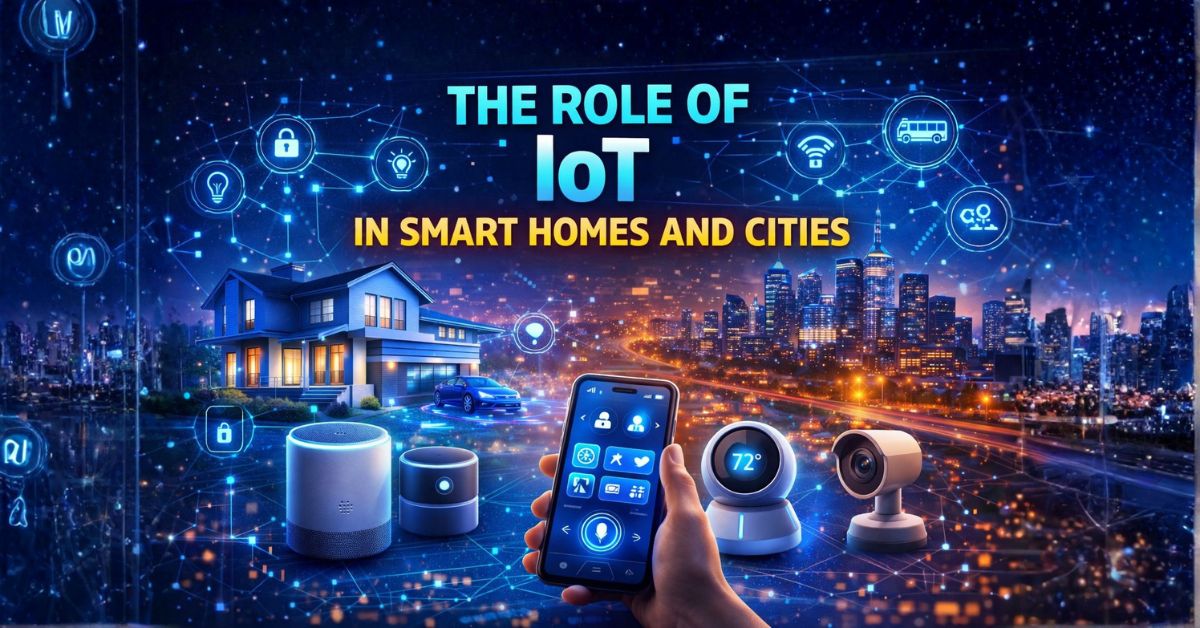
The Internet of Things (IoT) is quietly reshaping the way we live and govern our cities. From smart thermostats that learn your schedule to city-wide sensor networks that optimize traffic flow, IoT technology is transforming everyday environments into intelligent, connected ecosystems. In 2026, IoT is no longer a futuristic concept — it’s a present-day reality with profound implications for energy efficiency, safety, and urban planning.
This article breaks down what IoT is, how it works in homes and cities, its real-world applications, and what to expect as the technology continues to mature.
What Is IoT?
The Internet of Things refers to a network of physical devices — sensors, appliances, vehicles, and infrastructure — embedded with software, connectivity, and data-processing capabilities. These devices collect and exchange data with each other and with central systems, often without human intervention.
Key components include sensors and actuators, connectivity protocols (Wi-Fi, Zigbee, Z-Wave, 5G), edge computing hardware, and cloud platforms for data storage and analytics. A smart light bulb that adjusts based on natural light levels and a water treatment facility that monitors pipe pressure in real time are both examples of IoT in action.
Why IoT Matters in 2026
With over 18 billion connected IoT devices projected globally in 2026, the technology has reached a tipping point. Several factors are driving this expansion:
- 5G rollout: Faster, low-latency networks enable real-time IoT communication at scale.
- Falling hardware costs: Sensors and microcontrollers are cheaper than ever, accelerating deployment.
- Energy concerns: IoT-enabled efficiency is central to sustainability goals in homes and cities.
- Urban population growth: Cities need smarter infrastructure to handle increasing population density.
IoT in Smart Homes
Smart home technology has moved well beyond novelty gadgets. Today’s connected homes feature integrated systems that communicate and adapt to resident behavior.
Key Smart Home Applications
- Smart thermostats: Devices like Nest and Ecobee learn usage patterns and reduce energy consumption by up to 23%.
- Security systems: AI-powered cameras, smart locks, and doorbell sensors provide real-time monitoring and alerts.
- Lighting automation: Motion-activated and schedule-based lighting reduces waste and enhances comfort.
- Appliance control: Smart refrigerators, ovens, and washers can be monitored and controlled remotely.
- Voice assistants: Amazon Alexa, Google Home, and Apple HomeKit serve as central hubs for device management.
- Energy monitoring: Smart meters give homeowners granular data on electricity consumption by device or room.
The average American smart home in 2026 contains 15 or more connected devices. Interoperability standards like Matter (developed by Apple, Google, Amazon, and Samsung) are making it easier for devices from different brands to work together seamlessly.
IoT in Smart Cities
At the city level, IoT enables data-driven governance and service delivery. Smart city initiatives use sensor networks, AI analytics, and connected infrastructure to improve quality of life and operational efficiency.
Key Smart City Applications
- Traffic management: Sensors and cameras feed real-time data to adaptive signal systems that reduce congestion by 20–30%.
- Waste management: Smart bins with fill-level sensors alert collection crews only when needed, cutting routes and emissions.
- Water systems: Leak detection sensors and smart meters reduce water waste and improve infrastructure maintenance.
- Public safety: Gunshot detection systems, smart streetlights with surveillance, and emergency response coordination.
- Air quality monitoring: Networks of micro-sensors provide hyper-local pollution data to inform policy and public health decisions.
- Smart grid: Utilities use IoT to balance energy loads, integrate renewable sources, and prevent outages.
- Connected transportation: IoT enables real-time bus/train tracking, e-scooter networks, and EV charging management.
Cities like Columbus, Ohio; Kansas City, Missouri; and San Jose, California have received federal Smart City funding and are deploying IoT infrastructure at scale. Internationally, Singapore and Amsterdam are often cited as global benchmarks.
Key Benefits of IoT
- Energy savings: Homes and cities using IoT automation typically reduce energy use by 15–30%.
- Improved safety: Real-time monitoring reduces response times for fires, break-ins, and infrastructure failures.
- Cost efficiency: Predictive maintenance of IoT-monitored assets reduces downtime and repair costs.
- Better data: Continuous sensor data enables smarter decisions at both household and municipal levels.
- Quality of life: Automated convenience, personalized environments, and reduced commute stress improve daily living.
Challenges and Risks
- Privacy concerns: Pervasive sensors collect vast amounts of personal data, raising questions about who owns and accesses it.
- Cybersecurity vulnerabilities: IoT devices are frequent targets for hackers; a compromised smart home device can be a gateway to larger network breaches.
- Interoperability: Despite the Matter standard, many devices still operate in silos, limiting integration.
- Digital divide: Smart city benefits are often unevenly distributed, with underserved communities receiving less investment.
- Infrastructure costs: Deploying city-wide IoT networks requires significant capital investment and ongoing maintenance.
Real-World Examples
- Google Nest: One of the most widely adopted smart home ecosystems, offering thermostat, camera, doorbell, and alarm integration.
- Barcelona’s smart water grid: The city saved €75 million annually by using IoT sensors to detect leaks and optimize irrigation.
- Chicago’s Array of Things: A city-wide sensor network collecting data on air quality, pedestrian traffic, and weather patterns.
- Amazon Sidewalk: A low-bandwidth network using Ring and Echo devices to extend connectivity for IoT devices even when home Wi-Fi is out of range.
Expert Take
IoT experts emphasize that the technology’s value lies not in individual devices but in integrated ecosystems. A single smart thermostat saves energy; a home where the thermostat communicates with the solar panels, EV charger, and utility grid optimizes the entire energy lifecycle. The same logic applies at the city level — isolated sensors provide data points, but connected networks create actionable intelligence.
Security professionals warn that IoT expansion outpaces cybersecurity investment. Every connected device is a potential attack surface, and many consumer IoT products ship with weak default credentials and infrequent software updates.
Frequently Asked Questions
What’s the difference between IoT and smart home devices?
IoT is the broader technology framework; smart home devices are consumer applications of IoT. Every smart home device is an IoT device, but IoT also encompasses industrial, agricultural, medical, and city infrastructure applications.
Is IoT secure?
Security varies widely. Enterprise and government IoT systems are generally well-secured. Consumer devices vary significantly — it’s important to use strong passwords, keep firmware updated, and segment IoT devices on a separate home network.
How much does a smart home setup cost?
Entry-level setups (smart speaker, a few bulbs, and a thermostat) can cost under $300. Full whole-home automation with security, lighting, climate, and appliance control can range from $2,000 to $20,000+ depending on the level of integration.
Which U.S. cities are the most “smart”?
According to various smart city indices, San Jose, Kansas City, Columbus, and New York City rank among the top U.S. smart cities based on IoT deployment, open data availability, and digital service quality.
The Bottom Line
IoT is transforming homes from passive structures into responsive, intelligent environments — and reshaping cities from static infrastructure networks into adaptive, data-driven organisms. The technology delivers real, measurable benefits in energy savings, safety, and efficiency. But it also introduces serious privacy and security challenges that users, developers, and policymakers must address together. For deeper reading, explore our articles on top emerging technologies to watch in 2026, how 5G is transforming connectivity, and the future of artificial intelligence in everyday life.