Explore nanotechnology’s basics, applications, challenges, and future possibilities in this essential guide. Your gateway to groundbreaking knowledge awaits!
Nanotechnology is the manipulation of matter at the nanoscale, which is approximately 1 to 100 nanometers. One billionth of a metre is called a nanometer. The diameter of a human hair is about 100 micrometers or 100,000 nanometers. At this infinitesimal scale, matter exhibits unique properties, such as enhanced strength, lighter weight, and increased conductivity.
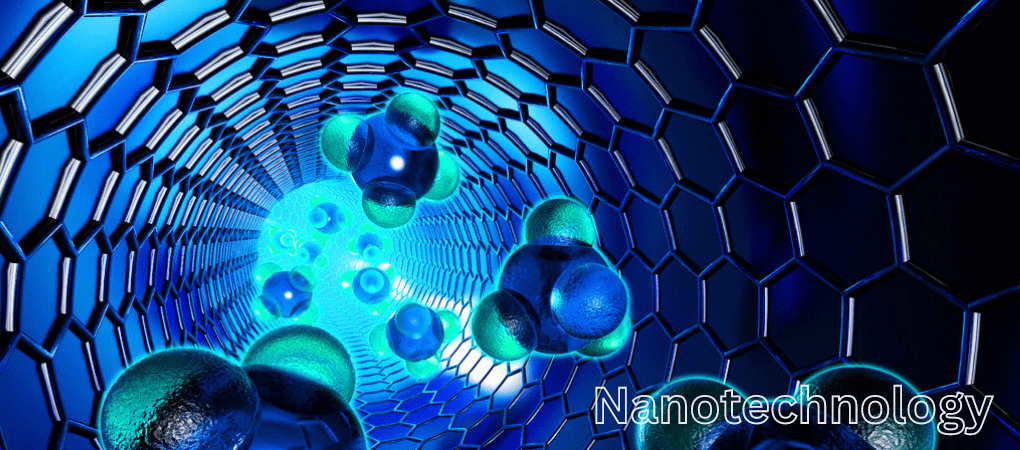
Nanotechnology is the science and engineering of designing, producing, and using structures, devices, and systems at the nanoscale. It is defined as the manipulation of matter at the nanoscale and is a rapidly developing field with applications in various industries, such as medicine, electronics, materials, and energy. If you’re wondering, ‘What is nanotechnology?’ it involves working with materials at the atomic and molecular levels. Some examples of nanomaterials include carbon nanotubes, graphene, and quantum dots.
Real-World Applications of Nanotechnology Today
Here are some examples of real-world applications of nanotechnology today:
- Medicine: Nanoparticles can be used to deliver drugs to specific cells in the body, which can improve the effectiveness of treatment and reduce side effects. Additionally, new imaging methods and diagnostic tools are being developed using nanotechnology.
- Electronics: Nanotechnology is used to create smaller, faster, and more energy-efficient electronic devices. For example, nanoparticles are used in lithium-ion batteries to increase their energy density and lifespan.
- Materials: Nanotechnology is used to create new materials with enhanced properties, such as strength, lightness, and durability. For example, carbon nanotubes are used to create lightweight and strong composites that are used in aircraft and spacecraft.
- Energy: Nanotechnology is being used to develop new renewable energy technologies and improve the efficiency of existing energy sources. For example, nanomaterials are used in solar cells to improve their efficiency and reduce their cost.
How Small Are Nanomaterials? Explain the Nanometer Scale

Imagine shrinking yourself down to the size of a speck of dust. Suddenly, a human hair looms like a towering redwood, and a raindrop becomes a shimmering ocean. Welcome to the realm of nanotechnology, where the tiniest tweaks at the atomic and molecular level unlock a universe of possibilities.
Nanoscale: Where Big Impact Starts Small
At the heart of this revolution lies the nanometer, a unit so small it boggles the mind. One nanometer is one billionth of a meter – think of it as a single strand of hair compared to the entire Earth! It’s a scale invisible to the naked eye, yet where some of the most fascinating phenomena occur.
Nano vs. Macro
To grasp just how microscopic this world is, let’s take a familiar object: a human hair. This seemingly slender filament boasts a whopping 100,000 nanometers in diameter! Imagine squeezing 100,000 of these miniaturized hairs side-by-side to barely reach the width of your fingernail.
- A red blood cell is roughly 7,000 nanometers wide, while a DNA molecule is only about 2 nanometers thick.
- The tip of a ballpoint pen is about 10,000 nanometers wide, while a virus is around 100 nanometers across.
Why Size Matters:
This mind-bending smallness gives nanomaterials unique properties that their larger counterparts lack. Think of it like having superpowers:
- Strength on a nano-scale: Nanomaterials can be incredibly strong, lighter than air, and more conductive than ever before. Imagine bridges constructed with carbon nanotubes, stronger than steel yet feather-light!
- Playing with atoms: At the nanoscale, scientists can manipulate individual atoms and molecules, crafting materials with tailor-made properties. It’s like building with Lego blocks, but on a subatomic level!
- Unlocking the door to the unseen: Nanomaterials can interact with biological systems on a cellular level, opening doors for targeted drug delivery and medical imaging. Imagine tiny nanorobots patrolling your bloodstream, seeking and destroying diseased cells!
Nanotechnology is no longer a futuristic fantasy; it’s rapidly transforming our world. From revolutionizing medicine and electronics to shaping the future of energy and materials, the possibilities are endless.
How Did Nanotechnology Get Started?
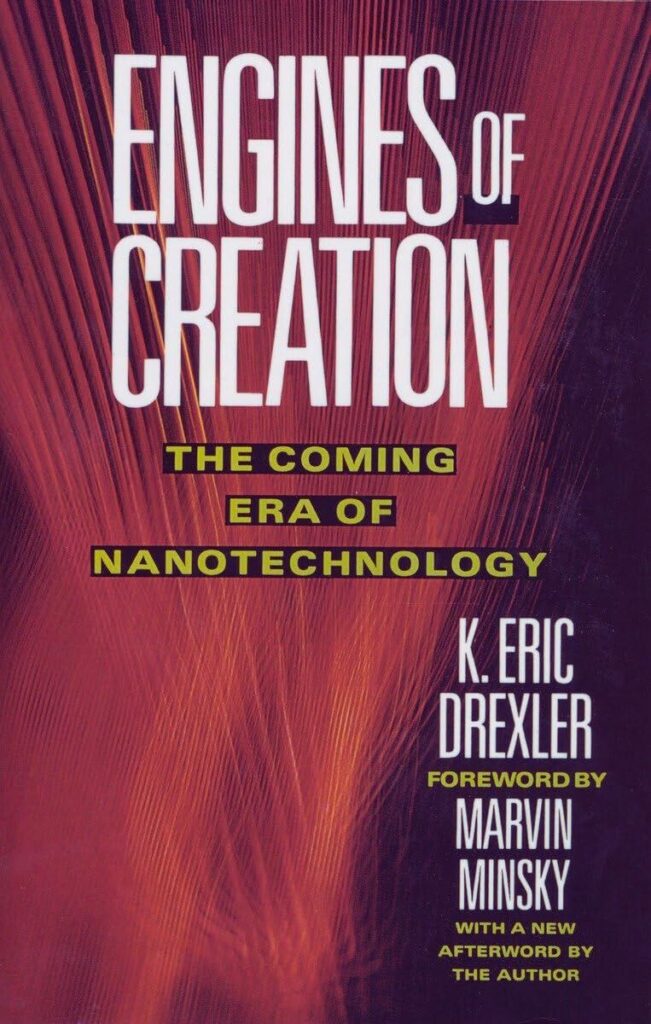
The term “nanotechnology” was first coined by Eric Drexler in his 1986 book Engines of Creation: The Coming Era of Nanotechnology. In this book, Drexler describes a vision of a future in which nanobots, or tiny machines, would be used to build anything from new materials to entire machines.
Although Drexler’s vision of nanotechnology has not yet been fully realised, significant progress has been made in the field over the past few decades. In the 1990s, scientists developed new techniques for manipulating matter at the nanoscale, such as scanning tunnelling microscopy and atomic force microscopy.
In the early 2000s, the first nanomaterials, such as carbon nanotubes and graphene, were discovered. These materials have unique properties that have led to a wide range of applications in electronics, materials, and other industries.
How is Nanotech Being Used in Healthcare?
Nanotechnology is being used in healthcare to develop new and innovative ways to diagnose and treat diseases. Here are some examples:
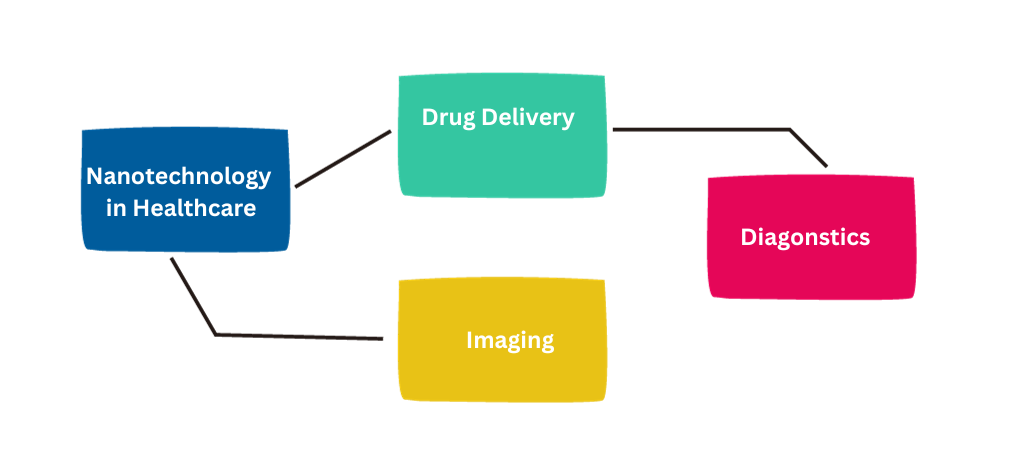
- Drug delivery: Nanoparticles can be used to deliver drugs to specific cells in the body, which can improve the effectiveness of treatment and reduce side effects. For example, nanoparticles are being used to deliver cancer drugs to tumor cells, while avoiding healthy cells.
- Imaging: Nanoparticles can be used to create contrast agents that can improve the resolution and accuracy of medical imaging techniques, such as MRI and CT scans.
- Diagnostics: Nanotechnology is being used to develop new diagnostic tools that can detect diseases at an early stage when they are most treatable. For example, nanobiosensors are being developed to detect cancer cells in the blood.
Exploring Ethical Questions in Nanotechnology
Delving into nanotechnology’s wonders, let’s pause to think about the ethics tied to these breakthroughs. While nanotech brings vast transformations, nuanced concerns in medicine and privacy deserve our attention.
In medicine, nanotechnology advances drug delivery. Nanoparticles targeting specific cells promise better treatments with fewer side effects. Yet, ethical questions arise. Are we tampering too much with the human body at the molecular level? How do we ensure ethical use, preventing unintended health consequences?
Take cancer treatment—nanoparticles delivering drugs directly to tumors show potential. Yet, we must balance innovation with ethics, safeguarding healthy cells. It’s a delicate dance needing continuous scrutiny and thoughtful rules.
Beyond medicine, nanotech sparks privacy concerns. Sophisticated nanoscale devices may intrude at unprecedented levels. Imagine nanosensors in our bloodstream for diagnostics—how do we protect personal data? Nanotech and privacy intersect, demanding exploration of boundaries and safeguards.
Nanotech’s ability to process molecular-level information requires robust ethical frameworks. Balancing innovation with privacy safeguards is crucial. How do we prevent misuse, like nanodevices for surveillance or data exploitation?
In exploring nanotechnology’s ethics, we face questions beyond science. Reflecting on achievements, we must consider the responsibilities that come with such capabilities. As we marvel at progress, let’s guide our nanoscale journey with an ethical compass—valuing impact on individuals, society, and our shared humanity.
Challenges in Nanotechnology
Unraveling the wonders of nanotechnology reveals not just boundless possibilities but also intricate challenges that shape its trajectory. Let’s explore these hurdles, acknowledging the complexities that define the nanotech landscape.
- Toxicity at the Nanoscale: A notable challenge is the potential toxicity of certain nanomaterials. While these materials offer remarkable properties, questions arise about their impact on living systems. How can we ensure the benefits of nanotechnology without unintended harm? Researchers grapple with understanding the interactions between nanomaterials and living organisms, aiming for innovation without compromising safety.
- Environmental Considerations: The environmental footprint of nanotechnology is another challenge. The manufacturing and disposal of nanomaterials may introduce new complexities to ecological systems. The very properties that make nanoparticles valuable—small size and increased reactivity—pose potential threats to the environment. Navigating this challenge requires a holistic approach, considering the entire life cycle of nanomaterials. It’s about balancing innovation with environmental responsibility.
- Technological Frontiers: In the ever-evolving nanotech landscape, researchers face technological hurdles. Tools like scanning tunneling microscopy and atomic force microscopy, while revolutionary, come with limitations. Bridging the gap between current technologies and the aspirations of working at the nanoscale demands constant refinement. Researchers walk a technological tightrope, pushing boundaries while navigating the constraints of existing tools.
Acknowledging these challenges is not a step back but a leap forward with awareness. The journey into the full potential of nanotechnology is adorned with triumphs and tribulations. Embracing these challenges ensures a balanced perspective, steering the nanotech narrative responsibly through the delicate interplay of innovation, safety, and environmental stewardship.
What Are the Future Possibilities of Nanotechnology?
Nanotechnology, the manipulation of matter at the atomic and molecular level, is no longer a futuristic fantasy. It’s rapidly evolving from science fiction to scientific fact, poised to revolutionize numerous industries and redefine our world. Imagine tiny machines operating within your body, crafting new tissues to heal, or computers with unimaginable processing power. This is the transformative potential of nanotechnology, and its upcoming applications are sure to leave us awestruck.
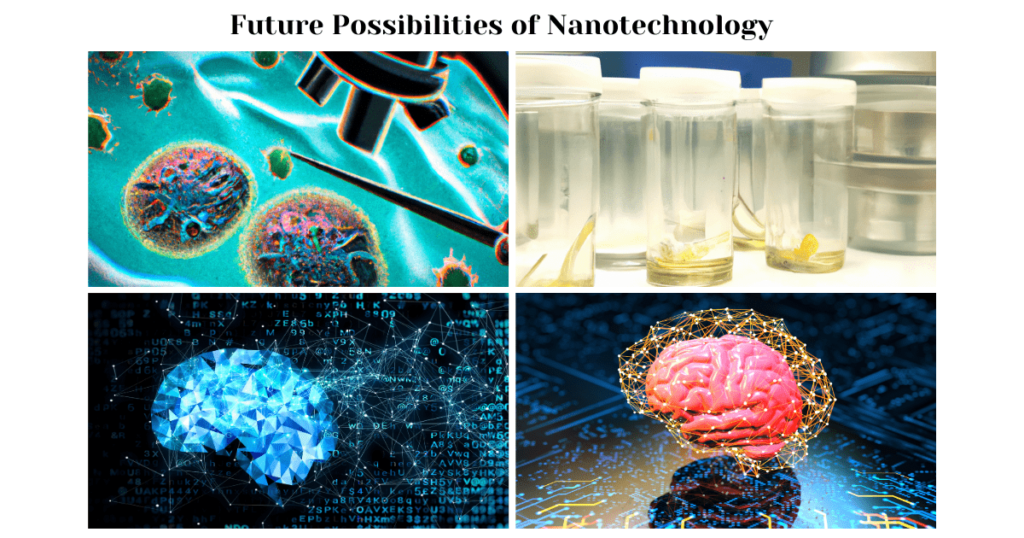
Here are some potential upcoming applications of nanotechnology:
- Surgery on a Cellular Scale: Nanorobots, microscopic machines designed to operate at the nanoscale, hold immense promise for medical advancements. These miniature marvels could navigate our bloodstreams, performing pinpoint surgery on diseased cells or delivering targeted drug therapies directly to affected areas. Imagine treating cancer by deploying these nanodocs, eliminating tumors with precision while minimizing side effects. The possibilities for personalized medicine become boundless with nanorobotics at the helm.
- Tissue engineering: Tissue engineering, the art of growing functional tissues, takes a leap forward with nanotechnology. By harnessing the power of nanomaterials, scientists envision crafting replacement organs, nerves, and even entire limbs. This could bring hope to millions suffering from organ failure or debilitating injuries, offering a future where regeneration replaces irreversible damage. Imagine a world where a damaged liver could be regrown using biocompatible nanomaterials, or a severed spinal cord restored through nanofiber bridges.
- Artificial intelligence: Artificial intelligence, the driving force behind our technological advancements, stands to benefit immensely from nanotechnology. Nanoelectronic components would offer unprecedented miniaturization and processing power, paving the way for AI systems that are far more sophisticated and energy-efficient than anything we’ve seen before. Imagine intelligent prosthetics seamlessly connected to the nervous system, or AI assistants embedded in our environment, anticipating our needs and seamlessly adapting to our lives.
- Quantum computing: Quantum computing, harnessing the bizarre quirks of quantum mechanics, promises to shatter the limitations of traditional computers. However, creating functioning quantum systems requires incredible precision and control. Nanotechnology emerges as a crucial enabler, providing the tools to manipulate quantum bits (qubits) at the atomic level. This could unlock the door to solving previously intractable problems, revolutionizing fields like materials science, drug discovery, and even financial modeling. Imagine simulating complex molecules to design life-saving drugs, or optimizing global logistics networks with real-time quantum computations.
Conclusion
Nanotechnology, the manipulation of matter at the nanoscale, has the potential to revolutionise various sectors, including healthcare, electronics, and energy. Its unique properties allow for groundbreaking technologies to address pressing challenges. Nanoparticles can enhance drug delivery, imaging, and diagnostics in medicine, while nanomaterials can improve medical imaging techniques.
Nanotechnology can also enhance the performance of electronic components, leading to more powerful and compact devices. It can also create materials with enhanced properties, enabling applications in aerospace, construction, automotive, and consumer electronics. Additionally, nanotechnology can develop renewable energy technologies and improve energy storage and distribution.


Leave a Reply
You must be logged in to post a comment.